Oiji Mi




1 Michelin Star · James Beard Award Semi Finalist · Esquire Best New Restaurants #37
Our verdict
Oiji Mi holds a Michelin star and an Opinionated About Dining top-100 North America ranking, making it one of the most credentialed contemporary Korean kitchens in New York City. Chefs Brian Kim and Tae Kyung Ku run a five-course prix fixe from their Flatiron address, where the format disciplines flavors toward restraint rather than spectacle. The beverage program, built on creative cocktails and a wine list, matches the ambition of the kitchen.

Pearl is the En Primeur Club membership app, where members save venues, book tables and use the concierge.
Contemporary Korean Fine Dining and Where Oiji Mi Sits in the New York Tier
New York's contemporary Korean dining scene has developed a clear upper bracket over the past decade. A handful of prix fixe restaurants now compete directly with French and Japanese fine dining at the $$$$ price point, holding Michelin recognition and placing on international ranking lists rather than positioning themselves within a Korean-specific category. Atomix, which holds two Michelin stars, anchors the very leading of that tier. Oiji Mi, which earned its first Michelin star in 2024 and ranked 63rd on the Opinionated About Dining Leading Restaurants in North America list in 2025, sits directly inside that upper bracket, competing on quality and ambition against peers like Le Bernardin, Eleven Madison Park, and Per Se rather than against casual Korean restaurants in Koreatown. Its trajectory has been notably fast: an Esquire Leading New Restaurants listing at number 37 in 2023, an OAD Highly Recommended designation that same year, an OAD top-175 North America ranking in 2024, and a jump to 63rd by 2025. That kind of upward movement is uncommon in a market this competitive.
The Five-Course Format and What It Says About the Cooking
Fine dining formats in New York have split into two recognizable camps: open-ended tasting menus that can stretch past ten courses and run well over three hours, and shorter prix fixe structures that use constraint as an editorial tool. The five-course format at Oiji Mi belongs firmly to the second camp. The decision to limit courses disciplines the kitchen to make every plate count rather than relying on accumulated volume to create an impression. Across the city, this approach appears at some of the most considered rooms: Lazy Bear in San Francisco uses a similarly disciplined communal format, and Alinea in Chicago has periodically restructured its format to sharpen focus. The principle is the same: fewer courses, more precision per plate.
At Oiji Mi, Opinionated About Dining's assessors noted a refinement and a more subtle approach to flavors across the menu, which is a meaningful signal in a genre of cooking that can lean toward bold, fermented intensity. The kitchen under Chefs Brian Kim and Tae Kyung Ku appears to be working toward integration rather than assertion, Korean technique and flavor foundations brought into dialogue with the pacing and plating conventions of international fine dining rather than used as a statement of cultural difference.
Sourcing, Restraint, and the Ethics of the New Korean Kitchen
The sustainability story in contemporary fine dining is often told through ingredients: where proteins are sourced, whether seafood is responsibly harvested, how kitchen waste is handled. At the Michelin star level, sourcing transparency has become a baseline expectation rather than a differentiator. What distinguishes restaurants in this tier is less the fact of ethical sourcing and more the degree to which it shapes the menu's structure and flavor logic.
The dishes cited by OAD's assessors at Oiji Mi reflect sourcing choices that point toward quality over volume: striped jack hwe finished with a seaweed and scallion vinaigrette; chili lobster ramyun using tender lobster meat over springy noodles in gochujang; cheese-stuffed chapssal donuts as dessert. Each of those dishes requires a specific, well-sourced main ingredient to function at the level described. Striped jack is a fish that demands careful handling and a reliable supply relationship. Lobster at this price point is sourced for texture and flavor precision, not as a luxury signal alone. The chapssal donut, made from glutinous rice, is a traditional Korean form repurposed as a fine dining dessert, which suggests an interest in ingredient heritage and culinary continuity rather than novelty for its own sake.
This approach to ingredients connects to a broader pattern visible at Michelin-recognized restaurants across the United States. Single Thread Farm in Healdsburg structures its entire program around farm and ocean sourcing. Providence in Los Angeles built its reputation on responsible seafood sourcing well before it became fashionable. The French Laundry in Napa maintains its own kitchen garden. These are not marketing positions; they are operational commitments that shape what appears on the plate. Oiji Mi's menu choices reflect a similar logic: ingredients selected for their specific character and handled with enough precision that provenance becomes legible in the eating.
The Beverage Program in Context
New York's leading prix fixe rooms have raised expectations around beverage programs significantly. A wine list is no longer sufficient at the $$$$ tier; rooms like Masa have integrated beverage pairing as an architectural element of the dining experience. OAD's assessors described Oiji Mi's beverage program as creative and skillful, with eye-catching cocktails and a wine list. The mention of cocktails as a distinct strength is notable: it suggests the program is not simply wine-forward with cocktails as an afterthought, but built as a parallel program. That places Oiji Mi in a small group of New York fine dining rooms where the bar team operates with the same level of intentionality as the kitchen. For reference, internationally recognized fine dining rooms such as 8 1/2 Otto e Mezzo Bombana in Hong Kong and Alain Ducasse at Louis XV in Monte Carlo treat the beverage program as an equal partner to the kitchen, a standard that Oiji Mi appears to be working toward in its own format.
The Flatiron Address and the Neighbourhood Context
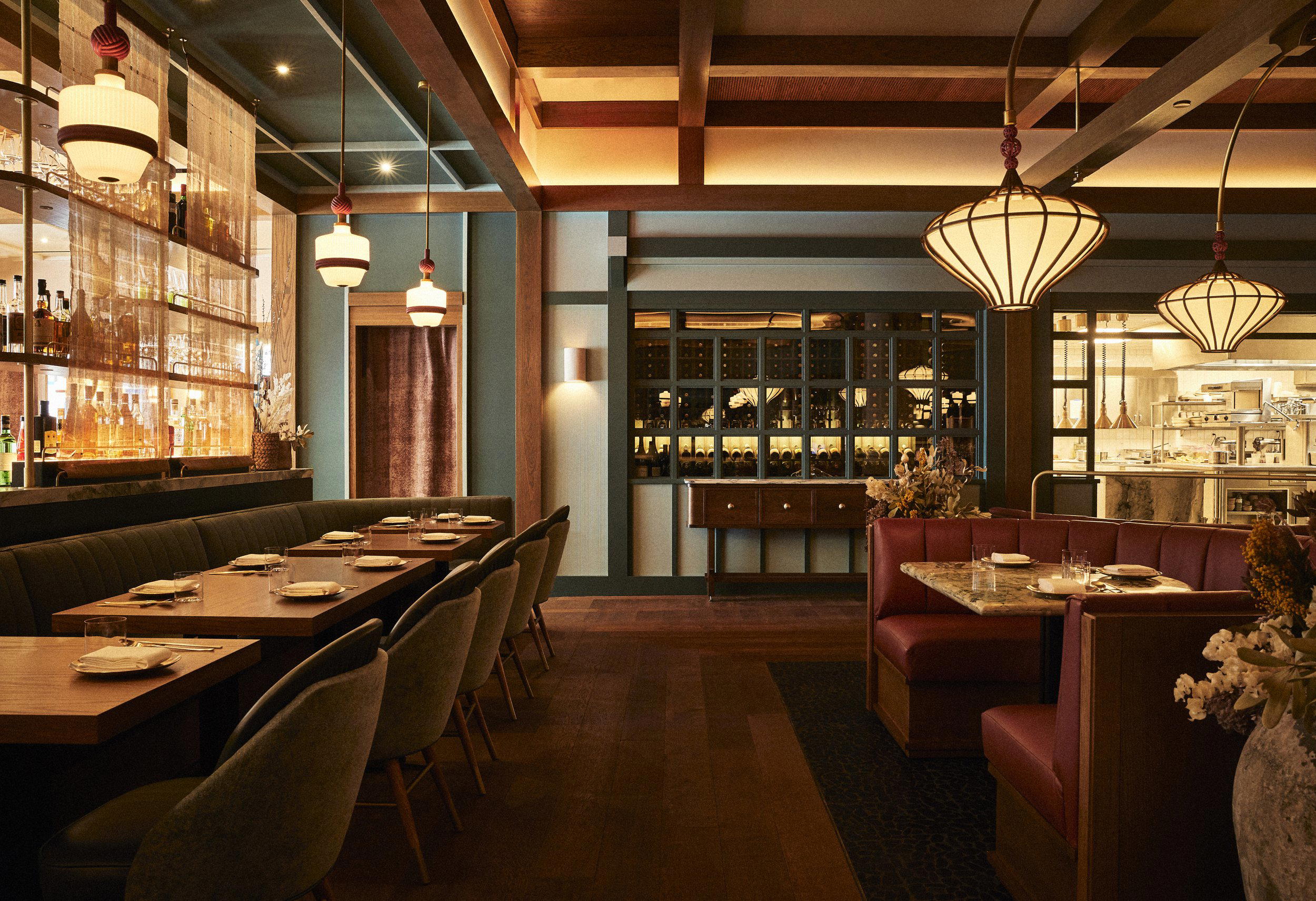
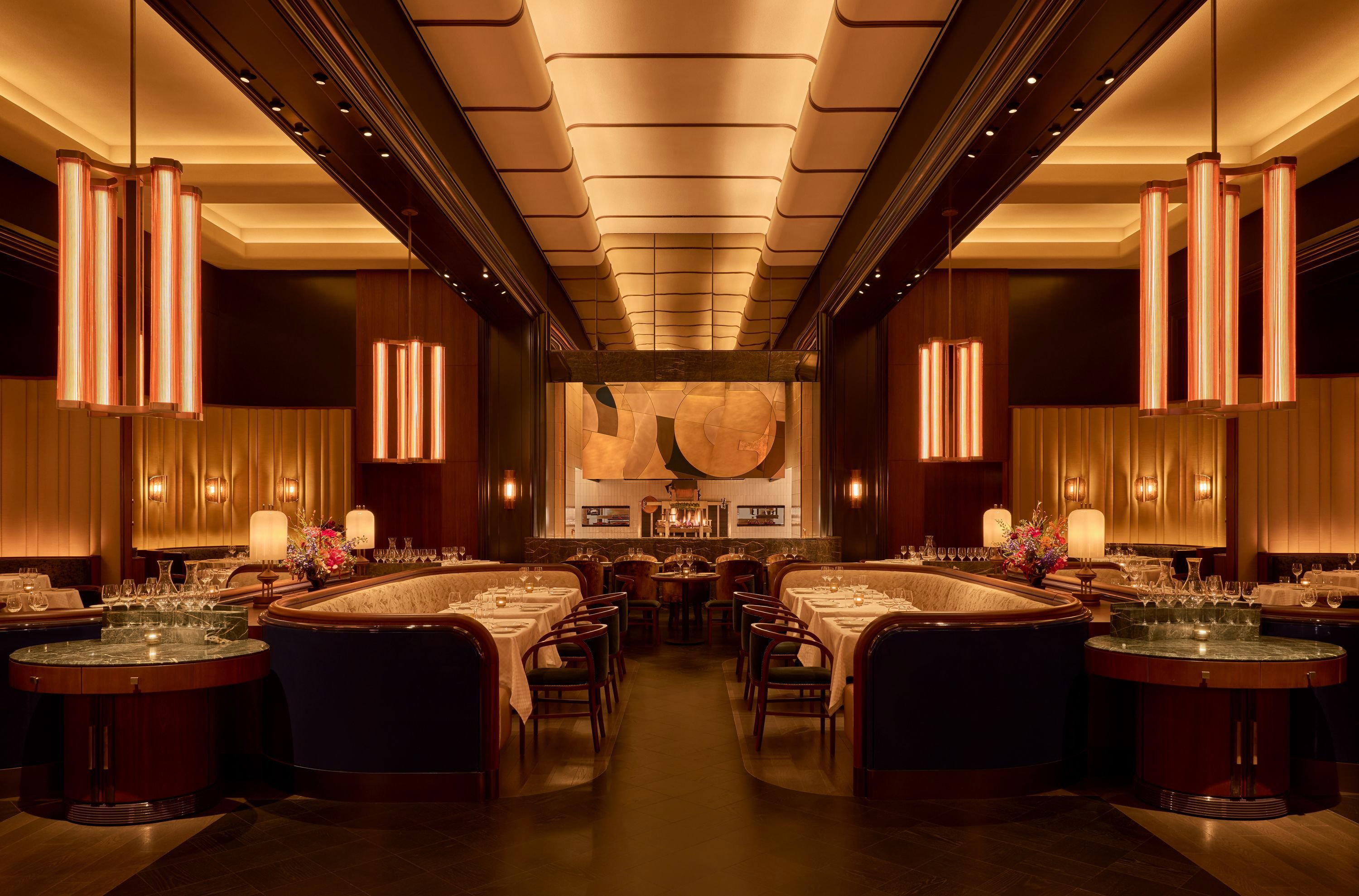
West 19th Street in the Flatiron district sits at a remove from the concentrated fine dining corridors of Midtown and the West Village. The neighbourhood has a density of design studios, gallery spaces, and mid-size offices that makes it a more considered destination for dinner rather than a casual drop-in. That geography tends to attract a clientele arriving with intention: reservation holders rather than walk-ins, people who have read the menu in advance. For a restaurant running a structured prix fixe format, that self-selecting audience is an advantage. The room itself, described by OAD as sleek and attended by a fleet of staff, reads as a room built for the format it runs rather than adapted to it. Service density at this level is a deliberate operational signal: enough staff to manage a multi-course format at pace without crowding the experience.
For visitors to New York planning around the broader dining scene, see our full New York City restaurants guide, our full New York City hotels guide, our full New York City bars guide, our full New York City wineries guide, and our full New York City experiences guide. For comparable prix fixe programs elsewhere in the United States, Emeril's in New Orleans represents a different regional tradition at the $$$$ tier.
Know Before You Go
- Address: 17 W 19th St, New York, NY 10011 (Flatiron District)
- Hours: Monday through Sunday, 5 PM to 10 PM
- Format: Five-course prix fixe
- Price tier: $$$$
- Awards: Michelin 1 Star (2024); Opinionated About Dining Top 63 in North America (2025); Esquire Leading New Restaurants #37 (2023)
- Booking: Reservations required; advance booking is advisable given recognition level
What Do Regulars Order at Oiji Mi?
OAD assessors, who return to rated restaurants over multiple visits, flagged three dishes as standouts on the current five-course menu. The striped jack hwe, a preparation rooted in Korean raw fish tradition, arrives finished with a seaweed and scallion vinaigrette that reads as both technically grounded and relatively restrained. The chili lobster ramyun uses gochujang as the base for the sauce, placing a Korean pantry ingredient at the center of a luxury protein dish rather than as a background note: the noodles are described as springy, the lobster meat as tender, which together suggest careful timing in the kitchen. The cheese-stuffed chapssal donuts close the meal: a traditional glutinous rice form with a filling that moves it toward a fine dining dessert register without abandoning the original format. The beverage program has been called out independently as a strength, so guests who engage with cocktails rather than treating the wine list as the default choice are likely to find the bar team a meaningful part of the experience.
Recognition, Side-by-Side
| Venue | Cuisine | Price | Awards | Notes |
|---|---|---|---|---|
| Oiji MiThis venue (the venue you are viewing) | Modern Korean Fine Dining | $150–200 | 1 Michelin Star · James Beard Award Semi Finalist | Not listed |
| Le Bernardin | French Seafood Fine Dining | $300–500 | 3 Michelin Stars · World's 50 Best #13 | French, Seafood |
| Atomix | Modern Korean Tasting Menu | $300–500 | 2 Michelin Stars · World's 50 Best #7 | Modern Korean, Korean |
| Masa | Seasonal Hokkaido Tempura Omakase | $150–200 | Tabelog 100 #34 | Sushi, Japanese |
| Per Se | French Fine Dining Tasting Menu | $300–500 | 3 Michelin Stars · World's 50 Best #40 | French, Contemporary |
| Eleven Madison Park | Contemporary Plant-Based Fine Dining | $300–500 | 3 Michelin Stars · World's 50 Best #4 | French, Vegan |
Recognition history
Dated appearances from independent guides and award organizations, with the underlying list record or original source where available.
Michelin 1 Star
Michelin
James Beard Award Semi Finalist
James Beard Award
Opinionated About Dining Top Restaurants in North America Ranked #81
Opinionated About Dining
Esquire Best New Restaurants #37
Esquire
Full recognition history (9 entries)
Opinionated About Dining Top Restaurants in North America Ranked #63
Opinionated About Dining
Michelin 1 Star
Michelin
Opinionated About Dining Top Restaurants in North America Ranked #175
Opinionated About Dining
Opinionated About Dining Top Restaurants in North America Highly Recommended
Opinionated About Dining
Opinionated About Dining Gourmet Casual Dining in North America Ranked #150
Opinionated About Dining
Continue exploring
More in New York City
More from Chef Brian Kim
Browse all →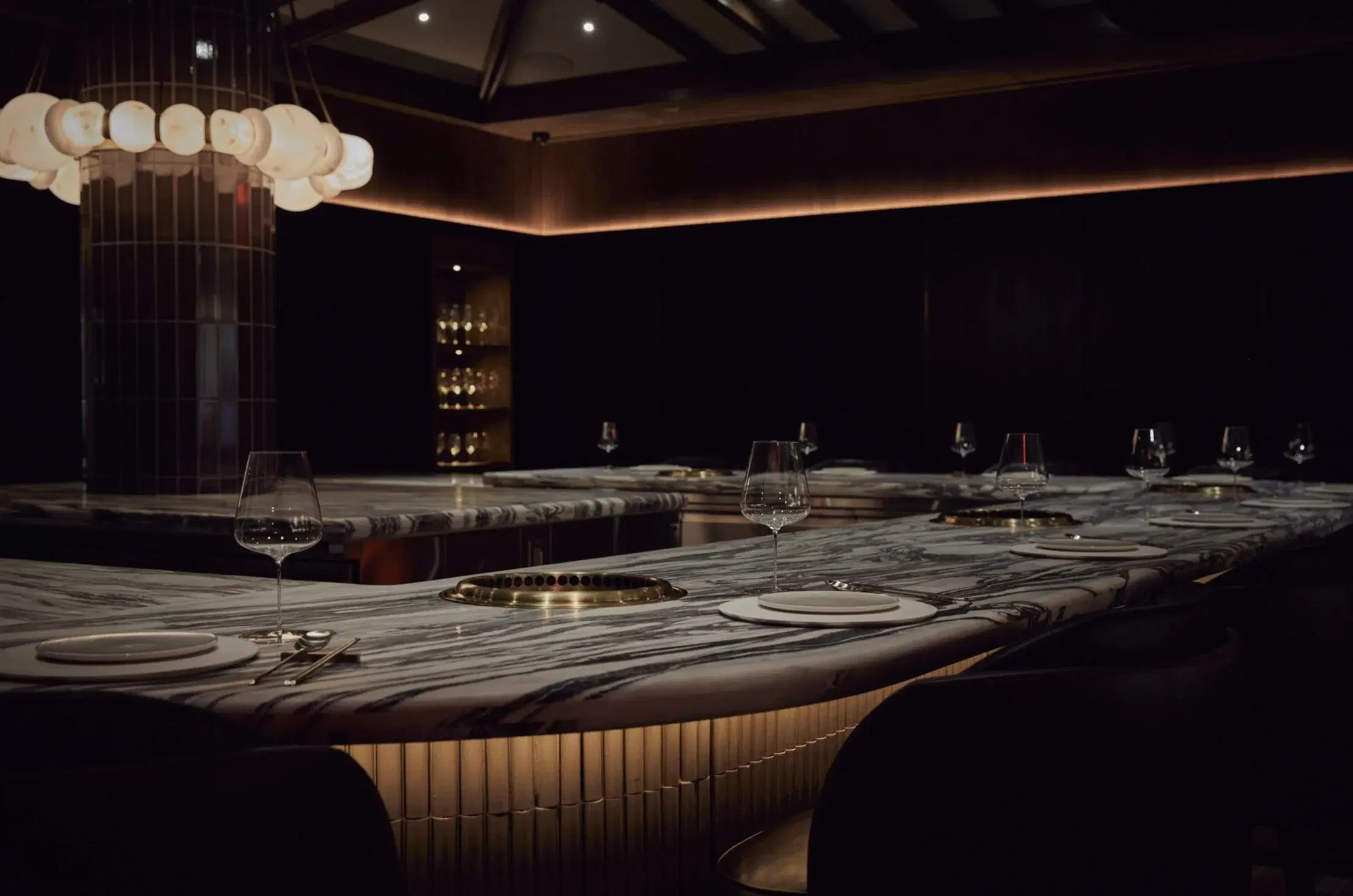
Restaurants in New York City
All restaurants in New York City →

Bars in New York City
All bars in New York City →








Details
- Modern
- Elegant
- Cozy
- Sophisticated
- Date Night
- Special Occasion
- Business Dinner
- Open Kitchen
- Craft Cocktails
- Sake Program
- Prix Fixe
- A La Carte
- Tasting Menu
Current opening hours
- Monday
- 5–10 PM
- Tuesday
- 5–10 PM
- Wednesday
- 5–10 PM
- Thursday
- 5–10 PM
- Friday
- 5–10 PM
- Saturday
- 5–10 PM
- Sunday
- 5–10 PM
Hours can change for holidays and private events. Hours as of .
Sleek, modern dining room with lantern-style lamps, lattice-inspired walls, warm lighting, and a relaxed yet elegant supper club atmosphere.