Our verdict
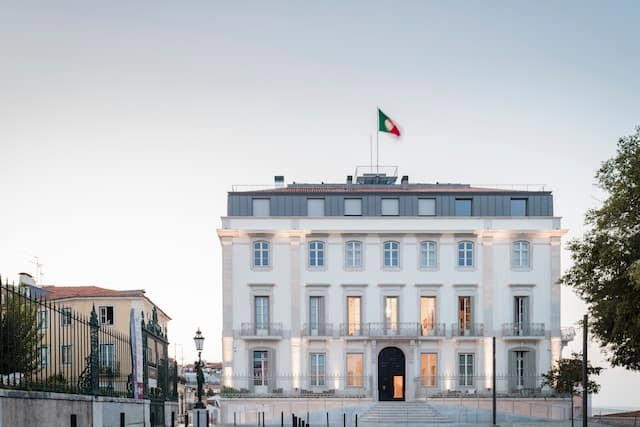
O Palácio occupies a historic address in Lisbon's Campo de Ourique quarter, placing it within the city's quieter, residential fine-dining tier rather than the tourist-facing circuits of Chiado or Belém. Where peers like Belcanto and CURA anchor Lisbon's Michelin-decorated creative-Portuguese canon, O Palácio operates with a different gravity, a sense of occasion rooted in place and architecture as much as plate.

Pearl is the En Primeur Club membership app, where members save venues, book tables and use the concierge.

The menu
What to order
- Octopus roasted with olive oil and garlic
- Grilled tiger prawns with shrimp risotto
- Char-grilled matured entrecôte
A Different Register of Lisbon Dining
Lisbon's fine-dining map has consolidated around two poles in recent years. One is the creative-Portuguese mode, represented by Michelin-starred addresses like Belcanto and CURA, where tasting menus reinterpret national larder through a technical, often produce-forward lens. The other is the international-chef import, exemplified by 50 Seconds from Martin Berasategui, which grafts a Basque progressive sensibility onto a panoramic Tagus setting. O Palácio at Rua Prior do Crato 142 in the Campo de Ourique district represents something quieter and, in its own way, more insistent: a dining address whose identity draws as much from its architectural shell as from whatever arrives at the table.
Campo de Ourique sits uphill from the riverside glamour of Belém and west of the Michelin corridor running through Chiado and Santos. It is a neighbourhood of broad, tree-lined streets, old tiled shopfronts, and a residential cadence that the city's tourist surge has not entirely absorbed. Eating well here has historically meant neighbourhood tascas and local wine bars rather than formal multi-course programs. A palace-scaled room arriving into this context changes the terms of the conversation.
Architecture as the First Course
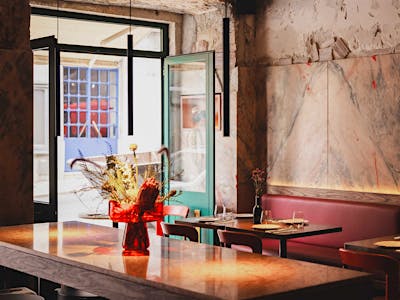
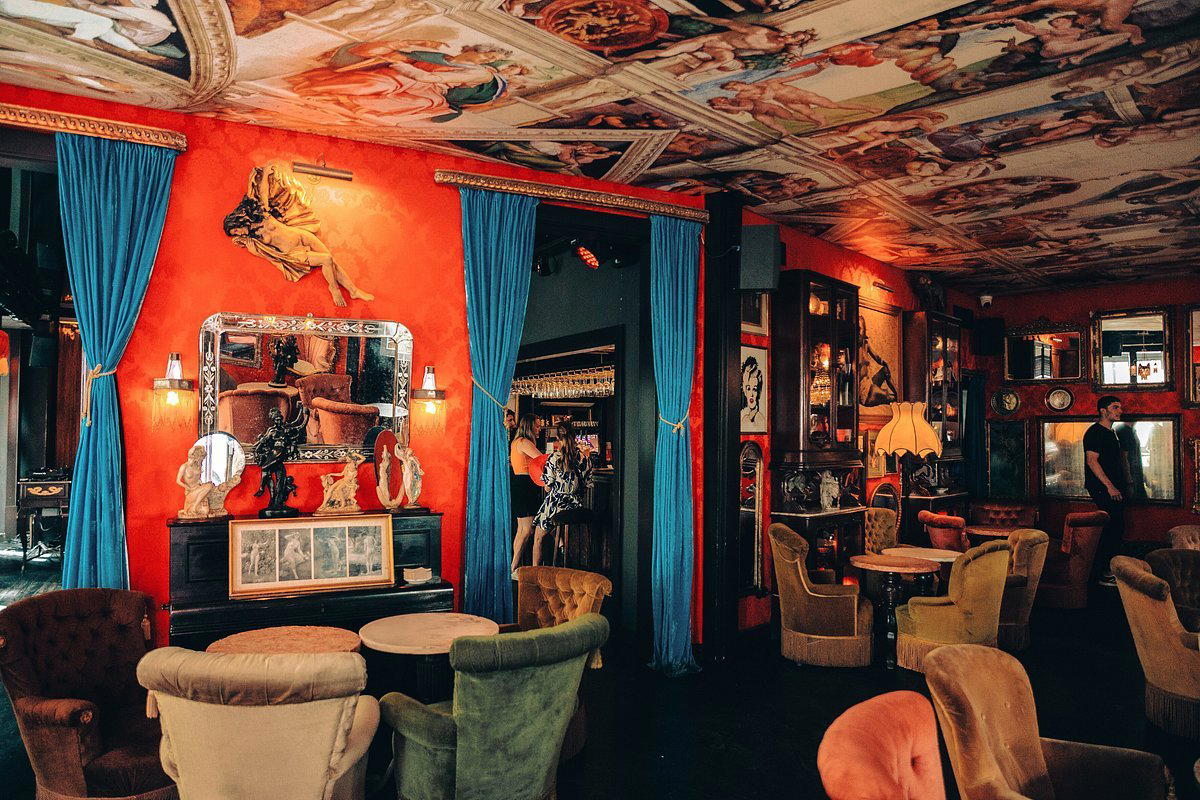
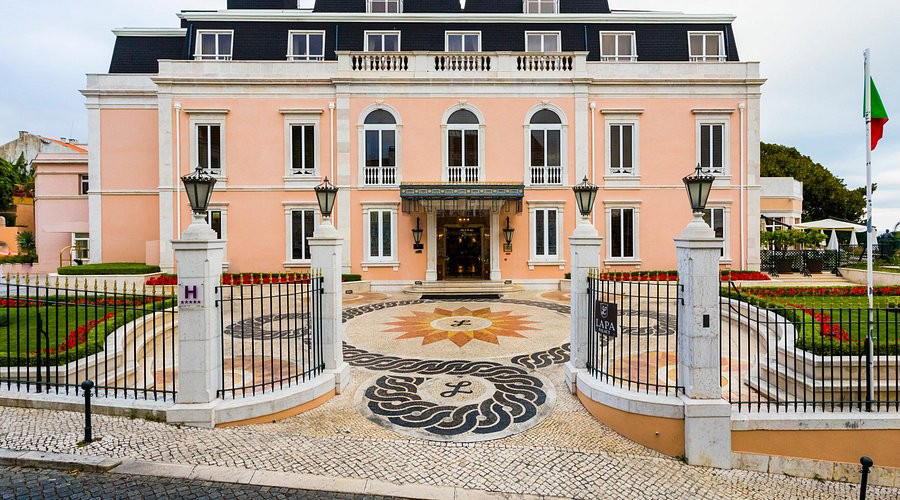
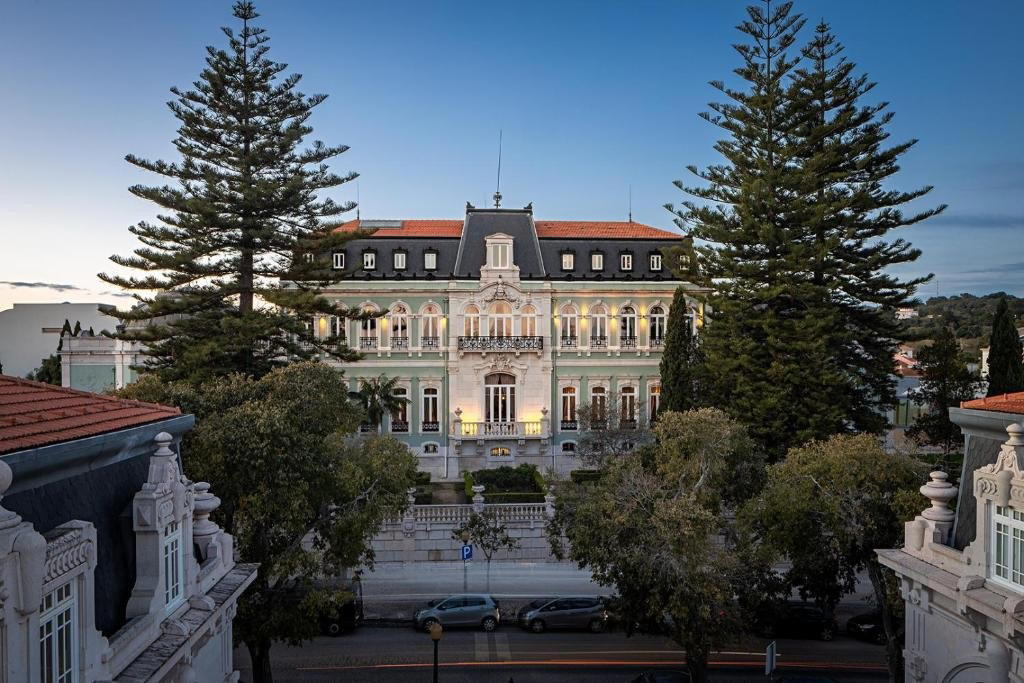
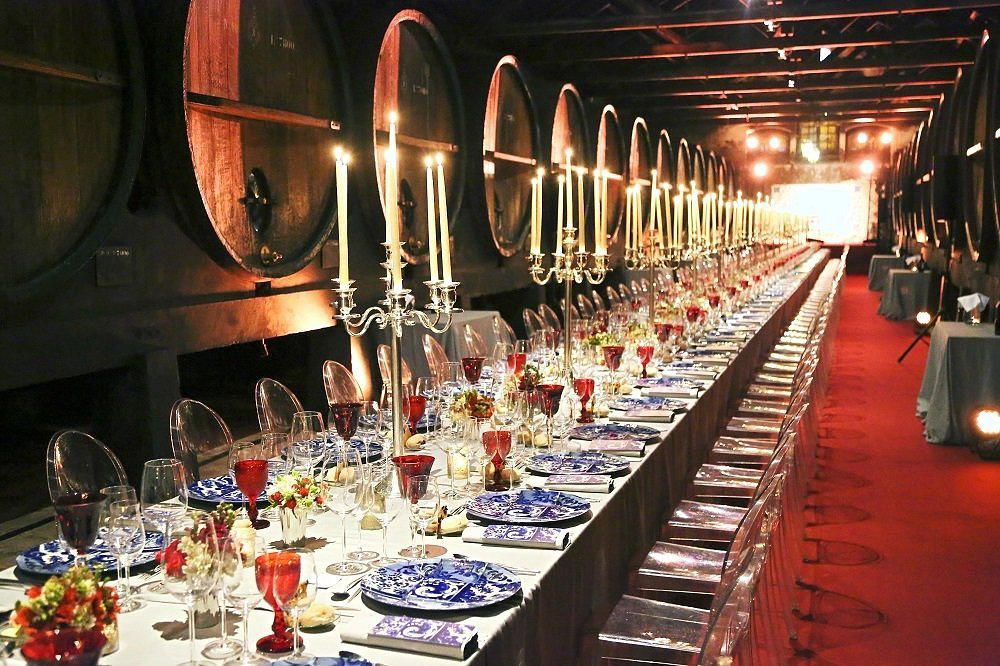
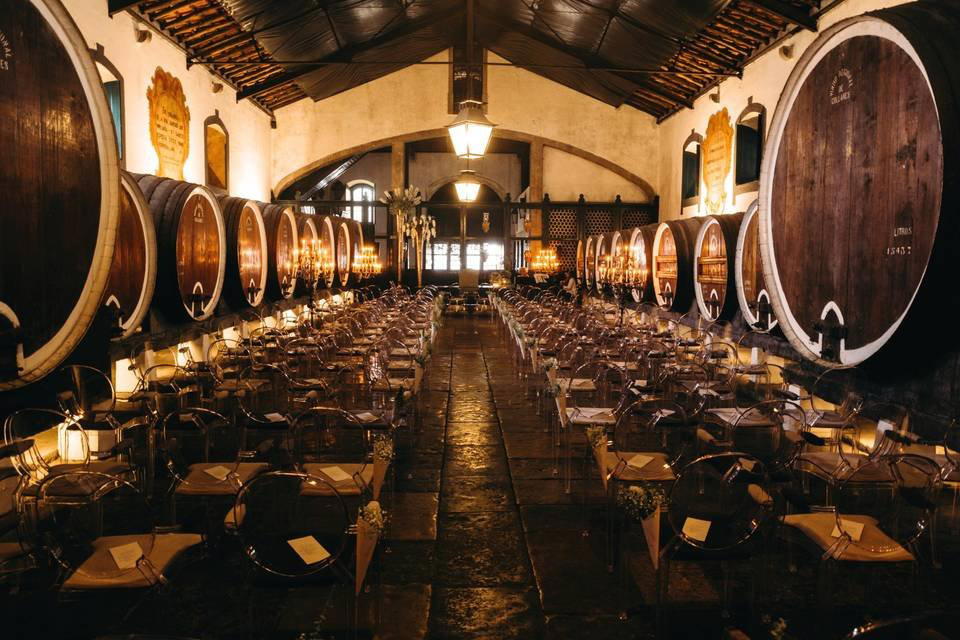
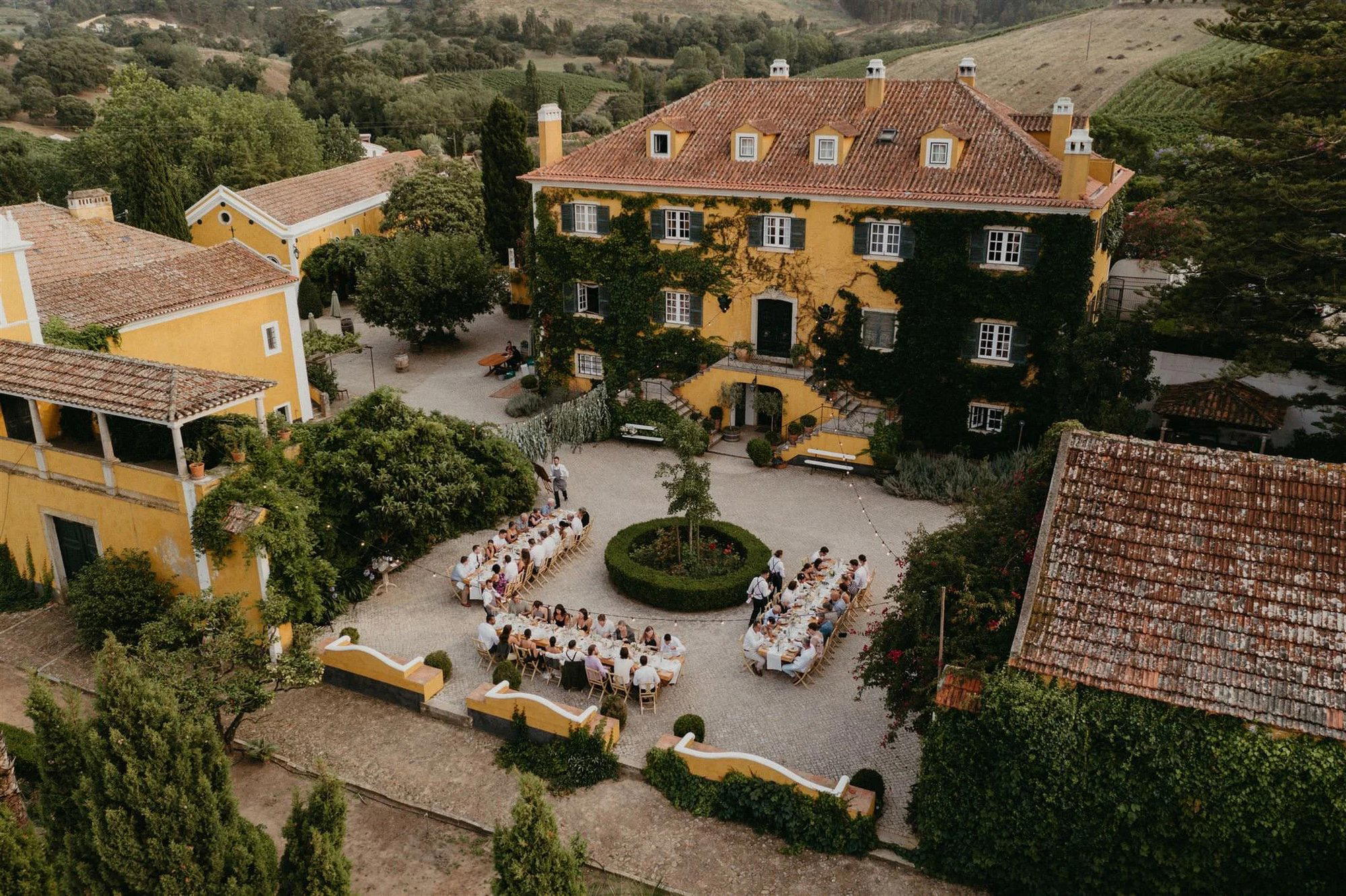
In the grammar of long, sequenced meals, the room is always the first course. It sets expectation, tempo, and the register in which everything that follows will be read. At O Palácio, the address, a palace structure on Rua Prior do Crato, performs that function before a menu is opened. Palaces in Lisbon are not museum pieces: the city's aristocratic residential architecture ranges from modest noble townhouses to baroque staterooms, and how a dining room sits within that heritage determines whether the occasion reads as theatre or as genuine continuity with the city's material culture.
This matters because Lisbon's premium dining tier has increasingly leaned into spatial drama: Eleven, perched on a Parque Eduardo VII promontory with panoramic views, and 2Monkeys, with its creative spatial energy, both demonstrate that where you eat shapes how you eat. O Palácio works within a similar logic, though the proposition is heritage weight rather than view or concept.
The Arc of a Meal in This Setting
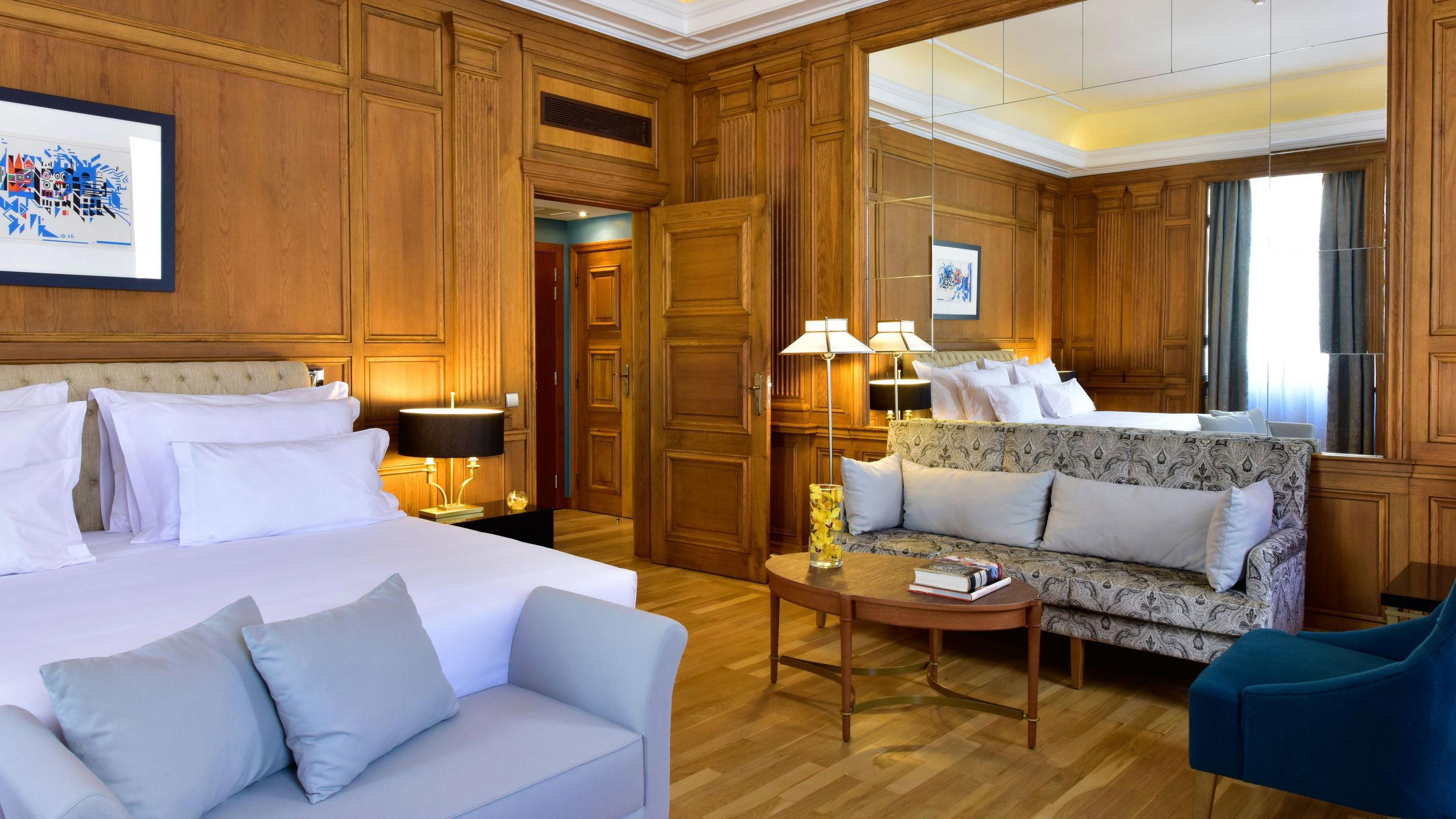
A long, structured meal in a historic Portuguese interior moves differently than the same number of courses in a minimalist Scandinavian-influenced room. The pacing tends toward ceremony. Arrivals and transitions carry more visual charge when the backdrop is gilded plasterwork or azulejo panels rather than bare concrete. This is the tradition from which Portugal's grand hotel dining rooms evolved, and it is the register that informs what a meal at an address like O Palácio is built to deliver.
The multi-course progression in settings of this kind typically opens with lighter, more technically intricate preparations, snacks and amuse-bouche that demonstrate kitchen precision without overwhelming the room's gravity. Mid-sequence courses anchor to Portuguese product: cured fish from the Atlantic coast, cured and braised preparations built around the country's exceptional pork, and vegetables from the green river valleys north of Lisbon. The arc moves toward richness and weight before the dessert sequence resets palate and mood. Whether O Palácio executes this form or departs from it is, at this point, a question for those who have sat at the table. What the address promises is that the form itself will be taken seriously.
For reference, Portugal's most recognised long-format dining programs share this seriousness of intent. Vila Joya in Albufeira has held two Michelin stars for years on the back of a meticulous seasonal progression. Ocean in Porches and Casa de Chá da Boa Nova in Leça da Palmeira each demonstrate that Portugal's decorated table is no longer confined to Lisbon or Porto. O Palácio enters that field with the advantage of an address that few can replicate.
Where It Sits in the Wider Portuguese Fine-Dining Circuit
Reading O Palácio in isolation misses the point. Lisbon is now a city with genuine depth in formal dining, and understanding any single address requires knowing the map. Antiqvvm in Porto has shown that romantic, heritage-inflected settings can anchor Michelin recognition in Portugal's second city. The Yeatman in Vila Nova de Gaia and Il Gallo d'Oro in Funchal extend the conversation to wine country and the Atlantic islands. At the other end of the country, Bon Bon in Lagoa, Al Sud in Lagos, and A Ver Tavira in Tavira have built the Algarve's fine-dining credibility well beyond its resort origins. A Cozinha in Guimarães rounds out a national picture that is now genuinely competitive at the European level.
Against this backdrop, an address in Lisbon needs a clear point of difference. O Palácio's is architectural and locational: a palace structure in a residential quarter, removed from the city's formal fine-dining corridors, with a proposition rooted in setting as much as cuisine. For diners willing to travel to the Campo de Ourique postcode, that difference carries weight.
Internationally, the closest analogues are dining rooms that have used historic private architecture to frame a meal as something closer to a private occasion than a restaurant visit. In New York, the gap between a technically driven program like Le Bernardin's formal seafood progression and the conceptually-led intimacy of Atomix's Korean tasting counter illustrates how setting and format together define what a meal means. O Palácio's architectural weight places it closer to the Le Bernardin end of that axis: occasion dining, formal in its bones, with setting providing a significant share of the experience's total charge.
Planning Your Visit
O Palácio is located at Rua Prior do Crato 142 in the 1350-263 postcode, Campo de Ourique, Lisbon. The neighbourhood is accessible by tram from central Lisbon, and the walk from Príncipe Real takes roughly fifteen minutes through the city's hilly residential streets. For context on the full range of Lisbon's formal dining options, our full Lisbon restaurants guide maps the city's premium tier in detail. Given the sparse public information currently available about O Palácio's specific format, hours, and booking approach, direct contact with the venue before visiting is the practical first step.
Frequently asked questions
What part of town is O Palácio in?
O Palácio is located at Rua Prior do Crato 142, 1350-263 Lisboa, Portugal, Lisbon.
Is O Palácio in Lisbon suitable for a formal special-occasion dinner?
O Palácio's address in Campo de Ourique, Lisbon, and its historic palace interior place it firmly in the formal-occasion category rather than the casual neighbourhood-dinner bracket. The structured, multi-course format documented in editorial coverage aligns with what guests expect from a significant celebration meal in a city that now has genuine depth across its fine-dining circuit.
What do people recommend at O Palácio?
Because O Palácio operates within the formal, sequenced-meal tradition that has taken hold across Lisbon's serious dining addresses, regulars tend to point toward the structured progression of the meal rather than any single plate. The Campo de Ourique location draws a neighbourhood crowd that returns for the full arc of a long dinner rather than drop-in plates.
Can I walk in to O Palácio?
Walk-in availability at formal Lisbon dining rooms of this register is generally limited, and O Palácio at Rua Prior do Crato 142 is no exception in that respect. Campo de Ourique is accessible by tram from central Lisbon, making a reconnaissance visit straightforward if you want to inquire in person.
What's the defining dish or idea at O Palácio?
The defining idea is architectural: the historic Portuguese interior at Rua Prior do Crato 142 functions as a structural element of the meal itself, setting tempo and register before any food arrives. This positions O Palácio within a strand of Lisbon dining that treats the room as a deliberate counterpoint to the minimalist Scandinavian-influenced spaces that have dominated the city's newer fine-dining openings. The cuisine format reinforces that positioning through long, sequenced service rather than à la carte informality.
A Lean Comparison
Comparable venues nearby, for context on price, style, and recognition.
| Venue | Cuisine | Price | Notes |
|---|---|---|---|
| O PalácioThis venue (the venue you are viewing) | Modern Portuguese Fine Dining | $50–100 | Not listed |
| Chapitô à Mesa | Traditional Portuguese with City Views | $30–50 | Castelo, Traditional Portuguese with City Views |
| Canto da Atalaia | Traditional Portuguese with Fado | $30–50 | Chiado, Traditional Portuguese with Fado |
| R de S. Bento 81 | Modern Portuguese Taberna | $30–50 | Bairro Alto, Modern Portuguese Taberna |
| Antiga Camponesa | Traditional Portuguese | Not listed | Bairro Alto, Traditional Portuguese |
| VISEVERSA RESTAURANT & BAR | Modern Portuguese Bistro | $30–50 | Santo Amaro, Modern Portuguese Bistro |