On Denman Street in Vancouver's West End, Nook occupies the kind of compact, neighbourhood-anchored space that the city's most reliable casual dining rooms tend to share: an interior scaled for conversation rather than spectacle, a menu that rewards return visits, and a walk-in culture that keeps the room honest. It sits a tier below Vancouver's $$$$ fine-dining circuit and earns its place through consistency rather than occasion-dining ambition.
Pearl is the En Primeur Club membership app — saves, bookings, and concierge access live there. Same editors, same standards.
- Address
- 781 Denman St, Vancouver, BC V6G 2L6, Canada
- Phone
- +1 604 568 4554
- Website
- nookrestaurants.com
- Directions
- Get directions
 Saves & bookings on Pearl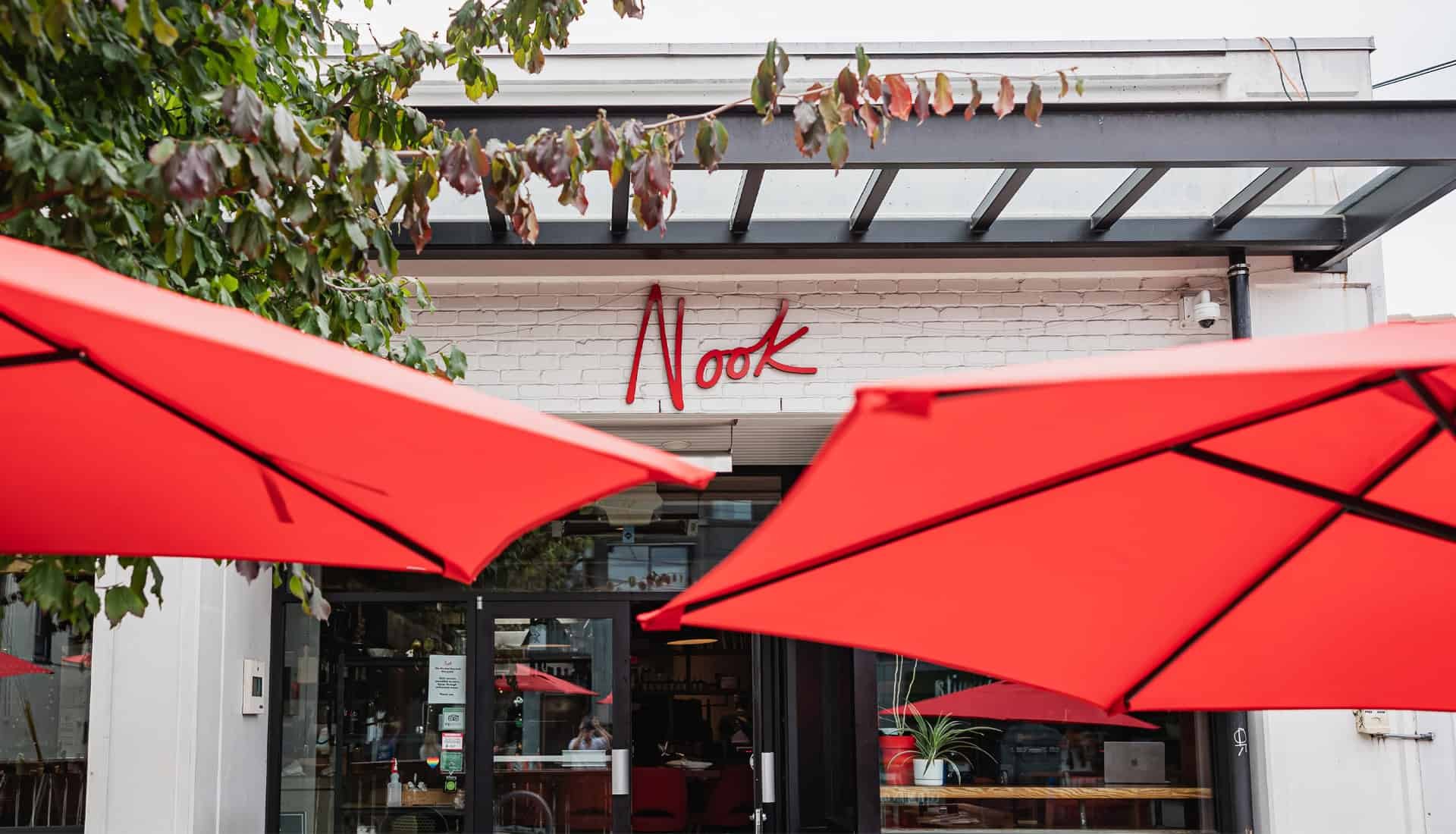
Denman Street and the Case for Compact Dining
Vancouver's West End has never been the city's loudest dining district. That distinction belongs to Gastown and Chinatown, where the $$$$ tier congregates around restaurants like Kissa Tanto and Masayoshi, or to Mount Pleasant, where AnnaLena and Barbara anchor a newer contemporary corridor. Denman Street operates at a different register: a residential strip running toward English Bay where the dining rooms are smaller, the price points more moderate, and the neighbourhood loyalty notably stronger. Nook, at 781 Denman, fits that pattern precisely.
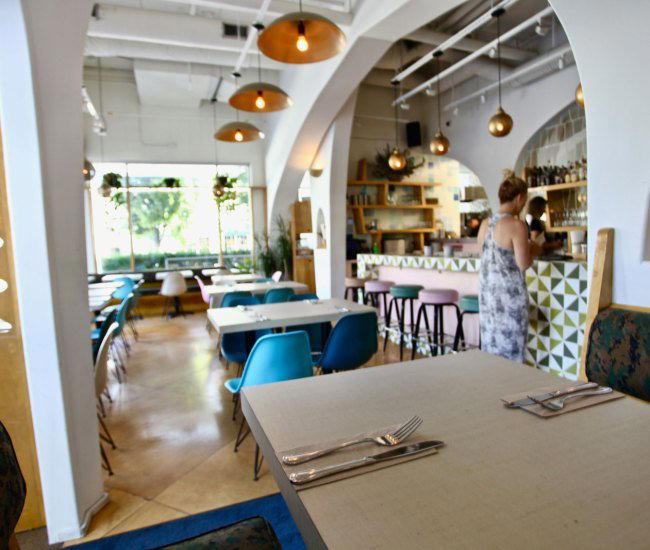
The address places it within walking distance of Stanley Park and the seawall, which means foot traffic from residents rather than destination diners. That distinction shapes everything about the physical experience of the space. Rooms like this one, scaled to serve a neighbourhood rather than draw a city-wide reservation list, tend to prioritise closeness over theatre. Tables sit near enough to each other that the ambient noise carries warmth rather than isolation, and the dimensions of the room keep the energy consistent whether the house is half full or complete.
The Physical Container: What Small Scale Delivers
In Vancouver's dining scene, the interior format of a neighbourhood room communicates its own editorial position. The city's higher-end operations have largely moved toward either open-kitchen counter formats, where the kitchen becomes the spectacle, or intimate tasting-menu rooms where architectural restraint signals seriousness. Restaurants like iDen & QuanJuDe Beijing Duck House occupy a different spatial register entirely, with banquet-scale capacity and ceremony to match. Nook's Denman Street footprint belongs to neither extreme.
What compact dining rooms at this tier tend to share across Vancouver and comparable Canadian cities is a design logic built around repetition of use rather than first-impression drama. The space needs to work on a Tuesday as well as a Friday, for a couple of regulars as well as a table of visitors who found the address through a recommendation. When that balance is achieved through physical design, the room reads as settled rather than temporary, as if the tables and walls have absorbed enough evenings to stop trying. That quality, harder to manufacture than any specific furniture or lighting choice, is what separates a neighbourhood institution from a neighbourhood opening.
For comparison across the Canadian dining circuit, the same spatial logic appears in very different formats: the rural remoteness of Eigensinn Farm in Singhampton, the converted-heritage rooms of Cafe Brio in Victoria, or the deliberately low-key setting of Restaurant Pearl Morissette in Lincoln. The physical container, in each case, makes a claim about what the dining experience prioritises. At Nook, the claim is neighbourhood reliability over occasion-dining ambition.
Position in Vancouver's Casual Dining Tier
Vancouver's restaurant scene has stratified considerably over the past decade. At the leading, a cluster of tasting-menu operations and acclaimed à la carte rooms compete for critical attention and destination diners. Below that tier sits a mid-range bracket that the city has historically undersupplied relative to cities like Toronto, where operations like Alo anchor one end of a wider spectrum, or Montreal, where Jérôme Ferrer's Europea demonstrates what sustained neighbourhood investment looks like across decades.
Nook operates in this mid-range bracket on Denman Street, where the competitive set is defined less by cuisine category and more by format and frequency of use. The restaurants that succeed at this level in Vancouver tend to build on return visits rather than first-time occasion dining. They price accessibly relative to the $$$$ tier, maintain consistency across services, and develop the kind of regulars who anchor a room on slow nights. That is a harder competitive position to hold than it sounds, because it requires kitchen discipline without the motivating pressure of critical scrutiny, and front-of-house warmth without the staffing resources of a large operation.
For readers who have experienced the destination-dining end of the Canadian spectrum, from Tanière³ in Quebec City to the remote hospitality of Fogo Island Inn Dining Room in Joe Batt's Arm, Nook represents the other necessary end: the room you return to because the experience is reliable rather than singular.
Planning Your Visit
Denman Street runs through a walkable residential neighbourhood, making Nook accessible on foot from the West End, the downtown core, and the English Bay waterfront. The walk-in culture on this strip tends to be stronger than in Vancouver's destination dining districts, where advance booking is effectively mandatory. For a full picture of where Nook sits within the broader Vancouver dining circuit, our full Vancouver restaurants guide maps the city's key neighbourhoods, price tiers, and cuisine categories. For reference on comparable casual formats elsewhere in British Columbia and the wider Canadian west, Cafe Brio in Victoria offers a useful benchmark at a similar neighbourhood-anchored scale. Further afield, Narval in Rimouski and Busters Barbeque in Kenora illustrate how Canada's mid-tier dining culture plays out across very different regional contexts. At the international level, the neighbourhood-reliability model has its highest-profile expressions in rooms like Lazy Bear in San Francisco and, at the technical extreme, Le Bernardin in New York City, though neither operates in Nook's format or price register.
How Nook Vancouver compares with similar nearby venues.
| Venue | Cuisine | Price |
|---|---|---|
| Tetsu Sushi Bar | Japanese | $$$$ |
Continue exploring
More in Vancouver
Restaurants in Vancouver
Browse all →
Bars in Vancouver
Browse all →

At a Glance
- Cozy
- Casual
- Intimate
- Casual Hangout
- Group Dining
- Brunch
- Date Night
- After Work
- Open Kitchen
- Standalone
- Natural Wine
- Local Sourcing
- Farm To Table
Current opening hours
- Monday
- 4–10 PM
- Tuesday
- 4–10 PM
- Wednesday
- 4–10 PM
- Thursday
- 4–10 PM
- Friday
- 4–11 PM
- Saturday
- 4–11 PM
- Sunday
- 4–11 PM
Hours can change for holidays and private events. Last verified .
Warm and inviting with visible kitchen, cozy bar seating, and intimate tables creating an unpretentious, welcoming atmosphere.
Know Before You Go
- Getting there
- 781 Denman St, Vancouver, BC V6G 2L6, Canada