Our verdict
This listing is retired after a June 2026 status audit found the place inactive at its stored address.
- Address
- 620 Quebec St, Vancouver, BC V6A 1X4, Canada
- Phone
- (604) 563-1700
- Directions
- Get directions
The menu
What to order
- Sugo Sauce
- Fresh pasta
- Focaccia paninis
Quebec Street and the New Shape of Vancouver's Independent Dining
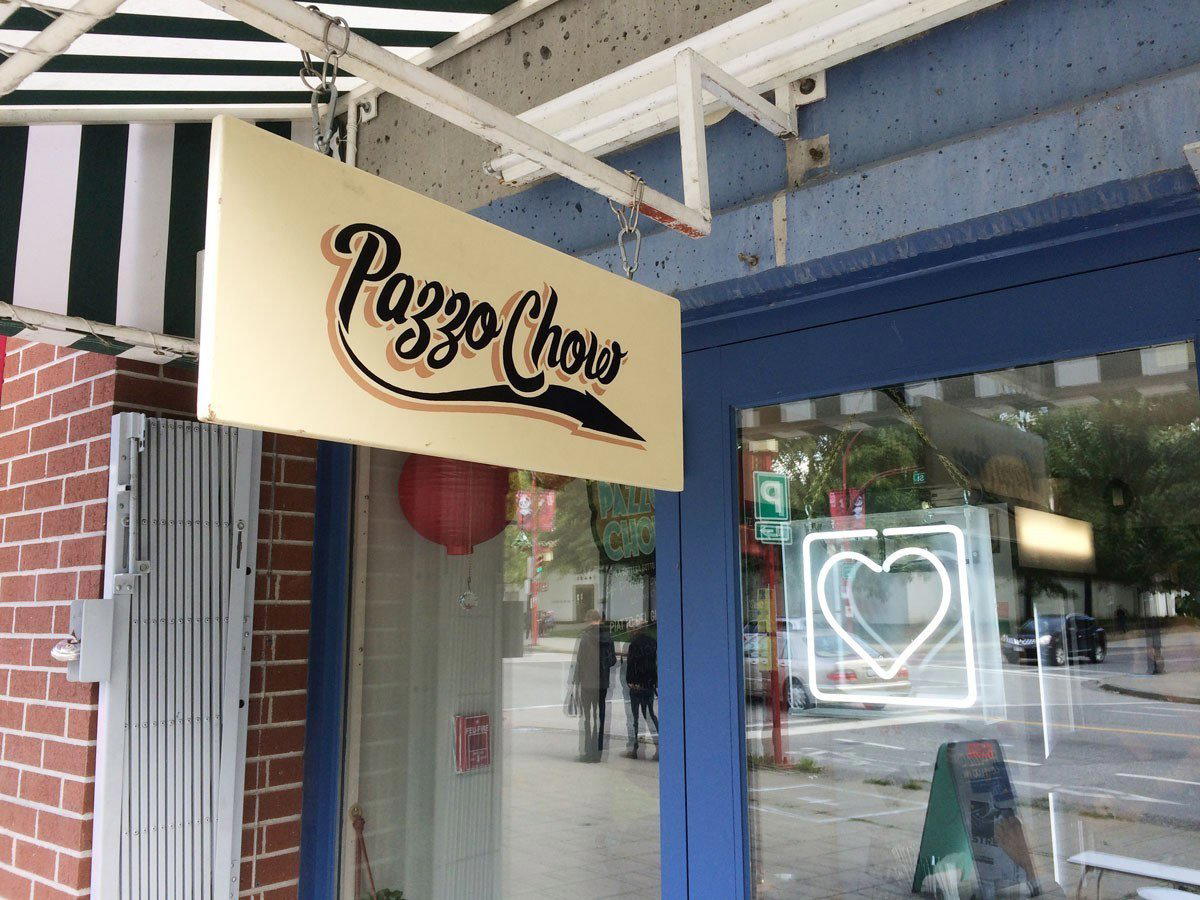
The stretch of Quebec Street running through Vancouver's False Creek Flats and into the lower Mount Pleasant corridor has changed character considerably over the past decade. What was once a light-industrial fringe has become a legible dining address, attracting independent operators who could not, or chose not to, compete for space in Gastown or on Main Street. Pazzo Chow is a casual, walk-in-friendly home-style Italian restaurant at 620 Quebec St in Vancouver. Pazzo Chow, at 620 Quebec St, belongs to that wave of venues that staked a claim in the neighbourhood before it became an obvious destination. In Vancouver, that kind of early positioning tends to accumulate goodwill faster than a well-marketed opening in a saturated corridor ever could.
The area sits close enough to the Olympic Village dining cluster to benefit from its foot traffic, while maintaining enough distance to feel like a deliberate find rather than a spillover option. That geography matters in a city where dining neighbourhoods are still forming, and where the distance between a tourist circuit and a genuine local scene can be measured in a few city blocks.
The Wine Angle: Curation as Identity
Across Vancouver's premium independent restaurant tier, the wine list has increasingly become the primary signal of a venue's seriousness. The pattern holds at AnnaLena and Barbara, both of which operate at the $$$$ price point and have built reputations partly on cellar programs that reward return visits. At Kissa Tanto, the wine selection functions as a counterpoint to the Japanese-Italian fusion menu, leaning into natural and minimal-intervention producers. At Masayoshi, the Japanese focus shapes a tighter, sake-forward list with selective wine additions.
What these programs share is intentionality. The era of the perfunctory restaurant wine list, padded with safe commercial labels and organised by colour alone, has largely passed in Vancouver's higher-end independent sector. In its place, operators are building lists that reflect a point of view: a bias toward a region, a house position on intervention levels, or a commitment to smaller allocations that require active sourcing. Pazzo Chow sits within this environment, where the wine program is read by regulars as a statement of intent, not an afterthought.
For diners who approach a wine list as one reliable indicator of how seriously a kitchen takes its own work, Quebec Street offers a useful contrast to the more heavily trafficked corridors. The cost of occupancy is lower, which means a larger share of a venue's capital can go toward cellar investment rather than rent servicing. That structural reality shows up on the lists of the better independent operators in emerging Vancouver neighbourhoods, and it shapes the kind of curation a venue can sustain over time.
Vancouver's Broader Wine and Dining Context
British Columbia's wine industry has reached a level of maturity that gives Vancouver restaurants a credible local selection to draw on. The Okanagan Valley, the Similkameen, and pockets of Vancouver Island now produce Pinot Noir, Chardonnay, Riesling, and Syrah that can hold their own against peer expressions from cooler European appellations. The leading Vancouver wine programs treat BC vintages as part of a global conversation rather than a local obligation, placing them alongside Burgundy, the Rhône, and natural producers from Slovenia or the Jura without hierarchy.
That approach to curation, which refuses to segregate local from international, is increasingly the standard at the serious end of Vancouver's independent dining scene. It reflects a broader shift in how Canadian restaurants handle domestic wine: see the cellar at Restaurant Pearl Morissette in Lincoln, Ontario, where the estate's own Niagara production sits alongside serious European selections, or the program at Tanière³ in Quebec City, which treats regional Quebec producers as credible partners in a fine-dining context. The same logic applies to venues like Alo in Toronto, where the wine list has long been considered a separate attraction from the tasting menu.
In Vancouver, that standard is spreading beyond the obvious flagship addresses. Neighbourhood venues are increasingly hiring staff who can speak to the list with precision, and who can match a glass to a course rather than simply describing a grape variety. The sommelier, or the floor manager who doubles as wine lead, has become a meaningful differentiator in the mid-to-upper tier of the city's independent scene.
The Neighbourhood and the Decision to Dine Here
Choosing a restaurant on Quebec Street rather than a more established address involves a trade-off that many Vancouver diners are increasingly comfortable making. The room may not have the design pedigree of a Gastown conversion or the visibility of a Broadway corridor opening, but the food-to-context ratio at venues in this part of the city often tilts favourably. Independent operators with lower overhead tend to take more risk on the plate and in the glass, which is where the interest tends to concentrate for a certain kind of diner.
The False Creek waterfront is a short walk west, and the area connects easily to transit along Main and Cambie. Visitors using the city as a base for broader BC exploration, particularly those heading to the Okanagan or Vancouver Island, will find the neighbourhood convenient enough to the central business district without requiring a commitment to the hotel-adjacent dining circuits. For context on how Quebec Street compares to other Vancouver dining addresses,
Those building a broader Canada dining itinerary might also consider Cafe Brio in Victoria as a natural complement to a Vancouver visit, given the ferry crossing and Victoria's own strong independent restaurant scene. Further afield, Eigensinn Farm in Singhampton and Fogo Island Inn Dining Room in Joe Batt's Arm represent the kind of destination dining that Canada has developed a reputation for producing, and both reward the same appetite for intentional, producer-led hospitality that defines the better end of Vancouver's independent scene. Diners interested in the international reference points for this style of wine-forward, independent-operator dining might look to Le Bernardin in New York City or Lazy Bear in San Francisco for comparison. Within Vancouver, iDen & QuanJuDe Beijing Duck House offers a contrasting model, where the format is built around a specific culinary tradition rather than a curated wine identity.
Planning Your Visit
Pazzo Chow's address at 620 Quebec St places it within the False Creek Flats corridor, accessible from downtown Vancouver by bike, transit, or a short drive with parking available in the surrounding blocks. Given the venue's position within a neighbourhood where independent operators tend to attract regulars quickly, arriving as a walk-in is the sensible approach. For visitors arriving from outside the city,
Frequently asked questions
Where is Pazzo Chow in Vancouver?
Pazzo Chow is located at 620 Quebec St, Vancouver, BC V6A 1X4, Canada.
Is Pazzo Chow a good option for wine-focused dining in Vancouver's False Creek area?
Pazzo Chow's position on Quebec Street places it within a cluster of independent Vancouver restaurants where wine curation has become a key differentiator from larger downtown venues. British Columbia's Okanagan Valley gives restaurants in this tier credible local selections to draw on alongside international lists.
What's the signature dish at Pazzo Chow?
Pazzo Chow serves home-style Italian food at 620 Quebec St in Vancouver. Signature dishes are not listed in the record.
Do they take walk-ins at Pazzo Chow?
Pazzo Chow is walk-in friendly.
Comparable Venues
Comparable venues nearby, for context on price, style, and recognition.
| Venue | Cuisine | Price | Notes |
|---|---|---|---|
| Pazzo ChowThis venue — the venue you are viewing | Italian | Not listed | Not listed |
| Sopra Sotto Pizzeria | Authentic Italian Pizza and Pasta | $20–30 | Commercial |
| Giovane Caffè | Modern Italian Caffè | $20–30 | Coal Harbor |
| Osteria al Centro | Authentic Italian Osteria | $30–50 | Renfrew-Collingwood |
| Arriva Ristorante | Authentic Italian Trattoria | $30–50 | Commercial |
| The Parlour | Modern Italian Pizza & Comfort Cuisine | $30–50 | Downtown |