
Tabelog 100 #55
Our verdict
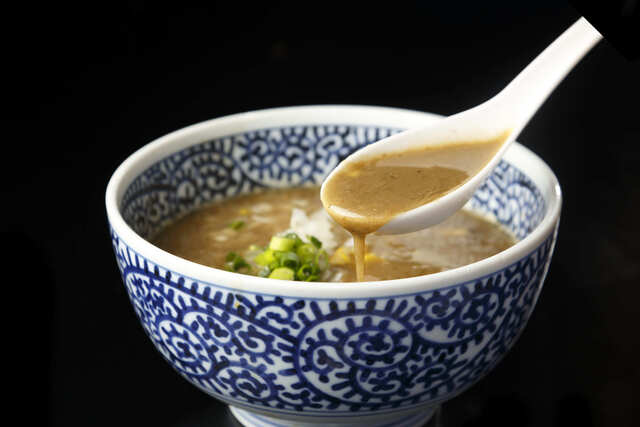
Niboshi Tsukemen Miyamoto brings Tokyo’s niboshi ramen culture into a compact Kamata counter built for concentration rather than ceremony. The draw is the physical economy of the place: 9 counter seats, tsukemen and ramen formats, and Tabelog Ramen TOKYO 100 recognition running through the recent 2025 selection.

Pearl is the En Primeur Club membership app, where members save venues, book tables and use the concierge.
The menu
What to order
- Niboshi tsukemen
- Tokusei tsukemen
- Niboshi ramen
Tokyo’s noodle culture has a different rhythm from luxury counters or hotel dining rooms. The meal is direct, the choices are focused, and the architecture of attention is often built around the bowl rather than the room. At Niboshi Tsukemen Miyamoto, the confirmed frame is concise: a Tokyo venue listed for tsukemen and ramen, with recognition that places it within the city’s serious noodle conversation. The appeal is not dependent on lounge-like prelude or theatrical dining-room choreography. Tokyo ramen at this level often depends on concentration. The design of the experience is less decorative than practical.
That matters because tsukemen and ramen reward focus. Dipping noodles can sharpen the contrast between noodles and soup, while ramen keeps the bowl unified and immediate. In a larger dining context, the format can feel casual to the point of anonymity. In Tokyo’s noodle world, the sequence is legible: choose, eat, assess the balance, and move on. The format’s limits are part of the cuisine’s grammar.
A compact Tokyo counter built around concentration
Tokyo’s ramen culture splits into many micro-scenes: destination noodle shops, specialists built around concentrated soup, and tsukemen venues built for deliberate noodle texture. Niboshi Tsukemen Miyamoto fits that world because its listed categories keep the meal close to the city’s everyday ramen tradition while its recognition places it above the ordinary commuter bowl.
The Tabelog Hyakumeiten recognition in 2025 is the clearest external signal here, alongside a listed Tabelog score of 3.78. In Tokyo ramen and tsukemen, that kind of listing has different meaning from a single viral queue. It suggests visibility in a category where fashion moves quickly and where new openings can dominate attention for a season before the city moves on.
The venue also tells diners what not to overread. This is not the counter economy of longer-form dining, nor the broader visual conceit of a casual café. The logic belongs to ramen’s faster, tighter code: the bowl is the focal point, and the meal is judged by soup, noodle handling and pace rather than décor.
Tsukemen, ramen and the Tokyo appetite for controlled intensity
Niboshi Tsukemen Miyamoto is listed in the categories of tsukemen, or dipping noodles, and ramen. That pairing matters because it gives the venue room to express concentration in different ways rather than forcing every guest into a single bowl logic. Tsukemen separates noodles from the dipping soup; ramen keeps everything in one vessel. Both formats depend on timing, temperature and balance.
Tsukemen is especially revealing because the format slows the diner down without turning the meal into fine dining. Noodles are dipped rather than submerged, so texture and temperature carry more responsibility. The act of eating reinforces that attention. In a city where high-end dining often equates with privacy, ramen reverses the equation: the more serious the bowl, the more direct and compact the experience can become.
That compactness is a useful contrast with other Tokyo categories. Sushi counters and yakitori counters use proximity differently, with pacing and sequence shaped around courses. Casual specialist rooms lean into another kind of urban repetition: regulars, comfort, speed. Ramen sits between those worlds. It can be technically exacting, but its social contract remains short and democratic.
How to read this room against Tokyo's wider dining map
The right comparison is not with luxury restaurants, even when the recognition is strong. Tokyo has restaurants where scarcity is created by long reservation books, chef-led menus and high fixed prices. Ramen scarcity works differently. Capacity, turnover and the focused nature of the format shape the experience. A noodle stop can feel more intense than a larger acclaimed restaurant because the whole proposition is compressed into a short meal.
For travelers building a Tokyo eating itinerary, this is the kind of stop that gives the city texture beyond major tasting menus. A day can move from ramen to other Tokyo dining without pretending those meals belong to the same category. EP Club’s broader city coverage is useful for that kind of calibration: Our full Tokyo restaurants guide maps the dining spread, while Our full Tokyo bars guide, Our full Tokyo hotels guide, Our full Tokyo wineries guide and Our full Tokyo experiences guide place the meal inside the wider trip rather than treating ramen as a standalone trophy.
The national context is also useful. Japan’s casual-specialist dining is not limited to Tokyo: narrow formats across the country show how focused cooking can carry serious local identity. Some rooms build around noodles, others around café culture, curry, seafood, grills or contemporary cooking. Even outside Japan, the same logic appears in focused Japanese-leaning rooms. The point is not breadth for its own sake, but the way a narrow format can become a complete experience.
Niboshi Tsukemen Miyamoto is strongest as a study in focus. Its appeal is not ceremony, luxury or narrative polish. It is the discipline of a specific noodle vocabulary, a Tokyo ramen identity, and a reputation supported by Tabelog Hyakumeiten recognition in 2025. In a city crowded with high-production dining experiences, that kind of venue makes a sharper point: sometimes the narrow format is the critical argument.
Frequently asked questions
What part of town is Niboshi Tsukemen Miyamoto in?
Tokyo.
What's the pricing like at Niboshi Tsukemen Miyamoto?
Pricing at Niboshi Tsukemen Miyamoto is listed as JPY 1,000 - JPY 1,999 JPY 1,000 - JPY 1,999.
What days is Niboshi Tsukemen Miyamoto closed?
Specific closing days are not provided in the available venue facts for Niboshi Tsukemen Miyamoto.
What is Niboshi Tsukemen Miyamoto known for?
Niboshi Tsukemen Miyamoto is known for tsukemen, or dipping noodles, and ramen in Tokyo.
City Peers
Comparable options at the same price tier.
| Venue | Cuisine | Price | Awards | Notes |
|---|---|---|---|---|
| Niboshi Tsukemen MiyamotoThis venue (the venue you are viewing) | Niboshi-focused Tsukemen & Ramen | $10–20 | Tabelog 100 #55 | Not listed |
| Hatsunezushi | Edomae Sushi Omakase | $50–100 | Tabelog Bronze #103 | Sushi |
| Namake | Casual Japanese izakaya standing bar | $10–20 | Tabelog 100 #55 | JPY 3,000 - JPY 3,999 |
| CIVITAS | Japanese kissaten cafe & pancakes | $10–20 | Tabelog 100 | JPY 999 JPY 1,000 - JPY 1,999 View spending breakdown |
| Mi Rei | Casual Vietnamese restaurant | $30–50 | Tabelog 100 #95 | JPY 3,000 - JPY 3,999 |
Recognition history
Dated appearances from independent guides and award organizations, with the underlying list record or original source where available.
Tabelog 100 #55 · No. 55
Tabelog · Tabelog 100 - Ramen - TOKYO - 2025
Continue exploring
More in Tokyo
Restaurants in Tokyo
All restaurants in Tokyo →

Bars in Tokyo
All bars in Tokyo →


Details
- Lively
- Cozy
- Well Known
- Energetic
- Solo
- Casual Hangout
- After Work
- Chefs Counter
- Standalone
- Street Scene
- A La Carte
- Counter Dining
Current opening hours
- Monday
- 11 AM–3 PM, 5:30–9 PM
- Tuesday
- 11 AM–3 PM, 5:30–9 PM
- Wednesday
- 11 AM–3 PM, 5:30–9 PM
- Thursday
- 11 AM–3 PM, 5:30–9 PM
- Friday
- 11 AM–3 PM, 5:30–9 PM
- Saturday
- 11 AM–3 PM, 5:30–9 PM
- Sunday
- Closed
Hours can change for holidays and private events. Hours as of .
A compact, cozy neighborhood ramen shop near Kamata Station with a strong niboshi aroma that drifts into the street, counter-focused seating, and a busy, energetic atmosphere driven by a steady flow of ramen enthusiasts.