

Tabelog Bronze #103
Our verdict
An eight-seat omakase counter in Nishikamata, Ota City, Hatsunezushi holds a Tabelog score of 4.26 and consecutive Silver and Bronze Tabelog Awards dating to 2017, alongside three selections for the Sushi Tokyo Tabelog 100. Chef Katsu Nakaji runs the fifth-generation course at dinner prices of roughly JPY 8,000–14,999, placing it in the mid-upper tier of Tokyo sushi, serious recognition at a fraction of the city-centre premium.

Pearl is the En Primeur Club membership app, where members save venues, book tables and use the concierge.
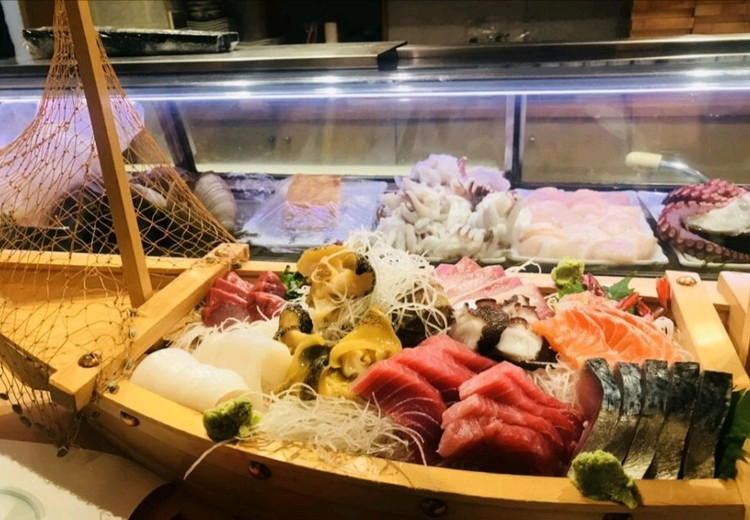
A Counter in the Commuter Belt
Tokyo's most discussed omakase counters tend to cluster in Ginza, Nihonbashi, and Minami-Aoyama, where rents set a floor on pricing and foot traffic from overseas diners sustains year-round demand. The further you move from that corridor, the more the economics shift: neighbourhood clientele, lower overhead, and a format oriented toward regulars rather than first-time visitors from abroad. Nishikamata, a residential pocket of Ota City roughly five minutes' walk from the west exit of JR Kamata Station, sits squarely in that second category. It is not a dining destination in the way Ginza is, which is precisely why a counter like Hatsunezushi, eight seats, reservation-only, no cash, carries a different kind of weight when it surfaces consistently in the same ranked lists as venues charging two to three times the price.
Tabelog, Japan's most data-dense restaurant review platform, has recognised Hatsunezushi with consecutive awards every year from 2017 through 2026: Silver from 2017 to 2021, Bronze from 2022 onward. The venue holds a current score of 4.26, placing it at rank 103 in the 2026 Tabelog Awards overall. It has been selected for the Sushi Tokyo Tabelog 100 in 2021, 2022, and 2025. For context, the Tabelog 100 draws from tens of thousands of listed restaurants across the city; reaching it three times over five years, from a residential address outside the central dining belt, signals a level of consistency that most counters in better-trafficked postcodes do not achieve. The Opinionated About Dining guide, which tracks critical consensus across multiple sources, ranked Hatsunezushi at #138 in Japan in 2023, #152 in 2024, and #165 in 2025, a slight softening in position but persistent presence in the upper tier of a country with more high-performing sushi counters per capita than anywhere else on earth.
The Eight-Seat Room and What It Demands
Counter omakase at this scale is a specific theatrical form. Eight seats arranged in a line or shallow curve mean that every guest is within clear sightline of the preparation surface. There is no kitchen remove, no pass, no expediting team. The chef works directly in front of the room, and the pace of the meal is set by their hands rather than by a back-of-house brigade. This format concentrates attention in a way that larger rooms cannot replicate: the compression of rice, the angle of a knife cut, the moment a piece is set down, all of it happens at close range.
Hatsunezushi runs this format under Chef Katsu Nakaji, who offers what the venue describes as the "Fifth Generation" omakase course at both lunch and dinner. The title implies a lineage, a claim of craft passed through multiple generations, though the specific genealogy is not detailed in public records. What the award history confirms is sustained peer recognition over nearly a decade. Counters that hold Tabelog Silver for five consecutive years and then maintain Bronze while also appearing in the Tokyo 100 shortlist are not doing so on a single strong vintage; they are being measured across thousands of individual visits by a reviewer base that skews toward experienced, repeat diners in Japan rather than international tourists.
For comparison, several of Tokyo's most decorated sushi addresses, Harutaka, Sukiyabashi Jiro Roppongiten, and Sushi Kanesaka, operate in central locations at price points that can reach JPY 30,000–50,000 or beyond per person at dinner. Hatsunezushi's listed dinner budget of JPY 8,000–9,999 per person (with reviewer-reported actuals trending toward JPY 10,000–14,999) positions it well below that bracket while competing for the same critical attention. That gap matters for how you plan a Tokyo sushi itinerary: it is not the same category of experience as a three-Michelin-star counter in Ginza, but it is a recognised, awarded counter with a documented track record, at a price that leaves room in the budget for other meals.
The Geography of Getting Here
Kamata has a dual identity: it is one of the busier commuter interchange stations on the JR Keihin-Tohoku line, and it sits close enough to Haneda Airport that travellers transiting between the international terminal and central Tokyo pass through or near it. That proximity to Haneda is practically useful, Hatsunezushi opens at 5 pm, which means an early evening arrival into Haneda followed by a direct connection to Kamata Station (roughly 15–20 minutes by rail) makes the counter accessible on a first or last night without requiring a trip back into Shinjuku or Shibuya. This is the kind of geographic efficiency that rarely surfaces in edited Tokyo dining guides, which tend to anchor itineraries around the Yamanote Line inner loop.
The address is 5-chome-20-2 Nishikamata, Ota City, approximately 363 metres from Kamata Station's west exit, or five minutes on foot. There is no parking and the venue operates within what Tabelog classifies as a "house restaurant" or "hideout" format, a residential-feeling space rather than a commercial shopfront, common among smaller omakase operations that prioritise intimacy over visibility.
Booking, Format, and What to Expect
Hatsunezushi operates Tuesday through Saturday for dinner (5–11 pm), closing Wednesday and Sunday. Reservations are online-only and the venue explicitly does not accept cash; payment is by credit card (Visa, Mastercard, JCB, Amex, Diners, UnionPay), IC transport cards, QUICPay, or QR-code services including PayPay. Groups of six or more can reserve the full counter for private use. The venue does not offer private rooms, and the no-smoking rule extends to stepping outside during the session, a policy that keeps the meal uninterrupted and the room free of residual odour.
Two course formats run in parallel: the "Fifth Generation" omakase and the "Nakaji Katsu Course," the latter listed as not fixed in terms of schedule. Check the reservation site for current availability on both. The venue notes that only guests who can eat a full portion are accommodated, standard for omakase, where the course is designed as a single, calibrated sequence rather than a menu from which items can be dropped.
Drink service covers sake (nihonshu) and shochu. The dress code specifies no shorts or sandals, consistent with the general expectation at awarded omakase counters across Tokyo, where the physical intimacy of counter seating makes dress more visible than it would be in a dining room.
Where Hatsunezushi Sits in the Tokyo Sushi Picture
Tokyo's sushi scene has always had vertical range, from standing bars charging JPY 150 per piece to Ginza counters where the omakase runs past JPY 50,000. What has shifted over the past decade is the formalisation of mid-upper tier counters in non-central locations: venues that bring the discipline and sourcing standards of high-end omakase to neighbourhoods where the clientele is predominantly local and the economics allow pricing that central venues cannot match. Hatsunezushi belongs to this cohort, which also includes counters in areas like Sangenjaya, Jiyugaoka, and Musashi-Koyama, residential addresses with awarded restaurants that rarely appear in international travel coverage.
For visitors building a multi-counter itinerary, the comparison set is instructive. Edomae Sushi Hanabusa and Hiroo Ishizaka represent the kind of recognised mid-tier counters that serious diners cross-reference with Hatsunezushi when planning sequences across different price points and neighbourhoods. Outside Tokyo, the same critical framework applies to counters that earn regional recognition without central-city positioning, see Goh in Fukuoka or the sushi-focused side of 1000 in Yokohama for how that dynamic plays out in other Japanese cities. For sushi in other Asian capitals, Sushi Shikon in Hong Kong and Shoukouwa in Singapore offer useful reference points on how the Tokyo counter format exports and what premium sushi costs outside Japan.
Japan's broader fine dining picture runs well beyond sushi. HAJIME in Osaka, Gion Sasaki in Kyoto, and akordu in Nara each represent the regional depth available to anyone treating a Japan trip as a serious eating itinerary rather than a single-city visit. 6 in Okinawa extends that map further south. For a complete framework of where to eat, drink, and stay in Tokyo, our full Tokyo restaurants guide, Tokyo hotels guide, Tokyo bars guide, Tokyo wineries guide, and Tokyo experiences guide cover the full range.
Planning Details
Reservations: Online only; no walk-ins accepted. Payment: Cashless, credit cards, IC cards, QUICPay, QR payment services. Budget: JPY 8,000–9,999 listed; reviewer actuals skew JPY 10,000–14,999 at dinner. Hours: Monday, Tuesday, Thursday, Friday, Saturday, 5–11 pm; closed Wednesday and Sunday. Getting there: Five-minute walk from JR Kamata Station West Exit; no parking on site. Dress: No shorts or sandals. Capacity: Eight seats; private buy-out available for groups of six or more. Drink: Sake and shochu. Note: Unrelated to the Hatsune Sushi main store in Okachimachi, Taito Ward.
What Should I Order at Hatsunezushi?
Hatsunezushi operates as a counter omakase, which means the course is set by the chef, there is no à la carte selection. Both available formats, the "Fifth Generation" omakase and the "Nakaji Katsu Course," follow a pre-determined sequence tied to the day's sourcing. The venue describes its approach as "particular about fish," a phrase that in the context of Tokyo omakase signals attention to supplier relationships and seasonal availability rather than a fixed repertoire. The practical implication is that what arrives in front of you will reflect what was available at market that morning, which is the correct expectation to bring to any serious sushi counter. Drink pairings are sake or shochu; the counter does not list wine service. Given the price point and the Tabelog 100 recognition across multiple years, the course rewards guests who eat without restriction and engage with the format on its own terms.
Frequently asked questions
What part of town is Hatsunezushi in?
Hatsunezushi is located at 5 Chome-20-2 Nishikamata, Ota City, Tokyo 144-0051, Japan, Tokyo.
Who is the chef at Hatsunezushi?
The chef associated with Hatsunezushi is Katsu Nakaji.
City Peers
| Venue | Cuisine | Price | Awards | Notes |
|---|---|---|---|---|
| HatsunezushiThis venue (the venue you are viewing) | Edomae Sushi Omakase | $50–100 | Tabelog Bronze #103 | Not listed |
| Harutaka | Edo-Style Omakase Sushi | $200–300 | 3 Michelin Stars · World's 50 Best #76 | Sushi |
| RyuGin | Modern Kaiseki | $500+ | 3 Michelin Stars · World's 50 Best #41 | Kaiseki, Japanese |
| L'Effervescence | Modern French with Japanese Influences | $200–300 | 3 Michelin Stars · World's 50 Best #69 | French |
| HOMMAGE | Modern French with Japanese Influences | $150–200 | 2 Michelin Stars · World's 50 Best #78 | Innovtive French, French |
| MAZ | Innovative Peruvian-Japanese Fusion | $150–200 | 2 Michelin Stars · World's 50 Best #28 | Innovative |
Recognition history
Dated appearances from independent guides and award organizations, with the underlying list record or original source where available.
Opinionated About Dining Top Restaurants in Japan Highly Recommended
Opinionated About Dining
Tabelog Bronze #103
Tabelog
Full recognition history (7 entries)
Opinionated About Dining Top Restaurants in Japan Ranked #165
Opinionated About Dining
Tabelog Bronze
Tabelog
Tabelog 100 #15 · No. 15
Tabelog · Tabelog 100 - Sushi - TOKYO - 2025
Opinionated About Dining Top Restaurants in Japan Ranked #152
Opinionated About Dining
Opinionated About Dining Top Restaurants in Japan Ranked #138
Opinionated About Dining
Continue exploring
More in Tokyo
Restaurants in Tokyo
All restaurants in Tokyo →


Bars in Tokyo
All bars in Tokyo →


Details
- Intimate
- Elegant
- Energetic
- Special Occasion
- Date Night
- Chefs Counter
- Sake Program
- Omakase
- Counter Dining
- Sake
Current opening hours
- Monday
- 12–10 PM
- Tuesday
- 12–10 PM
- Wednesday
- Closed
- Thursday
- 12–10 PM
- Friday
- 12–10 PM
- Saturday
- 12–10 PM
- Sunday
- Closed
Hours can change for holidays and private events. Hours as of .
Cozy, intimate counter seating with warm hospitality and energetic interaction from the chef.