
A 14-seat yakitori counter in Nezu with Tabelog 100 Yakitori EAST selections from 2022 through 2025, Nezu Yakitori Terusumi belongs to Tokyo’s serious small-room chicken-grilling tier rather than the casual skewer-and-beer circuit. The appeal is format discipline: counter seats, course-led pacing, sake and wine in the orbit, and a regulars’ rhythm that rewards diners who understand yakitori as a full dinner, not a snack.
Pearl is the En Primeur Club membership app — saves, bookings, and concierge access live there. Same editors, same standards.
- Address
- Japan, 〒113-0031 Tokyo, Bunkyo City, 文京区Nezu, 1 Chome−1−21 ゼネラル根津
- Phone
- +81 3-5834-8891
- Website
- facebook.com
 Saves & bookings on Pearl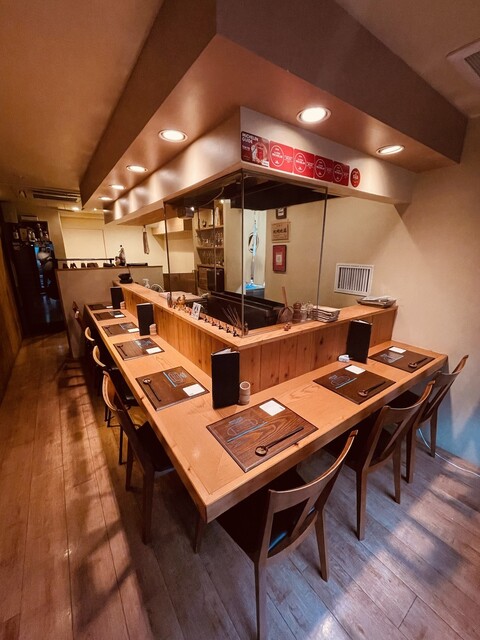
Nezu after dark has a different tempo from Ginza or Roppongi. The streets around the station are residential, older, and quieter, with Ueno’s museum quarter close enough to shape the evening but not enough to turn the area into a late-night dining strip. In that setting, yakitori reads less like spectacle and more like ritual: a narrow room, smoke management, counter focus, and a sequence of chicken parts that depends on heat control rather than decorative plating.
Tokyo’s serious yakitori scene has spent the past decade moving further from izakaya shorthand. At the stronger end, the genre now competes with sushi counters and tempura rooms for diners who care about pacing, sourcing, and the order in which fat, salt, smoke, and bitterness arrive. Nezu Yakitori Terusumi sits in that bracket. Its Tabelog 100 Yakitori EAST selections from 2022, 2023, 2024, and 2025 put it inside a narrow, repeat-recognized group, while its small seating count keeps the experience closer to a counter dinner than a neighborhood canteen.
Yakitori in Nezu is a regulars' language, not a skewer checklist
The regulars’ perspective matters here because yakitori is not read dish by dish in the same way as a tasting menu. The unwritten menu is sequence, restraint, and trust: lean cuts before richer ones, offal handled with enough confidence to avoid apology, vegetables or supporting plates used for calibration rather than decoration. The better Tokyo counters are built around that grammar. Diners return not because every item is new, but because the house has a recognizable cadence.
That cadence is especially useful in Nezu, where the surrounding dining map is smaller and more local than the city’s central luxury corridors. Nearby comparison points show the neighborhood’s range: Soba Kokoro and Teuchi Soba Nezu Takajo sit in a lower-price soba lane, Nezu Kamachiku occupies a udon-and-sake register, while Tempura Fukutarou reaches a higher dinner spend. Against that field, a serious yakitori room has a clear function. It gives the area a charcoal-driven dinner format with enough ceremony for a planned night, without needing the formality of kaiseki or the international polish of hotel dining.
The category itself rewards repeat visits. Yakitori’s pleasure comes from narrow variables: how skin is rendered, how thigh and breast are placed in a sequence, how liver or gizzard is timed, how salt is used against smoke, how sake, shochu, or wine resets the palate. Specific dishes change from counter to counter, but the diner’s question is consistent: does the room have the patience to let chicken remain the subject? A place recognized repeatedly by Tabelog in the yakitori category is operating in a field where small deviations are noticed.
A small-room format with serious Tokyo positioning
Small capacity changes the social contract. At 14 seats, with counter seating as part of the format, the room cannot absorb the looseness of a large izakaya. Timing, cancellations, fragrance, and group behavior matter more because the experience is shared at close range. This is why Tokyo’s stronger counter restaurants often feel governed by unwritten rules even when they are not severe. The point is not stiffness; it is protecting the rhythm of the grill.
For travelers, the useful comparison is not between yakitori and casual grilled chicken elsewhere. The better comparison is with Tokyo’s other precision-counter traditions. Sushi counters foreground rice temperature, vinegar, fish aging, and hand speed. Tempura rooms foreground batter, oil, and timing. Yakitori foregrounds charcoal, fat, tendon, and the full anatomical range of the bird. The price tier here places it above everyday neighborhood dining and below the city’s highest ceremony-led counters, which makes it compelling for diners who want technical craft without turning dinner into a trophy exercise.
The drinks signal also matters. Sake and shochu are natural companions, but wine has become increasingly relevant at serious yakitori counters because smoke, salt, and poultry fat can work across acidity, texture, and mineral profiles. That does not turn yakitori into a wine-bar format. It does show how Tokyo’s grill counters have absorbed broader dining expectations while keeping the skewer sequence central.
How to frame the night in Tokyo's wider dining map
Nezu Yakitori Terusumi is not the right lens for a maximalist Tokyo night. It suits diners who understand that a small counter can be the whole evening: arrival, sequence, drinks, exit. The room’s repeated Tabelog 100 recognition is the trust signal; the reason to choose it is the combination of neighborhood calm and serious yakitori structure. In a city where chicken can be casual, ceremonial, or chef-led in the span of a few train stops, this address belongs to the disciplined middle-high tier: focused, intimate, and best appreciated by diners who already know that yakitori is one of Tokyo’s major counter cuisines.
Readers mapping a broader Tokyo dining itinerary can pair this with other EP Club coverage rather than treating one dinner as the entire city. For more restaurants, see Our full Tokyo restaurants guide, alongside category planning through Our full Tokyo hotels guide, Our full Tokyo bars guide, Our full Tokyo wineries guide, and Our full Tokyo experiences guide. Nearby and citywide restaurant references include. 鮪と炭火焼き うお炭 秋葉原店, 12/10 Shinjuku ten, 124. KAGURAZAKA (Yakitori), 2D Cafe, and 3 Chome no Curry Ya San. For Japan and overseas context, compare -Grilled beef Sukiyaki- KAMAKURA TANUKIAN 鎌倉 たぬき庵 in Kamakura.cafe in Osaka.know in Kumamoto, (Shoku) Vietnam in Kawasaki, [Curry Senmon Ten] Maruyama Kyoju. in Sapporo, [ki:] in Kyoto, Jōdo Saké Bar in Los Angeles, and Onigiri Time in Pasadena.
A Credentials Check
Comparable options at the same price tier.
| Venue | Cuisine | Price | Notes |
|---|---|---|---|
| Nezu Yakitori TerusumiThis venue — the venue you are viewing | Yakitori Omakase | $$$ | Not listed |
| Manten Sushi (まんてん鮨) | Edomae Omakase Sushi | $$$ | Marunouchi |
| Akagi | Traditional Japanese Izakaya with Aged Eel | $$$ | Taitō |
| Tachinomi Asakusa Sharemon | Japanese Izakaya / Standing Bar | $$$ | Taitō |
| 新ばし 笹田 | Traditional Kappo Japanese | $$$ | Minato |
| Tempura Osaka | Seasonal Tempura Omakase | $$$ | Minato |
Recognition history
Dated appearances from independent guides and award organizations, with the underlying list record or original source where available.
Tabelog 100 #50 · No. 50
Tabelog · Tabelog 100 - Yakitori - EAST - 2025







At a Glance
- Intimate
- Cozy
- Lively
- Date Night
- Solo
- Group Dining
- Casual Hangout
- Late Night
- After Work
- Chefs Counter
- Open Kitchen
- Standalone
- Sake Program
- Beer Program
Current opening hours
- Monday
- 6–11 PM
- Tuesday
- 6–11 PM
- Wednesday
- Closed
- Thursday
- Closed
- Friday
- 6–11 PM
- Saturday
- 6–11 PM
- Sunday
- 6–11 PM
Hours can change for holidays and private events. Last verified .
A small, warm counter with close-up views of the grill, softly lit and slightly smoky from binchotan charcoal, creating an intimate but lively atmosphere where guests interact closely with the chef over a leisurely omakase course.