Our verdict
Naxi Jing Cai Fang brings the culinary traditions of Yunnan's Naxi ethnic minority to Kunming's dining scene, with a focus on ingredients sourced from the high-altitude valleys and mountain ecosystems of northwest Yunnan. The kitchen draws on a distinct regional pantry, wild mushrooms, cured meats, and heritage grains, that separates Naxi cooking from the broader Yunnanese canon. For travelers moving through Kunming, this is a focused entry point into one of China's least-documented ethnic food traditions.

Pearl is the En Primeur Club membership app, where members save venues, book tables and use the concierge.
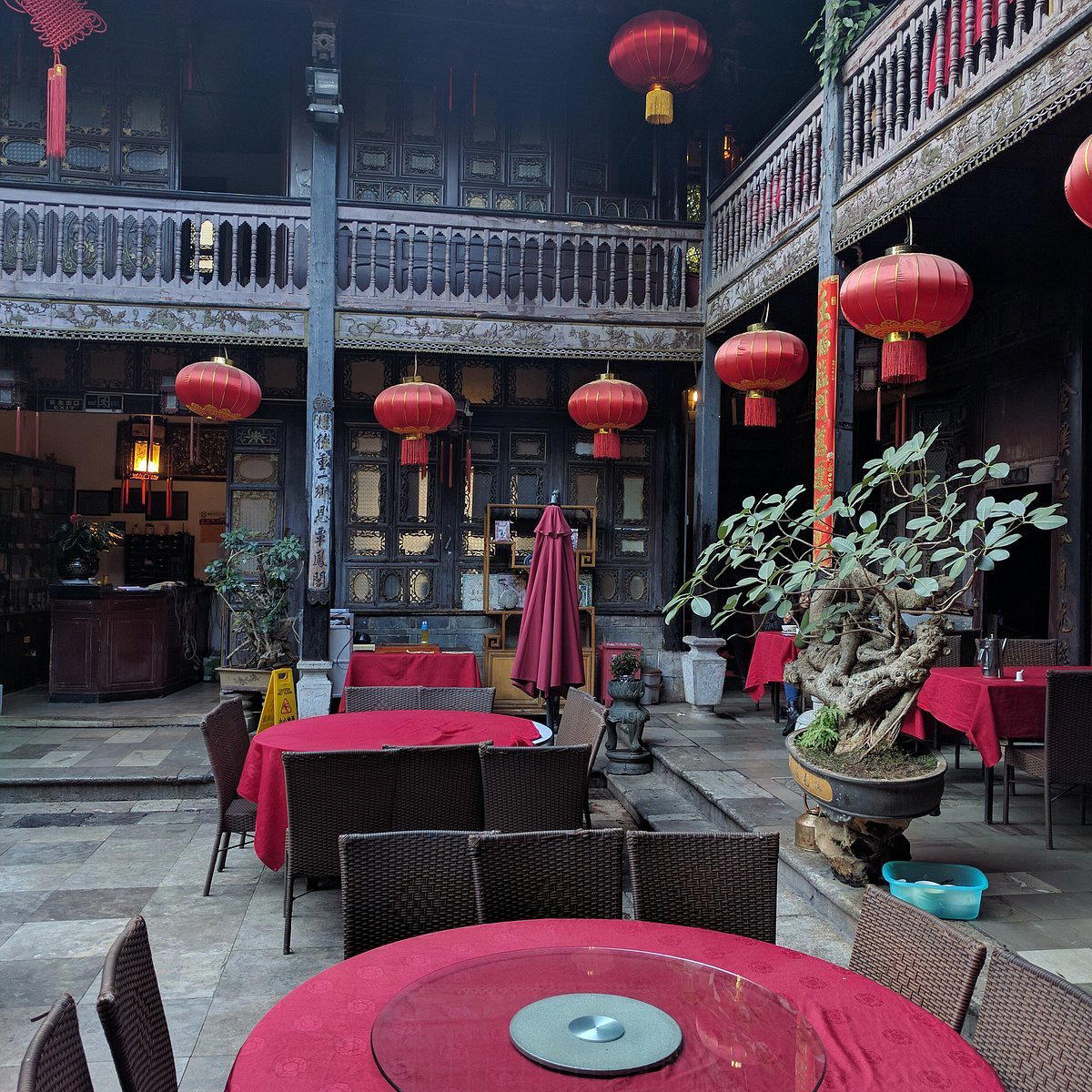
Southwest China's ethnic minority cuisines occupy a complicated position in the country's food culture: celebrated in tourism literature, rarely examined with any rigor. Yunnan province alone is home to 25 of China's 55 officially recognized ethnic minorities, each with distinct agricultural practices and food traditions shaped by altitude, trade routes, and centuries of relative geographic isolation. The Naxi people, concentrated primarily around Lijiang and the Jade Dragon Snow Mountain range in northwest Yunnan, represent one of the more distinctive of these traditions, a cuisine built around high-altitude foraging, cured preservation techniques, and a pantry that has almost no overlap with the lowland Han cooking most international visitors associate with Chinese food. Naxi Jing Cai Fang, operating in Kunming, brings this tradition into Yunnan's provincial capital.
The Naxi Pantry and Why It Matters
Understanding Naxi cooking requires understanding the geography that produced it. The Naxi heartland sits at elevations between 2,400 and 3,200 meters, where the growing season is short, the soil is particular, and the surrounding forests yield ingredients that don't appear anywhere else in the Chinese culinary system. Wild mushrooms, including varieties that have no formal common-name translation, emerge seasonally from pine and oak forest floors. Mountain herbs, foraged greens, and specific highland grains form the structural base of the diet. Preservation by smoking and air-curing, a practical response to cold winters and limited refrigeration, produces cured pork and dried ingredients with flavor profiles that bear more resemblance to Tibetan or Himalayan food traditions than to anything from coastal or central China.
This sourcing geography is the editorial story at a restaurant like Naxi Jing Cai Fang. When a kitchen commits to Naxi cuisine in Kunming, a city with direct access to lowland Yunnanese ingredients and mass-market supply chains, it is making a deliberate choice to draw from a more remote and seasonal pantry. That choice has logistical consequences: some ingredients arrive dried or cured rather than fresh, some are available only for weeks out of the year, and the flavor register of the resulting dishes is earthier, more austere, and less immediately accessible to palates calibrated on Cantonese or Sichuan cooking.
Across China's fine dining and ethnic minority restaurant categories, a small number of kitchens have begun treating this sourcing specificity as a credential rather than a constraint. Venues like Xin Rong Ji (Xinyuan South Road) in Beijing and 102 House in Shanghai have demonstrated that regional Chinese traditions, rigorously sourced, can hold their own in China's most demanding dining markets. The same argument is playing out at a smaller scale in Yunnan, where the province's biodiversity gives chefs access to ingredients that are genuinely unavailable elsewhere.
Kunming's Position in the Yunnanese Dining Conversation
Kunming operates as the gateway city for most international travel into Yunnan, which means its restaurant scene has developed two distinct registers: the accessible, tourist-facing interpretation of Yunnanese cuisine, and a smaller tier of more specific, less-compromised kitchens. The first category tends toward the familiar, crossing-the-bridge noodles, stir-fried wild mushrooms, steam pot chicken, dishes that have been refined for broad palatability and are available at dozens of addresses across the city. The second category is harder to locate and less predictable in format.
Naxi Jing Cai Fang occupies space in this second register. Ethnic minority cuisine restaurants in Kunming that specifically focus on Naxi food, rather than generic Yunnanese or pan-minority cooking, form a narrow subset of the market. For context on the broader Kunming dining field, InterContinental Kunming Shang Tao Chinese Restaurant represents the hotel-tier end of the spectrum, while CUI HOUSE and MOUNTAIN & SEA occupy different positions in the contemporary and regional dining conversation. YIJINSTING and Jian Xin Yuan round out the range further. Naxi Jing Cai Fang's focus on a single ethnic tradition rather than a broad Yunnanese sweep gives it a narrower but more coherent identity than most of its Kunming peers.
Comparable regional-specificity restaurants elsewhere in China, Ru Yuan in Hangzhou, Fleurs Et Festin in Xiamen, or Dingshan·Jiangyan (Xiangcheng) in Suzhou, demonstrate that the market for rigorously place-specific Chinese cuisine is real, if not yet large. The international comparison is instructive too: the way Atomix in New York City frames Korean regional tradition with precision, or the way Le Bernardin in New York City treats sourcing as primary identity, offers a useful lens for reading what a kitchen like Naxi Jing Cai Fang is attempting at the ingredient level, even if the scale and recognition are very different.
What the Approach Signals to the Reader
A restaurant focused on Naxi cuisine in Kunming is, practically speaking, an argument about what deserves preservation. The Naxi food tradition is not endangered in the way some smaller ethnic minority cuisines are, but it is underrepresented in Chinese restaurant culture outside Lijiang itself. A dedicated kitchen in Kunming, the province's most cosmopolitan city, makes the tradition accessible to a wider audience without requiring the full journey to the source region. That has value for travelers who are moving through Yunnan on broader itineraries, as well as for Kunming residents who may have limited exposure to the northwest Yunnanese pantry.
The cured meat and wild mushroom components of Naxi cooking tend to be the most immediately striking for first-time visitors: flavors that are more concentrated and less bright than the stir-fry-forward cooking most visitors associate with the region. Some dishes skew umami-forward in ways that can surprise palates expecting the chili heat of neighboring Sichuan or the floral aromatics of Dai cooking. Visitors to other minority-cuisine specialists in the region, or those who have eaten at Imperial Treasure Fine Chinese Cuisine in Guangzhou, Chef Tam's Seasons in Macau, or Jiangnan Wok·Rong in Fuzhou, will find the flavor profile here a meaningful departure from the southern Chinese canon those kitchens represent.
For planning purposes, travelers should approach Naxi Jing Cai Fang as they would any regionally specific restaurant in a provincial capital: expect a dining room that reflects the tradition rather than packaging it, and recognize that ingredient availability will influence what appears on the menu seasonally. Booking ahead is advisable, particularly for larger groups, given the specific nature of the kitchen's sourcing. For a fuller picture of the city's dining options, the EP Club Kunming restaurants guide covers the range from hotel dining to independent specialists. Those who want additional regional context may also find Xin Rong Ji in Chengdu and Dai Yuet Heen in Nanjing useful reference points for how regional Chinese cuisine scales across different city contexts.
Frequently asked questions
Is Naxi Jing Cai Fang child-friendly?
Ethnic minority cuisine restaurants in Kunming's provincial dining circuit generally operate as family-format venues, and Naxi Jing Cai Fang fits that pattern. Naxi food relies on cured meats, foraged vegetables, and highland grains rather than heavily spiced preparations, which broadens accessibility for younger diners. Nothing about the cuisine tradition suggests a format that excludes children.
What's the overall feel of Naxi Jing Cai Fang?
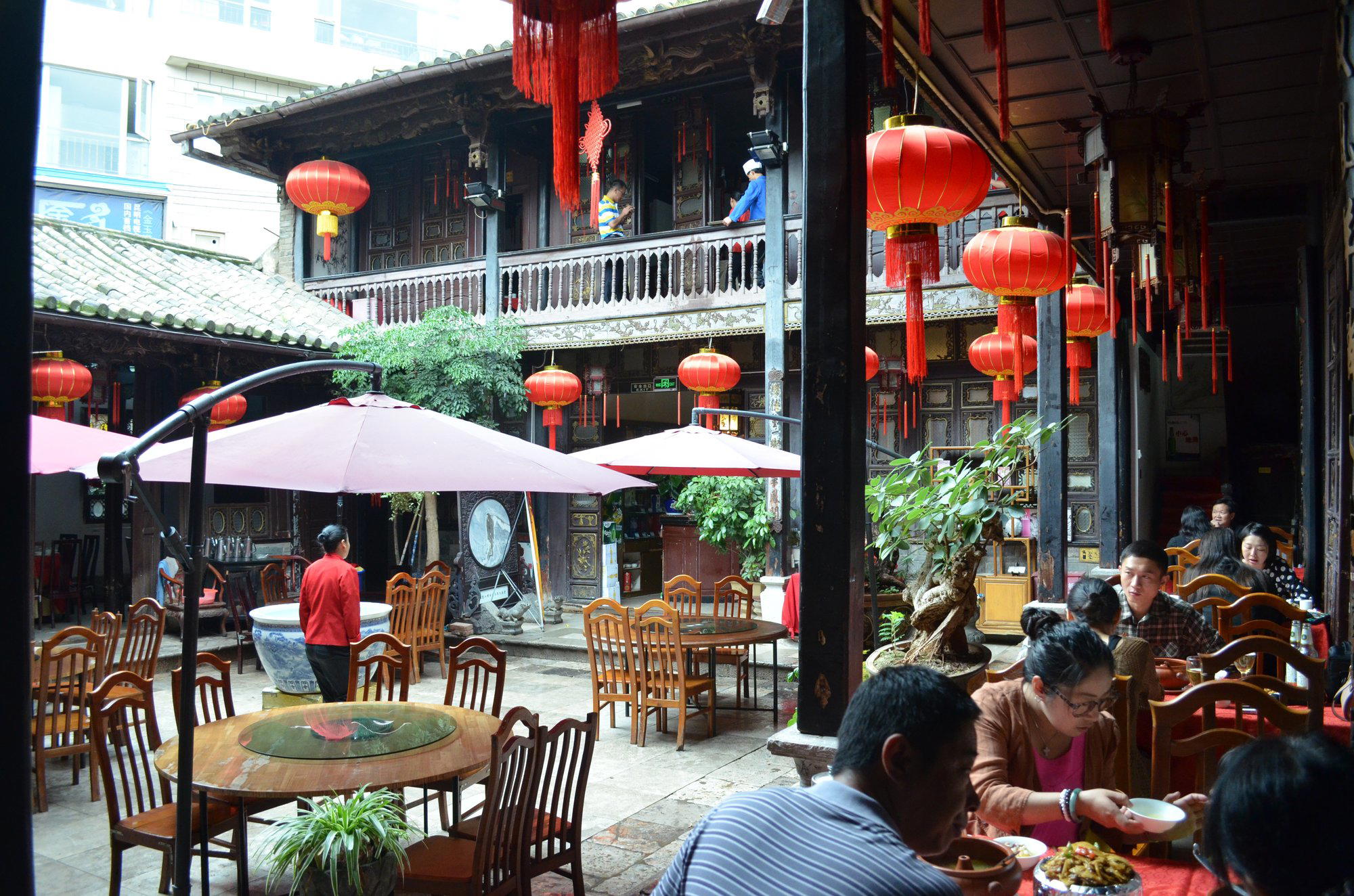
Kunming's restaurant scene divides between tourist-accessible Yunnanese generalism and more focused ethnic minority cooking, and Naxi Jing Cai Fang sits firmly in the latter register. A restaurant organized around a single minority tradition, the Naxi people of northwestern Yunnan, reads as a curatorial decision rather than a commercial one. Expect a dining room that prioritizes the food's cultural context over cosmopolitan presentation.
How does Naxi Jing Cai Fang differ from other Yunnan restaurants in Kunming?
Yunnan has 25 officially recognized ethnic minorities, each with distinct food traditions, but most Kunming restaurants present a blended, broadly accessible version of Yunnanese cooking. Naxi Jing Cai Fang's focus on a single minority group, the Naxi of the Lijiang plateau, means the menu draws from a geographically and culturally specific pantry rather than a provincial composite. That specificity is the meaningful distinction for anyone already familiar with mainstream Yunnanese cuisine.
What should I eat at Naxi Jing Cai Fang?
Naxi cuisine's most recognizable contributions are its cured and air-dried meats, developed at elevations between 2,400 and 3,200 meters where cold, dry conditions favor preservation. Foraged ingredients sourced from alpine terrain also define the tradition, so dishes built around wild mushrooms, highland herbs, or fermented components reflect what this kitchen does that lowland Yunnanese restaurants cannot replicate. Prioritize anything that signals those two pillars.
Fast Comparison
| Venue | Cuisine | Price | Awards |
|---|---|---|---|
| Naxi Jing Cai FangThis venue (the venue you are viewing) | Not listed | Not listed | Not listed |
| InterContinental Kunming Shang Tao Chinese Restaurant | Cantonese and Yunnan Chinese | Not listed | Black Pearl 1 Diamond |
| CUI HOUSE | Modern Cantonese Dim Sum & Fine Dining | $50–100 | Black Pearl 1 Diamond |
| MOUNTAIN &SEA | Chaozhou Cuisine | Not listed | Black Pearl 1 Diamond |
| YIJINSTING | Modern Yunnan Fine Dining | $50–100 | Black Pearl 1 Diamond |
Continue exploring
More in Kunming
Restaurants in Kunming
All restaurants in Kunming →



Details
- Casual Hangout
- Historic Building
- A La Carte