Tabelog 100 #19
Our verdict
Tokyo’s tachinomi culture rewards compression: a counter, a short drinks focus, and food built for standing rather than lingering. Nawa Noren sits in Ebisu’s after-work orbit with a Tabelog 100 Tachinomi 2025 selection, a sake-and-shochu drinks identity, and a tripe and grilled-tripe format that places it closer to old-school drinking rooms than polished restaurant dining.

Pearl is the En Primeur Club membership app, where members save venues, book tables and use the concierge.
The menu
What to order
- Grilled offal skewers (horumon)
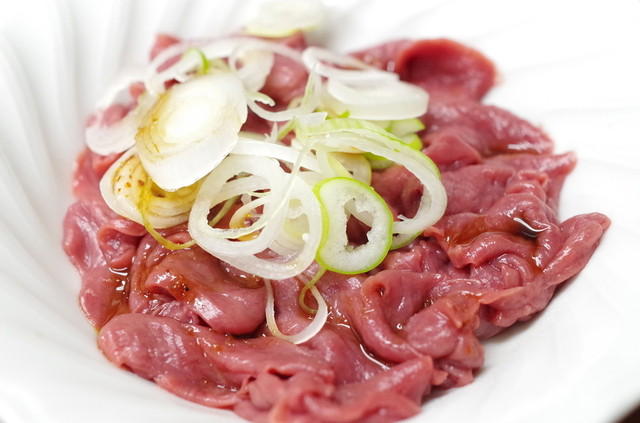
- Grilled tripe
- Nikomi (offal stew)
Tokyo drinking rooms often work at human scale: ground-floor frontage, counter in view, evenings measured in pours rather than courses. Tachinomi is not lesser seated dining; it is its own discipline, built on pace, proximity, and food that works without a long table.
Nawa Noren fits that tighter Tokyo register. The format is stand-up bar; the food runs through tripe and grilled tripe. In a city where premium dining is often equated with omakase counters and multi-course kitchens, Tokyo keeps another seriousness alive: modest spend, compressed space, and a sharper test of whether a room knows what it is doing.
Tokyo tachinomi, with drinks doing the cellar work
The assigned angle is the drinks list, but the useful comparison is not Burgundy versus Bordeaux. Tokyo tachinomi drinks programs often build depth inside narrow lanes, with pairings for salt, char, fat, and offal. Nawa Noren’s public identity places it in a Japanese standing-bar tradition rather than the international cocktail-bar lane associated with peers such as BAR Go or Bar ODIN.
That distinction shapes how to read the room. A tachinomi does not need a heavy cellar for authority; it needs disciplined selection and food that can handle repeated pours. Tripe is a telling anchor because it resists the soft-focus language around much Tokyo dining coverage. It asks for heat, texture, seasoning, and alcohol compatibility. In a standing format, that cooking is practical rather than theatrical.
The Tabelog 100 Tachinomi 2025 selection gives Nawa Noren a clear external trust signal within its category. Tabelog’s Hyakumeiten lists are useful because they separate genre from glamour: a standing bar is judged against standing bars, not kaiseki rooms or hotel dining. Nawa Noren is not competing with ceremony-heavy dining rooms; it belongs to Tokyo’s compact drinking culture, where repeatability and focus matter more than spectacle.
Offal, standing-room pace, and the anti-ceremonial side of Tokyo dining
Tokyo’s offal-drinking tradition has a different grammar from sushi or tempura. The point is not pristine seasonality in a hushed room, but intelligent use of parts, heat, alcohol, and a room that keeps exchange direct. Public categories list stand-up bar, tripe, and grilled tripe, placing the kitchen in a focused drinking-food lineage rather than broad casual territory.
That narrow identity is a strength for the right reader. A generalist casual restaurant can cover many styles without declaring a point of view. A tripe-led tachinomi has less room to hide: the food must justify its place in the format, and the customer must accept a setup that favors movement and repetition over a long seated arc.
Among named Tokyo comparison venues, the spread of formats clarifies the context. Kirin, sumiyaki kadota or yourisu zuki, and Cafe Tram each point to different sides of the city’s eating and drinking map. Nawa Noren lands in a compact drinking-room register: serious enough to be category-recognized, informal enough to remain anchored in tachinomi culture. That middle is one of Tokyo’s better dining lessons. Luxury is not the only route to precision.
For a broader Tokyo itinerary, the contrast helps. A day can move from curry or café culture into standing-bar dining without treating any format as secondary. EP Club’s wider city coverage includes Our full Tokyo restaurants guide, Our full Tokyo bars guide, and adjacent planning through Our full Tokyo hotels guide, Our full Tokyo wineries guide, and Our full Tokyo experiences guide. Within the restaurant map, nearby or contrasting unnamed entries show how varied Tokyo’s casual dining categories become beyond fine dining shorthand.
How to use Nawa Noren in a serious Tokyo eating plan
The editorial case for Nawa Noren is not a grand night out. It is that Tokyo’s drinking culture is often clearest in rooms that do less. A stand-up format, tripe, and grilled tripe create compact expectations. Treat it as a focused Tokyo stop rather than a destination built around a long tasting menu.
Payment and access conventions also shape the experience across Tokyo’s older drinking economy, but Nawa Noren is best understood first through its confirmed category rather than through assumptions about service rules. Those details do not make the place difficult in a luxury-travel sense; they make it category-faithful. Readers wanting plush pacing, guaranteed seating, and bottle-list ceremony should choose another genre. Readers interested in how Tokyo drinks after work will understand the appeal faster.
There is a useful national comparison, too. Japan’s casual-specialist rooms often travel better as ideas than replicas: curry counters, café concepts, neighborhood drinking rooms, and other narrow formats show how focus can carry local intelligence. Beyond Japan, Japanese drinking and snack formats are often interpreted with more explanation and less compression. Nawa Noren’s value is that it keeps the idea compact, local, and category-specific.
The verdict is simple without being simplistic: Nawa Noren is for travellers who want Tokyo’s standing-bar culture at close range, with offal at the center and ceremony kept minimal. Its 2025 Tabelog 100 Tachinomi selection is the right recognition because it validates the format on its own terms. In Tokyo, that is more useful than another polished room trying to behave like fine dining.
Frequently asked questions
Where is Nawa Noren located?
Tokyo.
What should I budget for a meal at Nawa Noren?
Pricing at Nawa Noren is listed as JPY 3,000 - JPY 3,999 View spending breakdown.
What are Nawa Noren's hours?
Published hours are not specified in the provided venue details.
What is Nawa Noren known for?
Nawa Noren is known as a Tokyo stand-up bar focused on tripe and grilled tripe.
The Minimal Set
Comparable venues to place this listing in its category.
| Venue | Cuisine | Price | Awards | Notes |
|---|---|---|---|---|
| Nawa NorenThis venue (the venue you are viewing) | Stand-up Horumon & Grilled Tripe Bar | $30–50 | Tabelog 100 #19 | Not listed |
| Kirin | Yakitori | $50–100 | Tabelog 100 #36 | JPY 8,000 - JPY 9,999 |
| BAR Go | Japanese Cocktail Bar | Not listed | Tabelog 100 #23 | JPY 4,000 - JPY 4,999 |
| Cafe Tram | Not listed | Not listed | Not listed | JPY 1,000 - JPY 1,999 |
| sumiyaki kadota or yourisu zuki | Charcoal-grilled Japanese diner & motsunabe | $50–100 | Tabelog 100 #25 | JPY 8,000 - JPY 9,999 JPY 1,000 - JPY 1,999 |
| Bar ODIN | Cocktail & Whisky Bar | $50–100 | Tabelog 100 #83 | JPY 4,000 - JPY 4,999 |
Recognition history
Dated appearances from independent guides and award organizations, with the underlying list record or original source where available.
Tabelog 100 #19 · No. 19
Tabelog · Tabelog 100 - Tachinomi - 2025