
NaNum brings Korean contemporary cooking to Berlin's Kreuzberg district with a discipline that earned Michelin Plate recognition in 2025. Chef Jinok Kim works a five- or seven-course set menu format driven by fermentation, regional German ingredients, and produce from the restaurant's own Brandenburg garden. Natural wines, handmade ceramics, and a pared-back room near the Jewish Museum complete a format that rewards attention.
Pearl is the En Primeur Club membership app — saves, bookings, and concierge access live there. Same editors, same standards.
- Address
- Lindenstraße 90, 10969 Berlin, Germany
- Phone
- +49 177 2084785
- Website
- nanumberlin.com
- Directions
- Get directions
 Saves & bookings on Pearl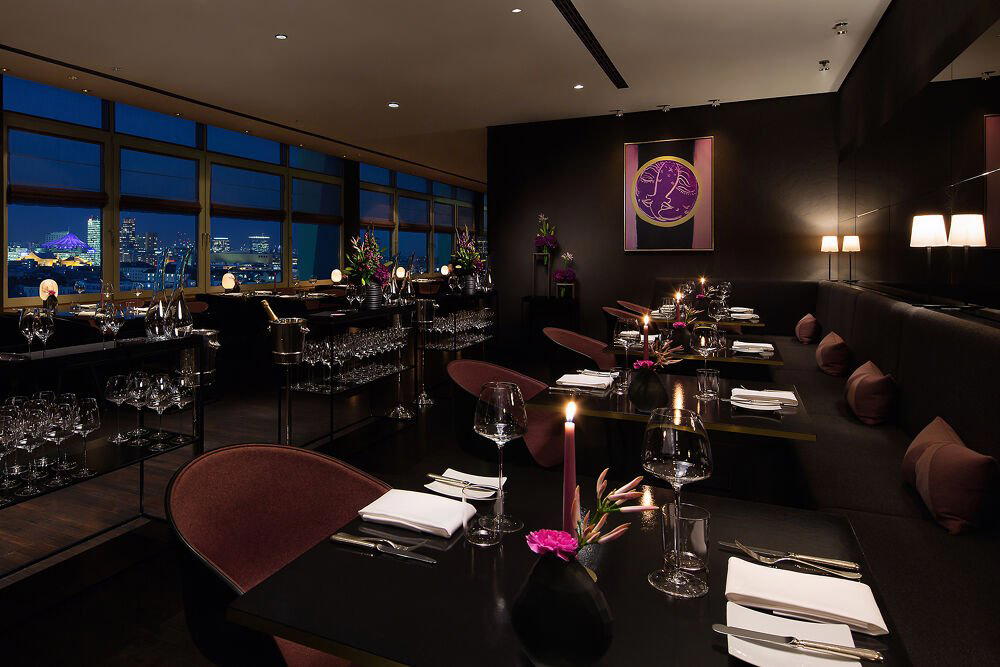
A Counter View Into Korean Precision
The first thing you register at NaNum is the kitchen. The pass faces the room, and from the moment you sit, you can watch chef Jinok Kim and her team working through the mise en place that anchors a menu built around fermented foods and regional German produce. In a city where the dominant fine-dining register runs toward modern European formality, see FACIL, Rutz, or Nobelhart & Schmutzig, NaNum operates in a quieter register. The room is deliberately spare. The ceramics on the table were made by Kim herself, in a studio occupying the same building. The cumulative effect, before a single course arrives, is of somewhere that has thought carefully about what it wants to be.
The Fermentation Frame
Korean culinary tradition is built around transformation over time. Kimchi, doenjang, ganjang, gochujang: these ferments are not condiments applied at the end but structural elements that determine the salt, acid, and depth running through an entire meal. NaNum works inside that logic. Kim's approach uses fermented ingredients as foundational flavour rather than flourish, and the effect on the set menu is cumulative, dishes that seem restrained on first taste reveal more as the meal progresses. That layered quality is one of the defining characteristics of well-executed Korean-influenced contemporary cooking, and it distinguishes this format from the more immediately declarative flavour profiles you find at, say, Restaurant Tim Raue, where Chinese influence produces a different kind of intensity.
The comparison with the wider global scene for Korean contemporary is worth making. At Nae:um in Singapore and Restaurant Ki in Los Angeles, Korean-rooted tasting menus have moved firmly into the upper tier of their respective cities' fine-dining conversations. Berlin is a different market, larger in appetite for cultural experimentation, more compressed in its luxury dining spend, but NaNum's Michelin Plate recognition in 2025 places it within that same broader current.
The Banchan Philosophy, Applied to a Tasting Menu Format
Banchan, the array of small dishes that arrive alongside a main course in traditional Korean dining, operates on a logic of accompaniment, contrast, and completeness. No single dish is the point; the table as a whole is. That philosophy maps interestingly onto a tasting menu structure, and it appears to inform how NaNum builds its courses. The menu isn't a linear progression of escalating richness in the Western fine-dining mode. Instead, fermented, fresh, and pickled elements appear across multiple courses, returning and recurring in ways that echo the banchan table's repetition of flavour families.
Kim sources ingredients from the restaurant's own garden in Brandenburg, which anchors the menu in a specific, local material reality. This isn't a decorative detail about provenance, it means the fermentation program can work with produce the kitchen controls from growth to preservation. That level of sourcing integration is relatively rare at this price point in Berlin. Nobelhart & Schmutzig operates on a comparable sourcing commitment, though from a modern German rather than Korean foundation. The structural similarity is worth noting: both restaurants ask their regional material to carry the weight of identity on the plate.
Format, Days, and What to Expect
NaNum operates on a compressed weekly schedule. A five-course set menu, available in vegetarian or meat formats, runs on Wednesdays and Thursdays. Fridays and Saturdays offer a seven-course format, vegetarian or with fish. The two-format structure is not unusual for chef-led tasting rooms operating at this scale, it allows a smaller kitchen to execute at a high level of precision without the repetition-fatigue that affects larger, more commercially pressured operations. The natural wine list accompanies both formats, which is consistent with the menu's emphasis on living, fermented flavour.
The rating from Google reflects genuine consistency: 4.8 across 335 reviews is a strong signal for a restaurant operating at €€€ pricing in a city with an exceptionally engaged dining public. Berlin diners are not reflexively deferential to fine-dining formats, the score reflects a kitchen that meets its own terms reliably.
Location and the Kreuzberg Context
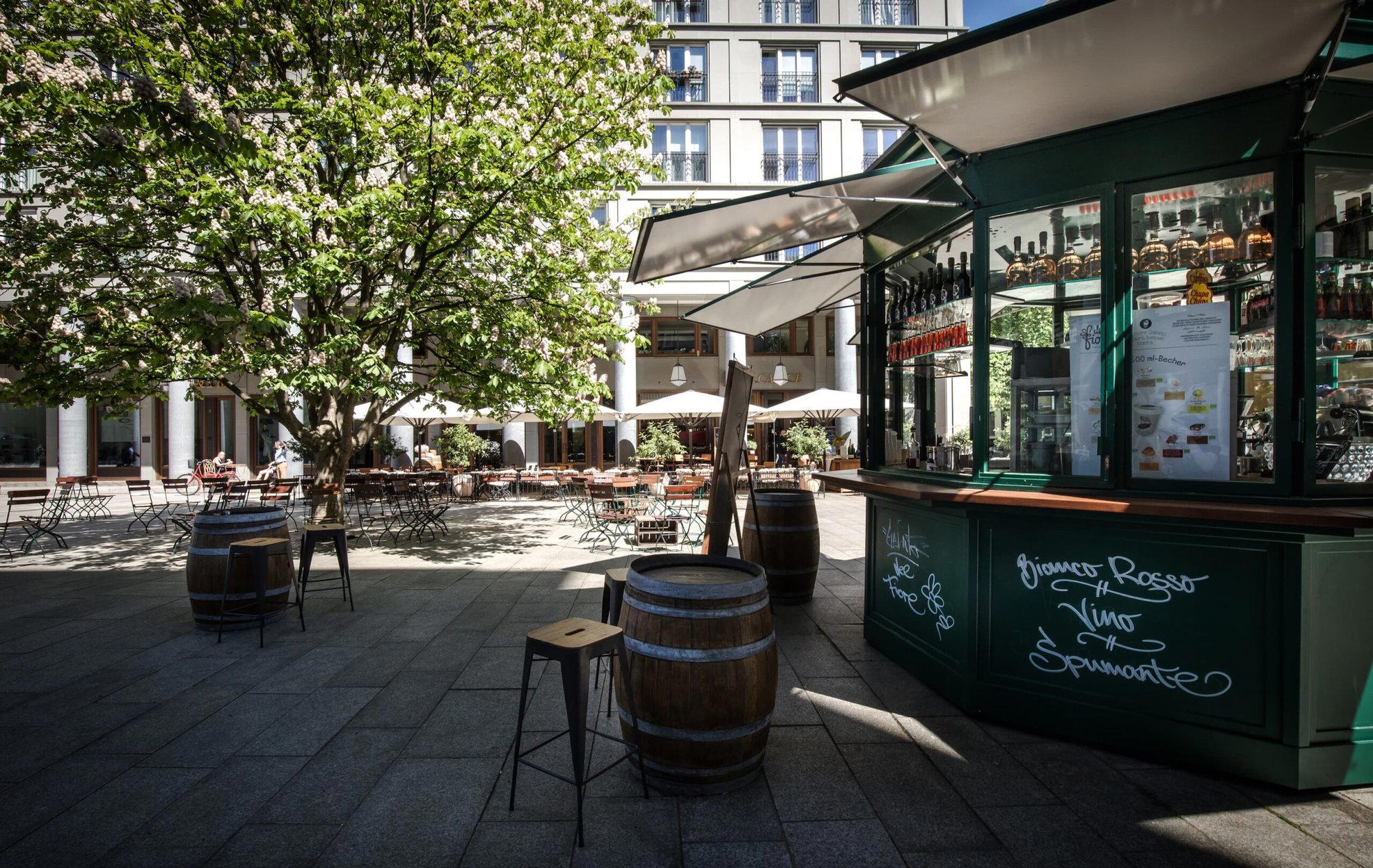
The address, Lindenstraße 90, in Kreuzberg, places NaNum on a small square a short walk from Checkpoint Charlie, directly opposite the Jewish Museum. The terrace, when weather allows, is one of the more considered outdoor dining positions in the neighbourhood: a quiet square rather than a pavement table on a traffic artery. The surrounding area is dense with cultural institutions and has a mixed residential and commercial character that gives the street a different feel from the higher-footfall zones further north in Mitte.
Kreuzberg's dining character has shifted considerably over the past decade. It was long associated with casual, affordable, and internationally influenced eating, Turkish, Middle Eastern, Vietnamese, rather than with tasting-menu dining. NaNum, along with a handful of other focused operations, represents a shift in that character without abandoning the neighbourhood's preference for substance over performance. The room's pared-back design and the service's reported friendliness fit the district's anti-ostentation instincts while the kitchen's precision operates at a Michelin-recognised level.
NaNum Within Berlin's Broader Fine Dining Scene
Berlin's Michelin-starred and Plate tier spans a wide range of cuisines and formats. At the creative end, CODA Dessert Dining runs a format built almost entirely around pastry techniques. Rutz remains the city's most recognised address for modern European cooking with a strong local-produce bias. For German-language comparisons further afield, JAN in Munich, Schwarzwaldstube in Baiersbronn, Aqua in Wolfsburg, Vendôme in Bergisch Gladbach, ES:SENZ in Grassau, and Restaurant Haerlin in Hamburg illustrate the range of serious contemporary cooking across the German-speaking market. Within Berlin specifically, NaNum occupies a niche with limited direct competition: Korean contemporary at Michelin-recognised level, in a format that is simultaneously rooted in craft fermentation and in the chef's own ceramic practice.
That dual grounding in food and material culture gives NaNum a coherence that is harder to manufacture than a tasting menu format alone. The ceramics Kim makes are not a lifestyle brand extension; they are tableware she designed around specific dishes, made in a studio in the same building where the food is served. The integration is functional first.
Planning Your Visit
NaNum operates Wednesday through Saturday. The five-course format on Wednesdays and Thursdays is the more accessible entry point in terms of length; the seven-course Friday and Saturday format is suited to an evening with more time. At €€€ pricing, the restaurant sits below the €€€€ bracket occupied by Rutz, Nobelhart & Schmutzig, and FACIL, making it one of the more accessible Michelin-recognised formats in the city for its level of ambition. Reservations are recommended, especially for a weekend sitting. The address, Lindenstraße 90, is reachable by U-Bahn, with the U6 line stopping close by.
Recognition, Side-by-Side
Comparable venues nearby, for context on price, style, and recognition.
| Venue | Cuisine | Price | Awards | Notes |
|---|---|---|---|---|
| NaNumThis venue — the venue you are viewing | Modern Korean Fermentation | $$$ | Michelin Plate | Not listed |
| Brasserie Lamazère | French Brasserie | $$$ | Michelin Plate | Charlottenburg |
| TISK | Modern German Bistronomic | $$$ | Michelin Plate | Neukolln |
| aerde | Modern Regional Foraging & Fermentation | $$$ | Michelin Plate | Schoneberg |
| Macionga | Modern German with French influences | $$$ | Michelin Plate | Wilmersdorf |
| SWAN&SON | Modern French-Asian Fusion Bistro | $$$ | Michelin Plate | Charlottenburg |
Recognition history
Dated appearances from independent guides and award organizations, with the underlying list record or original source where available.
Michelin Plate
Michelin · 2026 Michelin Plate
Michelin Plate
Michelin
Michelin Plate
Michelin
Continue exploring
More in Berlin
Restaurants in Berlin
Browse all →
Bars in Berlin
Browse all →
Hotels in Berlin
Browse all →


At a Glance
- Minimalist
- Cozy
- Intimate
- Modern
- Date Night
- Special Occasion
- Open Kitchen
- Natural Wine
- Local Sourcing
- Street Scene
Current opening hours
- Monday
- Closed
- Tuesday
- Closed
- Wednesday
- 7–11 PM
- Thursday
- 7–11 PM
- Friday
- 7–11 PM
- Saturday
- 7–11 PM
- Sunday
- Closed
Hours can change for holidays and private events. Last verified .
Pleasantly pared-back space with earthy, handmade ceramics, open kitchen view, and calm, intimate atmosphere.