Our verdict
Namaaz Dining operates at the sharper end of Jakarta's progressive restaurant scene, running a format that treats Indonesian culinary tradition as raw material for technical experimentation. Located in Kebayoran Baru, South Jakarta, it occupies a tier of the city's dining market defined less by ingredient provenance than by the architecture of the meal itself — a structured, course-by-course format that places it closer to international tasting-menu peers than to the Indonesian fine-dining mainstream.

Pearl is the En Primeur Club membership app — saves, bookings, and concierge access live there. Same editors, same standards.
- Address
- Jl. Brawijaya VIII No.6A, Pulo, Kec. Kby. Baru, Kota Jakarta Selatan, Daerah Khusus Ibukota Jakarta 12160, Indonesia
- Phone
- +628111557798
- Hours
- Mon ClosedTue–Sat 6–10 PMSun Closed
- Website
- namaazdining.com
- Directions
- Get directions
The menu
What to order
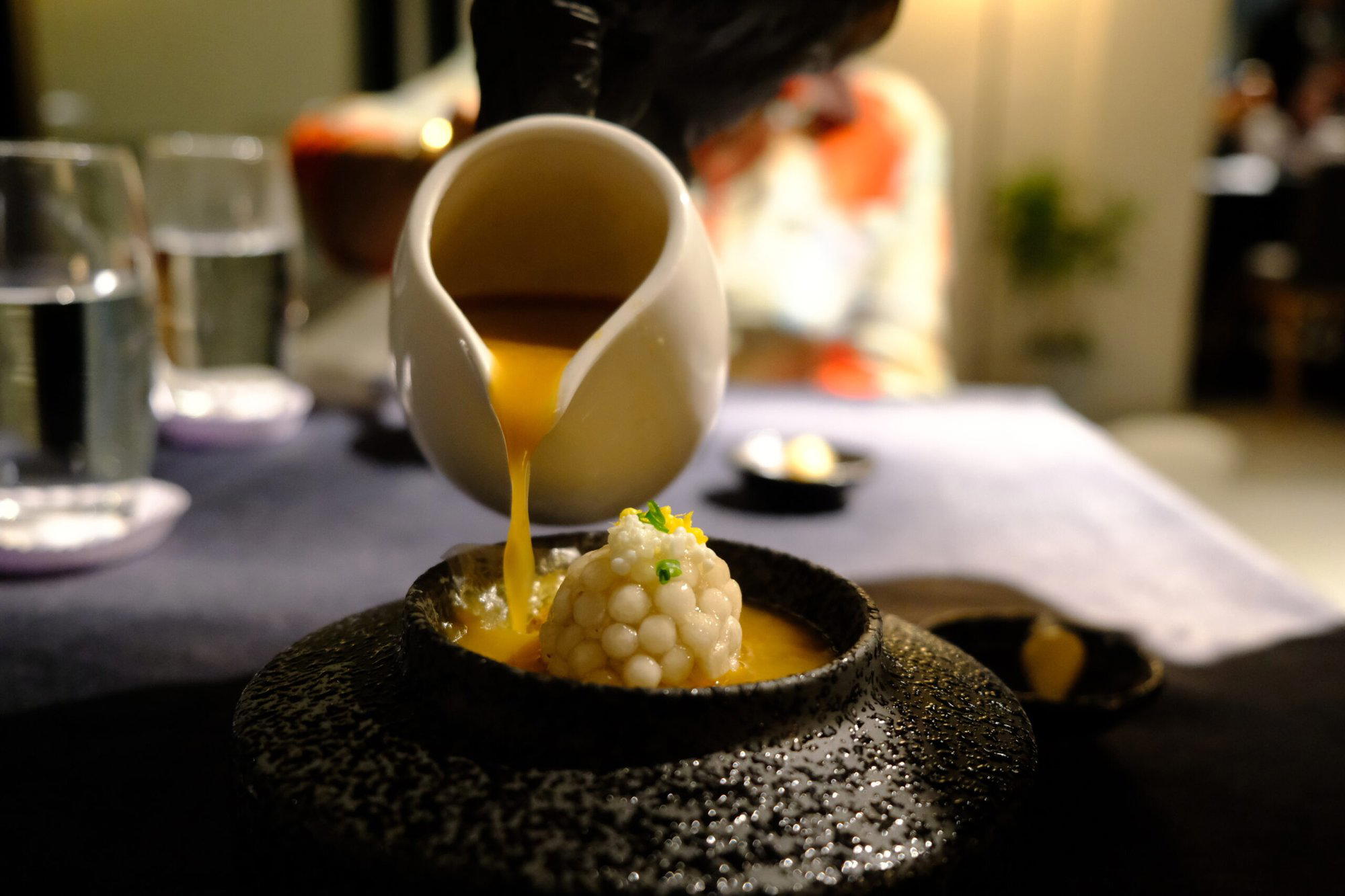
- Sous-vide egg candle
- Modern sambal terasi
Where the Meal Is the Medium
Jakarta's premium restaurant scene has spent the last decade resolving a tension between two modes: the heritage-led Indonesian table, where recipes carry generational authority, and the international tasting-menu format, where the sequence of courses is itself an argument. Namaaz Dining sits firmly inside the second category. Located on Jl. Brawijaya VIII in Kebayoran Baru, one of South Jakarta's more composed residential-commercial pockets, it occupies a position in the city's dining hierarchy that is defined not by a particular ingredient or regional cuisine but by the logic of how the meal is assembled. The physical approach through the neighbourhood — quieter than Jakarta's busier commercial corridors, with less of the street-level noise that defines areas like Kemang or Sudirman — functions as a kind of pre-amble to a restaurant that rewards attention.
That positioning matters because Jakarta's upper dining tier is genuinely crowded. Venues like August and Bistecca compete in overlapping but distinct registers: European-trained technique, premium protein, and format precision. Namaaz Dining enters that conversation from a different angle, one that uses Indonesian culinary vocabulary as both source material and subject matter.
Menu Architecture as Editorial Statement
The tasting-menu format, now standard at the top end of dining in cities from Seoul to New York, carries a specific set of assumptions: the kitchen controls sequence, the diner surrenders choice in exchange for coherence, and the progression of courses is meant to communicate something about the restaurant's point of view. At venues like Atomix in New York City or Le Bernardin in New York City, that structure is used to express a culinary philosophy with enough precision that the menu itself reads as argument. Namaaz Dining applies a comparable structural logic to Indonesian source material, tempeh, sambal, rendang-adjacent flavour profiles, tropical produce, treating the format not as an imported Western convention but as a frame through which Indonesian cooking can be re-examined.
This is an increasingly common approach across Southeast Asia's most discussed restaurants. Locavore NXT in Ubud operates on a similar premise: the menu is a sequence of propositions about Indonesian ingredients, not a replication of a canonical dish set. What distinguishes venues in this category is the degree to which the sequence holds together as argument rather than anthology. A well-built tasting menu at this level creates accumulation, each course adds to a developing thesis rather than simply cycling through a list of dishes. The risk, particularly for Indonesian-inflected menus where bold, assertive flavours are structural rather than incidental, is calibration: how do you sustain a 10-plus course progression when the underlying cuisine vocabulary tends toward intensity?
Within Jakarta's competitive set, Kita 喜多 Restaurant And Bar in Kecamatan Menteng represents a different answer to that question, a Japanese-Indonesian register that softens the intensity curve by modulating between two culinary traditions. Namaaz occupies a more committed position, staying closer to the Indonesian source even as it applies international technique.
Kebayoran Baru and the South Jakarta Dining Context
The restaurant's address in Kebayoran Baru is not incidental. South Jakarta has historically housed the city's most ambition-intensive restaurants precisely because the neighbourhood structure, lower foot traffic, more residential character, a customer base with higher disposable income and lower tolerance for noise, supports the slower, more deliberate dining format that tasting-menu restaurants require. The contrast with the more casual Indonesian dining spread across areas further south or the more commercial Sudirman corridor north is significant. Restaurants like Abunawas Restaurant in Kemang operate in a more democratic register; Aged + Butchered Jakarta pulls toward premium casual. Namaaz Dining signals, through its format and location, that it is not competing in either of those registers.
For visitors arriving from Bali, where the premium dining scene has its own logic (see Bikini Restaurant Bali in Badung and Jungle Fish Bali in Gianyar for the island's more relaxed premium tier), Jakarta's tasting-menu scene will read as more formal, more urban, and more structurally demanding. That is the point. See our full Jakarta restaurants guide for a wider map of where the city's dining scene is currently moving.
Planning Your Visit
A restaurant operating in the structured tasting-menu format in this part of South Jakarta requires planning in advance. The format itself, fixed sequence, kitchen-controlled timing, means walk-in visits are not realistic, and the restaurant's residential-adjacent location makes it a deliberate destination rather than a spontaneous stop. Visitors staying in the Sudirman or Senayan corridor should account for South Jakarta traffic, which can extend journey times significantly during evening peak hours; arriving by GrabCar from central Jakarta with a 30-minute buffer is a reasonable approach. Dress expectations at this tier of Jakarta dining trend formal-casual: business casual is the safe register, and the more experimental or occasion-driven the dinner, the more the room tends to dress up accordingly. For context on the broader South Jakarta dining range at different price and casualness levels, Chongqing Liuyishou Hotpot in South Jakarta and Hai Di Lao in Central Jakarta represent the city's more accessible end of the spectrum, while Bakerzin Central Park occupies a mid-range international casual tier. Namaaz Dining sits at a clear remove from all three.
Frequently asked questions
How do I find Namaaz Dining?
Namaaz Dining is located at Jl. Brawijaya VIII No.6A, Pulo, Kec. Kby. Baru, Kota Jakarta Selatan, Daerah Khusus Ibukota Jakarta 12160, Indonesia, Jakarta.
How does Namaaz Dining's format differ from conventional Indonesian restaurants in Jakarta?
Namaaz Dining operates within a small cohort of Jakarta restaurants that apply international tasting-menu structure to Indonesian culinary material — a format where the kitchen determines sequence, pacing, and technique rather than a shared table of individually ordered dishes. This positions the Kebayoran Baru venue outside the heritage-style Indonesian dining tradition that dominates the city's broader restaurant scene. The result is a meal shaped more by kitchen intent than by regional custom.
What do people recommend at Namaaz Dining?
At Namaaz Dining, the kitchen makes the selections — the restaurant runs a fixed tasting-menu sequence, so individual dish recommendations from diners reflect the current programme rather than à la carte favourites. The format, common to Jakarta's premium dining tier, positions the meal as a structured editorial statement rather than a guest-directed order. Arriving without preconceptions about specific courses is the practical approach.
Do I need a reservation for Namaaz Dining?
A reservation is structurally required. Tasting-menu restaurants operating in South Jakarta's premium tier, including Namaaz Dining at its Kebayoran Baru address on Jl. Brawijaya VIII, do not accommodate walk-ins — the fixed-sequence format means seat count and timing are set in advance. check the venue's official channels to confirm current booking channels, as phone and web details are not publicly listed in standard directories.
A Tight Comparison
Comparable venues nearby, for context on price, style, and recognition.
| Venue | Cuisine | Price | Notes |
|---|---|---|---|
| Namaaz DiningThis venue — the venue you are viewing | Indonesian Molecular Gastronomy | $50–100 | Not listed |
| Seribu Rasa Menteng | Indonesian Seafood | $20–30 | Gondangdia, Southeast Asian and Indonesian Seafood |
| Plataran Menteng | Traditional Indonesian Fine Dining | $30–50 | Gondangdia, Traditional Indonesian Fine Dining |
| Daun Muda Soulfood by Peresthu - Wolter Monginsidi | Modern Indonesian Soulfood (Palembang & Manado) | $10–20 | Selong, Modern Indonesian Soulfood (Palembang & Manado) |
| Sushi Kawana | Traditional Japanese Sushi | $50–100 | Melawai, Traditional Japanese Sushi |
| Jajaghu Restaurant | Modern Indonesian-Japanese Fusion | Not listed | Malaka, Modern Indonesian-Japanese Fusion |