One of Frankfurt's most enduring addresses in the Innenstadt, Mutter Ernst has operated from Rahmhofstraße for decades, anchoring the city's traditional restaurant culture with a format that shifts noticeably between its quieter lunch service and a more animated evening dining room. For visitors oriented around German cooking traditions and city-centre convenience, it offers a grounded alternative to the finance district's more transient dining options.
Pearl is the En Primeur Club membership app — saves, bookings, and concierge access live there. Same editors, same standards.
- Address
- Rahmhofstraße 2-4, 60313 Frankfurt am Main, Germany
- Phone
- +496915341610
- Website
- speisekartenweb.de
- Directions
- Get directions
 Saves & bookings on Pearl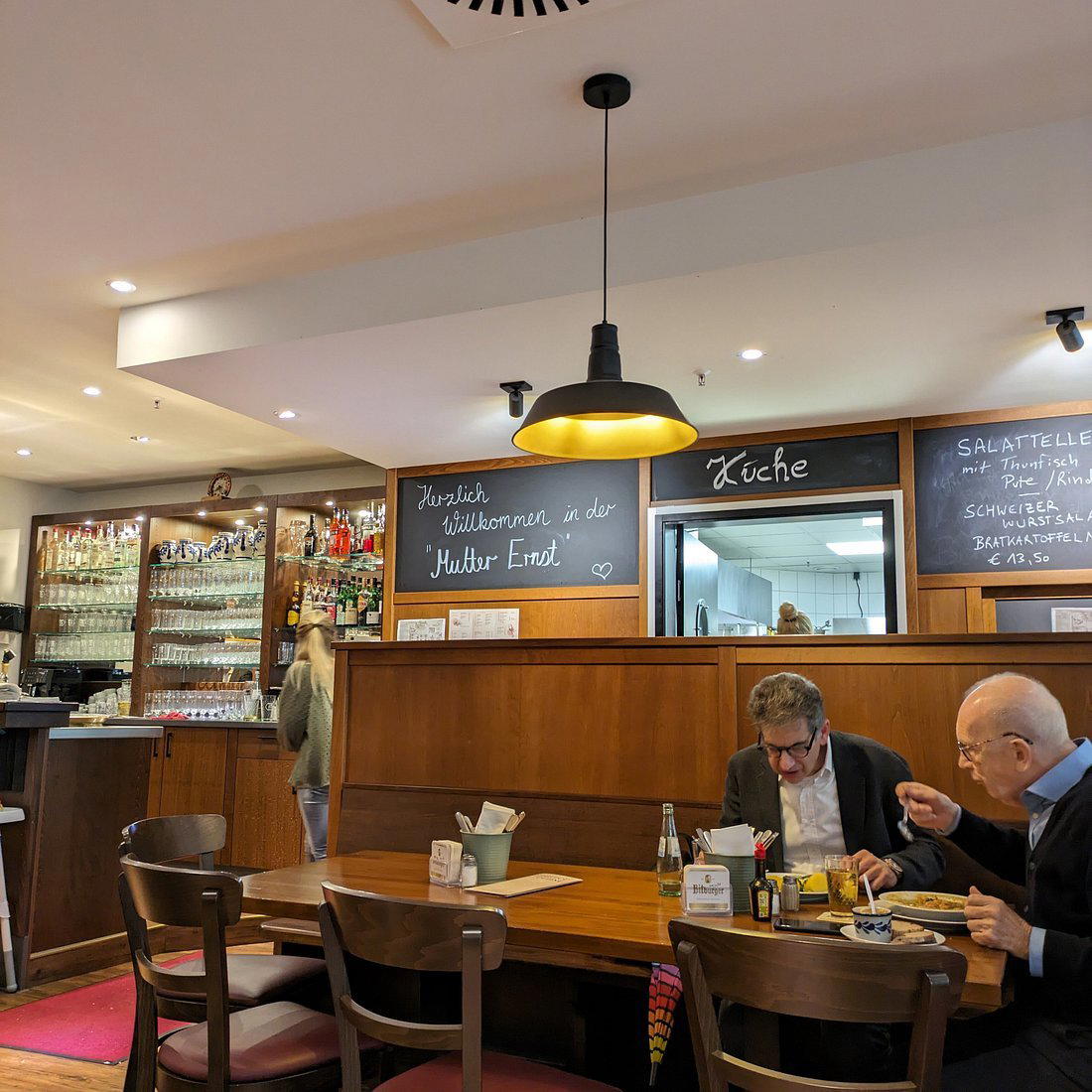
Frankfurt's Innenstadt and the Weight of Staying Power
The Innenstadt serves one of Europe's largest financial hubs, which means a dining room can fill reliably on expense accounts while losing its identity in the process. The venues that avoid that fate tend to be the ones with a clear sense of what they are before the lunch crowd arrives. Mutter Ernst, at Rahmhofstraße 2-4, is one of the older addresses in this part of the city, and its persistence through successive waves of restaurant openings says something about the durability of its format. Longevity in Frankfurt's centre is a credential in itself, given how regularly newer operations rotate in and out of the streets around the Römerberg and the banking quarter.
That address puts it within comfortable walking distance of the Hauptwache and the old town, making it accessible without being a tourist trap in the usual sense. Frankfurt does not have a single dominant dining district the way Hamburg has the Eppendorf or Munich has Maxvorstadt; the centre disperses good restaurants across a relatively compact grid, and Mutter Ernst sits inside that grid at a point where business diners, residents, and visitors overlap.
The Lunch-to-Dinner Shift: Two Speeds, One Room
One useful way to read Mutter Ernst is through the difference between its daytime and evening character, because they operate at different speeds and serve different purposes. Frankfurt's traditional restaurant culture has always maintained a functional lunch, shaped by the city's role as a working financial centre rather than a tourist destination. Lunchtime in a room like this is businesslike: plates arrive without ceremony, the room turns, and the kitchen works through a menu that reflects German cooking's strengths at midday, which historically means hearty, portioned food rather than long-form tasting sequences.
The evening service allows the room to breathe. Frankfurt's dinner culture, while not as internationally prominent as Berlin's or Munich's, has its own register, particularly at addresses that have been operating long enough to develop a regular clientele. Evening guests at the restaurant are less likely to be working to a schedule, which changes the pace of service and the way the kitchen performs. Across Germany's premium dining tier, the lunch-versus-dinner divide has sharpened over the past decade: addresses like Aqua in Wolfsburg, JAN in Munich, and Schwarzwaldstube in Baiersbronn reserve their most ambitious menus for dinner, while lunch functions as a more structured, value-conscious entry point. The restaurant operates further down that spectrum, but the same principle applies: the evening version of the restaurant is the fuller expression of it.
Traditional German Cooking in a City That Leans International
Frankfurt's dining culture is more internationally oriented than many German cities its size, a function of its airport, its financial sector, and its significant expatriate population. The city supports a wide range of cuisines, from the contemporary Korean and Japanese counters that have opened in recent years to long-established Italian and French addresses. Within that context, restaurants maintaining a connection to German cooking traditions occupy a specific position: they serve a clientele that actively chooses them rather than defaulting to them, which tends to produce more deliberate kitchens.
Hessian cooking, the regional tradition Frankfurt belongs to, has a character distinct from the Bavarian canon that dominates German food's international image. It centres on dishes like Grüne Soße, the herb sauce that Frankfurt claims as its own, along with river fish preparations and pork dishes that reflect the Main valley's agricultural history. The restaurant's positioning within this tradition, however precise, places it in a category that Frankfurt's more transient dining addresses cannot easily replicate. Comparable Frankfurt addresses with distinct culinary points of view include Allgaiers Restaurant and Ariston, both of which operate with their own specific registers within the city's mid-to-upper dining tier. Ambassel and ALEJANDRO'S occupy different parts of the spectrum, while atm by Deli&Grape represents the city's newer wine-forward format.
Germany's Fine Dining Tier: Where Frankfurt Sits
To understand the restaurant's position accurately, it helps to map it against the broader German fine dining structure. Germany's Michelin-recognised tier extends across the country with significant concentration outside its major cities: Vendôme in Bergisch Gladbach, Victor's Fine Dining by Christian Bau in Perl, and Waldhotel Sonnora in Dreis each represent the kind of destination dining that draws guests specifically for the kitchen rather than for the city around it. Frankfurt itself does not have an equivalent concentration of multi-starred addresses, which positions its established traditional restaurants as anchors of a different kind: not destinations in the Michelin-pilgrimage sense, but reliable mid-tier addresses with genuine local authority. Further afield, ES:SENZ in Grassau, Schanz in Piesport, and Restaurant Haerlin in Hamburg demonstrate how Germany's serious kitchens tend to anchor themselves in specific regional or hotel contexts. CODA Dessert Dining in Berlin shows the experimental edge of what German dining has produced in recent years, a useful contrast to Frankfurt's more conventional centre. For international reference points, Le Bernardin in New York City and Atomix in New York City illustrate what sustained culinary identity looks like at the highest tier, regardless of city context.
Planning a Visit: Timing, Access, and Expectations
Rahmhofstraße sits in the Innenstadt proper, well-served by Frankfurt's S-Bahn and U-Bahn network, with Hauptwache station the natural point of arrival for most visitors coming from the main train station or the airport. The street is pedestrian-accessible from the shopping and banking grid, which makes it easy to find without requiring navigation through Frankfurt's more complex outer districts. As with most traditional Frankfurt addresses, lunch on weekdays sees the highest turnover and one compressed service window, while evenings and weekends allow for a less pressured experience. The restaurant is open Monday through Saturday from 11 AM to 11 PM and closed on Sunday. Reservations are recommended.
How It Stacks Up
Comparable venues nearby, for context on price, style, and recognition.
| Venue | Cuisine | Price | Notes |
|---|---|---|---|
| Mutter ErnstThis venue — the venue you are viewing | Traditional German Hausmannskost | $$ | Not listed |
| Lorsbacher Thal | Traditional Hessian Apfelwein Tavern | $$ | Roemerberg |
| Gref-Völsings Braterei | Traditional German Sausage House | $$ | Im Teller |
| Im Herzen Afrikas | Eritrean African | $$ | Roemerberg |
| Yumas | Modern Mexican | $$ | Goethehaus |
| Toh Thong | Modern Thai Fusion | $$ | Goethehaus |
Continue exploring
More in Frankfurt
Restaurants in Frankfurt
Browse all →
Bars in Frankfurt
Browse all →

Hotels in Frankfurt
Browse all →

At a Glance
- Classic
- Cozy
- Rustic
- Casual Hangout
- Standalone
Current opening hours
- Monday
- 11 AM–11 PM
- Tuesday
- 11 AM–11 PM
- Wednesday
- 11 AM–11 PM
- Thursday
- 11 AM–11 PM
- Friday
- 11 AM–11 PM
- Saturday
- 11 AM–11 PM
- Sunday
- Closed
Hours can change for holidays and private events. Last verified .
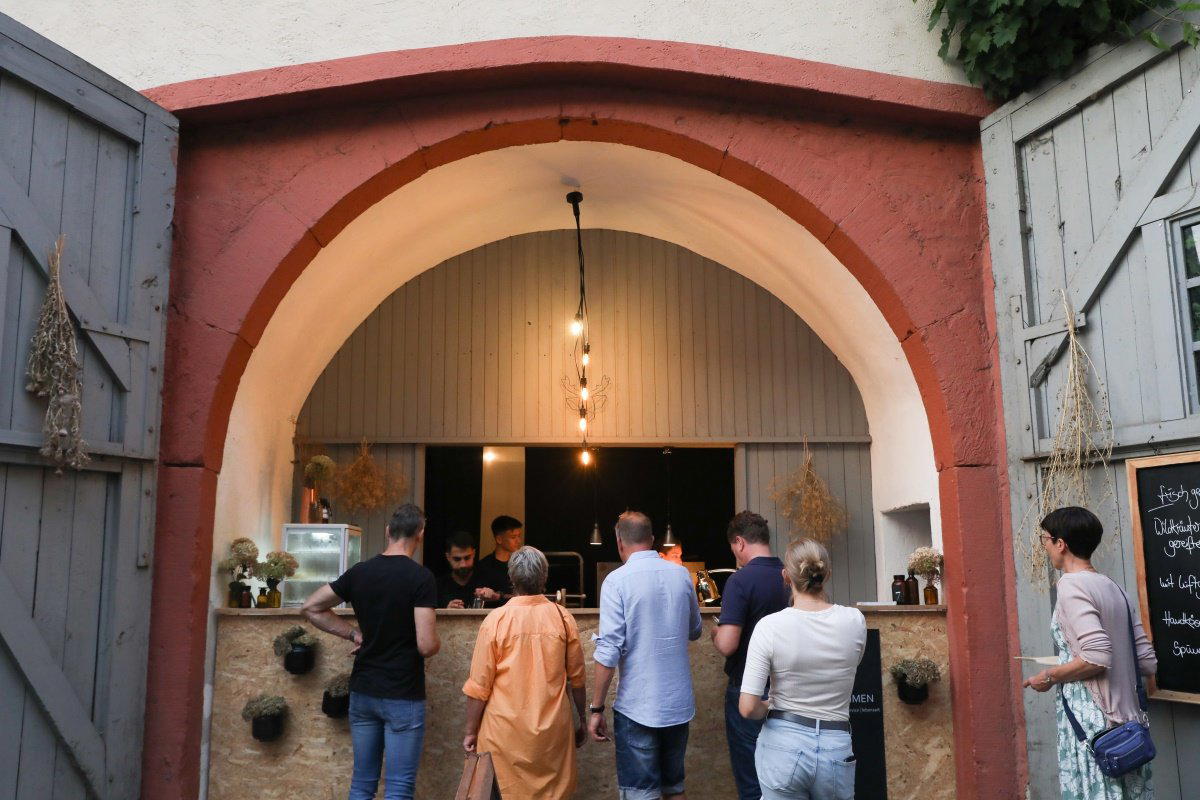
Gemütlich and urig with a modern touch, featuring classic German decor and a lively, crowded vibe.