München Haus
München Haus sits at 709 Front St in the heart of Leavenworth, Washington's Bavarian-themed village, serving German-style sausages and beer in an outdoor beer garden format that mirrors the town's European architectural conceit. The setting rewards visitors who arrive hungry and unhurried, willing to let the communal table rhythm set the pace of the meal. It is one of Leavenworth's most recognizable spots for casual German fare.
Pearl is the En Primeur Club membership app — saves, bookings, and concierge access live there. Same editors, same standards.
- Address
- 709 Front St, Leavenworth, WA 98826
- Phone
- +1 509 548 1158
- Website
- munchenhaus.com
- Directions
- Get directions
 Saves & bookings on Pearl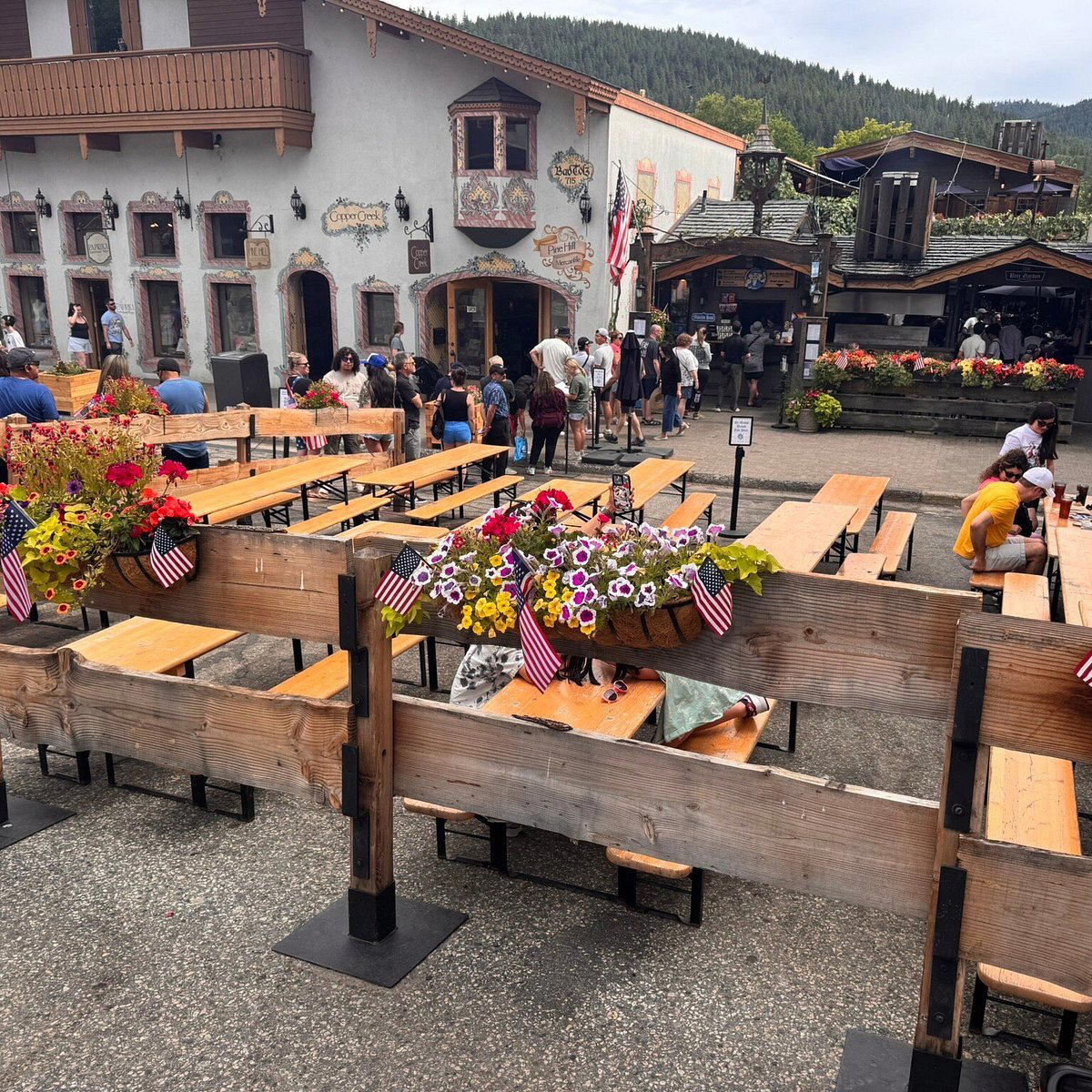
The Beer Garden as Social Contract
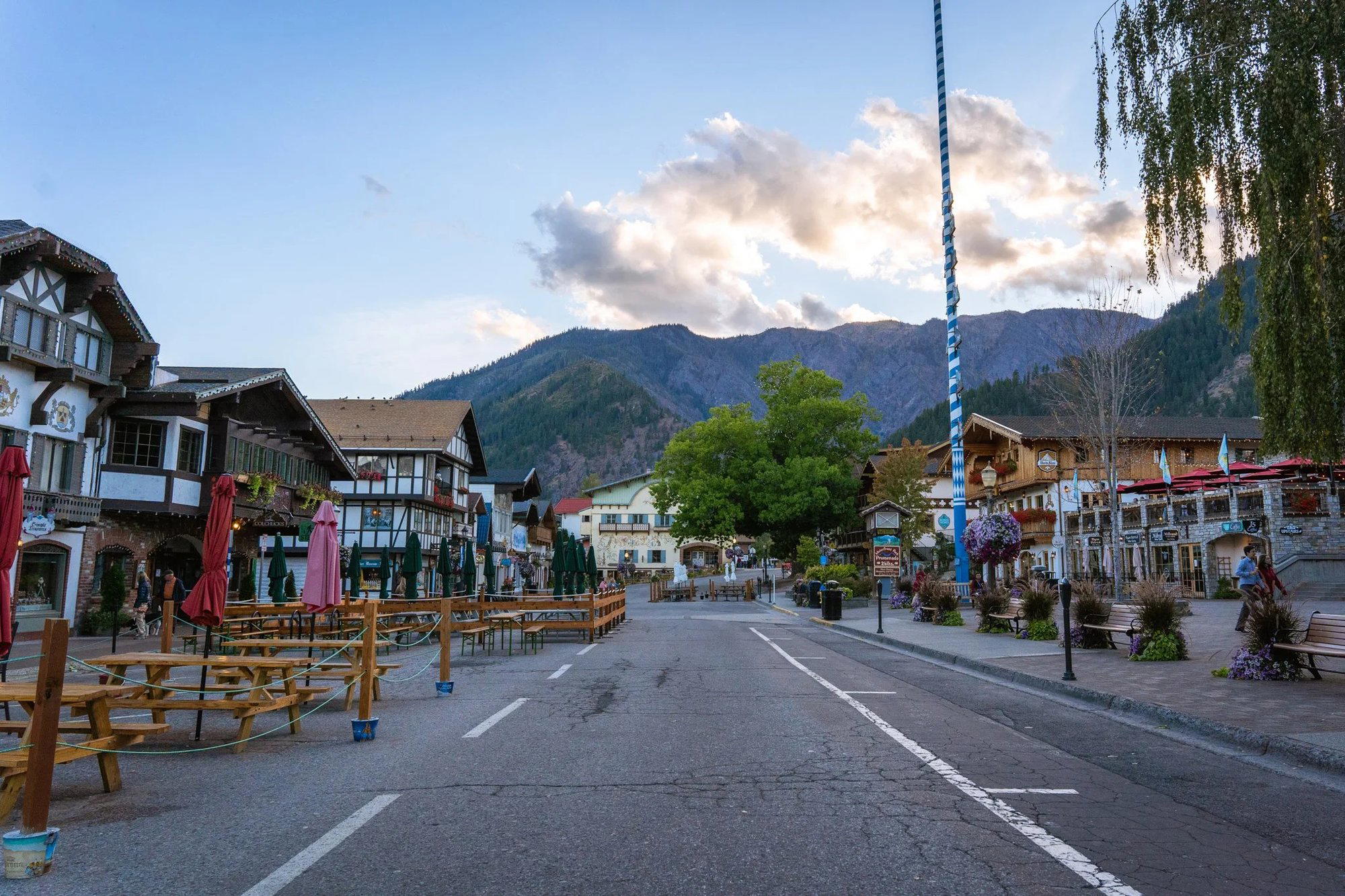
Leavenworth, Washington occupies a particular niche in American small-town tourism: a former logging settlement that reinvented itself in the 1960s as a Bavarian village, complete with half-timbered facades, dirndl-clad shopkeepers, and a civic commitment to the aesthetic so thorough that even the McDonald's operates behind a chalet exterior. The town sits in the Cascade foothills about two and a half hours east of Seattle, and the transformation, while theatrical by design, has produced a genuine culture of outdoor eating and communal drinking that mirrors, at least in spirit, the Bavarian beer garden tradition it references.
München Haus, at 709 Front St, sits inside that conceit and takes it seriously as a dining format. The beer garden model it operates under is less about novelty and more about a specific social contract: you order at a counter, you find a bench, you share a table with strangers, and the pace of the meal is dictated by the rhythm of the space rather than the choreography of a floor team. In a region where most casual dining defaults to the American diner template, that distinction matters.
The Ritual of the Communal Table
The communal table is one of the oldest dining formats in the German-speaking world, and its persistence in modern beer gardens is not mere nostalgia. It enforces a particular kind of meal: unhurried, social, structured around rounds of beer and a plate that holds the table rather than a multi-course sequence that moves you toward the door. The format is as much a pacing mechanism as a seating arrangement.
At München Haus, the outdoor beer garden setting is the primary draw. This is not incidental to the experience; it is the experience. Visitors who arrive expecting the insulated comfort of an enclosed restaurant are reading the venue wrong. The beer garden format rewards patience with the elements and an appetite for the specific conviviality that bench seating and shared tables produce. The ritual here is horizontal rather than vertical: the point is to settle in, not to progress through a menu.
German sausage culture, which underpins the food program here, is itself a highly ritualized category. The bratwurst, the bockwurst, the knackwurst — each has regional associations, traditional accompaniments, and a correct relationship to the beer alongside it. That specificity is largely invisible to the casual visitor but present in the format: the pairing of sausage with mustard and a stein is not arbitrary. It is a compressed version of the same logic that drives the tasting menu pairings at places like Single Thread Farm in Healdsburg or Frasca Food and Wine in Boulder — the idea that certain foods and drinks complete each other structurally, not just palatably.
Leavenworth's Dining Context
Leavenworth's dining scene divides roughly into two tiers: establishments that use the Bavarian theme as decoration while running a generic American menu, and those that make a genuine attempt at the culinary traditions the architecture references. München Haus belongs to the latter category, and that places it in a meaningful peer position within the town. Visitors looking for the full Bavarian-inflected experience will find it a more coherent choice than the many Front Street options that wear lederhosen on the outside and serve nachos inside.
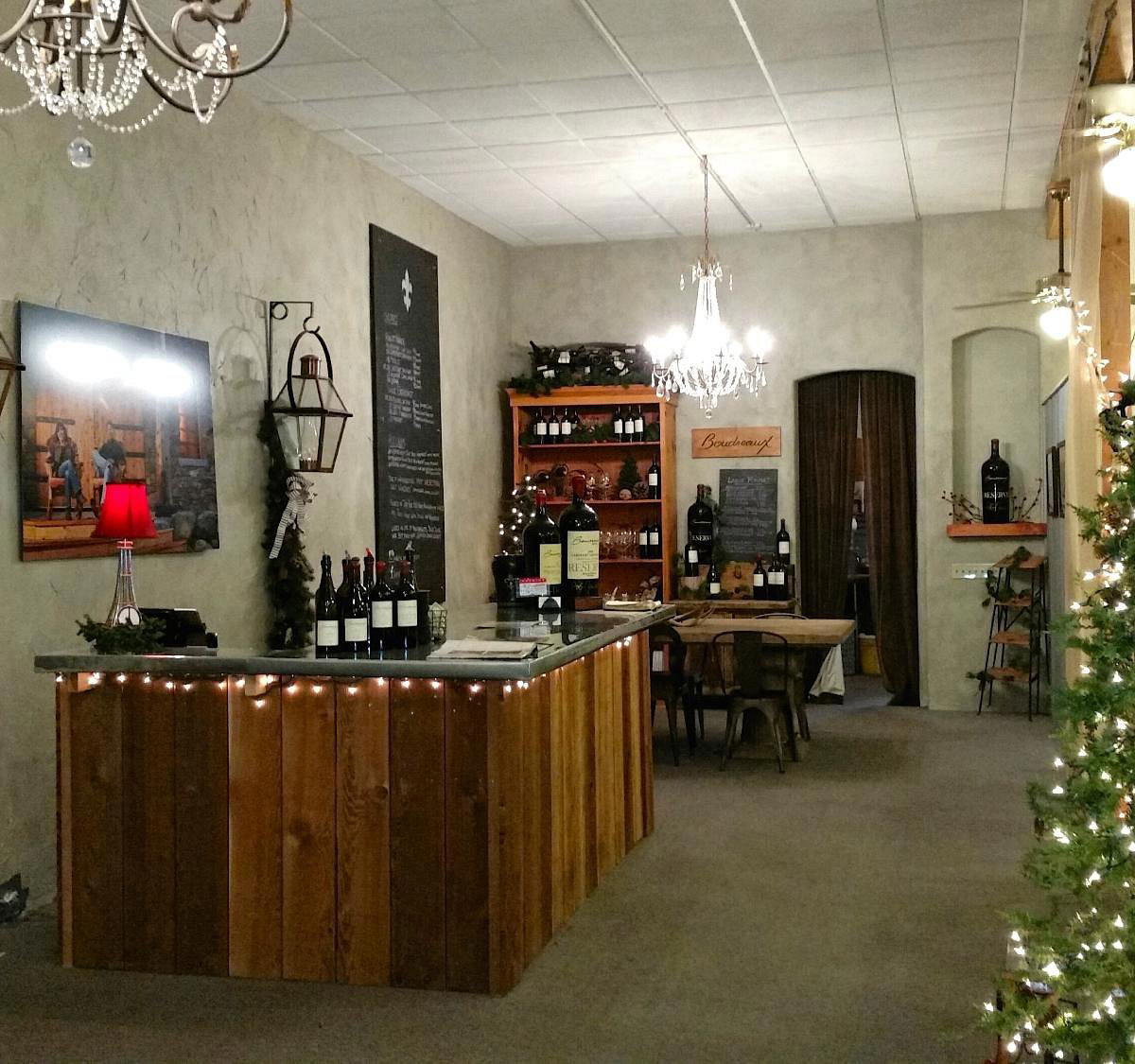
The town's other dining options worth noting include Visconti's Italian Restaurant, which operates in a different register entirely, and Boudreaux Cellars Tasting Room, which anchors the wine-focused end of Front Street's hospitality offerings. For a fuller picture of where München Haus sits in the local dining ecosystem, the full Leavenworth restaurants guide maps the scene with more granularity.
The contrast with destination-tier American dining is instructive without being unfair. The kind of formal ritual that governs a meal at Le Bernardin in New York or The French Laundry in Napa is precisely the opposite of what München Haus is doing. Where those rooms are designed to hold the diner in a state of focused attention, the beer garden format at München Haus disperses attention outward, to the people at the next bench, to the street, to the glass in hand. Both are legitimate dining rituals. They are simply calibrated for different kinds of pleasure. Similarly, the communal energy here has more in common with the convivial dining philosophy at Lazy Bear in San Francisco than with the hushed precision of, say, Atomix in New York City.
What the Format Demands of the Visitor
Beer garden dining is weather-dependent in ways that indoor restaurants are not. Leavenworth's location in the rain shadow of the Cascades gives it sunnier, drier summers than the west side of the mountains, and the town's peak season runs from late spring through October, with a secondary spike during the Oktoberfest celebrations in September and October that draw visitors specifically for the Bavarian food and drink experience. Arriving during those weekends means accepting crowd density and longer counter waits as part of the format.
The shoulder months, early May and late October, offer a different calculation: thinner crowds, cooler temperatures at the outdoor tables, and the same menu. For visitors who prioritize the social ease of the space over the full-sun beer garden experience, those periods can be more rewarding. The town's Bavarian architecture reads differently in autumn light, and the sausage-and-beer combination has an argument for being more seasonally appropriate then than in July.
Planning around München Haus specifically requires accepting that the venue's logistics are informal: counter service, no reservations in the traditional sense, and an experience shaped by how busy the garden is on a given afternoon. That informality is the point. The high-ceremony dining experiences available elsewhere, Blue Hill at Stone Barns, The Inn at Little Washington, Smyth in Chicago, Providence in Los Angeles, Addison in San Diego, Emeril's in New Orleans, The Wolf's Tailor in Denver, ITAMAE in Miami, or Atelier Moessmer Norbert Niederkofler in Brunico, operate on a logic of controlled time and orchestrated sequence. München Haus operates on the opposite logic: time is yours, the sequence is whatever you want it to be, and the meal ends when you decide it does.
Planning Your Visit
München Haus is located at 709 Front St in Leavenworth, Washington, the main pedestrian thoroughfare that runs through the center of the Bavarian village district. Leavenworth is accessible from Seattle via US-2, a route that takes most drivers roughly two and a half hours depending on conditions. The drive through Stevens Pass is itself a draw for visitors in autumn when the larch trees along the eastern slopes turn. Parking in central Leavenworth during peak weekends requires arriving early or using the town's peripheral lots and walking in.
Continue exploring
More in Leavenworth
Restaurants in Leavenworth
Browse all →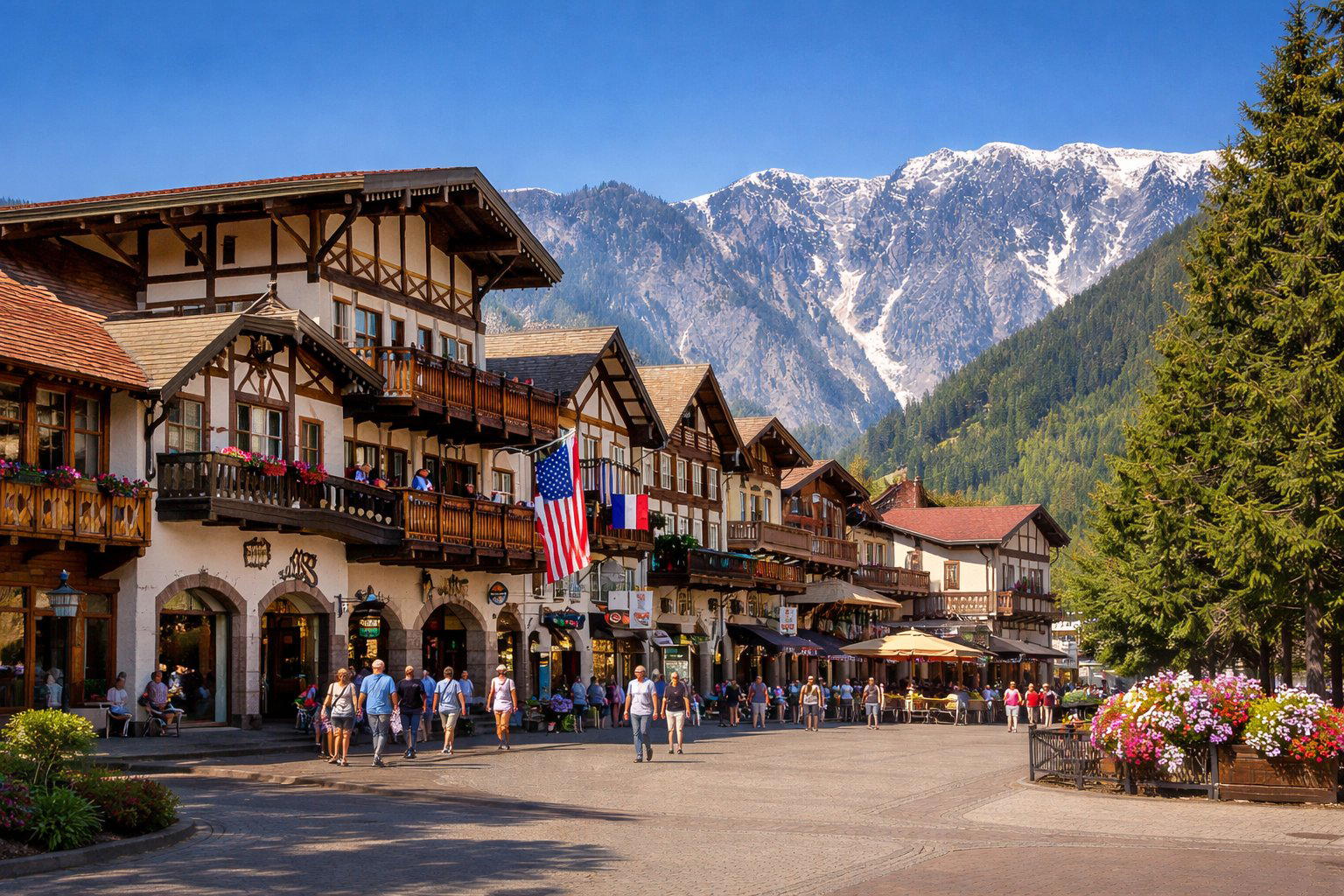
Hotels in Leavenworth
Browse all →
At a Glance
- Lively
- Rustic
- Cozy
- Family
- Casual Hangout
- Group Dining
- Terrace
- Beer Program
- Mountain
Current opening hours
- Monday
- 11 AM–8 PM
- Tuesday
- 11 AM–8 PM
- Wednesday
- 11 AM–8 PM
- Thursday
- 11 AM–8 PM
- Friday
- 11 AM–10 PM
- Saturday
- 11 AM–10 PM
- Sunday
- 11 AM–8 PM
Hours can change for holidays and private events. Last verified .
Lively outdoor beer garden with warm hospitality, fun family atmosphere, and scenic mountain views in a charming historic setting.
Know Before You Go
- Getting there
- 709 Front St, Leavenworth, WA 98826