





Moss sits inside the Blue Lagoon complex on Iceland's Reykjanes Peninsula, holding a Michelin star since 2024 and a wine cellar carved into lava that erupted in 1226. Chef Konstantinos Sakellariou leads a modern cuisine program at the €€€€ price tier, while the Star Wine List rankings, finishing first in both 2024 and 2026, confirm a wine program that punches well above the restaurant's remote setting.
Pearl is the En Primeur Club membership app — saves, bookings, and concierge access live there. Same editors, same standards.
- Address
- Nordurljosavegur 11, 240 Grindavík, Iceland
- Phone
- +354 420 8700
- Website
- bluelagoon.com
- Directions
- Get directions
 Saves & bookings on Pearl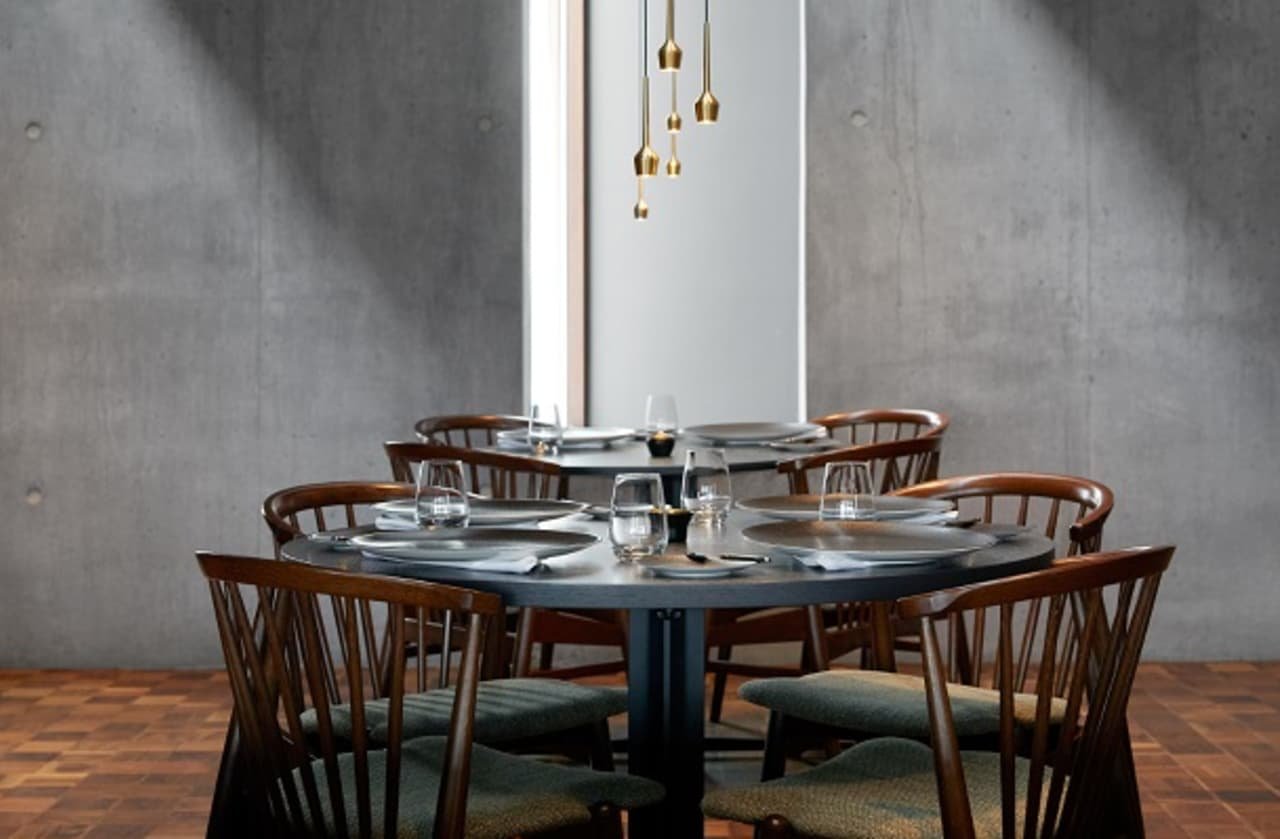
Moss is a Michelin-starred restaurant in Grindavík, Iceland, serving Modern Icelandic Fine Dining at the Blue Lagoon complex. The Blue Lagoon complex on Iceland's Reykjanes Peninsula sits atop among the more geologically active stretches of land in Europe, and the restaurant that lives inside it was built around a wine cellar formed from lava that flowed in 1226. That is not a design concept. It is geology pressed into service as architecture, and it gives Moss a physical specificity that no interior designer could replicate.
Inside, the transition from the geothermal exterior to the dining room carries the same tonal shift you feel entering a serious restaurant anywhere in the Nordic region, the noise drops, the pace slows, and the room asks for attention. The steam from the lagoon filters the light differently at different times of day, which means the experience at midwinter and midsummer are genuinely distinct. For visitors already staying at the Blue Lagoon's accommodation, the restaurant functions as the culinary anchor of a longer stay. For those travelling from Reykjavík, roughly 50 kilometres to the northeast, it is a deliberate destination, and it is worth treating it as such.
Modern Cuisine at the Edge of the Atlantic
The category label here is Modern Cuisine, but that classification carries different weight in Iceland than it does in, say, Milan or Buenos Aires. Iceland's food culture has undergone a concentrated shift over the past two decades. The country's small population and extreme seasonality once meant a cuisine defined by preservation, dried fish, fermented shark, skyr, rather than elaboration. What has emerged from that base is a generation of chefs working in a tradition they are still actively constructing, pulling from Nordic frameworks while sitting on ingredients, Arctic char, langoustine, lamb from free-range flocks, with no direct European equivalent.
Moss operates within that context under chef Konstantinos Sakellariou, whose name signals a background that reaches beyond the Nordic kitchen. Modern cuisine programs at this price tier increasingly reflect this kind of cross-cultural formation: the local product is primary, but the technique library draws from wherever the chef trained. Comparing Moss to international peers in the modern cuisine bracket, venues like Cracco in Galleria in Milan, Maison Lameloise in Chagny, or Agli Amici in Godia all share the Michelin one-star tier but operate inside deep culinary traditions stretching back generations. Moss is doing something structurally different: it is building a fine dining identity in a place where that tradition is less than a quarter century old.
That context makes the Michelin recognition, awarded in both 2024 and 2025, a more interesting data point than it would be in cities with longer fine dining histories. Michelin has been expanding its Nordic coverage deliberately, and the inclusion of a restaurant inside a geothermal spa complex signals the guide's willingness to evaluate dining on its own terms regardless of surrounding format. ÓX in Reykjavík operates at the same price tier and holds comparable recognition; together they represent Iceland's current ceiling for formal dining.
The Wine Cellar Argument
The cellar at Moss is the kind of detail that, once you know it, reframes everything else. It was constructed inside lava from a volcanic eruption in 1226, not an adapted space, not a design reference to volcanic activity, but the actual frozen rock formation used as the physical architecture of a wine storage room. That is a provenance argument no other cellar in the world can make in quite the same terms.
The wine program has built outward from that foundation in ways the Star Wine List rankings confirm directly. Finishing first in 2024, second in 2026, and first again in a parallel 2026 ranking, the list contains vertical vintages from France, Spain, and further afield. The vertical depth indicates a program focused on maturity and comparison across time, rather than simply breadth of coverage. For wine-focused diners, this is the more compelling reason to visit: the cellar is not decorative, it is functional, and the list has been assembled with the kind of rigour that wins specialist awards three times in three years.
Wine-destination restaurants at this level sit in a specific comparable set globally. Frantzén in Stockholm similarly treats its wine program as a co-equal element of the experience rather than a supporting cast. Bartholomeus in Heist and Casadelmar in Porto-Vecchio occupy the same intersection of dramatic natural setting and serious cellar depth. Moss's advantage over all of them is the sheer geological improbability of the room itself.
Grindavík's Dining Context
Grindavík as a dining destination requires some framing. The town itself is a small fishing community on the southwestern tip of the Reykjanes Peninsula, better known internationally for the Blue Lagoon than for a restaurant scene. The recent volcanic activity on the peninsula, eruptions between 2023 and 2024 damaged parts of Grindavík and prompted temporary closures at the Blue Lagoon complex, has made the area's geology newly present in ways both dramatic and practical.
Within the Grindavík dining frame, the comparison set is thin. Lava, which also operates within the Blue Lagoon complex, takes a Nordic approach and functions as the more accessible entry point for guests who want serious food without the full €€€€ commitment. Blue Lagoon's own restaurant offers a distinct format for guests already on site. For anyone whose primary reason to visit is fine dining rather than the geothermal experience, Moss is where the investment goes.
The Reykjavík scene, which includes Dill, Matur og Drykkur, and ÓX among its leading addresses, operates at higher volume and with more options at each price point. But Reykjavík also lacks the physical drama of eating at the edge of a geothermal field inside an 800-year-old lava formation. These are not substitutable experiences. Those planning a longer Iceland stay who want to cover both should treat Moss as a separate day trip rather than an alternative to city dining.
Planning a Visit
Moss sits at the summit of Iceland's formal dining price range. At the €€€€ tier, with Michelin recognition and a specialist wine program, this is not a casual drop-in. The restaurant is accessed through the Blue Lagoon complex at Nordurljosavegur 11, 240 Grindavík, and given the complex's own booking requirements and the restaurant's capacity constraints, advance planning is advisable, particularly during peak summer months when the peninsula draws visitors from across Iceland and internationally. The combination of a Michelin star and a Star Wine List first-place finish means the room fills on reputation alone.
The restaurant does not exist independently of the complex, which means any disruption to Blue Lagoon access affects Moss directly. That interdependence is part of the visit's character: Moss cannot be separated from its setting, which is precisely what makes it interesting.
For broader context on the peninsula's offerings, the Grindavík bars guide and wineries guide round out what is available in the area. Those looking at comparable modern cuisine programs at the one-star tier internationally might also consider Trescha in Buenos Aires, Azafrán in Mendoza, 11 Woodfire in Dubai, or FZN by Björn Frantzén in Dubai, each representing a different version of what modern cuisine looks like when it takes a specific place seriously.
What It’s Closest To
Comparable venues nearby, for context on price, style, and recognition.
| Venue | Cuisine | Price | Awards | Notes |
|---|---|---|---|---|
| MossThis venue — the venue you are viewing | Modern Icelandic Fine Dining | $$$$ | Michelin 1 Star | Not listed |
| Blue Lagoon | Modern Icelandic Seafood & Grill | $$$$ | World's 50 Best #44 | Grindavík |
| Lava | Modern Icelandic Fine Dining | $$$ | Not listed | Grindavík |
| ÓX | Modern Icelandic Fine Dining | $$$$ | Michelin 1 Star | Reykjavíkurborg |
| DILL | New Nordic Tasting Menu | $$$$ | Michelin 1 Star | Reykjavíkurborg |
| 3 Frakkar | Traditional Icelandic Seafood | $$$ | Not listed | Reykjavíkurborg |
Recognition history
Dated appearances from independent guides and award organizations, with the underlying list record or original source where available.
Michelin 1 Star
Michelin
Opinionated About Dining Newly Added European Restaurants
Opinionated About Dining
Opinionated About Dining Top Restaurants in Europe Recommended
Opinionated About Dining
Star Wine List
Star Wine List
White Guide Nordic Restaurants - Fine Level
White Guide
Wine Spectator Best of Award of Excellence
Wine Spectator
Michelin 1 Star
Michelin
World Culinary Awards Iceland's Best Hotel Restaurant 2025 #1
World Culinary Awards
Michelin 1 Star
Michelin
Star Wine List
Star Wine List
Continue exploring
More in Grindavík
Restaurants in Grindavík
Browse all →

Bars in Grindavík
Browse all →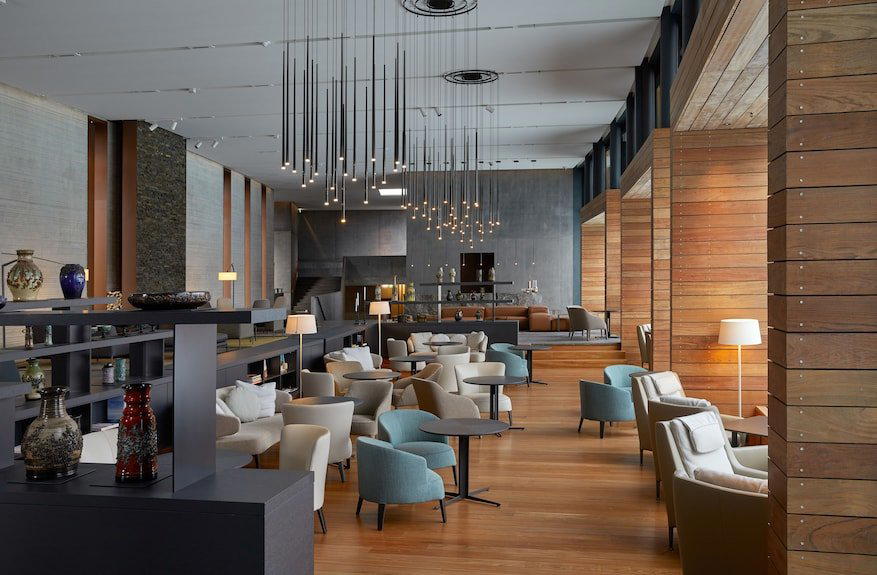
Hotels in Grindavík
Browse all →
At a Glance
- Romantic
- Elegant
- Modern
- Scenic
- Sophisticated
- Date Night
- Celebration
- Special Occasion
- Open Kitchen
- Panoramic View
- Hotel Restaurant
- Chefs Counter
- Extensive Wine List
- Sommelier Led
- Local Sourcing
- Mountain
Current opening hours
- Monday
- Closed
- Tuesday
- Closed
- Wednesday
- 6–11 PM
- Thursday
- 6–11 PM
- Friday
- 6–11 PM
- Saturday
- 6–11 PM
- Sunday
- 6–11 PM
Hours can change for holidays and private events. Last verified .
Modern, minimalist Nordic design with floor-to-ceiling windows overlooking volcanic landscape; intimate and exclusive atmosphere with refined service.