Tabelog 100 #71
Our verdict
Mori no Rakuda belongs to Osaka’s quieter cafe register: small-format, daytime, ingredient-minded, and closer to a neighbourhood refuge than a dessert showroom. Its 2025 Tabelog Cafe WEST 100 selection gives it a clear quality signal, while the cafe-and-cake format keeps the experience informal rather than ceremonial.

Pearl is the En Primeur Club membership app, where members save venues, book tables and use the concierge.
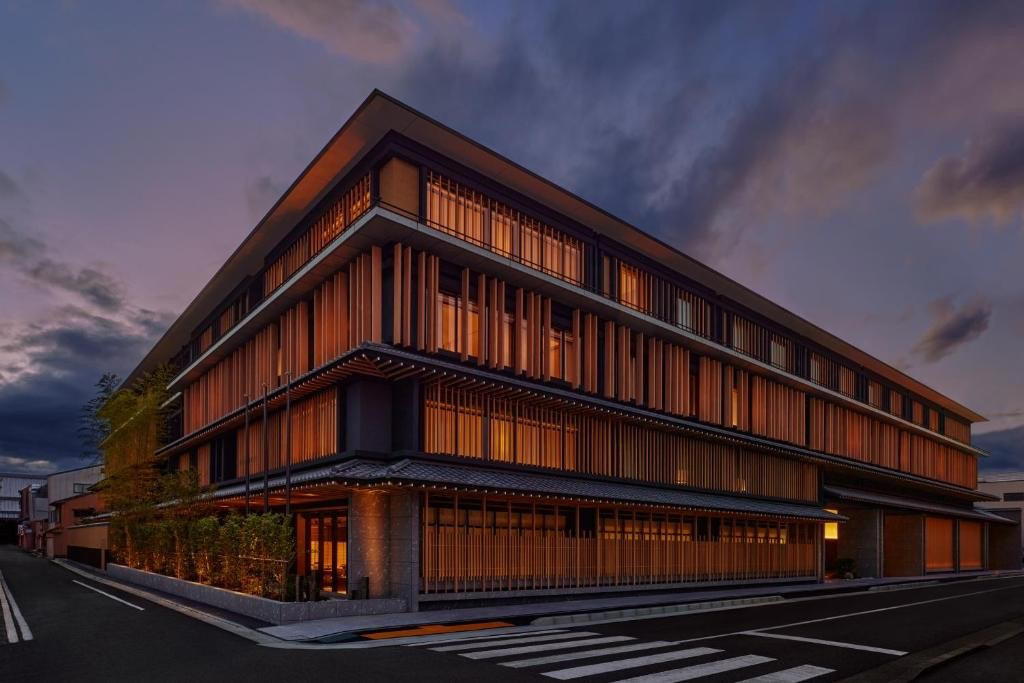
Approaching Osaka, the city’s appetite changes register. The city is often read through takoyaki steam, standing counters, department-store basements, and late-night neon, but its cafe culture works at a lower volume: focused menus, familiar routines, and pauses that treat tea, cake, and light food as daily rituals rather than spectacle. Mori no Rakuda sits in that Osaka, where the pleasure is not scale but pace.
The cafe’s Tabelog recognition for 2025 places it in a defined dining conversation, not a generic coffee-stop category. In Japan, stronger cafe lists tend to reward places with a clear identity: sweets that can hold their own without restaurant theatrics, drinks that support rather than dominate, and experiences built for repetition. The useful comparison is not with Osaka’s high-spend tasting-menu circuit, but with specialist addresses where craft is measured in consistency and restraint.
A small Osaka cafe scene built around source, season, and restraint
Osaka’s cafe culture has long lived between kissaten inheritance and newer specialist formats. The older model prized routine: a seat, a cup, a slice of cake, time held at human speed. The newer model brings sharper attention to menu focus and tighter product identity. Mori no Rakuda belongs to that second current without abandoning the first. Its listed categories, cafe and cake, sound modest, but modest categories in Japan often demand precision because there is nowhere to hide.
The ingredient angle matters here because the format is focused. A cake-led cafe identity points toward food built for daytime regularity rather than grand-occasion dining. In a city where inexpensive meals can mean counters, quick lunches, bakery runs, or other casual stops, this kind of cafe offers a different kind of value: a controlled pause, a narrow remit, and a menu that makes sense for solo dining as much as for two friends catching up.
That distinction is useful when mapping Osaka by appetite. A visitor chasing street-food density might start elsewhere in the city; a bread-focused morning might point toward another bakery; a broader cafe comparison can include other Osaka dining rooms. Mori no Rakuda occupies a quieter lane: less about city-wide appetite as performance, more about how Osaka uses cafe stops for daily recovery.
Why the format matters more than spectacle
The cafe runs on a focused premise. That changes the way the experience should be judged. Large restaurants can create energy through flow; cafes like this succeed or fail on proportion. The best examples suit short pauses, unhurried conversation, and repeat visits, reinforcing the point: this is not a place built around occasion management.
The Tabelog score of 3.61 is a useful Japanese context marker because cafe ratings on the platform tend to move in smaller increments than luxury restaurant ratings. A 2025 selection carries more editorial weight than the raw number alone. It signals sustained approval within a category that includes dessert specialists, coffee rooms, tea-led addresses, and hybrid lunch cafes across Japan.
Within Osaka’s low-to-mid casual dining tier, the cafe also sits beside a crowded field of focused operators. Mannen Curry, Spice Curry Babiru no To, Udama Tanimachi base, Dahl, and other Osaka rooms all answer different versions of everyday appetite. Mori no Rakuda’s point of difference is not luxury, but category discipline: cafe, cake, and a pace scaled for quiet use.
That restraint also makes it a practical counterweight to the city’s louder dining routes. Osaka can reward constant movement, but a serious cafe asks for a slower read of the city. Its rhythm shifts with daily routines and flexible stops, with lunch and afternoon patterns shaping demand. A cafe in this context works when it understands repetition, not when it tries to perform destination dining.
How to place it in an Osaka food itinerary
Mori no Rakuda makes the strongest sense as part of a daytime Osaka plan rather than as the centrepiece of a night out. Pair it with Osaka walking, use it as a pause between heavier meals, or treat it as a cafe stop when the city’s counter dining starts to feel too compressed. Its listed budget, JPY 1,000 - JPY 1,999 for both lunch and dinner, adds to its usefulness, especially for travellers trying to keep a day flexible.
For a broader Osaka edit, Our full Osaka restaurants guide is the right starting point, with separate city reads through Our full Osaka hotels guide, Our full Osaka bars guide, Our full Osaka wineries guide, and Our full Osaka experiences guide. Travellers building a Japan-wide casual dining map can also compare the way small-format venues express place across unnamed dining rooms in Kyoto, Kumamoto, Sapporo, Kawasaki, and beyond.
Osaka’s dining strength is not only in famous foods; it is in the number of highly specific rooms that know exactly what they are for. That is why a cafe like this belongs in the conversation with more obvious specialist formats, from counters and casual rooms to national and overseas Japanese-inflected references. The through-line is focus: a narrow promise, executed without excess.
Frequently asked questions
What kind of setting is Mori no Rakuda?
Mori no Rakuda is an Osaka cafe listed in the cafe and cake categories. It was recognised by Tabelog in 2025, with a listed score of 3.61.
Where exactly is Mori no Rakuda?
Osaka.
What's the price range at Mori no Rakuda?
Pricing at Mori no Rakuda is listed as JPY 1,000 - JPY 1,999 for dinner and JPY 1,000 - JPY 1,999 for lunch.
What is Mori no Rakuda known for?
Mori no Rakuda is known as an Osaka cafe in the cafe and cake categories, with Tabelog recognition in 2025.
Pricing, Compared
Comparable venues for context, by category and price tier.
| Venue | Cuisine | Price | Awards | Notes |
|---|---|---|---|---|
| Mori no RakudaThis venue (the venue you are viewing) | Japanese-style tea room & cake café | $10–20 | Tabelog 100 #71 | Not listed |
| Delicius pasticceria Oosaka ten | Modern Japanese patisserie & cheesecake shop | $1–10 | Tabelog 100 #22 | Kita, Modern Japanese patisserie & cheesecake shop |
| Le Sucre Coeur Kishibe | Artisan French-style bakery & cafe | Not listed | Tabelog 100 #31 | Suita / Kishibe, Artisan French-style bakery & cafe |
| Boulangerie goût | Chūō, French-style bakery & cafe | $10–20 | Tabelog 100 #34 | Not listed |
| Cafe Toki ona | Not listed | $10–20 | Tabelog 100 #100 | Kita, Japanese neighborhood cafe with bagels and pasta |
| Shigeki Ya | Japanese Curry | Not listed | Tabelog 100 #78 | Chūō, Japanese Curry |
Recognition history
Dated appearances from independent guides and award organizations, with the underlying list record or original source where available.
Tabelog 100 #71 · No. 71
Tabelog · Tabelog 100 - Cafe - WEST - 2025