Moreton Fig
Our verdict
Moreton Fig occupies a distinctive position on the University of Southern California campus at 3607 Trousdale Pkwy, where collegiate architecture frames a dining room that draws both the USC community and visitors from across Los Angeles. The address places it inside a specific kind of institutional setting that shapes everything from the pace of service to the rhythm of the dining room across the academic calendar.

Pearl is the En Primeur Club membership app — saves, bookings, and concierge access live there. Same editors, same standards.
- Address
- 3607 Trousdale Pkwy, Los Angeles, CA 90089
- Phone
- (213) 821-3441
- Website
- hospitality.usc.edu
- Directions
- Get directions
- Booking
- Book on OpenTable
A Campus Address That Sets the Terms
University-anchored restaurants operate under a set of conditions that few urban dining rooms face: a captive audience that cycles seasonally, an architectural context designed for purposes other than hospitality, and a clientele that spans faculty lunches, donor dinners, and casual student meals within the same week. Moreton Fig, at 3607 Trousdale Pkwy on the University of Southern California campus in Los Angeles, sits inside that specific category. The address is not incidental. It defines the physical container, the customer mix, and the rhythms that govern the room across the year.
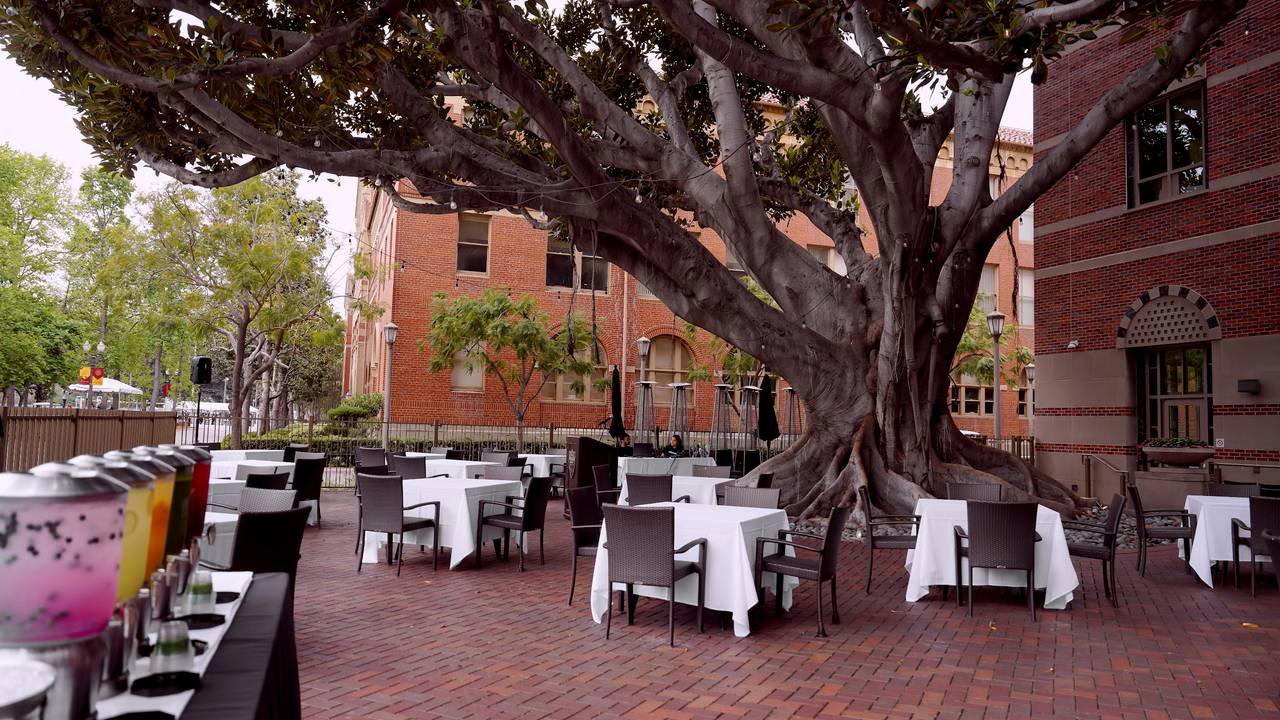
USC's Trousdale Parkway is the university's ceremonial spine, flanked by buildings that signal institutional permanence. Dining in that context carries a particular atmosphere: the scale of surrounding structures tends toward the monumental, and any restaurant operating within or adjacent to them either fights against that weight or leans into it. The Moreton Fig borrows its name from the Moreton Bay fig trees that define the campus grounds, a detail that positions the venue within USC's landscape identity rather than apart from it. Named spaces in institutional settings tend to anchor themselves in the physical environment this way, and that choice signals something about how the room relates to its surroundings.
The Physical Container
Campus dining at the higher end of the market in the United States has undergone a quiet repositioning over the past decade. Institutions that once treated food service as purely functional have increasingly invested in dining venues designed to compete with the broader restaurant market in their respective cities. The logic is partly recruitment, partly donor relations, partly a recognition that faculty and staff compare their on-campus options against what the surrounding city offers. In Los Angeles, that comparison is demanding. The city's restaurant scene includes Providence (Contemporary Seafood), Kato (New Taiwanese, Asian), and Hayato (Japanese) at the upper tier, alongside technically ambitious operators like Somni (Molecular) and established Italian anchors like Osteria Mozza (Italian). Any venue that draws from the same pool of diners in Los Angeles is competing, at least partly, against that broader context.
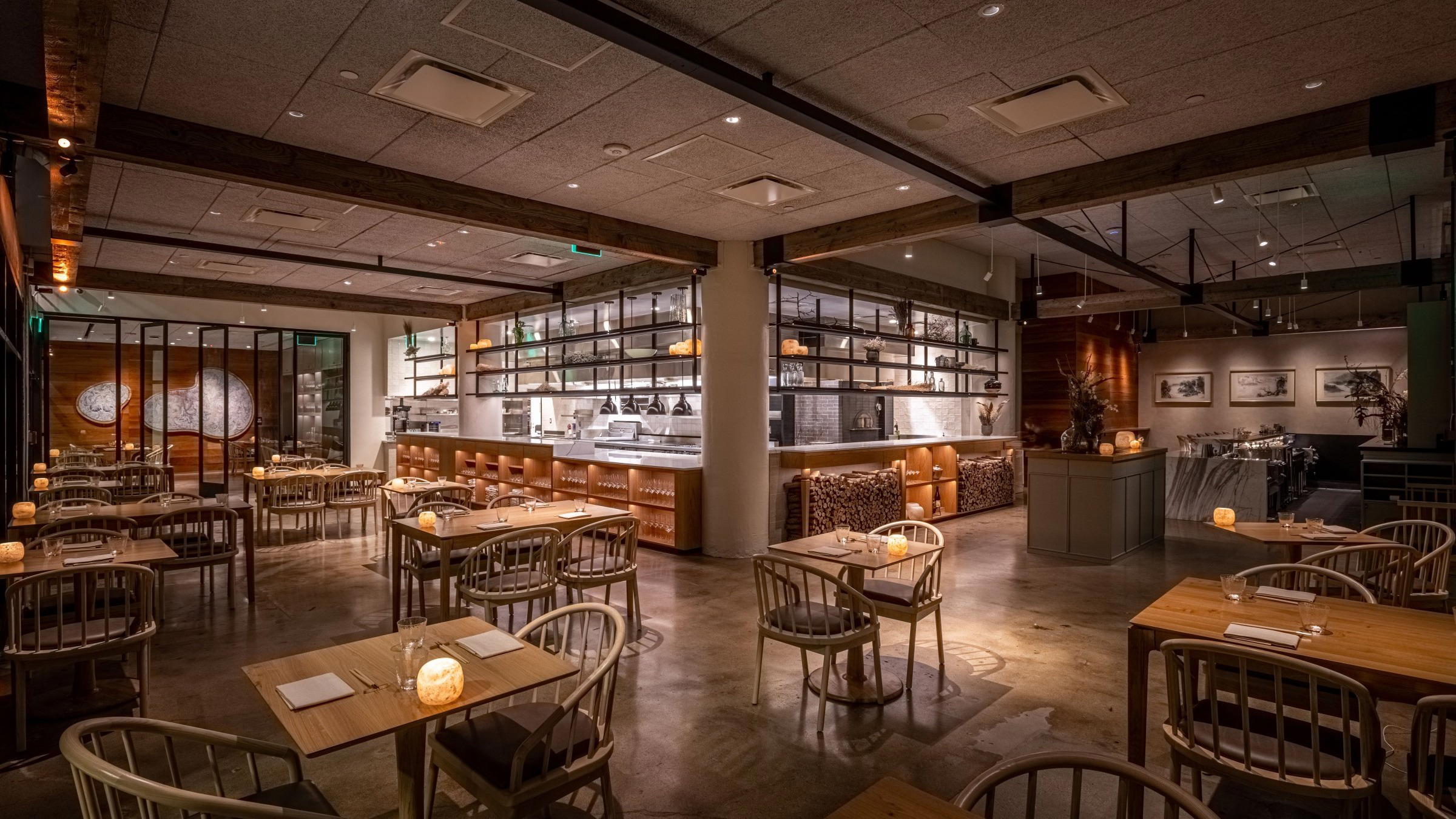
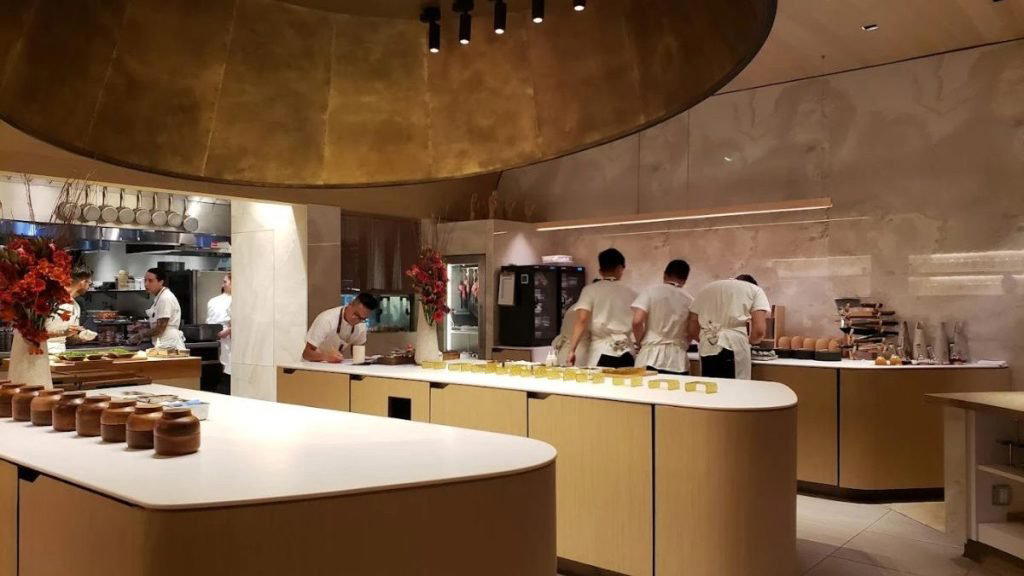
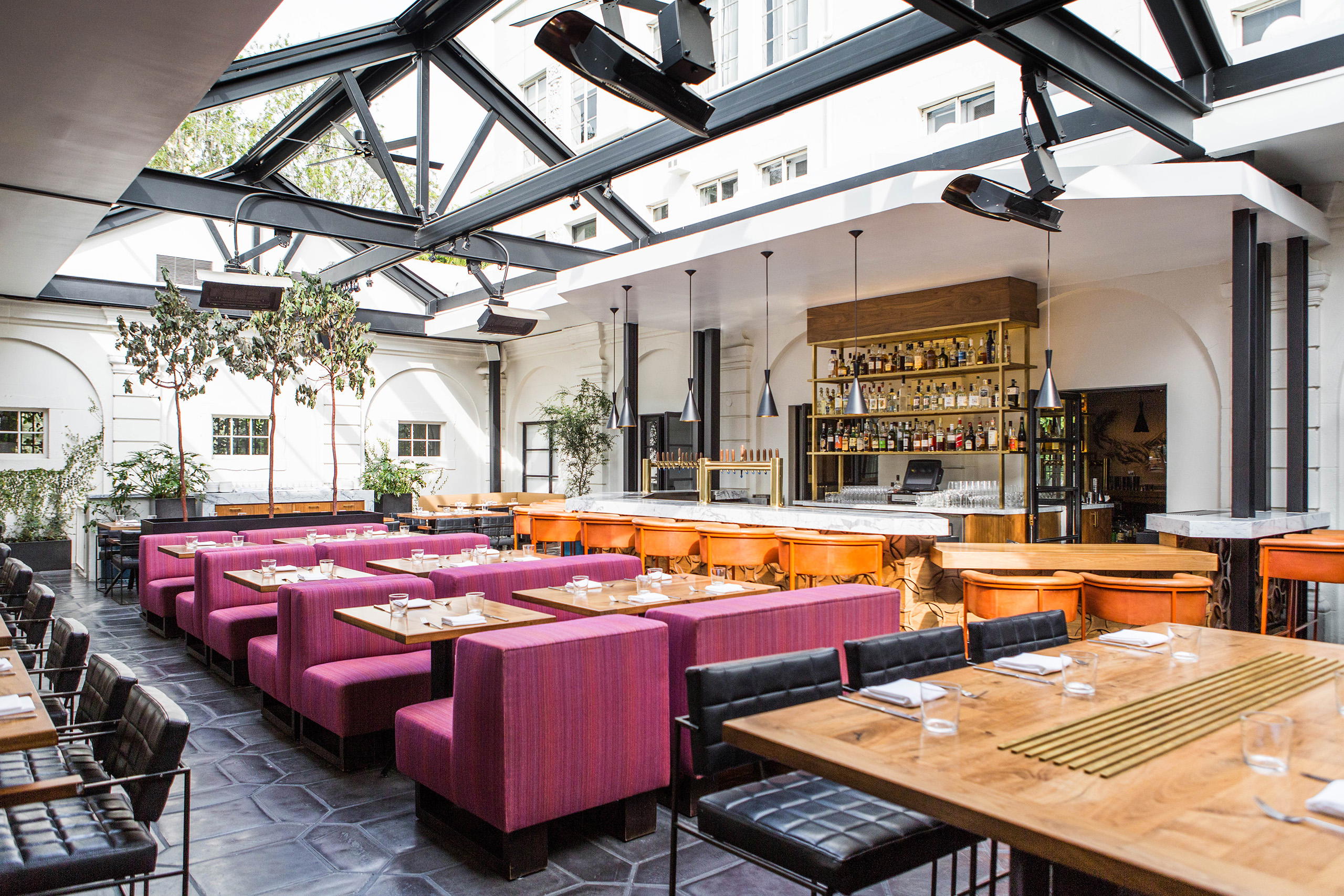
The design logic of campus-anchored dining rooms in this tier tends toward materiality: wood, stone, and natural light work harder than decorative gestures, partly because they age better in high-traffic environments, and partly because they communicate permanence without requiring ongoing reinvention. Seating arrangements in these spaces typically balance communal and private configurations, given the range of dining occasions the venue must accommodate in a single service.
Seasonal Rhythms and the Academic Calendar
Few restaurants feel the turn of a calendar as acutely as those operating within a university. The academic year structures foot traffic in ways that restaurants on open city blocks never experience: the quiet of winter and spring breaks, the surge of orientation weeks, the particular energy of commencement season. For a venue positioned within USC's campus, late spring and early fall mark the high-demand periods, when the dining room absorbs the full weight of the university's social calendar. Summer draws a different crowd, often conference guests and visitors rather than the regular faculty and student base. That seasonal structure is useful intelligence for anyone planning a visit outside peak term time, when the room typically operates at a different pace.
This kind of temporal variability separates campus dining from street-level restaurants in ways that matter for visitors. Advance planning around USC's academic calendar, available through the university's public schedule, is a practical step that shapes the experience as much as any menu consideration.
Los Angeles in the Broader Fine Dining Picture
Placing Moreton Fig inside the Los Angeles dining context means acknowledging how the city fits into the national fine dining conversation. Across the United States, the top tier of restaurant ambition clusters in a handful of cities. In California alone, The French Laundry in Napa and Single Thread Farm in Healdsburg set a particular register of precision and commitment to place. Regionally, Addison in San Diego, Bacchanalia in Atlanta, and Emeril's in New Orleans each occupy defined positions in their city's dining hierarchy. Further afield, destinations like Atomix in New York City and 8 1/2 Otto e Mezzo Bombana (Hong Kong) in Hong Kong demonstrate how institutional dining ambition reads across different cultural contexts.
Los Angeles's own contribution to this tier has accelerated over the past decade, with the city moving from a reputation built on casual California cuisine to one that includes serious tasting-menu formats and technically precise cooking. That shift raises the bar for every dining room operating in the city, including those with campus addresses. For a broader view of where Los Angeles dining sits today, the full Los Angeles restaurants guide maps the city's current range across price tiers and cooking styles.
Planning Your Visit
Moreton Fig's USC campus location means access follows the university's own rhythms more than a typical restaurant's posted hours. Visitors arriving from off-campus should account for parking and entry logistics specific to USC's Trousdale Pkwy address, which sits within a managed campus environment. Checking with the university's visitor services or the venue directly before visiting is advisable, particularly on days when the campus hosts events that affect pedestrian and vehicle access. Dress: Budget: Getting there: 3607 Trousdale Pkwy, Los Angeles, CA 90089, within the USC campus; public transit via nearby Expo Line stops is a practical alternative to campus parking.
Frequently asked questions
What part of town is Moreton Fig in?
Moreton Fig is located at 3607 Trousdale Pkwy, Los Angeles, CA 90089, Los Angeles.
Is Moreton Fig open to the public, or is it restricted to USC students and staff?
Moreton Fig is located within the USC campus at 3607 Trousdale Pkwy, Los Angeles, a setting that places it in a category of university dining rooms that have repositioned toward external guests over the past decade. Campus access protocols vary by institution, and whether non-USC visitors can walk in without affiliation is best confirmed directly with the venue. In the Los Angeles fine dining context, the restaurant occupies a distinct position as one of the few sit-down options embedded within a major research university.
What do people recommend at Moreton Fig?
USC-adjacent diners tend to flag the seasonal rotation as the draw, since campus-tied kitchens at this positioning tier typically anchor their menus to what changes quarterly rather than what stays fixed. Asking staff about current preparations on the day of your visit will yield more accurate guidance than any standing recommendation.
Do they take walk-ins at Moreton Fig?
Moreton Fig sits on the USC campus at 3607 Trousdale Pkwy, which means access is shaped by the university's own schedule rather than a standard restaurant door policy. Walk-in availability is likely to vary with the academic calendar — peak semester periods will see heavier foot traffic than intersession weeks. Contacting the venue ahead of arrival is the practical approach, particularly if you are not affiliated with the university and are visiting from the broader Los Angeles area.
Peers in This Market
| Venue | Cuisine | Price | Awards | Notes |
|---|---|---|---|---|
| Moreton FigThis venue — the venue you are viewing | Farm-to-Table American | Not listed | Not listed | Not listed |
| Kato | Modern Taiwanese Fine Dining | $300–500 | 2 Michelin Stars · World's 50 Best #49 | New Taiwanese, Asian |
| Hayato | Traditional Japanese Kaiseki | $300–500 | 2 Michelin Stars · La Liste Top Restaurants | Japanese |
| Vespertine | Avant-Garde Tasting Menu | $200–300 | 2 Michelin Stars · La Liste Top Restaurants | Progressive, Contemporary |
| Camphor | Modern French with Southeast Asian influences | $150–200 | Michelin Plate · World Best Burgers World's 101 Best Burgers #15 | French-Asian, French |
| Gwen | Contemporary American Steakhouse | $50–100 | Michelin Plate · Wine Spectator Best of Award of Excellence | New American, Steakhouse |