
Momotaro sits in Nishiasakusa’s old sweets lane rather than Tokyo’s luxury dining circuit, which is precisely the point. Its Tabelog 100 selection for Tokyo Japanese traditional sweets and sweets cafés in 2023 places it among the city’s serious wagashi addresses, with a modest price band and take-out format that keep the focus on craft rather than ceremony.
Pearl is the En Primeur Club membership app — saves, bookings, and concierge access live there. Same editors, same standards.
- Address
- Japan, 〒111-0035 Tokyo, Taito City, Nishiasakusa, 2 Chome−13−10 蔵田フラッツ西浅
- Phone
- +81 3-3841-1287
- Website
- twitter.com
 Saves & bookings on Pearl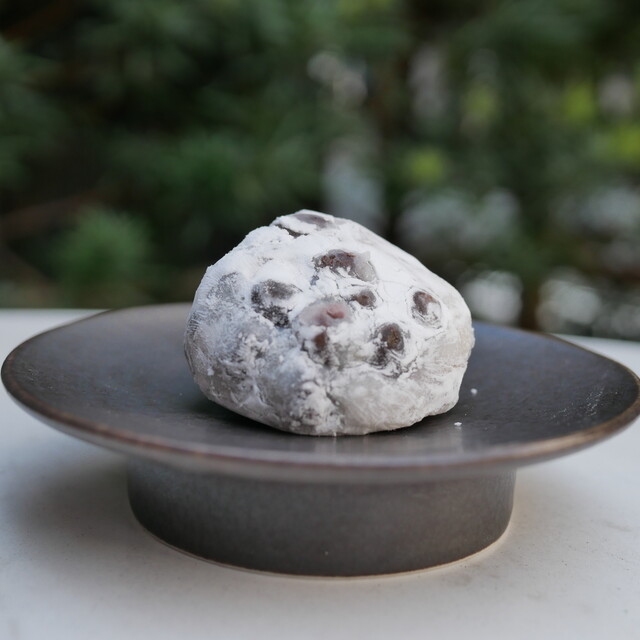
Approaching Nishiasakusa, the rhythm shifts before the address appears. The district sits between temple traffic, kitchenware shops, low-rise homes, and small food businesses Tokyo protects through habit more than spectacle. Momotaro belongs to that older register: a Japanese traditional sweets shop where the exchange is brief, the standards precise, and pleasure depends on freshness, season, and restraint rather than dining-room performance.
Tokyo wagashi runs on a different clock from counter restaurants. Sushi and kappo chase reservations, chef lineages, and high-touch service; sweets shops rely on repeat local custom, afternoon demand, and seasonal rotation. In a crowded, highly local category, recognition matters. Momotaro’s selection for the Tabelog 100 Japanese traditional sweets and Japanese sweets café list for Tokyo in 2023 signals that this is not a general dessert stop attached to a café trend, but part of the city’s disciplined wagashi circuit.
Nishiasakusa wagashi, measured by craft rather than ceremony
Asakusa’s food identity is often reduced to tourist snacks around Sensō-ji, but the stronger reading is granular. The area holds old confectionery habits, casual洋食 rooms, sukiyaki houses, standing bars, and shops serving residents as much as visitors. In that mix, Momotaro sits at the low-cost end of a neighborhood with wide price variance. Nearby comparison points show the spread: Asakusa Imahan Kokusai dori honten prices into a formal sukiyaki tier, Yoshikami Asakusa ten occupies a mid-priced Western-Japanese lane, and Tachinomi Asakusa Sharemon stays casual but drinking-led. Wagashi fills another role, between errand, gift, and seasonal pause.
The format matters. Take-out service changes the evaluation: not table pacing, wine pairing, or dining-room polish, but narrower questions. Does the shop belong to a serious sweets tradition? Is it recognized within Tokyo rather than merely convenient to a sightseeing route? Does the price band support daily use rather than occasion dining? Here, yes. A sub-¥1,000 spend profile places it where craft must reveal itself without tasting-menu theater.
That makes team dynamics harder to see, not absent. In wagashi shops, collaboration is compressed into production and counter service: makers managing texture and timing, front staff moving perishable sweets quickly, and the business choosing which seasonal forms deserve space. Without a public chef narrative, the editorial read stays with the category. Japanese sweets reward coordination because rice flour, bean paste, agar, and sugar respond differently to heat, humidity, and holding time. The counter is brief; the work behind it is unforgiving.
Recognition in a city that takes sweets seriously
The 2023 Tabelog 100 recognition is the strongest trust signal. Tokyo has deep wagashi competition across department-store counters, temple-adjacent shops, tea houses, and neighborhood specialists; inclusion in a Tokyo-specific sweets list places Momotaro inside that field, not a generic Asakusa snack category. Its Tabelog score of 3.69 adds another public indicator, especially in Japan, where ratings are compressed and a high-three score can mark a specialist with sustained local attention.
There is also a useful contrast with Tokyo’s premium dining economy. Visitors planning around high-ticket counters can over-index on scarcity: omakase seats, late-night bars, and hotel restaurants. Wagashi breaks that pattern. It is lower in price, faster in format, and more dependent on day-to-day consistency. That is not lesser; it is different evidence about Tokyo. A city’s sweets shops show how carefully it treats small rituals, from bringing something to a host to buying a seasonal piece for tea at home.
Momotaro’s lack of an official website is not unusual for this tier of Tokyo specialist. The practical implication is simple: treat posted hours and closures cautiously, especially around holidays or weather-affected days, and plan it as part of a neighborhood walk rather than the anchor of a cross-city itinerary. The nearest-station context is Asakusa, making it easy to pair with temple streets, Kappabashi, or a more formal district meal.
How to place it in a Tokyo eating day
The strongest use case is not dessert after a long meal, but a daytime stop that sharpens the neighborhood itinerary: something sweet before the lunch rush, a small purchase after Kappabashi, or a restrained counterpoint to a heavier Asakusa booking. The price band supports that role. In a city where one evening can swing from casual curry to a ¥15,000-plus dinner, serious wagashi below ¥1,000 changes the day’s texture without demanding a major commitment.
For broader planning, EP Club’s city rails separate categories rather than forcing every Tokyo address into one dining list. Start with Our full Tokyo restaurants guide for restaurant context, then split lodging, drinking, wine, and cultural planning through Our full Tokyo hotels guide, Our full Tokyo bars guide, Our full Tokyo wineries guide, and Our full Tokyo experiences guide. That separation matters in Tokyo, where a sweets shop, hotel bar, and temple-side lunch can all be excellent for different reasons.
Readers comparing styles within Japan can map Momotaro against other casual and specialist formats:. 鮪と炭火焼き うお炭 秋葉原店, 12/10 Shinjuku ten, 124. KAGURAZAKA (Yakitori), 2D Cafe, and 3 Chome no Curry Ya San. For a wider national comparison, look at -Grilled beef Sukiyaki- KAMAKURA TANUKIAN 鎌倉 たぬき庵 in Kamakura.cafe in Osaka.know in Kumamoto, (Shoku) Vietnam in Kawasaki, [Curry Senmon Ten] Maruyama Kyoju. in Sapporo, and [ki:] in Kyoto. The overseas Japanese-food lens differs at Jōdo Saké Bar in Los Angeles and Onigiri Time in Pasadena.
The editorial case for Momotaro is not scale, luxury, or personality branding. It is category discipline. In Nishiasakusa, where old Tokyo food habits sit close to visitor traffic, a recognized wagashi specialist offers a compact lesson in how the city treats sweetness: seasonal, modestly priced, and serious without needing a long explanation.
Peers in This Market
Comparable venues by category and price.
| Venue | Cuisine | Price | Notes |
|---|---|---|---|
| MomotaroThis venue — the venue you are viewing | Traditional Japanese wagashi (confectionery) shop | $ | Not listed |
| Tonpei | Traditional Tonkatsu Counter | $ | Taitō |
| Koukai Bou | Classic Tokyo ramen & tsukemen | $ | Kōtō |
| Stand Hero | Standing Japanese Izakaya & Kushikatsu Bar | $ | Chiyoda |
| Minna no Pan'ya | Traditional Japanese bakery | $ | Chiyoda |
| Uchitate ya | Handmade Udon Noodle Shop | $ | Toshima |
Recognition history
Dated appearances from independent guides and award organizations, with the underlying list record or original source where available.
Tabelog 100 #86 · No. 86
Tabelog · Tabelog 100 - Japanese traditional sweets / Japanese sweets cafe - TOKYO - 2023









At a Glance
- Classic
- Solo
- Family
- Casual Hangout
- After Work
- Historic Building
- Standalone
Current opening hours
- Monday
- Closed
- Tuesday
- 10 AM–6 PM
- Wednesday
- 9:30 AM–6 PM
- Thursday
- 9:30 AM–6 PM
- Friday
- 9:30 AM–6 PM
- Saturday
- 9:30 AM–6 PM
- Sunday
- 9:30 AM–6 PM
Hours can change for holidays and private events. Last verified .
A small, traditional Japanese confectionery with a simple, old-school feel typical of historic Asakusa shops, likely calm and direct with a focus on takeaway rather than lingered dining.