Miss Ollie's
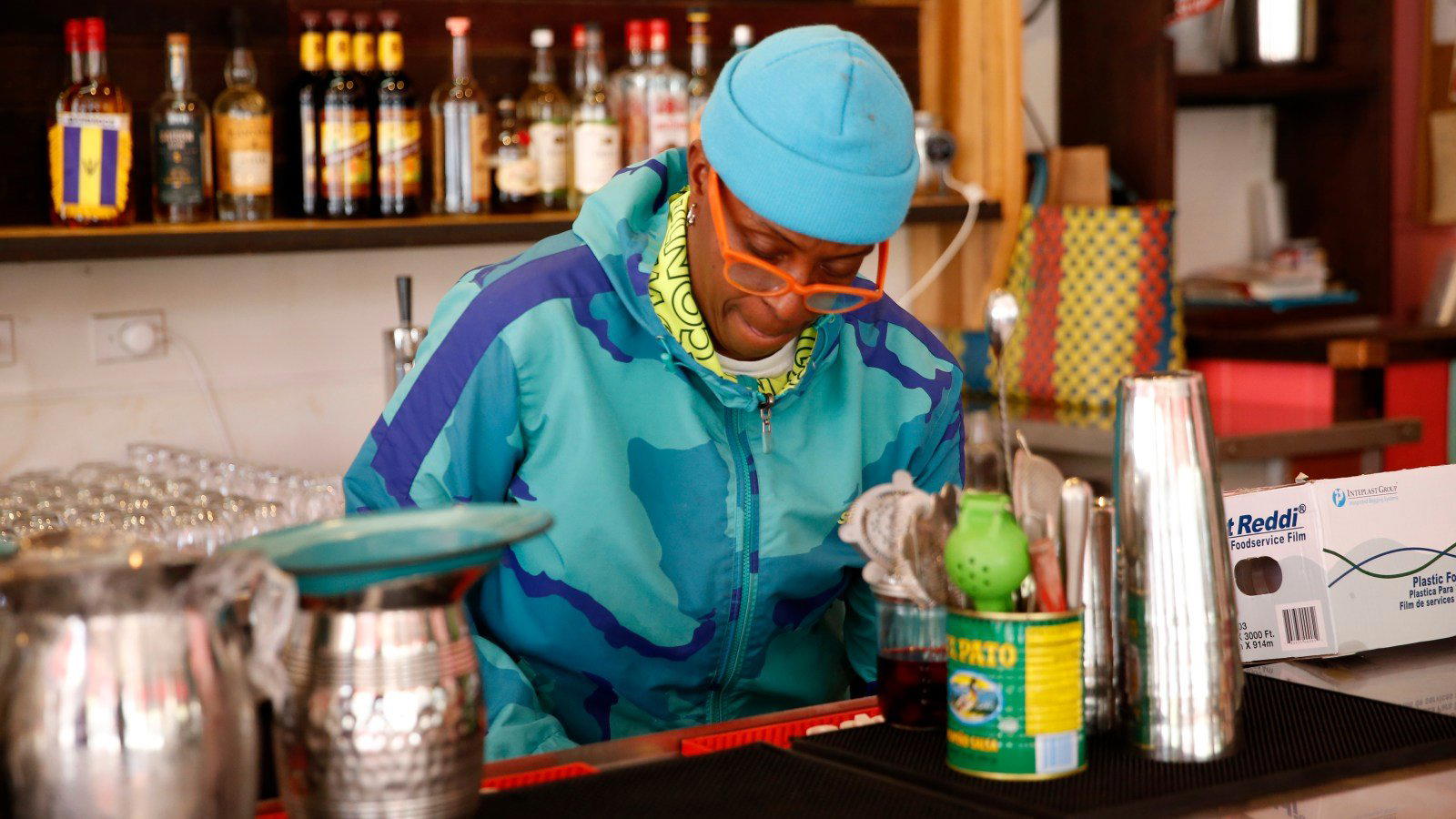
Miss Ollie's anchors the Caribbean cooking conversation in Oakland's Old Oakland neighborhood, bringing island-rooted food traditions to a city block defined by market halls and independent operators. The Washington Street address places it inside a pedestrian stretch that rewards explorers who understand Oakland's dining geography, where interesting food is rarely on the tourist maps.
- Address
- 901 Washington St, Oakland, CA 94607
- Phone
- +1 510 285 6188
- Website
- realmissolliesoakland.com
- Directions
- Get directions
Old Oakland, Reconsidered
The stretch of Washington Street between 8th and 9th in Old Oakland does not announce itself the way a Ferry Building or a Grand Central Market would. The covered Victorians are quieter, the lunch crowds more local, and the rhythm of the block moves at the pace of working people rather than food tourists. That context matters when assessing Miss Ollie's, which sits at 901 Washington Street inside a dining corridor that rewards returning visitors more than first-timers. Oakland's food culture has long operated on a separate frequency from San Francisco's, more neighborhood-scaled, more diaspora-driven, less interested in press cycles, and Miss Ollie's lands squarely inside that tradition.
Across the broader American dining spectrum, Caribbean cuisine occupies an underserved position in the fine-casual tier. Haitian, Trinidadian, Barbadian, and Jamaican food traditions have deep roots in cities with large island-origin populations, but they have historically been underdeveloped in the premium-casual format that defines so much of contemporary urban dining. Miss Ollie's operates in that gap, using Afro-Caribbean cooking as the organizing principle of the menu rather than as a side note on a more generically American plate. For Oakland, a city with documented Caribbean and African-American culinary traditions, that emphasis reads as a statement of local identity rather than a novelty positioning.
What the Neighborhood Signals About the Food
Old Oakland's food scene has been reconstructed over the past two decades around a mix of preserved market-hall infrastructure and independent operators who use the pedestrian-friendly streetscape to build lunch and brunch audiences. The area draws from downtown office workers, Chinatown overflow, and residents from the adjacent lake district who prefer neighborhood destinations to cross-bay dining trips. 8th St Cafe anchors the Hong Kong tea-house end of the corridor; Alem's Coffee represents the East African coffee tradition that runs through several Oakland neighborhoods. The restaurant fits this pattern of operators who bring a specific culinary lineage to a block that has shown it can hold multiple distinct traditions simultaneously.
The Washington Street placement also speaks to how the venue is accessed. For visitors building a day around Oakland's food geography, the neighborhood connects naturally to Chinatown to the south and Uptown to the north, where Agave Uptown handles the mezcal-forward Mexican end of the market.
Caribbean Cooking in an American Context
Caribbean food, when it appears at this scale in American cities, tends to follow one of two formats: the community-facing takeout counter oriented around lunch service, or the refined tasting-menu approach that uses island ingredients as a canvas for technique. The restaurant occupies a third position, one closer to the daytime casual-dining format that shapes most of Old Oakland's commercial activity. That positioning puts it in conversation with operators like alaMar Dominican Kitchen, which handles Dominican cooking at a similar register in a nearby East Bay ZIP code, and more broadly with the question of how diaspora cuisines find their footing in cities where the community is present but the restaurant infrastructure has historically lagged behind comparable European or East Asian traditions.
The Afro-Caribbean culinary tradition is not a monolith. Island-by-island, the cooking reflects distinct African, South Asian, and colonial European inputs that produce measurably different flavor profiles, the allspice and scotch bonnet logic of Jamaican cooking differs sharply from the roucou-and-saltfish base of Trinidadian preparation. How a restaurant within this tradition defines its specific territory is the meaningful editorial question, though in the case of the restaurant, with limited public-record detail available on current menu specifics, that question is leading answered in person.
Where It Sits Against Oakland's Wider Dining Field
Oakland's restaurant scene has attracted intermittent national attention without ever consolidating into a single narrative the way San Francisco's fine-dining corridor or Los Angeles's taco-truck culture has. The city produces a different kind of food story: plural, neighborhood-specific, and often more concerned with community function than with editorial positioning. Against that backdrop, the venues that accumulate durable local reputations tend to be operators with clear culinary convictions and stable locations, rather than those chasing trend cycles. 3 Bottled Fish represents one trajectory in the Oakland independent scene; the restaurant represents another, with Caribbean cooking as the specific through-line.
For travelers who arrive in Oakland from the broader fine-dining circuit, those whose reference points include The French Laundry in Napa, Lazy Bear in San Francisco, or Providence in Los Angeles, the restaurant occupies a different altitude entirely. It is not competing with multi-course tasting menus at the price points of Smyth in Chicago or Atomix in New York City. The value proposition here is cultural specificity and neighborhood authenticity, which in cities with Oakland's demographic depth often delivers more information about a place than any amount of fine-dining technique.
Visitors who want to build a full picture of Oakland's food range should treat the Old Oakland block as one node in a larger itinerary. Pairing the restaurant with a visit to alaMar Dominican Kitchen in the same day maps the Caribbean cooking conversation across two distinct island traditions operating in the same metro.
Planning Your Visit
The restaurant sits at 901 Washington Street in Old Oakland, accessible from 12th Street BART on foot. 8th St Cafe and the East African coffee culture at Alem's Coffee, building a two-stop morning in Old Oakland is worth the logistical planning. The scale of the neighborhood makes it walkable end-to-end in under fifteen minutes, which is part of why it rewards revisits more than single-destination trips.
The Minimal Set
Comparable venues nearby, for context on price, style, and recognition.
| Venue | Cuisine | Price | Notes |
|---|---|---|---|
| Miss Ollie'sThis venue — the venue you are viewing | Old Oakland, Afro-Caribbean | $$ | Not listed |
| Calabash | Waverly, Afro-Caribbean Jamaican Fusion | $$ | Not listed |
| Bowl'd Korean Stone Grill | Temescal, Korean Stone Grill Bibimbap | $$ | Not listed |
| Saucy Oakland | Old Oakland, Pan-Asian Fusion | $$ | Not listed |
| Tastee Steam Kitchen | Not listed | $$ | Chinatown, Chinese Seafood Steam & Hot Pot |
| Wing Wah Pho Ga | East Peralta, Vietnamese Chicken Pho | $$ | Not listed |
Continue exploring
More in Oakland
Restaurants in Oakland
Browse all →
Bars in Oakland
Browse all →
Hotels in Oakland
Browse all →


At a Glance
- Lively
- Cozy
- Trendy
- Casual Hangout
- Brunch
- Open Kitchen
- Craft Cocktails
Bright and island-like atmosphere that transports diners to the Caribbean with lively energy.