
Tabelog 100 #90
Our verdict
Midoricho Ikoma belongs to Tokyo’s quieter Chinese dining tier: small-room, neighbourhood-rooted, and serious enough to appear in Tabelog’s Chinese TOKYO 100 selection for 2026. The appeal is the split personality of the format: lunch reads as value and compression, while dinner gives the kitchen more room to work inside a restrained Sumida setting.

Pearl is the En Primeur Club membership app, where members save venues, book tables and use the concierge.
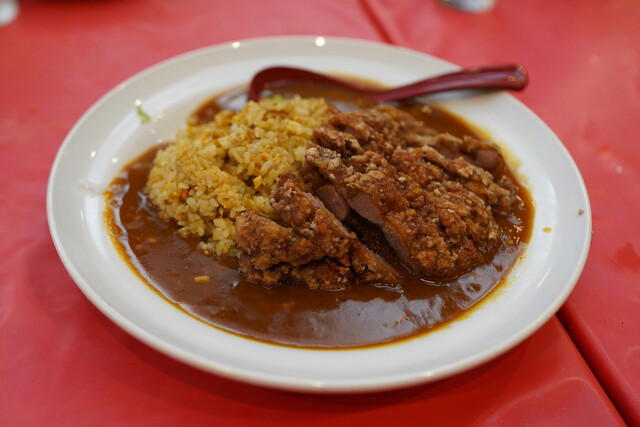
Tokyo has plenty of theatre around its better-publicized dining corridors, but Midoricho Ikoma reads more quietly. The approach is local rather than spectacular, and the rhythm feels closer to a regular appointment than a destination performance. That matters here because Chinese cooking in Tokyo often divides into two camps: polished high-ceremony dining on one side, everyday comfort on the other. Midoricho Ikoma sits in the narrower middle, where the cooking is serious enough for awards attention while the experience stays deliberately modest.
The useful way to read this address is through its lunch-and-dinner divide. Daytime Chinese dining in Tokyo often rewards decisiveness: shorter windows, sharper value, and less ceremony. Evening service changes the calculation. The same cuisine category can move from quick local meal to a more deliberate table, where pacing, ordering and appetite matter more. That split is the editorial story here, not a decorative detail.
Tokyo Chinese cooking, viewed through lunch restraint and dinner depth
Tokyo has a deep Chinese dining culture, but it is not a single tradition. Polished dining rooms, specialist counters, neighbourhood shops and modern Chinese formats all compete under the same broad label. The Tabelog Chinese TOKYO 100 selection for 2026 places Midoricho Ikoma inside a curated citywide conversation rather than merely a local one, and its 3.75 Tabelog score gives the recognition a measurable public-rating signal.
What separates this category from Tokyo’s luxury sushi or French dining is how often value and seriousness overlap. A restaurant can have award recognition without adopting the visual codes of high-ticket dining. That is part of the attraction: the room does not need to announce ambition for the cooking to register with regulars and list-makers. In the comparison set supplied for Tokyo, chuukaryouri tokutake offers one point of contrast, while casual addresses such as shake tree burger&bar, Hokusai Sabo and Jun Teuchi Sanuki Udon Goro show how mixed the city’s dining economy can be. This is not the same logic as Tokyo’s most image-driven dining zones; it is more practical, more local, and often more rewarding for diners who judge by execution rather than room polish.
Lunch is the cleaner value play. The format suits diners who want a compressed read on the kitchen and the city without turning the meal into the centre of an evening. Dinner is the more useful sitting for anyone trying to understand why a Tokyo Chinese restaurant earned a place on a citywide list. The point is not excess; it is range. In a city where many acclaimed restaurants force a single format, the daytime-evening contrast gives this address two different identities.
The format changes the stakes
Format shapes expectation. This is not best understood through spectacle or private-room entertaining, but through the practical rhythm of a Tokyo restaurant whose recognition comes from the Chinese category rather than from luxury signalling. For Tokyo, that is a familiar and often appealing way to dine. It lets the food carry the judgment.
The 2026 recognition also matters. Selection for the Tabelog Chinese TOKYO 100 places the restaurant in a current public conversation rather than relying only on reputation by association. That is an important distinction in Tokyo, where the dining landscape changes quickly and list placement can help travellers separate signal from noise. Here, the recognition is recent enough to be useful for planning.
There is also a practical edge to the restaurant’s two price bands. Lunch and dinner do not ask to be read in the same way. Lunch belongs to the clock and to the appeal of a sharper-value meal. Dinner belongs to a more deliberate kind of planning, especially for diners trying to understand the restaurant beyond a quick daytime stop. The distinction is common in Tokyo, but it is especially meaningful where the same category carries different expectations across the day.
Where it fits in a Tokyo itinerary
For travellers building meals across the city, Midoricho Ikoma makes sense as a counterweight to the more familiar central Tokyo circuits. Tokyo asks for different kinds of attention depending on where and how you eat: sometimes luxury signalling, sometimes neighbourhood texture. Pairing a meal here with other Tokyo plans gives the booking a stronger logic than treating it as a stand-alone detour from a hotel-heavy itinerary.
That is also why the restaurant belongs in a broader Tokyo dining plan rather than a single-category hunt. Readers comparing styles can use Our full Tokyo restaurants guide for the citywide restaurant map, then branch into adjacent planning through Our full Tokyo hotels guide, Our full Tokyo bars guide, Our full Tokyo wineries guide and Our full Tokyo experiences guide. Within the restaurant index, contrast this Tokyo Chinese address with broader genre shifts across other unnamed Tokyo dining rooms, from grilled formats and casual cafés to curry counters and quick-service specialists.
For wider Japan context, the same planning logic applies beyond Tokyo: compare regional price, format and speciality through unnamed restaurants in other Japanese cities and regions. Even overseas Japanese-adjacent formats underline the same point: format tells the diner how to read value before the meal begins.
The editorial verdict is simple. Choose lunch for a compressed, value-led read on a serious Tokyo Chinese kitchen. Choose dinner when the aim is to understand why this restaurant entered Tokyo’s 2026 Chinese conversation. In a city crowded with louder dining narratives, this is a quieter test of attention.
Frequently asked questions
What's the address for Midoricho Ikoma?
Midoricho Ikoma is located in Tokyo.
What price level is Midoricho Ikoma?
Pricing at Midoricho Ikoma is listed as Dinner: JPY 5,000 - JPY 5,999; Lunch: JPY 1,000 - JPY 1,999.
When can I go to Midoricho Ikoma?
Check the venue's official channels for current opening times before visiting.
What has Midoricho Ikoma built its reputation on?
Its clearest credential is selection for Tabelog Chinese TOKYO "Tabelog 100" in 2026, alongside a 3.75 Tabelog score and a Chinese category listing in Tokyo.
Can Midoricho Ikoma accommodate dietary restrictions?
No dedicated dietary menu is named in the provided record, so the clearest reference point is its Chinese category listing in Tokyo. For specific restrictions, the restaurant’s listed phone number is +81-3-3633-4089. Check the venue's official channels for the latest details.
Accolades, Compared
Comparable venues at a glance for context.
| Venue | Cuisine | Price | Awards | Notes |
|---|---|---|---|---|
| Midoricho IkomaThis venue (the venue you are viewing) | Creative Chinese | Not listed | Tabelog 100 #90 | Not listed |
| Eiraku | Chinese Dumplings | $10–20 | Tabelog 100 #87 | Edogawa |
| Ren Shan | Creative Chinese countryside cuisine | $30–50 | Tabelog 100 #11 | Minato |
| Gyoza Bo Butahakkai | Gyoza & Chinese hot pot | $30–50 | Tabelog 100 #41 | Suginami |
| 陳麻婆豆腐 麺飯館 | Authentic Sichuan Mapo Tofu and Noodles | $10–20 | Not listed | Shinjuku |
| Reikasai Ginza The Chinese Imperial Court dishes | Imperial Chinese court cuisine in Ginza | $50–100 | Tabelog 100 #39 | Chūō |
Recognition history
Dated appearances from independent guides and award organizations, with the underlying list record or original source where available.
Tabelog 100 #90 · No. 90
Tabelog · Tabelog 100 - Chinese cuisine - TOKYO - 2026
Continue exploring
More in Tokyo
Restaurants in Tokyo
All restaurants in Tokyo →











Details
- Cozy
- Classic
- Casual Hangout
- Solo
- Group Dining
- Standalone
- A La Carte
Current opening hours
- Monday
- 11:30 AM–1 PM, 6–9:30 PM
- Tuesday
- 6–9:30 PM
- Wednesday
- Closed
- Thursday
- 11:30 AM–1 PM, 6–9:30 PM
- Friday
- 11:30 AM–1 PM, 6–9:30 PM
- Saturday
- 6–9:30 PM
- Sunday
- 11:30 AM–1 PM, 6–9:30 PM
Hours can change for holidays and private events. Hours as of .
Compact, neighborhood Chinese dining with a lively, hard-to-book dinner feel and a casual local atmosphere.