Mesa de Frades sits on Rua dos Remédios in Alfama, Lisbon's oldest neighbourhood, in a former chapel that still carries its original azulejo tiles and vaulted ceiling. The space is intimate and unhurried, placing it at a different register from Lisbon's formal fine-dining tier. Late-night fado performances shift the evening from a dinner into something closer to a ceremony.
Pearl is the En Primeur Club membership app — saves, bookings, and concierge access live there. Same editors, same standards.
- Address
- R. dos Remédios 139, 1100-453 Lisboa, Portugal
- Phone
- +351917029436
- Website
- mesadefrades.pt
- Directions
- Get directions
 Saves & bookings on Pearl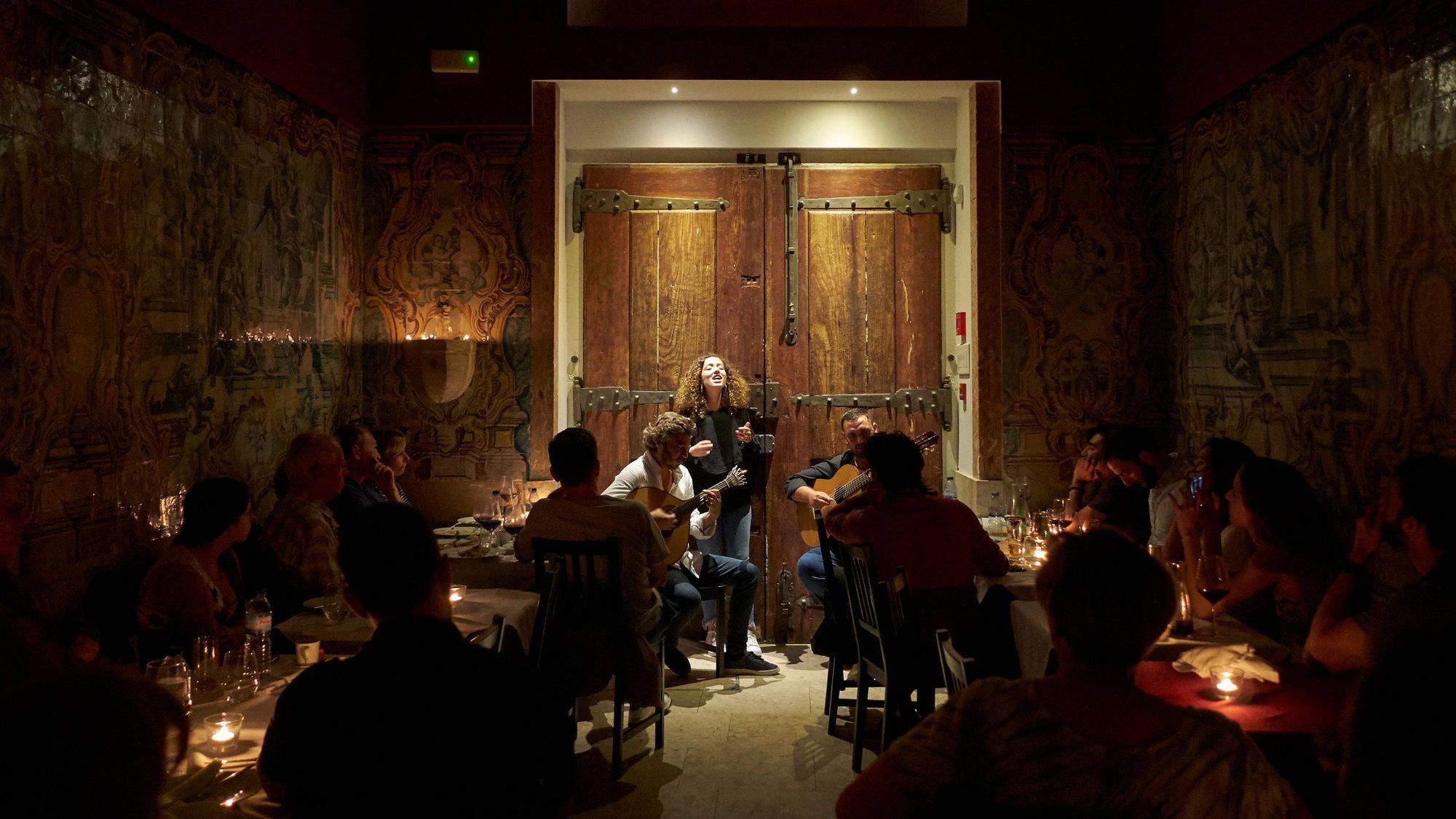
A Former Chapel in Alfama, and What That Architecture Demands of a Menu
Alfama is Lisbon's oldest neighbourhood, and Mesa de Frades is a restaurant serving traditional Portuguese petiscos and fado at R. dos Remédios 139, 1100-453 Lisboa, Portugal. The neighbourhood climbs from the waterfront through a network of steep alleys, whitewashed facades, and the occasional ruin that has simply been left to the weather. Rua dos Remédios runs through its lower reaches, and at number 139 a former chapel has been operating as a restaurant and fado house. The building sets the terms before you order anything: low vaulted ceilings, walls lined with hand-painted azulejo tiles, candlelight that arrives by necessity rather than by design decision. In a city where several of the headline dining addresses, Belcanto, CURA, and 50 Seconds from Martin Berasategui, occupy spaces built or stripped back for modern tasting-menu logic, Mesa de Frades operates in a room that has its own prior identity and asks the evening to work around it.
That distinction matters when you are thinking about where Lisbon's dining scene creates its most memorable hours. The city has moved firmly into the international fine-dining circuit over the past decade, with multiple Michelin-recognised addresses and a growing set of creative Portuguese kitchens that reference tradition while reframing technique. Mesa de Frades sits outside that specific competitive cluster. It is not competing with Eleven or 2Monkeys on the terms of menu innovation or ingredient sourcing provenance. It is operating in an older register, where the room, the music, and the food work as a combined programme rather than as separate propositions.
Menu Architecture and the Logic of a Fado House Kitchen
The menu structure at a venue like Mesa de Frades is shaped by a different set of constraints than a tasting-menu kitchen. The kitchen is not trying to narrate a ten-course arc or demonstrate a chef's technical range across small plates. The food serves an evening that will extend into live fado performance, which changes the pacing requirements considerably. Dishes need to sustain without demanding full attention; portions and sequencing need to account for an audience that will shift from eating to listening and back again. In practice, this tends to produce menus that are grounded in Portuguese classics: bacalhau preparations, presunto, petiscos in the broader tradition, and protein-led main courses that hold up across a longer table time than a conventional restaurant timeline would allow.
This is a different structural logic from what you find at the summit tier of Lisbon dining. At Belcanto, the menu functions as the primary argument, each course has a specific position in a designed sequence. At the restaurant, the menu is supporting architecture for an evening whose centrepiece arrives later, when the musicians and fadistas take over the room. That is not a lesser ambition; it is a different one, and understanding it clarifies what you are actually booking when you reserve a table here.
Portugal's fado houses, casas de fado, have historically occupied this middle ground between restaurant and performance venue, and Lisbon's Alfama neighbourhood remains the tradition's geographic centre. The neighbourhood's association with fado is older than the contemporary dining scene by several generations. What the restaurant does is hold that tradition in a space that, by virtue of its former function as a chapel, lends the music a degree of acoustic gravity that a purpose-built restaurant room rarely achieves. The azulejo tiles and vaulted ceiling do work that no interior designer could replicate from scratch.
Where This Sits in the Wider Portuguese Fine Dining Picture
For visitors approaching Portugal's restaurant scene with serious intent, it is worth being clear about the geographic spread of its most formally recognised kitchens. The Michelin-starred tier extends well beyond Lisbon: Vila Joya in Albufeira and Ocean in Porches represent the Algarve's serious dining claim; Antiqvvm in Porto and A Cozinha in Guimarães anchor the north; Casa de Chá da Boa Nova in Leça da Palmeira adds a Siza Vieira-designed room to Rui Paula's cooking; and in the islands, Il Gallo d'Oro in Funchal holds its position in Madeira's small but consistent fine-dining cluster. In the Alentejo and further south, Al Sud in Lagos, Bon Bon in Lagoa, and A Ver Tavira in Tavira complete a picture of a dining culture that has deepened considerably across the whole country. The Yeatman in Vila Nova de Gaia adds a wine-country dimension.
The restaurant is not positioned inside that Michelin conversation, but that framing is itself a category error. The venue addresses a different question: what does an evening in Alfama actually feel like when the food, the room, and the music are aligned. Visitors comparing it to Le Bernardin in New York or Atomix on tasting-menu grounds are using the wrong measuring stick. The relevant comparable set is other serious fado houses in Lisbon, and within that frame the former chapel location on Rua dos Remédios gives the restaurant a spatial authenticity that newer or more commercial fado venues in the Bairro Alto or Chiado cannot match.
Planning the Evening
Alfama is most logically approached on foot from the waterfront, or by tram from Praça do Comércio, though the neighbourhood's gradient makes flat-shoe planning advisable. The restaurant sits in the lower section of Rua dos Remédios, which is navigable without the full climb toward the São Jorge castle. Evenings at a casa de fado run long by design, arrival before 8pm is sensible to establish your table and order before the performances begin, which typically start later in the evening and continue in sets. The format means this is not an address for a quick dinner before a separate programme; the restaurant is the programme. Reservations are advisable, particularly for weekend evenings when Alfama draws both local and visiting audiences.
- Pataniscas de Bacalhau
- Peixinhos da Horta
- Pica Pau
- Morcela
- Beef Tenderloin with Spicy Potatoes
- Crispy Pork Ribs
The Quick Read
Comparable venues nearby, for context on price, style, and recognition.
| Venue | Cuisine | Price | Notes |
|---|---|---|---|
| Mesa De FradesThis venue — the venue you are viewing | Not listed | $$ | Not listed |
| Corrupio | Bairro Alto, Modern Portuguese | $$ | Not listed |
| Pharmacia | Not listed | $$ | Bairro Alto, Portuguese Tapas & Mediterranean |
| Biclaque X | Not listed | $$ | Olivais Sul, Modern Portuguese with European Influences |
| A Praça | Alcantara, Portuguese Mediterranean | $$ | Not listed |
| Cantina das Freiras | Not listed | $ | Chiado, Traditional Portuguese Comfort Food |
Continue exploring
More in Lisbon
Restaurants in Lisbon
Browse all →
Bars in Lisbon
Browse all →
Hotels in Lisbon
Browse all →
At a Glance
- Well Known
- Intimate
- Lively
- Bohemian
- Classic
- Date Night
- Special Occasion
- Group Dining
- Late Night
- Live Music
- Historic Building
- Standalone
- Beer Program
- Local Sourcing
Current opening hours
- Monday
- 6:30–9 PM, 9:30 PM–2 AM
- Tuesday
- 6:30–9 PM, 9:30 PM–2 AM
- Wednesday
- 6:30–9 PM, 9:30 PM–2 AM
- Thursday
- 6:30–9 PM, 9:30 PM–2 AM
- Friday
- 6:30–9 PM, 9:30 PM–2 AM
- Saturday
- 6:30–9 PM, 9:30 PM–2 AM
- Sunday
- 6:30–9 PM, 9:30 PM–2:30 AM
Hours can change for holidays and private events. Last verified .
Intimate and informal atmosphere with warm, historic 18th-century tile-lined chapel setting; energetic with live fado music performances creating a culturally immersive dining experience.