Our verdict
Mercado 20 de Noviembre sits at the centre of Oaxacan food culture, where charcoal grills line the central corridor and vendors have been turning out tlayudas, tasajo, and chorizo negro for generations. This is where the city's residents eat, not just its visitors. Come hungry, come early, and surrender to the market's own pace.

Pearl is the En Primeur Club membership app, where members save venues, book tables and use the concierge.
The menu
What to order
- Tasajo
- Cecina
- Chorizo
- Ribs
- Tlayudas
- Mole
Smoke, Ritual, and the Grammar of a Oaxacan Market Meal
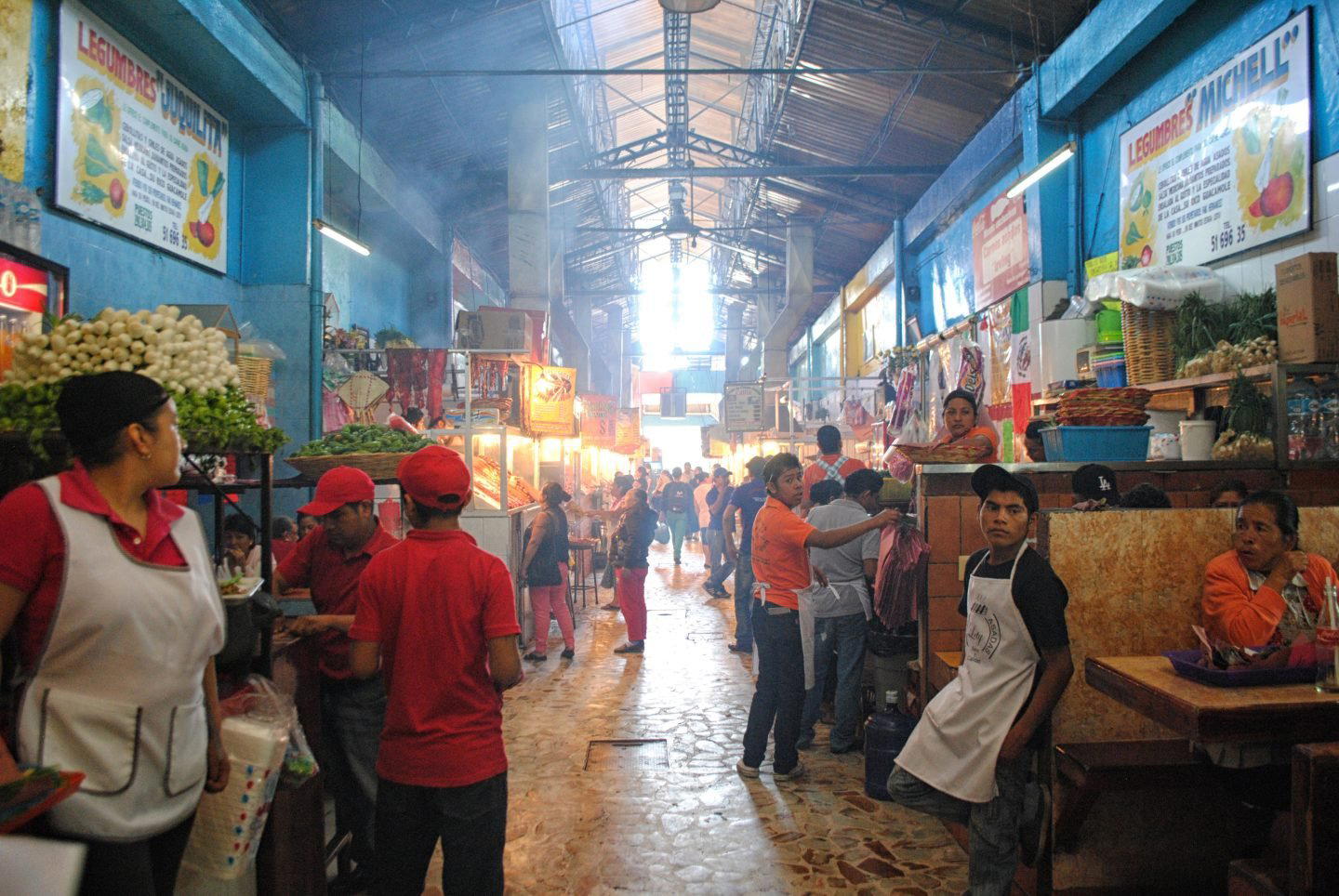
The approach tells you what to expect. Walk south from the zócalo and the smell of charcoal arrives before the building does: fat dripping onto coals, dried chiles warming in clay pots, the faint sweetness of fresh tortillas pressed against a comal. Mercado 20 de Noviembre operates at a register that has no equivalent in the city's restaurant scene. This is not a food hall redesigned for tourists, nor a curated market experience with printed menus and polished signage. It is a working market, built around the logic of Oaxacan daily life, where the meal is a practice rather than a transaction.
That distinction matters in a city that has attracted serious culinary attention. Oaxaca now holds a range of dining formats, from neighbourhood spots like Levadura de Olla Restaurante to more formal contemporary tables like Los Danzantes Oaxaca. But the market sits outside that competitive framing entirely. It does not price against peer restaurants or compete for reservations. It answers a different question: what does Oaxacan food look like when it is feeding the people who make it?
The Corridor of Coals
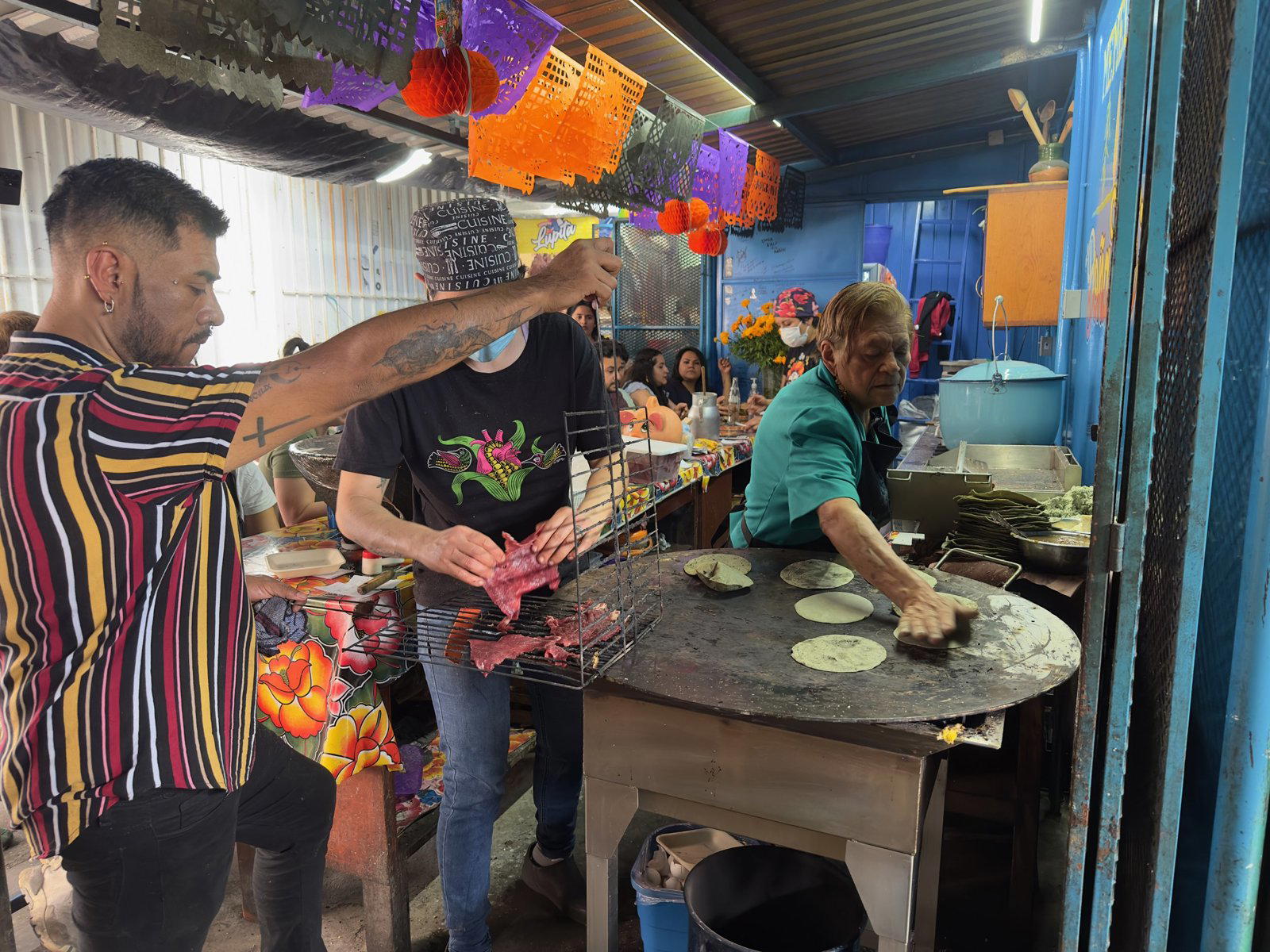
The section most visitors arrive at first is the Pasillo de Carnes Asadas, the covered aisle where vendors grill over open charcoal. The format here follows a logic that has remained consistent across decades: you choose your cut, you find a seat at the shared tables running alongside the stalls, and the food arrives in its own time. Tasajo, the thinly sliced air-dried beef that is one of Oaxaca's most specific regional products, comes off the grill with a char on its edges and a texture that rewards slow eating. Chorizo negro, darker and more heavily spiced than its Mexican counterparts elsewhere, arrives split and curled from the heat. Cecina, the chile-rubbed pork, sits alongside them on the same plate or on a tlayuda, the large crisped tortilla that functions as both vessel and staple.
The pacing of a meal in this corridor is not something you set. The vendors operate at a rhythm tied to their coals, their stock, and the natural flow of the midday crowd. Arriving between 12pm and 2pm puts you inside the peak of that rhythm. Earlier is quieter and the coals are fresher; later and the most popular stalls begin to thin their offerings. The etiquette is direct: sit where there is space, make eye contact with the nearest vendor, and follow their lead on which cuts are ready.
What a Market Meal Teaches About the Cuisine
Eating at Mercado 20 de Noviembre is also an education in the building blocks of Oaxacan cooking that finer-dining formats tend to interpret rather than present directly. The moles that appear at contemporary tables across the city, including at Alfonsina and Aguacate Oaxaca, trace their lineage to exactly the kind of vendor cooking the market preserves. The seven moles of Oaxaca, negro, colorado, amarillo, verde, coloradito, chichilo, and manchamanteles, each reflect specific chiles, spices, and techniques that took shape over centuries of indigenous and colonial exchange. The market is one of the places where those preparations remain embedded in their original social context: food made for volume, for community, and for daily nourishment rather than for plating.
This distinguishes Oaxaca's market food culture from what you encounter at destination-level Mexican restaurants elsewhere. The ambition at Pujol in Mexico City or Le Chique in Puerto Morelos is to reframe Mexican culinary tradition through a contemporary fine-dining lens. The ambition at Mercado 20 de Noviembre is continuity. Both are valid, and understanding one makes the other more legible.
The Broader Market and Its Adjacencies
Beyond the Pasillo de Carnes Asadas, the market extends into sections selling fresh produce, dried chiles, mole pastes, Oaxacan cheese, and chocolate. The cheese, quesillo and queso fresco in particular, comes from dairies in the Central Valleys and is sold in quantities that suggest most buyers are cooking for households rather than putting together a traveller's snack. The chocolate section, with vendors grinding cacao with cinnamon and sugar on request, provides some of the clearest evidence of why Oaxacan hot chocolate occupies a different category from the drink served elsewhere in Mexico.
Adjacent to the market, the Mercado Benito Juárez extends the same logic into textiles, crafts, and more produce. Together, the two markets form the functional core of the historic centre's commercial life, and spending time in both gives a more complete picture of the city's daily rhythms than any single restaurant visit could. For those mapping out a broader stay, the EP Club Oaxaca restaurants guide provides context across price tiers and formats.
Oaxaca's position in Mexican food culture has parallels in other cities with strong regional identities. The clarity of local ingredients and techniques that defines eating at Mercado 20 de Noviembre echoes what you find at markets in Merida, where Huniik represents one formal interpretation of Yucatecan tradition, or in Guadalajara, where Alcalde draws on a different set of regional references. In each case, understanding the market-level expression of a regional cuisine sharpens the appreciation of what its contemporary restaurants are working with.
Planning Your Visit
The market sits in the historic centre of Oaxaca, a short walk from the zócalo and within easy reach of the main hotel corridors. No reservation is required and no dress code applies. Payment is almost universally in cash at the stalls, and arriving with smaller denominations makes the exchange easier. The Pasillo de Carnes Asadas is most active at midday; a visit planned around 12.30pm to 1.30pm captures the market at its fullest without requiring the patience of the lunch rush. For context on how the market fits into a broader eating itinerary that includes contemporary Oaxacan cooking, Adamá offers an interesting counterpoint on the same historic centre circuit.
Frequently asked questions
Is Mercado 20 de Noviembre different from Mercado Benito Juárez, and which should I visit first?
The two markets sit adjacent in Oaxaca's historic centre but serve different purposes. Mercado 20 de Noviembre is the eating market, anchored by the charcoal grill corridor and cooked-food stalls. Mercado Benito Juárez next door skews toward craft goods, textiles, and tourist provisions. For anyone whose primary interest is Oaxacan cooking, Mercado 20 de Noviembre is the more direct entry point.
What should I order at Mercado 20 de Noviembre?
The Pasillo de Carnes Asadas is the place to start: vendors grill over open charcoal, and the format centres on grilled meats chosen by weight from the counter. Beyond the grill corridor, the market sells Oaxacan cheese, chocolate, mole pastes, and dried chiles, ingredients that form the backbone of regional cooking. Eating across multiple stalls in a single visit gives the clearest picture of what the cuisine is built from.
What's the best way to book Mercado 20 de Noviembre?
No reservation is required. The market operates on a walk-in basis, and seating at vendor stalls is first-come. Arriving before midday typically means shorter waits at the most active grill stations in the Pasillo de Carnes Asadas. The market sits a short walk from the zócalo in Oaxaca's historic centre, making it easy to combine with other visits nearby.
What is Mercado 20 de Noviembre known for?
The market is known primarily for the Pasillo de Carnes Asadas, a covered aisle of charcoal grills where vendors cook over open coals, a format that draws both locals and visitors for an unmediated read on Oaxacan cooking. It also functions as a working provisions market, with sections for mole pastes, Oaxacan cheese, dried chiles, and chocolate. For anyone trying to understand the raw materials of the regional cuisine, the market covers the ground that restaurant menus abstract.
How does Mercado 20 de Noviembre handle allergies?
The market is a working food hall with individual vendor stalls rather than a single managed kitchen, so formal allergen protocols do not apply in the way they would at a restaurant. Communication is direct with each vendor, and Spanish is the working language at the counters. Visitors with serious allergies should come prepared to ask about specific ingredients, as mole pastes and marinades frequently contain nuts, chiles, and multiple spice compounds.
Cuisine and Recognition
| Venue | Cuisine | Price | Awards | Notes |
|---|---|---|---|---|
| Mercado 20 de NoviembreThis venue (the venue you are viewing) | Traditional Oaxacan Market Food | $1–10 | Not listed | Not listed |
| Casa Oaxaca | Modern Oaxacan | $50–100 | Michelin Plate · La Liste Top Restaurants | Oaxacan |
| Criollo | Modern Oaxacan Tasting Menu | $100–150 | Michelin Plate · La Liste Top Restaurants | Mexican |
| Itanoní | Traditional Oaxacan Corn Antojitos | $10–20 | Michelin Plate | Mexican |
| Levadura de Olla Restaurante | Traditional Oaxacan | $10–20 | 1 Michelin Star | Mexican |
| Adamá | Authentic Middle Eastern | $20–30 | Michelin Plate | Middle Eastern |
Continue exploring
More in Oaxaca
Restaurants in Oaxaca
All restaurants in Oaxaca →
Bars in Oaxaca
All bars in Oaxaca →
Details
- Well Known
- Lively
- Classic
- Rustic
- Energetic
- Casual Hangout
- Solo
- Family
- Group Dining
- Historic Building
- Open Kitchen
- Beer Program
- Local Sourcing
- Street Scene
- Counter Dining
- A La Carte
- Mezcal
- Chocolate
- Vegetarian Friendly
Busy, traditional market atmosphere with food counters, smoke from charcoal grills, many vendors, and a loud, chaotic energy.