Tabelog 100 #63
Our verdict
Mensho Shisei brings Osaka’s ramen culture into a compact Shinmachi setting where counter rhythm matters as much as the bowl. Its Tabelog Ramen OSAKA 100 selections in 2023, 2024, and 2025 place it among the city’s more closely watched ramen addresses, with tsukemen part of the draw for diners comparing Osaka’s noodle spectrum.

Pearl is the En Primeur Club membership app, where members save venues, book tables and use the concierge.
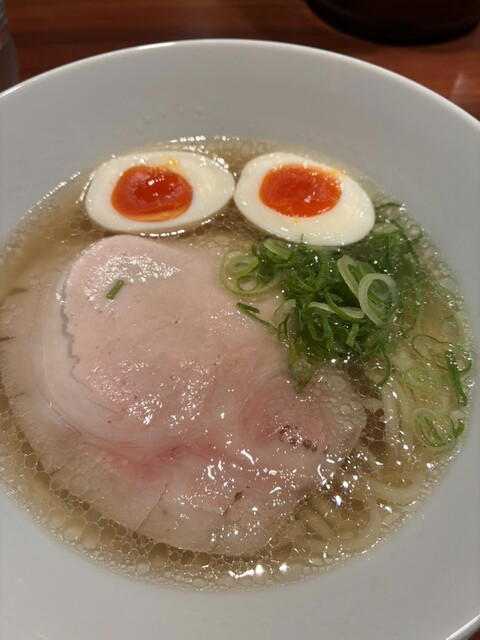
Osaka’s compact dining rooms have a particular charge: the move from the street into a focused specialist setting compresses the city’s noise into a tighter register, and ramen suits that compression. At a serious noodle shop, the room is not passive. Bowls move quickly, seats turn with precision, and the meal depends on coordination between preparation, service, and diner. Mensho Shisei belongs to that Osaka category where craft is measured less by ceremony than by timing, temperature, and whether the operation can repeat itself under pressure.
Osaka’s noodle culture rewards range. Udon has its local loyalties, cheap-and-fast ramen keeps busy districts fed, and tsukemen gives noodle shops a format built around concentration: dipping, pacing, and texture rather than the all-in-one immediacy of soup ramen. This venue works inside that ramen and tsukemen lane, which makes it a useful stop for readers who want to understand the city beyond more formal dining rooms. Its 2025 Tabelog Hyakumeiten recognition gives the place a public benchmark in a category where local diners can be exacting and unforgiving.
Ramen in Osaka, judged by pace rather than polish
The better ramen shops in Osaka do not need luxury signals. They need a clear flow, a kitchen that can hold its line through service, and a room built for short, focused meals. Here, the format is focused enough for the meal itself to shape the experience, but not so narrow that it becomes a chef-theatre performance. That distinction matters. A ramen meal is collaborative by design: the kitchen sets the rhythm, service keeps movement orderly, and diners complete the choreography by eating while the bowl is at its intended condition.
That team dynamic separates ramen from many higher-priced Japanese formats. In more formal formats, the guest often watches an individual practitioner. In ramen, consistency depends on multiple hands staying aligned through prep, assembly, seating, clearing, and reset. Mensho Shisei’s place in the 2025 Tabelog Hyakumeiten record suggests that this operational discipline has registered in Osaka’s ramen conversation, not just with visitors hunting a single famous bowl.
The comparison set in Osaka is broad. Oribe sits in a different dining lane, Labyrinth plays at another spend level, while MONDIAL KAFFEE 328 and other low-cost stops serve different daily-use needs. Ikareta Noodle Fish Tons and Lakshmi show how compact Osaka dining can still split into distinct price and category bands. Against that spread, a ramen-and-tsukemen specialist occupies a democratic but highly competitive tier: quick meals, repeat local scrutiny, and little margin for inconsistency.
Tsukemen gives the meal a slower grammar
Tsukemen changes the diner’s role. Instead of receiving a complete soup-noodle equation, the guest controls each pass through the dipping broth. That makes noodle texture more exposed and pacing more deliberate. Osaka’s appeal as an eating city often lies in this type of format: not grand dining, but tightly defined specialties that ask for attention without asking for a long evening.
For a visitor building a day around Osaka, this is the kind of stop that works as a sharp counterpoint to the city’s broader appetite. The same itinerary can swing from bakeries and coffee to casual snacks, specialist counters, and late drinks without pretending they belong to one neat culinary story. Osaka is better understood as overlapping habits: office lunches, station snacks, specialist counters, and destination meals all operating close together.
Use the wider EP Club Osaka map to frame that range. Casual research might start with unnamed Osaka cafes, bakeries, snack counters, pizza specialists, and Italian-leaning dining rooms. For broader planning, see Our full Osaka restaurants guide, Our full Osaka hotels guide, Our full Osaka bars guide, Our full Osaka wineries guide, and Our full Osaka experiences guide.
Where it fits in a Japan-wide casual dining itinerary
Japan’s casual specialists are often more revealing than formal restaurants because they show how a city eats when nobody is dressing for the occasion. A ramen shop in Osaka belongs in the same travel logic as other compact specialist formats across Japan and beyond: narrow formats, strong repeat use, and decisions made by appetite rather than ceremony.
For readers comparing compact, specific stops across an itinerary, EP Club’s broader Japan and diaspora notes can be read as a study in how focused formats travel across cities: grilled dishes, seafood counters, curry specialists, coffee stops, sake bars, and snack shops all work because they narrow the decision and sharpen the experience. Mensho Shisei is not a long-form dining commitment; its value is sharper than that. It gives a read on Osaka’s specialist ramen culture through a format where the whole room has to work in sync.
Frequently asked questions
What should I budget for a meal at Mensho Shisei?
Pricing at Mensho Shisei is listed as - JPY 999 - JPY 999.
What time does Mensho Shisei open and close?
Check the venue's official channels for the latest details.
Where do I go for Mensho Shisei?
Osaka.
What makes Mensho Shisei worth seeking out?
Mensho Shisei is listed in the 2025 Tabelog Hyakumeiten record for ramen and tsukemen, with a published Tabelog score of 3.67. That places it in Osaka’s competitive specialist noodle category.
How does Mensho Shisei handle allergies?
Diners should check the venue's official channels for the latest details before visiting.
Is Mensho Shisei okay with children?
Check the venue's official channels for the latest details.
Reputation First
Comparable venues by price and recognition.
| Venue | Cuisine | Price | Awards | Notes |
|---|---|---|---|---|
| Mensho ShiseiThis venue (the venue you are viewing) | Ramen | Not listed | Tabelog 100 #63 | Not listed |
| Meiji Ken | Classic Osaka yoshoku (Japanese-style Western) with omurice | $10–20 | Tabelog 100 #2 | Chūō |
| Okonomiyaki Dan | Traditional Osaka okonomiyaki & teppanyaki | $10–20 | Tabelog 100 #8 | Chūō |
| Ghar | Japanese curry house | $10–20 | Tabelog 100 #76 | Nishi |
| Tachinomiya Shiraishi | Japanese Tachinomi Stand‑Up Bar | $20–30 | Tabelog 100 #78 | Kita |
| umugi Hankyu sanbangai ten | Japanese Udon | $1–10 | Tabelog 100 #98 | Kita |
Recognition history
Dated appearances from independent guides and award organizations, with the underlying list record or original source where available.
Tabelog 100 #63 · No. 63
Tabelog · Tabelog 100 - Ramen - OSAKA - 2025