
Mensho Jikon is a five-seat counter in Moriguchi, just outside central Osaka’s usual eating circuits, where ramen regulars read the room as much as the menu. Its repeated Tabelog Ramen Hyakumeiten selections from 2017 through 2025 place it in Osaka’s serious ramen conversation, while the counter-only format keeps the experience tight, quick, and regular-driven.
Pearl is the En Primeur Club membership app — saves, bookings, and concierge access live there. Same editors, same standards.
- Address
- 大阪府守口市紅屋町6-16
- Website
- tabelog.com
 Saves & bookings on Pearl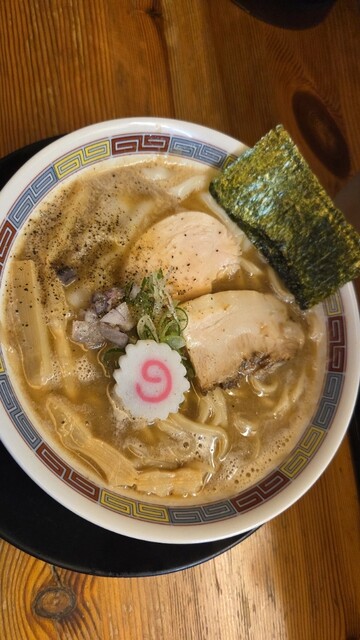
Takii is not the Osaka that first-time visitors usually chase. The rhythm is smaller: station gates, narrow shopfronts, local commuters, and the clipped efficiency of a meal built for people who already know how the room works. Mensho Jikon belongs to that strain of Kansai ramen culture where the counter is not decoration but operating system. Five seats change the social contract. Diners do not linger, parties do not sprawl, and the meal depends on reading pace, turnover, and the quiet choreography of a compact kitchen.
Osaka’s ramen scene has long sat beside louder local food identities: takoyaki, kushikatsu, okonomiyaki, udon, department-store bentos, and late-night drinking food. That makes the city’s serious ramen addresses more interesting, not less. They have to earn attention in a market where casual eating is already dense and affordable. A place selected repeatedly for Tabelog’s Ramen Hyakumeiten, including the Osaka list in 2025 and earlier West-region selections dating back to 2017, signals a sustained following rather than a single-season spike.
A five-seat counter changes how ramen is eaten
Small counters reward regulars because the unwritten rules matter. The familiar customer knows when to enter, how to order without slowing the line, and how quickly the room turns. That kind of discipline is common at serious ramen shops across Japan, but it feels sharper when capacity is this limited. The counter-only format also strips away the restaurant theatre that can attach itself to more expensive dining. The bowl is the event, and the room exists to get it in front of the diner efficiently.
That focus is useful in Osaka, where casual meals often compete on breadth: set meals, side dishes, drinking snacks, and multi-stop grazing. Ramen works differently. It asks for a narrow decision made at speed, then rewards concentration. The local regular does not need a long explanation of the category; the repeat visit is based on consistency, queue tolerance, and whether the shop’s current offering matches the craving that day.
The distinction between ramen and tsukemen also matters here. Ramen places broth and noodles in the same bowl, while tsukemen separates noodles from dipping broth and usually shifts the meal’s pacing. Mensho Jikon is listed in both categories, though rich ramen and tsukemen are currently marked unavailable. That kind of menu constraint is not a footnote for regulars; it affects why someone returns on a given day and what expectation they carry to the counter.
Why Moriguchi belongs in Osaka's serious casual-dining map
For travellers, Moriguchi can look peripheral when measured against Namba, Umeda, Kitashinchi, or Tenma. For residents, it sits inside the practical Osaka of rail lines and repeatable meals. The area around Takii has a compact everyday-food ecosystem: udon, tonkatsu, noodles, and quick counters rather than destination tasting menus. Nearby comparison points such as Teuchi Udon Beniy, Odoru Udon Takii honten, Tonkatsu Fujii, Yamada Seimensho, and Kadoya suggest a neighbourhood where low-to-mid-priced specialist eating is the norm rather than a novelty.
That context explains the loyalty. A ramen shop in this setting does not need to perform luxury. It competes against local habits: the udon place someone has visited for years, the tonkatsu counter that solves a weekday lunch, the noodle shop close enough to fold into a commute. Recognition matters because it separates a specialist counter from a large field of convenient meals, but regulars return for a more practical reason: the shop fits into the way Osaka actually eats.
The broader city guide helps frame that choice. Travellers building a food day can pair a counter like this with bakery, café, and casual Osaka staples rather than treating ramen as a standalone trophy. EP Club’s Osaka coverage ranges from .cafe and 52CHO-ME BAKERY to 551 Horai (551蓬莱), 99 Pizza Napoletana Gourmet, and a canto (Italian). For the full city picture, use Our full Osaka restaurants guide, then cross-reference Our full Osaka hotels guide, Our full Osaka bars guide, Our full Osaka wineries guide, and Our full Osaka experiences guide when planning beyond the meal.
Where it sits for ramen-focused travellers
Mensho Jikon is not the obvious Osaka ramen stop for someone who wants the easiest route from a hotel lobby. Its appeal is more specific: a small-format counter with long-running Hyakumeiten recognition, a neighbourhood audience, and a meal structure that suits solo diners and pairs better than groups. The Tabelog score of 3.69 places it in the serious local conversation, but the stronger signal is continuity across multiple annual selections.
The right reader is the one who values specialist formats over convenience. In Japan, that often means accepting a short menu, a fast meal, and little cushioning for indecision. The payoff is not ceremony; it is calibration. A five-seat ramen counter asks diners to meet the format on its own terms, and that is precisely why regulars protect places like this with repeat custom rather than noise.
For broader Japan and overseas comparisons, the same editorial logic applies: local format first, name recognition second. EP Club’s wider restaurant index includes -Grilled beef Sukiyaki- KAMAKURA TANUKIAN 鎌倉 たぬき庵 in Kamakura. 鮪と炭火焼き うお炭 秋葉原店 in Tokyo.know in Kumamoto, (Shoku) Vietnam in Kawasaki, [Curry Senmon Ten] Maruyama Kyoju. in Sapporo, [ki:] in Kyoto, Jōdo Saké Bar in Los Angeles, and Onigiri Time in Pasadena. The useful comparison is not cuisine-to-cuisine; it is how tightly a place understands its own format.
Similar Picks
Comparable venues for orientation by cuisine and category.
| Venue | Cuisine | Price | Notes |
|---|---|---|---|
| Mensho JikonThis venue — the venue you are viewing | Ramen & Tsukemen Shop | $ | Not listed |
| Lamp wakazou | Japanese Udon | $ | Neyagawa |
| Gyokusei Ya | Traditional Japanese wagashi & ohagi specialty shop | $ | Chūō |
| Rekka Honten | Spicy Yamagata-style ramen & tsukemen | $ | Toyonaka / Shonai |
| Fu-n@ | Japanese Shokudo / Teishoku | $ | Kita |
| Cafe Basara Kaeru dou | Japanese Cafe-Curry | $ | Nishi |
Recognition history
Dated appearances from independent guides and award organizations, with the underlying list record or original source where available.
Tabelog 100 #80 · No. 80
Tabelog · Tabelog 100 - Ramen - OSAKA - 2025
Continue exploring
More in Osaka
Restaurants in Osaka
Browse all →



Bars in Osaka
Browse all →

Hotels in Osaka
Browse all →



Wineries in Osaka
Browse all →
At a Glance
- Cozy
- Lively
- Intimate
- Solo
- Casual Hangout
- After Work
- Group Dining
- Standalone
A compact, counter‑only neighborhood ramen shop with just five seats, non‑smoking, a casual and lively atmosphere, and simple functional decor focused on quick solo and friend dining rather than lingering.