
Mendokoro Mahalo belongs to Kagawa’s serious udon circuit, where flour choice, noodle handling, and tempura work matter more than ceremony. Its Tabelog 100 Udon Kagawa 2024 selection and Sanuki Udon Skills Grand Prix recognition put it in the conversation for travelers treating Sanuki udon as a craft tradition rather than a quick regional snack.
Pearl is the En Primeur Club membership app — saves, bookings, and concierge access live there. Same editors, same standards.
- Address
- 3970 Sangawamachi Kanzaki, Sanuki, Kagawa 769-2323, Japan
- Phone
- +81 879-23-2668
- Website
- mendokoro-maharo.jp
 Saves & bookings on Pearl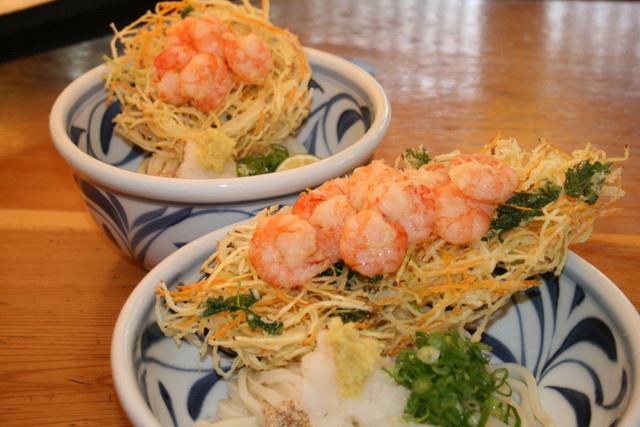
Approaching a Kagawa udon shop is rarely theatrical. The signal is plainer: cars in the lot, a short service window, and the quiet efficiency of a room built around noodles rather than lingering. In Sanuki, udon is not a side category; it is the local grammar of lunch, judged by chew, wheat character, broth discipline, and how well the kitchen handles fried accompaniments without turning the meal heavy.
Mendokoro Mahalo sits inside that grammar. Its recognition on Tabelog 100 Udon Kagawa 2024 matters because Kagawa’s udon field is unusually dense; a selection here does not simply mark a popular shop, it places the kitchen among a prefectural group where small differences in dough, boiling, rinsing, and serving temperature carry weight.
Sanuki udon is a wheat decision before it is a noodle dish
The ingredient story in Kagawa starts with flour. Sanuki udon has long been associated with firm, elastic noodles, but serious shops separate themselves by how they treat the wheat as a raw material rather than as a generic base. Mendokoro Mahalo’s public recognition at the 30th Kagawa Prefecture Sanuki Udon Skills Grand Prix, including awards connected to Sanuki no Yume and Sanuki no Yume Blend categories, points to that deeper local conversation. Those are not decoration-level details; they tell a diner that noodle texture and flour performance sit near the center of the kitchen’s identity.
This is where Kagawa differs from udon scenes in larger Japanese cities. In Tokyo or Osaka, udon often competes with ramen, soba, curry, and department-store dining. In Sanuki, the comparison set narrows and sharpens. A shop such as Teuchi Udon Gennai operates in the same regional price band, while names such as Takine, Tada Seimensho, Azuma, and Udon Honjin Yamada Ya Sanuki honten show how varied the local field can be, from leaner everyday formats to more substantial destination-style meals. The point is not to crown a single winner; the point is that Kagawa rewards repetition. One bowl teaches less than three bowls eaten across different rooms.
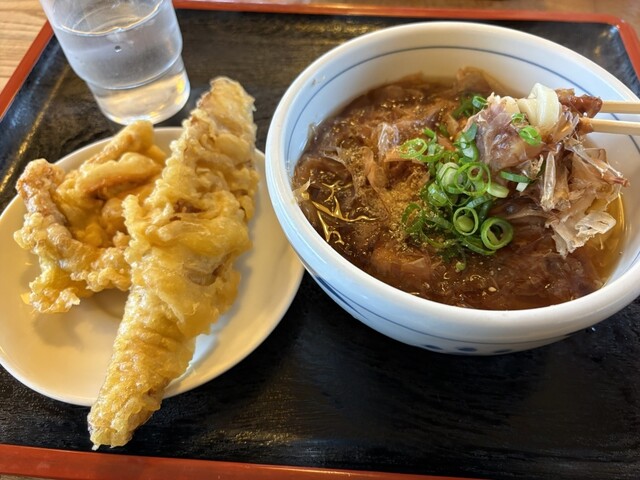
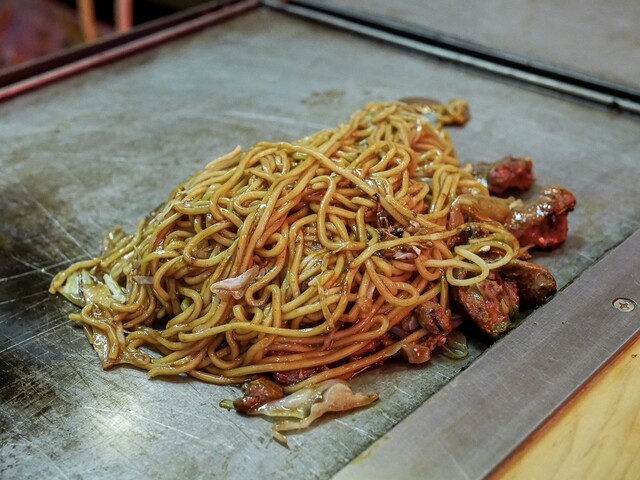
Mahalo’s categories also widen the read of the meal. Udon is the anchor, but tempura and oden matter because Sanuki udon culture is built around pacing and customization. Fried items bring contrast to the noodle structure; oden adds the slow-cooked, self-directed side of the local shop experience. Sake is listed among the drinks, but the format remains closer to a focused daytime meal than a drawn-out evening restaurant.
A small-room format shaped by turnover, families, and noodle timing
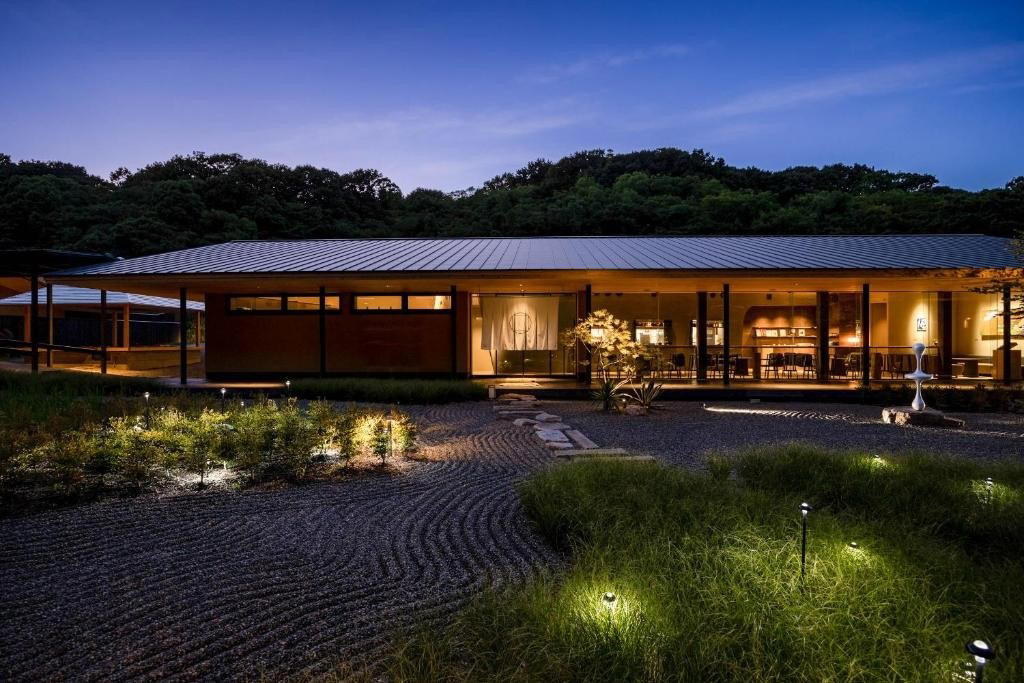
The room is modest in scale, with tatami and table seating rather than a luxury dining script. That matters. Kagawa udon shops are often judged by rhythm: how quickly noodles move from boil to bowl, how the room absorbs families and solo diners, and how little friction sits between arrival and eating. Private rooms and children-welcome positioning make this more forgiving than a counter-only specialist, while the no-smoking policy keeps the focus on food rather than atmosphere management.
Reservations are unavailable, which places the meal in the older udon-shop logic of arrival timing rather than concierge planning. That can be a virtue for travelers who understand the category. Sanuki udon is at its strongest when treated as a daytime pursuit, folded into a route between stations, shrines, coastline, or nearby towns, not forced into the role of a late-night dining centerpiece. For broader trip planning, the surrounding city pages help separate food stops from lodging and after-hours decisions: Our full Sanuki hotels guide, Our full Sanuki bars guide, Our full Sanuki wineries guide, and Our full Sanuki experiences guide.
The value proposition is also part of the cultural read. Kagawa’s udon tradition has not needed fine-dining pricing to signal seriousness. Skill shows up in elasticity, broth balance, frying discipline, and consistency under short service conditions. Compared with more formal Japanese dining categories, the barrier to entry is low, but the judgment can be severe. A casual room does not mean casual standards.
How to read Mahalo within a wider Japan itinerary
For visitors moving through Japan with restaurant lists assembled city by city, Sanuki can feel less obvious than Kyoto, Tokyo, or Osaka. That is precisely why it rewards attention. A noodle stop here connects the traveler to a regional food culture with a stronger local identity than many urban tasting-menu formats. The better comparison is not with sushi counters or kaiseki rooms, but with other ingredient-specific traditions where repetition clarifies quality: soba towns, ramen districts, tofu villages, or market sushi mornings.
EP Club’s wider Japan index makes that contrast visible. A traveler can move from beef-focused dining at -Grilled beef Sukiyaki- KAMAKURA TANUKIAN 鎌倉 たぬき庵 in Kamakura to charcoal and tuna at . 鮪と炭火焼き うお炭 秋葉原店 in Tokyo, cafe culture at .cafe in Osaka, contemporary local dining at.know in Kumamoto, Vietnamese cooking at (Shoku) Vietnam in Kawasaki, curry specialization at [Curry Senmon Ten] Maruyama Kyoju. in Sapporo, Kyoto dining at [ki:] in Kyoto, beef in Nara Prefecture at #肉といえば松田 奈良本店 in Kashihara, burgers at 1/3 HAMBURGER FACTORY in Kanazawa, and Yokohama dining at 1000 in Yokohama. Seen against that spread, Mahalo is not trying to compete on spectacle. It represents the tighter pleasure of a regional staple handled with enough skill to earn prefectural-level attention.
For readers outside Japan, the comparison may be easier through diaspora and specialty formats: Jōdo Saké Bar in Los Angeles and Onigiri Time in Pasadena show how Japanese food categories travel and adapt. Sanuki udon, by contrast, is most persuasive close to its source, where flour, water, shop rhythm, and local expectation form a compact system. Mendokoro Mahalo is worth placing on a Kagawa itinerary for that reason: it gives the traveler a disciplined, ingredient-led reading of a food culture that locals measure with precision.
Fast Comparison
Comparable venues by cuisine and price in the same metro.
| Venue | Cuisine | Price | Notes |
|---|---|---|---|
| Mendokoro MahaloThis venue — the venue you are viewing | Sanuki udon noodle shop | $ | Not listed |
| Teuchi Udon Gennai | Sanuki udon & curry udon | $ | Shido |
| 八十八庵 | Traditional Sanuki Uchikomi Udon | $$ | 多和 |
| ラーメン チョンマゲ 大阪天六店 | Traditional Japanese Soy Sauce Ramen | $ | Tenjinbashi |
| 屋宜家 | Traditional Okinawan Soba | $ | 八重瀬町大頓 |
| らぁめん道 あさひ食堂 | Traditional Hokkaido Miso Ramen | $ | 上川町 |
Recognition history
Dated appearances from independent guides and award organizations, with the underlying list record or original source where available.
Tabelog 100 #18 · No. 18
Tabelog · Tabelog 100 - Udon - KAGAWA - 2024
Continue exploring
More in Sanuki
Restaurants in Sanuki
Browse all →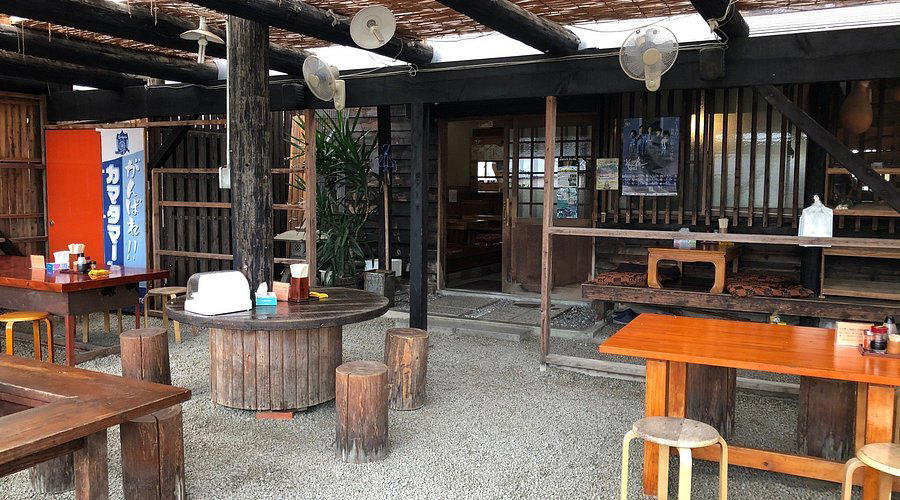
At a Glance
- Cozy
- Classic
- Solo
- Family
- Casual Hangout
- Group Dining
- Standalone
Current opening hours
- Monday
- 11 AM–2 PM
- Tuesday
- 11 AM–2 PM
- Wednesday
- 10:30 AM–3 PM
- Thursday
- Closed
- Friday
- 11 AM–2 PM
- Saturday
- 10:30 AM–3 PM
- Sunday
- 10:30 AM–3 PM
Hours can change for holidays and private events. Last verified .
A casual, local udon shop atmosphere with a warm and direct feel, focused on the craft of noodles rather than design flourishes; reviews describe it as a comfortable place to enjoy hearty Sanuki udon at lunchtime in a relaxed setting.