
Tabelog 100 #49
Our verdict
A six-seat, counter-only ramen shop in Saginuma, Kawasaki, Mendokoro Futokoro Ya sits in Kanagawa’s serious neighborhood ramen tier rather than the destination-dining circuit. Recognition from Tabelog Ramen KANAGAWA “Tabelog 100” 2025, a long run of prior selections, and sub-¥1,000 pricing make it a small-format shop with unusually strong signals for travelers who read ramen culture through queues, turnover, and local devotion.

Pearl is the En Primeur Club membership app, where members save venues, book tables and use the concierge.
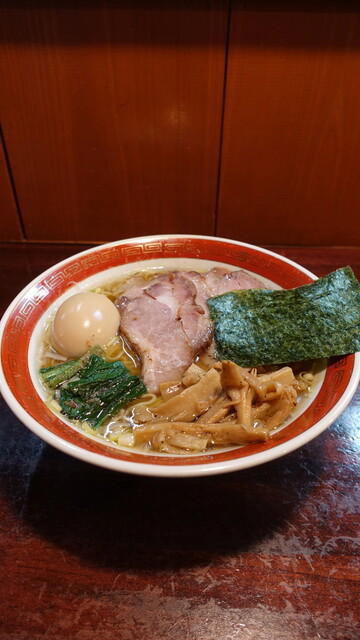
The approach is modest even by Kawasaki ramen standards: an understated shop profile, a focused format, and the kind of local attention that tends to build through repeat visits rather than spectacle. That scale matters. In Japanese ramen culture, authority often gathers around places that keep the experience direct, affordable, and closely tied to routine. Mendokoro Futokoro Ya belongs to that tradition: compact in spirit, ramen-focused, and closer to a neighborhood ritual than a polished restaurant set piece.
Kawasaki’s ramen map sits in a useful middle ground for travelers. It is not the tourist shorthand of larger city dining districts, and it is not a rural detour built around a single cult address. The city’s strength is commuter-belt seriousness: stations, residential streets, and small shops where lunch can be both routine and closely watched by local diners. Kawasaki fits that pattern. The format here makes sense in that context, a ramen shop whose value is measured through consistency, timing, and whether a diner accepts the discipline of a short, focused meal.
Kawasaki ramen, read through a focused counter culture
Ramen’s cultural weight in Japan comes partly from its resistance to luxury coding. It can attract obsessive travel and recognition systems while remaining affordable, quick, and physically informal. That tension is clear here. A Tabelog score of 3.84 and 2025 recognition through Tabelog Hyakumeiten place the shop inside a recognized ramen conversation, not merely a local lunch list. The listed price band of - JPY 999 keeps the experience in ramen’s everyday register, even as the recognition gives it a stronger pull for diners planning around specialist addresses.
The useful comparison is not with high-priced tasting counters, but with other Kawasaki formats competing for a diner’s limited meals. FUJIMORI Saginuma ten, Teuchi Soba Fuurai Kyo, Koguma, Sumibi Yakiniku Horumon Urara, and Berg no Shigatsu Honten sit in different occasion categories. Ramen at this scale works by another logic: quick focus, limited ceremony, and a dish category where small differences in preparation, handling, and service rhythm carry the entire experience. The broader point is Kawasaki’s ramen culture itself, where recognition often functions as shorthand for technical expectations.
For readers building a Kawasaki food day, this is the kind of stop that pairs better with neighborhood grazing than with a long formal itinerary. EP Club’s broader city coverage puts it alongside other Kawasaki dining rooms and casual specialists rather than in a single prestige category. The contrast is useful: Kawasaki dining is not a single cuisine story, but a spread of station-adjacent specialisms, bakeries, casual counters, and family-friendly rooms.
The discipline is logistical as much as culinary
Small ramen shops in Japan often ask diners to participate in the system before they taste anything. Here, the practical appeal comes from accepting the ramen format on its own terms: arrive with patience, keep the meal focused, and understand that the room is designed around the bowl rather than lingering. Those details are not ornamental. They show the pressure created by popular everyday restaurants in Kawasaki, where crowd behavior and timing can matter as much as appetite.
The category itself sets expectations. Ramen is usually a concise meal, and Mendokoro Futokoro Ya’s price listing of - JPY 999 reinforces that everyday rhythm. Diners should not approach it as a long, flexible restaurant sitting or a multi-course occasion. It is better understood as a targeted stop: a place to prioritize for the bowl, the local recognition, and the chance to read Kawasaki’s food culture through a modest specialist address.
The editorial read is clear: this is a disciplined ramen address for diners who value category depth over comfort padding. It is not best framed as a venue for an extended social meal or a broad tasting itinerary. It is built for focus, economy, and the kind of attention that makes Tabelog’s ramen recognition meaningful to domestic travelers and useful to visitors planning around a compact Kawasaki food day.
How to place it in a wider Japan itinerary
Travelers using Kawasaki as a base can treat Mendokoro Futokoro Ya as a precise ramen target rather than a general-purpose restaurant. For broader planning, start with Our full Kawasaki restaurants guide, then branch into category pages such as Our full Kawasaki hotels guide, Our full Kawasaki bars guide, Our full Kawasaki wineries guide, and Our full Kawasaki experiences guide. The larger point is sequencing: ramen rewards punctuality and patience, while hotels, bars, and experiences can absorb the rest of the day with less pressure on a meal’s narrow focus.
It also helps to see this shop within Japan’s wider casual-specialist culture. A traveler moving through the country might compare the decision-making logic with other unnamed dining rooms, ramen counters, soba shops, bakeries, and everyday specialists across Japan. Across borders, Japanese casual forms translate differently, where the ritual is often reframed for local dining habits. In Kawasaki, the original grammar remains intact: choose the target, respect the rhythm, focus on the bowl, and move on.
Frequently asked questions
Is Mendokoro Futokoro Ya okay with children?
The provided venue details do not specify a children policy. Families should treat it as a focused ramen stop in Kawasaki and plan accordingly.
What's the overall feel of Mendokoro Futokoro Ya?
It feels like a compact, focused ramen specialist in Kawasaki. The Tabelog Hyakumeiten 2025 recognition and 3.84 score give it clear status, while the price band keeps it in an everyday ramen register.
What price level is Mendokoro Futokoro Ya?
Pricing at Mendokoro Futokoro Ya is listed as - JPY 999.
Where is Mendokoro Futokoro Ya in Kawasaki?
Kawasaki.
Price and Positioning
Nearby venues at a similar price tier for orientation.
| Venue | Cuisine | Price | Awards | Notes |
|---|---|---|---|---|
| Mendokoro Futokoro YaThis venue (the venue you are viewing) | Classic Kawasaki ramen counter | $1–10 | Tabelog 100 #49 | Not listed |
| Ramen Marusen | Traditional Ramen Shop | $10–20 | Tabelog 100 #27 | Musashi-Kosugi, Traditional Ramen Shop |
| Sumiyoshiya Sohonten | Traditional Japanese sweets café (kuzumochi, soba & udon) | $1–10 | Tabelog 100 #16 | Kawasakidaishi, Traditional Japanese sweets café (kuzumochi, soba & udon) |
| Ramen Kan 2 Ya Kawasaki ten | Yokohama Iekei pork-soy sauce ramen | $10–20 | Tabelog 100 #1 | Not listed |
| Match Bo Mizonokuchi ten | Wakayama-style ramen | $10–20 | Tabelog 100 #60 | Takatsu-ku, Wakayama-style ramen |
| Teuchi Chuka Soba Sakata | Handmade Chuka Soba Ramen | $10–20 | Tabelog 100 #80 | Kawasaki-ku, Handmade Chuka Soba Ramen |
Recognition history
Dated appearances from independent guides and award organizations, with the underlying list record or original source where available.
Tabelog 100 #49 · No. 49
Tabelog · Tabelog 100 - Ramen - KANAGAWA - 2025
Continue exploring
More in Kawasaki
Restaurants in Kawasaki
All restaurants in Kawasaki →


Bars in Kawasaki
Browse all →



Hotels in Kawasaki
Browse all →


Wineries in Kawasaki
Browse all →
Details
- Cozy
- Intimate
- Solo
- Family
- Casual Hangout
- Chefs Counter
- Standalone
- A La Carte
- Counter Dining
A small, counter-only neighborhood ramen shop with just six seats, non-smoking, and a casual, slightly bustling atmosphere that feels like a local hideout rather than a polished design destination.