Mazza
Middle Eastern Dining in a City That Has Learned to Pay Attention The stretch of 1500 East in Salt Lake City's Sugar House district runs through one of the city's more settled residential corridors, where local restaurants outlast trends by...
Pearl is the En Primeur Club membership app — saves, bookings, and concierge access live there. Same editors, same standards.
- Address
- 1515 S 1500 E, Salt Lake City, UT 84105
- Phone
- +18014849259
- Website
- mazzacafe.com
- Directions
- Get directions
 Saves & bookings on Pearl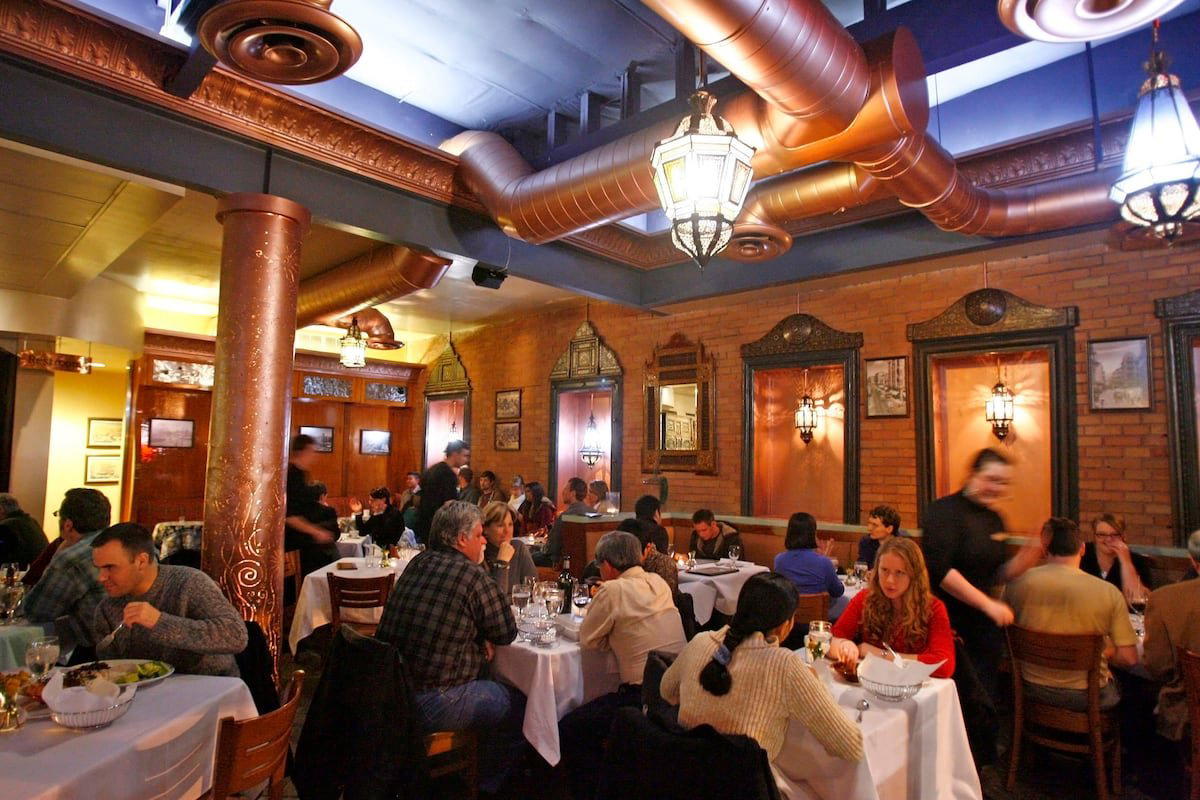
Middle Eastern Dining in a City That Has Learned to Pay Attention
The stretch of 1500 East in Salt Lake City's Sugar House district runs through one of the city's more settled residential corridors, where local restaurants outlast trends by earning neighborhood loyalty rather than chasing it. Mazza, at 1515 S 1500 E, sits in that context: a casual Salt Lake City restaurant serving authentic Lebanese Middle Eastern cuisine at an approachable price point. Salt Lake City is no longer a market where ambitious cuisine survives only downtown. Neighborhood spots with serious kitchens now hold their own alongside the hotel dining rooms and high-profile openings that tend to attract press attention first.
The Cuisine and Its Regional Roots
Middle Eastern cooking in the United States occupies a complicated position in the restaurant economy. At one end, fast-casual formats have made falafel and shawarma everyday vocabulary. At the other, a smaller number of restaurants treat the tradition as a full culinary discipline, drawing on the distinct regional identities of Lebanese, Syrian, Palestinian, and broader Levantine cooking rather than collapsing them into a generic category. The distance between those two poles is considerable.
Levantine cuisine, in its more complete expression, is built around balance and technique that rarely announces itself loudly. The architecture of a mezze spread, for instance, depends on the cook’s understanding of acid, fat, and texture across multiple dishes meant to be read as a composed whole rather than individually. Hummus done properly requires specific ratios and fresh tahini; kibbeh reflects regional identity through its grain-to-meat proportions and spice profile; fattoush depends on the quality of the sumac and the timing of the bread. These are details that separate a kitchen with genuine command from one that is simply executing familiar names.
In American cities outside New York, Los Angeles, and Dearborn, restaurants offering this level of engagement with the tradition are less common than the cuisine’s casual-dining ubiquity would suggest. Salt Lake City’s Middle Eastern dining scene is not large, which makes the restaurants that anchor it more consequential by default. Mazza has held that position in the Sugar House area long enough to be part of how residents in that neighborhood understand what the cuisine can do at its more considered end.
Where Mazza Sits in Salt Lake City’s Dining Picture
Salt Lake City’s restaurant scene has diversified meaningfully, and the city now supports a range of serious kitchens across different cuisines and price points. Bambara Salt Lake City represents the hotel dining tradition; Avenues Proper anchors the craft-focused neighborhood pub format; Arlo Restaurant and Adelaide represent the newer wave of chef-driven rooms. Blind Rabbit Kitchen adds another dimension to the east-side dining picture.
Mazza operates outside that competitive set almost entirely. Its peer restaurants are not other Sugar House spots but other American cities’ Middle Eastern kitchens, places where the cuisine is treated as a serious discipline rather than a category filler. In that sense, Salt Lake City diners with access to Mazza are in a better position than the city’s overall restaurant count might imply. For the cuisine, it is not about whether Salt Lake City can compete with New York or Los Angeles. It is about whether a specific kitchen is doing the work seriously. The evidence from Mazza’s longevity in the neighborhood suggests it is.
The broader EP Club guide to Salt Lake City restaurants maps the city’s dining scene across categories and neighborhoods for readers planning a fuller itinerary.
A Note on Scale and Expectation
Visitors accustomed to the format of high-investment American fine dining, places like Le Bernardin in New York City, Alinea in Chicago, The French Laundry in Napa, Lazy Bear in San Francisco, or Single Thread Farm in Healdsburg, will find Mazza operating in a different register entirely. Levantine cuisine does not typically express itself through tasting-menu architecture or elaborate plating conventions. Its ambitions run in a different direction: depth of flavor, freshness of ingredient, and fidelity to a regional tradition that has thousands of years of culinary history behind it. That is not a lesser ambition. It is a different one.
The same distinction applies when comparing across American regions. Restaurants like Blue Hill at Stone Barns in Tarrytown, Providence in Los Angeles, Addison in San Diego, The Inn at Little Washington, Emeril’s in New Orleans, Atomix in New York City, and 8½ Otto e Mezzo Bombana in Hong Kong each define excellence within their own culinary traditions. Mazza should be understood in the context of Levantine cooking’s own standards of excellence, not mapped onto formats it was never designed to resemble.
Planning a Visit
Mazza is located in Salt Lake City’s Sugar House neighborhood at 1515 S 1500 E, reachable by car from downtown in under fifteen minutes and accessible via TRAX with a short walk from the 1300 East station. For a restaurant of this type and neighborhood standing, reservations are worth making in advance for dinner, particularly on weekend evenings when the room tends to fill with regulars. Lunch service, where offered, tends to be more accessible on a walk-in basis. Current hours are Mon through Thu 4:30 to 8:30 PM, Fri and Sat 4:30 to 9 PM, and Sun closed. Reservations are recommended.
Comparable Spots, Quickly
Comparable venues nearby, for context on price, style, and recognition.
| Venue | Cuisine | Price | Notes |
|---|---|---|---|
| MazzaThis venue — the venue you are viewing | Authentic Lebanese Middle Eastern | $$ | Not listed |
| The Blue Plate Diner | Americana Diner Comfort Food | $$ | Sugarhouse |
| LOLA | Mexican Infusion | $$ | 9th and 9th |
| Rio Grande Cafe | Classic Mexican Comfort Food | $$ | East Central |
| Nona Bistro | Rustic Italian Bistro | $$ | Central City |
| Bombay House | Authentic Indian Cuisine | $$ | Sugarhouse |
Continue exploring
More in Salt Lake City
Restaurants in Salt Lake City
Browse all →
Bars in Salt Lake City
Browse all →
Hotels in Salt Lake City
Browse all →
Wineries in Salt Lake City
Browse all →
At a Glance
- Lively
- Casual Hangout
- Family
- Extensive Wine List
Current opening hours
- Monday
- 4:30–8:30 PM
- Tuesday
- 4:30–8:30 PM
- Wednesday
- 4:30–8:30 PM
- Thursday
- 4:30–8:30 PM
- Friday
- 4:30–9 PM
- Saturday
- 4:30–9 PM
- Sunday
- Closed
Hours can change for holidays and private events. Last verified .
Small, packed, and noisy atmosphere with good service.