
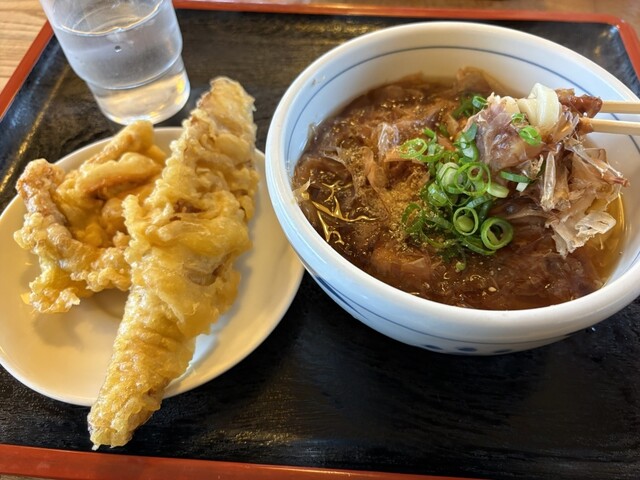
Matsushita Seimensho belongs to Takamatsu’s working udon culture rather than its restaurant theatre: low-cost bowls, counter seating, take-out, and a format built for repeat local use. Its Tabelog 100 Udon Kagawa 2024 selection, long operating history from 1966, and noodle-shop breadth place it inside the city’s serious Sanuki udon conversation.
Pearl is the En Primeur Club membership app — saves, bookings, and concierge access live there. Same editors, same standards.
- Address
- 2-2 Nakanocho, Takamatsu, Kagawa 760-0008, Japan
- Phone
- +81 87-831-6279
- Website
- matsushita-seimen.jp
 Saves & bookings on Pearl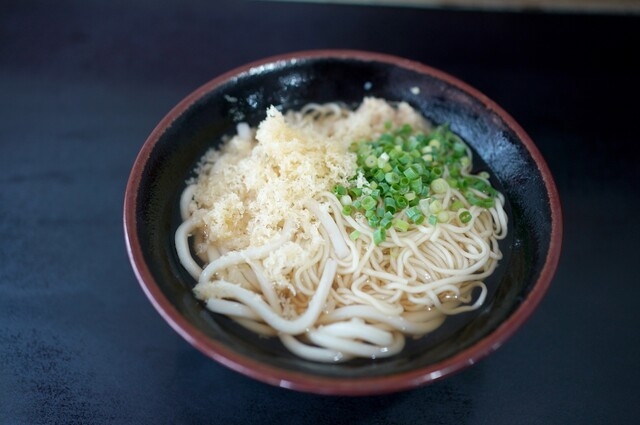
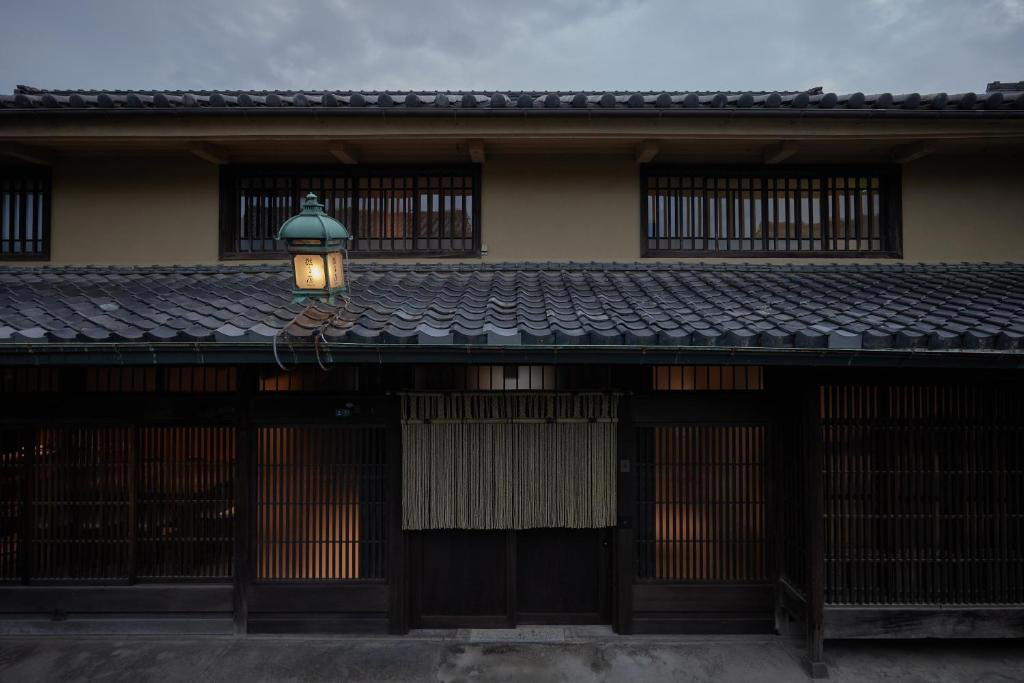
On the approach to a Takamatsu noodle shop, the cues are usually practical before they are decorative: a compact frontage, counter rhythm, and customers moving through a meal without ceremony. That matters in Kagawa, where Sanuki udon is not a special-occasion cuisine but a daily infrastructure. Matsushita Seimensho fits that grammar closely, with a small counter-led format and a price band under JPY 999 that keeps the experience closer to a working flour-and-broth shop than a staged regional showcase.
Kagawa’s udon reputation rests on a narrow set of variables: wheat noodles, water, broth, speed, and the diner’s tolerance for self-directed simplicity. The serious shops rarely need luxury signals. They compete on texture discipline, turnover, and the confidence to let a bowl remain inexpensive. In that context, a Tabelog 100 Udon Kagawa 2024 selection is a useful marker because it places the shop among the prefecture’s recognised udon addresses rather than among generic casual restaurants.
Sanuki udon judged by flour, broth, and repetition
Ingredient sourcing in Sanuki udon is less about a single named farm than about a regional food system built around wheat noodles and dashi culture. Kagawa’s identity is tied to udon at an everyday scale: flour is kneaded into a noodle that must hold chew, broth is kept direct, and garnish is secondary to the base. The category rewards consistency because customers return often, not because they are chasing a long menu.
This is where the noodle-shop format becomes editorially interesting. A low price ceiling does not signal lack of seriousness; in Takamatsu it often signals the opposite. The city’s udon counters operate on volume, repeat trade, and narrow margins, which puts pressure on the fundamentals. Matsushita Seimensho’s inclusion in the 2024 Tabelog 100 list, alongside earlier Tabelog 100 udon selections in 2017, 2018, 2020, and 2022, points to sustained recognition within a category that locals evaluate with unusual precision.
The menu’s broader noodle scope also says something about Takamatsu’s casual dining culture. Udon and soba appear in the category listing, while the shop also notes Chinese noodles and a seasonal Japanese soba period from around November to March. The mixed-bowl option, combining udon with Chinese noodles or udon with Japanese soba, belongs to a utilitarian local register rather than a chef-driven tasting format. It treats noodles as a flexible staple, not as a museum object.
A counter shop in a city that takes udon seriously
Takamatsu’s restaurant map splits between destination dining and everyday specialists, and udon sits firmly in the second camp even when a shop earns outside recognition. Comparison is useful here. Chikusei Honten works in the same sub-JPY 999 bracket, while Makoto Udon and Menya Shichifuku Honten also occupy the low-cost udon tier. Shinpei Udon moves into a slightly higher JPY 1,000 to JPY 1,999 range, and Renge Ryori Ten sits in a different dining band altogether at JPY 4,000 to JPY 4,999. The lesson is not that one price is superior; it is that Takamatsu’s udon culture allows serious eating at a level where cost stays deliberately modest.
That modesty shapes the room. Counter seating, a 20-seat capacity, take-out, no private rooms, and children welcome all point to a place designed for solo diners, families, and quick meals rather than extended service. Reservations are unavailable, which aligns with the category’s first-come rhythm. Payment is cash only, and the absence of card, electronic money, and QR payment support is a practical signal: this is an old-school noodle operation, not a hospitality concept built around frictionless tourism.
The location near Ritsurinkoen Kitaguchi Station also matters because Takamatsu’s food itinerary often pairs udon with movement through the city rather than a single destination meal. Ritsurin Garden pulls visitors into this part of town, while local bus stops and rail access make the shop easier to fold into a half-day route. Parking in front of the store and nearby further reflects Kagawa’s udon pattern, where car-based noodle touring is part of the prefectural ritual.
How to read it against Takamatsu's wider table
For travellers building a Takamatsu eating plan, the sharper move is to separate noodle houses from full-service restaurants rather than rank them together. Udon shops answer a different question: where does the city’s staple food show its daily discipline? For that frame, Matsushita Seimensho is relevant because it combines longevity from 1966, low pricing, counter format, and repeated Tabelog 100 recognition.
The surrounding shortlist can widen the picture. Chikusei Honten, Azuma, Furukawa Udon, and Furusato Udon keep the focus on Takamatsu’s noodle identity, while Fumiya Okonomiyaki Honten moves into a different casual Japanese comfort-food lane. For a broader city edit, use Our full Takamatsu restaurants guide, then add context from Our full Takamatsu hotels guide, Our full Takamatsu bars guide, Our full Takamatsu wineries guide, and Our full Takamatsu experiences guide.
The wider Japan and overseas Japanese-food map shows how different this format is from destination dining elsewhere: -Grilled beef Sukiyaki- KAMAKURA TANUKIAN 鎌倉 たぬき庵 in Kamakura. 鮪と炭火焼き うお炭 秋葉原店 in Tokyo.cafe in Osaka.know in Kumamoto, (Shoku) Vietnam in Kawasaki, [Curry Senmon Ten] Maruyama Kyoju. in Sapporo, Jōdo Saké Bar in Los Angeles, and Onigiri Time in Pasadena each belongs to another dining logic. Takamatsu udon is more compressed: fewer signals, lower spend, faster decisions, and a heavier burden on the noodle itself.
Comparison Snapshot
Comparable venues by cuisine and price in the same metro.
| Venue | Cuisine | Price | Notes |
|---|---|---|---|
| Matsushita SeimenshoThis venue — the venue you are viewing | Sanuki Udon | $ | Not listed |
| Teuchi Udon Shimizuya | Sanuki udon & tempura | $ | Takamatsu |
| Marutani Seimen | Traditional Sanuki udon shop | $ | Takamatsu |
| Teuchi Menya Oshima | Self-service Sanuki udon & soba shop | $ | Takamatsu |
| Teuchi Udon Fugetsu | Traditional Sanuki Udon | $ | Takamatsu |
| Utsumi Udon | Sanuki Udon | $ | Takamatsu |
Recognition history
Dated appearances from independent guides and award organizations, with the underlying list record or original source where available.
Tabelog 100 #98 · No. 98
Tabelog · Tabelog 100 - Udon - KAGAWA - 2024
Continue exploring
More in Takamatsu
Restaurants in Takamatsu
Browse all →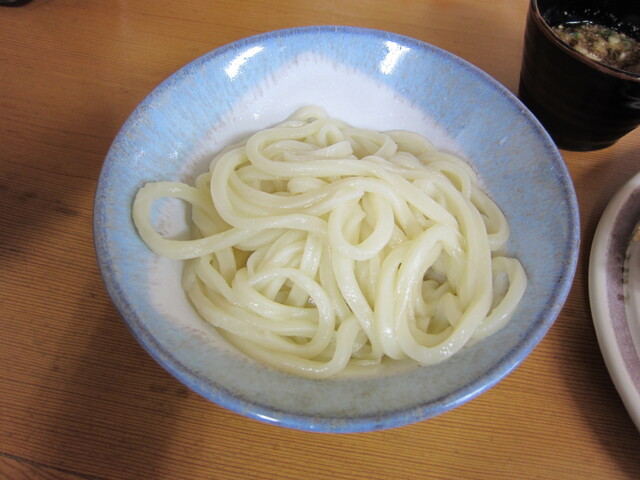

At a Glance
- Classic
- Cozy
- Well Known
- Solo
- Casual Hangout
- Family
- Standalone
- Open Kitchen
Current opening hours
- Monday
- 7 AM–3 PM
- Tuesday
- 7 AM–3 PM
- Wednesday
- 7 AM–3 PM
- Thursday
- 7 AM–3 PM
- Friday
- 7 AM–3 PM
- Saturday
- 7 AM–3 PM
- Sunday
- Closed
Hours can change for holidays and private events. Last verified .
Simple, no-frills, and old-school, with the feel of a compact neighborhood noodle shop that draws early-morning queues.