
1 Michelin Star
Our verdict
Mater1apr1ma holds a Michelin star in Pontinia, a working agricultural town in the Agro Pontino plain south of Rome. Chef Fabio's kitchen draws on the region's produce with a programme that includes an Indian-influenced lamb dish reflecting the area's immigrant communities, while the savory dessert course — built around olives, basil, and artichokes — signals a kitchen operating well beyond regional convention.

Pearl is the En Primeur Club membership app — saves, bookings, and concierge access live there. Same editors, same standards.
- Address
- Via Sardegna, 8, 04014 Pontinia LT, Italy
- Phone
- +39 0773 86391
- Hours
- Mon ClosedTue–Fri 8–11 PMSat 1–3:30 PM, 8–11 PMSun 1–3:30 PM
- Website
- materiaprimapontinia.it
- Directions
- Get directions
- Booking
- Book on TheFork
The menu
What to order
- Duck tortellini
- Venison
- Orata with almonds and 'nduja
- Cabbage sausage
- Squid appetizer
Lazio's Overlooked Southern Plain and What It Produces
Most fine-dining attention in Lazio concentrates on Rome, and understandably so. But the Agro Pontino — the reclaimed marshland stretching south toward the Tyrrhenian coast — has its own distinct agricultural identity, shaped by mid-twentieth-century land drainage, resettlement programmes, and decades of intensive farming that now produces buffalo, lamb, artichokes, and a range of field vegetables with little visibility on the capital's restaurant menus. Pontinia sits at the centre of this plain, a grid-planned town built under Mussolini's bonifica campaign. It is not a place where you expect to find a Michelin-starred kitchen, which is partly why finding one here says something worth paying attention to.
Contemporary Italian fine dining has largely concentrated in the north, where you find the multi-star ambitions of places like Osteria Francescana in Modena, Le Calandre in Rubano, or Enrico Bartolini in Milan. Southern Lazio, by contrast, has no established fine-dining circuit. A single Michelin star awarded here in 2024 is not part of a cluster; it is an outlier that earns its distinction in a different way, through the specificity of an agricultural territory that most restaurants in the country have not thought to systematically address.
The Kitchen's Relationship with the Agro Pontino
The Agro Pontino is a region defined by its flatness and its produce rather than by any historical culinary tradition with the cultural weight of, say, the Neapolitan ragù or the Roman cacio e pepe. That absence of a prescriptive local canon is, in practice, a kind of freedom. A kitchen working here does not need to negotiate with a centuries-old template. What it must do instead is identify which local ingredients are worth building a menu around and assemble them into something that reads as coherent and contemporary rather than merely regional.
At Mater1apr1ma, on Via Sardegna in central Pontinia, the approach is to treat regional produce as the primary material and then apply technique and conceptual thinking that extends well beyond the immediate geography. The lamb dish that has drawn attention from Michelin's inspectors is the clearest example: local lamb prepared with Indian spice influences, a combination that the kitchen connects explicitly to the large Indian immigrant workforce that has settled across the Agro Pontino's farming operations over the past two decades. This is not fusion for its own sake; it is a kitchen reading its social environment as carefully as its agricultural one. Comparable moves in southern Italian contemporary cooking can be found further down the coast at Quattro Passi in Marina del Cantone and at L'Olivo in Anacapri, though both operate in landscapes with far stronger culinary heritage to push against.
The Dessert Course as a Statement
The category of so-called non-sweet desserts has been a recurring device in progressive Italian kitchens for some time, a way of challenging the conventional architecture of a meal while deploying underused ingredients. What Mater1apr1ma does with olives, basil, and artichokes at the end of the meal places it in a specific conversation about how kitchens in agricultural regions can reframe familiar produce. Artichokes have deep roots in Lazio cooking: the Jewish-Roman carciofo alla giudia and the Roman carciofo alla romana are among the most recognisable expressions of the regional pantry. Using artichokes in a dessert context is not merely a technical exercise but a reframing of a locally familiar ingredient, asking the diner to approach it from an entirely different angle.
This kind of structural ambition at the close of a meal puts Mater1apr1ma in conversation with kitchens far outside the local scene. The cooking at Reale in Castel di Sangro has made regional Abruzzese produce central to a menu that operates with equivalent conceptual seriousness, and Uliassi in Senigallia similarly uses Adriatic coastal produce as a launchpad for a programme that goes far beyond the predictable. The geography of starred Italian restaurants outside the main urban centres has shifted noticeably over the past decade, with recognition increasingly following kitchens that commit to a specific territory rather than chasing generic fine-dining convention. Mater1apr1ma's 2024 star fits that pattern.
Front of House and the Wine Programme
Italian fine dining at this price tier, the restaurant sits in the €€€ bracket, depends considerably on the service model. In northern Italy, houses like Dal Pescatore in Runate and Enoteca Pinchiorri in Florence have built reputations over decades in part through a formality and depth of service that matches the ambition of the kitchen. At the €€€€ end, that level of investment in front-of-house consistency becomes almost a prerequisite. At €€€, the calculus is different: the service must carry editorial weight without the infrastructure of a larger operation.
At Mater1apr1ma, the front-of-house programme is run by Sara, whose knowledge of the wine list is described in Michelin's own commentary as a distinguishing feature. The wine list at a restaurant in the Agro Pontino is not drawing on a famous local appellation the way, for instance, an Alba restaurant would lean into Barolo and Barbaresco at Piazza Duomo, or the way a South Tyrolean kitchen like Atelier Moessmer Norbert Niederkofler in Brunico can work within a tightly defined Alpine wine culture. Building an interesting and coherent wine programme in this particular geography requires genuine curatorial work. That Michelin's inspectors noted Sara's command of the list as part of the restaurant's overall proposition indicates that the wine programme is operating as something more than an afterthought.
Visiting Mater1apr1ma: Practical Notes
Pontinia is approximately 75 kilometres south-southeast of Rome, reachable by car via the Via Pontina (SS148), which runs through the Agro Pontino plain. The drive from Rome takes roughly 75 to 90 minutes depending on traffic leaving the city. There is no direct rail connection of practical use for a restaurant visit, so a car remains the standard approach. The restaurant sits on Via Sardegna, centrally within the town's planned grid.
The schedule across the week rewards careful reading before planning. Mater1apr1ma is closed on Mondays. Tuesday, Thursday, and Friday service is dinner only, running from 7 PM to 11 PM. Wednesday opens for lunch from 1 PM to 3:30 PM, with no dinner service that evening. Saturday covers both lunch (1 PM to 3 PM) and dinner (7 PM to 11:30 PM), and Sunday is lunch only from 1 PM to 3 PM. For visitors combining the restaurant with a broader trip, Saturday is the only day where both services are available, which may help with logistics. The price tier of €€€ in an Italian context typically implies a meaningful investment per head for the full experience, though not at the levels of the multi-star northern houses listed above.
For those building a broader itinerary around the region, EP Club also covers the full Pontinia restaurants guide, Pontinia hotels, bars in Pontinia, local wineries, and experiences across the area. For Italian contemporary cooking at comparable or adjacent quality levels, see also Agli Amici Rovinj and Casa Perbellini 12 Apostoli in Verona.
Frequently asked questions
What dish is Mater1apr1ma known for?
Go for the lamb. Michelin's inspectors specifically highlighted a lamb dish that combines Agro Pontino ingredients with Indian spice influences, a combination that reflects the local immigrant farming community. That same editorial instinct, using cuisine to read social as well as agricultural context, also shows in the kitchen's non-sweet desserts built around olives, basil, and artichokes. The Michelin 1 Star awarded in 2024 gives credible weight to both as expressions of the kitchen's approach.
What is the atmosphere like at Mater1apr1ma?
Mater1apr1ma operates as a tight, couple-run operation in a working agricultural town without a tourist circuit, which sets a different register from Rome's fine-dining rooms. The Michelin commentary describes the service as precise and friendly, and Sara's deep involvement with the wine programme shapes the front-of-house experience considerably.
Is Mater1apr1ma suitable for children?
At €€€ in a Michelin-starred kitchen operating with a conceptually driven menu, this is better suited to adults with a genuine interest in the food than to families with young children.
Comparable Spots, Quickly
| Venue | Cuisine | Price | Awards | Notes |
|---|---|---|---|---|
| Mater1apr1maThis venue — the venue you are viewing | Contemporary Italian | $50–100 | 1 Michelin Star | Not listed |
| Atelier Moessmer Norbert Niederkofler | Italian, Creative | Not listed | Michelin 3 Star | Not listed |
| Dal Pescatore | Italian, Italian Contemporary | Not listed | Michelin 3 Star | Not listed |
| Enoteca Pinchiorri | Contemporary Italian Fine Dining | $200–300 | 3 Michelin Stars · World's 50 Best #32 | Italian - French, Italian Contemporary |
| Enrico Bartolini | Creative | Not listed | Michelin 3 Star | Not listed |
| Osteria Francescana | Avant-Garde Italian Contemporary | $300–500 | 3 Michelin Stars · World's 50 Best #1 | Progressive Italian, Creative |
Recognition history
Dated appearances from independent guides and award organizations, with the underlying list record or original source where available.
Michelin 1 Star
Michelin
Full recognition history (3 entries)
Michelin 1 Star
Michelin
Michelin 1 Star
Michelin

Mater1apr1ma
The wine
- Wine program
- Exceptional wine program
- Extensive wine list
- Sommelier-led
Details
- Intimate
- Elegant
- Modern
- Sophisticated
- Date Night
- Special Occasion
- Celebration
- Open Kitchen
- Standalone
- Extensive Wine List
- Sommelier Led
- Farm To Table
- Local Sourcing
- Sustainable Seafood
- Tasting Menu
- Prix Fixe
- Italian Wines
- Natural Wines
- Wine Pairings
- Vegetarian Friendly
- Vegan Options
- Gluten Free Options
- Allergy Accommodating
Current opening hours
- Monday
- Closed
- Tuesday
- 8–11 PM
- Wednesday
- 8–11 PM
- Thursday
- 8–11 PM
- Friday
- 8–11 PM
- Saturday
- 1–3:30 PM, 8–11 PM
- Sunday
- 1–3:30 PM
Hours can change for holidays and private events. Last verified .
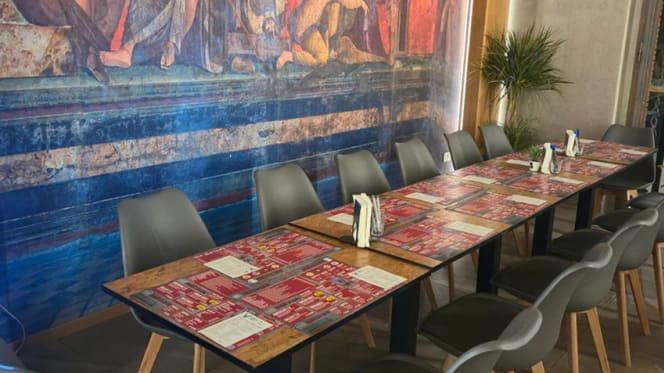
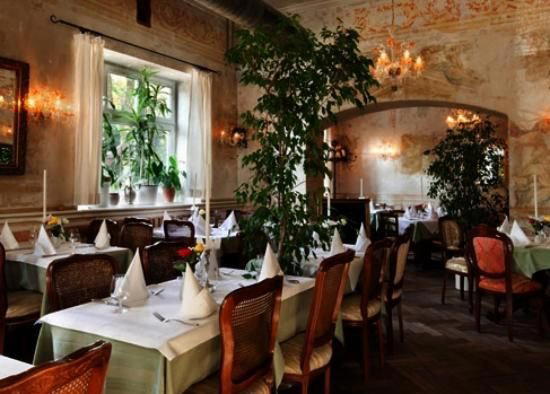
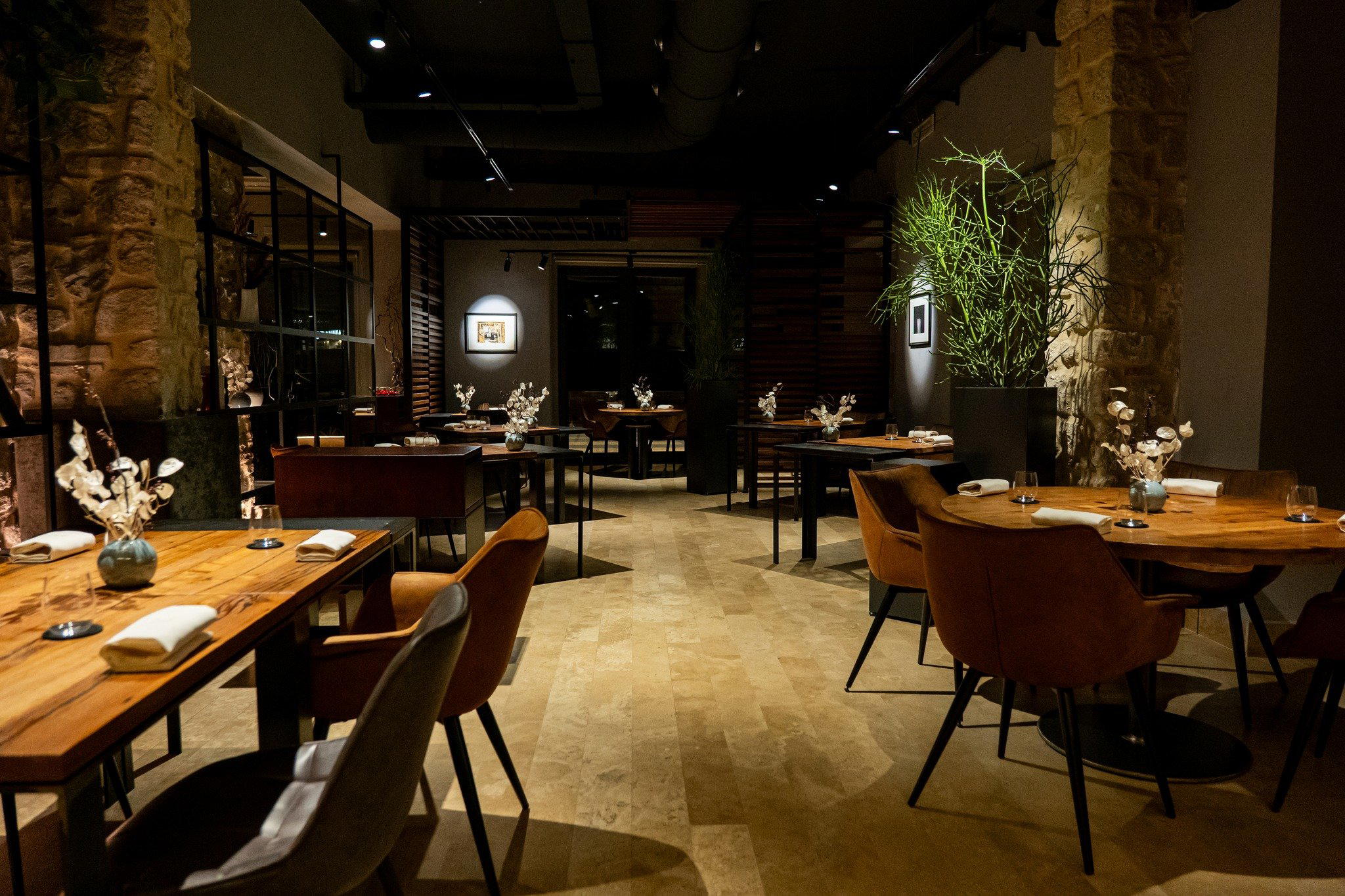
Modern, welcoming space with wood tables and open kitchen; refined dining room with understated elegance, tranquil glow, and fireplace; intimate atmosphere with views overlooking the kitchen.