
A Michelin Plate-recognised bistro on Via Pasquale Sottocorno, steps from Piazza Cinque Giornate, Mater Bistrot operates at the quieter, more considered end of Milan's modern dining scene. A short counter lets guests watch chef Alessandro at work, while two tasting menus and a natural wine selection define the format. Small in scale, deliberate in sourcing, and consistent enough to hold Michelin recognition for consecutive years.
Pearl is the En Primeur Club membership app — saves, bookings, and concierge access live there. Same editors, same standards.
- Address
- Via Pasquale Sottocorno, 1, 20129 Milano MI, Italy
- Phone
- +39 02 9132 1602
- Website
- materbistrot.it
- Directions
- Get directions
 Saves & bookings on Pearl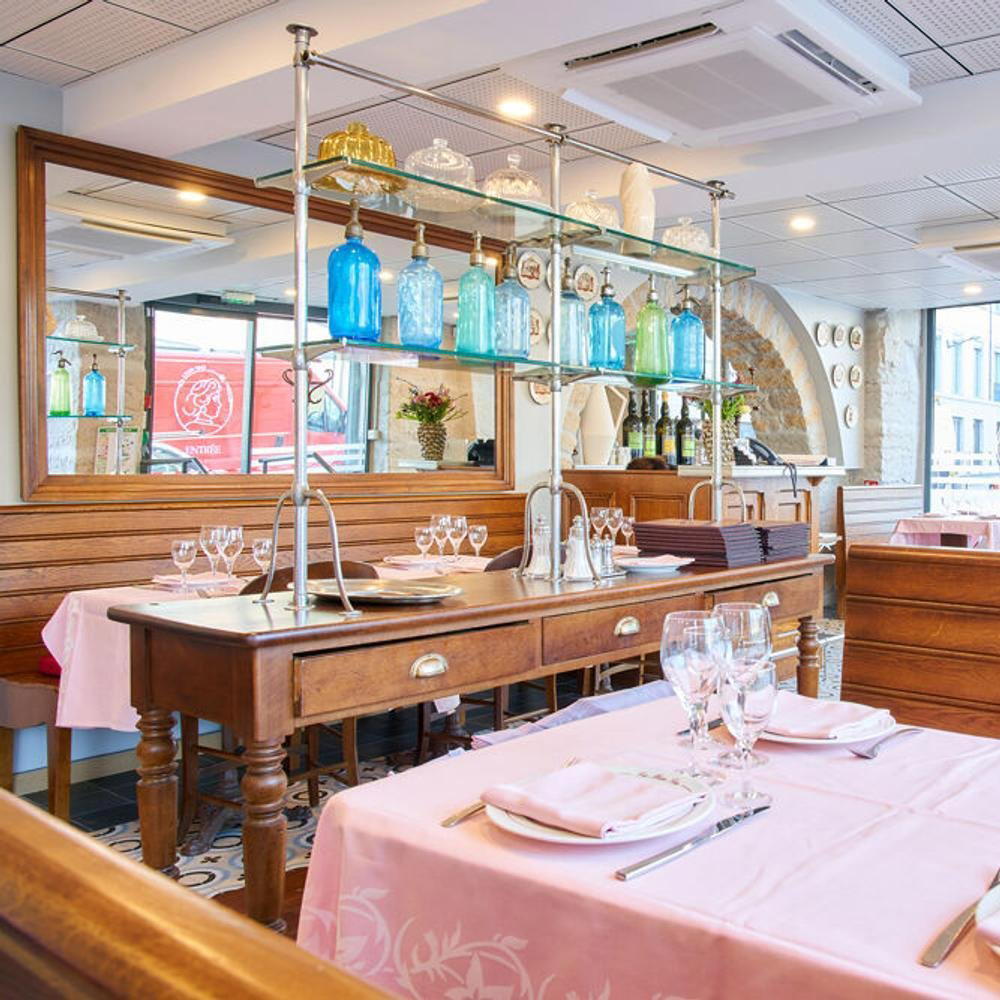
A Side Street That Earns Its Detour
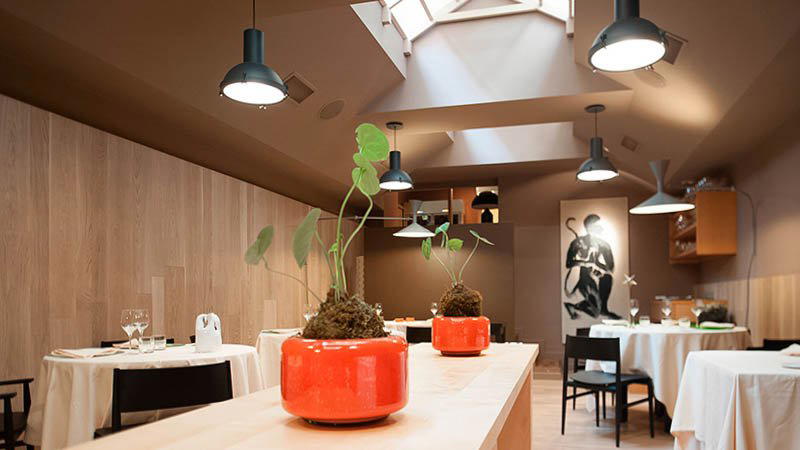
The blocks immediately behind Piazza Cinque Giornate sit outside Milan's well-worn aperitivo and restaurant circuits. The square itself marks the edge of the Porta Vittoria neighbourhood, where the foot traffic thins and the dining rooms tend to serve the people who actually live nearby rather than those working through a shortlist. Mater Bistrot occupies exactly that kind of address on Via Pasquale Sottocorno: low-lit, a handful of tables, a counter facing the kitchen. The small ceiling lights create the dim, settled atmosphere that Milan's more theatrical rooms work hard to manufacture. Here it reads as the baseline rather than a design decision.
That physical scale is not incidental. In a city where the premium modern-cuisine tier runs from large-format tasting rooms like Cracco in Galleria to the minimalist precision of Contraste, the bistro format occupies a distinct position: fewer covers, lower price point, and a format that sits closer to a Parisian neighbourhood restaurant than to a destination-dining event. The €€€ pricing places Mater firmly outside the €€€€ bracket where most of Milan's Michelin-starred modern cuisine operates, which matters when you are reading the room through an ingredient-sourcing lens. Smaller operations with tighter covers can sustain closer producer relationships and shorter supply lines than kitchens turning multiple sittings at scale.
What the Michelin Plate Signals, and What It Doesn't
Mater Bistrot has carried a Michelin Plate in both 2024 and 2025. The Plate designation, introduced by Michelin to recognise restaurants preparing food to a good standard without star-level distinction, functions as a quality floor rather than a ceiling. It tells you the kitchen is consistent and the cooking is taken seriously. It does not position Mater alongside the starred rooms of Milan, where Acanto or Ceresio 7 operate with larger brigades and deeper wine programmes. The consecutive recognition does, however, signal stability: this is not a kitchen in flux.
For context on where the Plate sits within Italy's broader fine-dining conversation, it helps to look beyond Milan. At the other end of the spectrum, three-starred rooms like Osteria Francescana in Modena and Enoteca Pinchiorri in Florence define a category of Italian cooking where ingredient narrative, regional identity, and tasting-menu architecture have been refined over decades. Uliassi in Senigallia and Dal Pescatore in Runate illustrate how deeply regional sourcing can anchor a menu when geography becomes the creative constraint. What Mater shares with those rooms, even at a different level of recognition, is a structural commitment to a curated format: you eat what the kitchen has decided to cook, framed by what is available and in season.
The Sourcing Argument in a Bistro Format
The editorial angle that makes Mater worth examining is not the Michelin notation but the sourcing logic behind a natural wine list paired with a kitchen running two tasting menus in a room this small. Natural wine as a category has moved from fringe positioning to mainstream in Milan's serious dining rooms, but its relationship to food sourcing reveals something about how a kitchen is thinking. A commitment to natural wine typically signals a parallel interest in low-intervention produce: growers rather than distributors, seasonal availability rather than year-round consistency, and the kind of producer relationships that require a buyer small enough to matter to a small-scale grower.
At Mater's scale, those relationships are plausible in a way they are not at higher-volume operations. The bistro format, with its compact menu and limited covers, creates the conditions under which a chef can actually visit the farms and growers whose products appear on the plate. Whether chef Alessandro (Alex) is operating that way is not confirmed, but the structural logic of the format points in that direction. The description of his dishes as "imaginative" within a natural wine context suggests a kitchen that treats ingredient quality as the starting creative constraint rather than the finishing touch.
This approach finds stronger European parallels in kitchens working at similar scales in other cities. Frantzén in Stockholm built its reputation on hyper-specific Nordic sourcing within a format that prioritised direct producer access, while FZN by Björn Frantzén in Dubai demonstrates how that sourcing philosophy can be exported, at greater logistical cost, to a different geography entirely. Mater's position in a mid-tier price bracket suggests a different set of trade-offs, but the underlying commitment to format control and ingredient origin belongs to the same conversation.
Where It Sits in Milan's Modern Dining Spread
Milan's modern cuisine category runs wide. At the neighbourhood-accessible end, 28 Posti and Altriménti offer contemporary cooking with social or cooperative missions built into their operating models. At the other extreme, the grand tasting rooms charge accordingly and operate with the infrastructure to match. Mater sits somewhere between those poles: more structured and menu-driven than a casual neighbourhood trattoria, less formally staged than the city's destination rooms, and priced to reflect that positioning honestly.
The counter seating facing the kitchen is the detail that most precisely defines the experience. In a room with limited tables, watching the chef work is not a supplementary option but a core feature of the format. It is the kind of proximity that larger rooms cannot replicate regardless of how they design their open kitchens. It also means that the quality and character of what arrives on the plate is harder to obscure behind service ceremony. The food has to carry the evening, and at a Michelin-recognised level within a €€ price bracket, that is a meaningful bar to clear.
For visitors building a broader Milan itinerary, the restaurant sits close enough to Piazza Cinque Giornate to combine with an afternoon in the Porta Vittoria area before service, and the address connects naturally with the quieter residential streets of the neighbourhood rather than the more congested restaurant clusters around Navigli or Brera. Autumn and winter, when natural wine kitchens typically anchor their menus around denser, rooted ingredients, are the seasons well suited to what the format promises.
For Italy's wider tasting-menu scene, Atelier Moessmer Norbert Niederkofler in Brunico and Quattro Passi in Marina del Cantone offer useful regional counterpoints.
Know Before You Go
- Address: Via Pasquale Sottocorno, 1, 20129 Milano
- Neighbourhood: Porta Vittoria, behind Piazza Cinque Giornate
- Price range: €€
- Format: Two tasting menus or smaller shared dishes; natural wine selection
- Recognition: Michelin Plate 2024 and 2025 3 from 369 reviews
- Booking: Reservations are essential
- Leading season: Autumn and winter align well with the kitchen's natural wine and ingredient-led approach
Peers in This Market
Comparable venues nearby, for context on price, style, and recognition.
| Venue | Cuisine | Price | Notes |
|---|---|---|---|
| Mater BistrotThis venue — the venue you are viewing | Modern Italian Bistro | $$$ | Not listed |
| L’Alchimia | Modern Italian Fine Dining | $$$ | Xxii Marzo |
| Il Cairoli | Traditional Milanese | $$ | Brera |
| InGalera | Modern Northern Italian | $$$ | Cascina Merlata |
| Locanda Perbellini | Modern Northern & Southern Italian | $$$ | Brera |
| Remulass | Modern Italian Vegetable-Forward Bistro | $$$ | Buenos Aires - Porta Venezia - Porta Monforte |
Recognition history
Dated appearances from independent guides and award organizations, with the underlying list record or original source where available.
Michelin Plate
Michelin
Michelin Plate
Michelin
Michelin Plate
Michelin
Continue exploring
More in Milan
Restaurants in Milan
Browse all →
Bars in Milan
Browse all →
Hotels in Milan
Browse all →

At a Glance
- Trendy
- Intimate
- Modern
- Cozy
- Sophisticated
- Date Night
- Special Occasion
- Celebration
- Open Kitchen
- Standalone
- Natural Wine
- Extensive Wine List
- Sommelier Led
- Natural Wine
- Organic
- Local Sourcing
Current opening hours
- Monday
- Closed
- Tuesday
- 6:30 PM–12:30 AM
- Wednesday
- 6:30 PM–12:30 AM
- Thursday
- 6:30 PM–12:30 AM
- Friday
- 6:30 PM–12:30 AM
- Saturday
- 12:30–3 PM, 6:30 PM–12:30 AM
- Sunday
- 12:30–3 PM, 6:30 PM–12:30 AM
Hours can change for holidays and private events. Last verified .
Cozy and welcoming with small lights creating an intimate atmosphere; minimalistic industrial design with tightly spaced seating and open kitchen visible from dining area.