
Marusho Gyoza Ten Honten belongs to Osaka’s serious dumpling circuit rather than its tourist-snack lane. The Daito counter is a Tabelog 100 Dumplings selection for 2024, with prior selections in 2021 and 2019, and sits in a low-spend bracket that makes the planning pressure feel disproportionate to the bill.
Pearl is the En Primeur Club membership app — saves, bookings, and concierge access live there. Same editors, same standards.
- Address
- Japan, 〒574-0027 Osaka, Daito, Misumicho, 1−35 石田ビル
- Phone
- +81 72-872-0776
- Website
- marusyougyouza.shop-pro.jp
 Saves & bookings on Pearl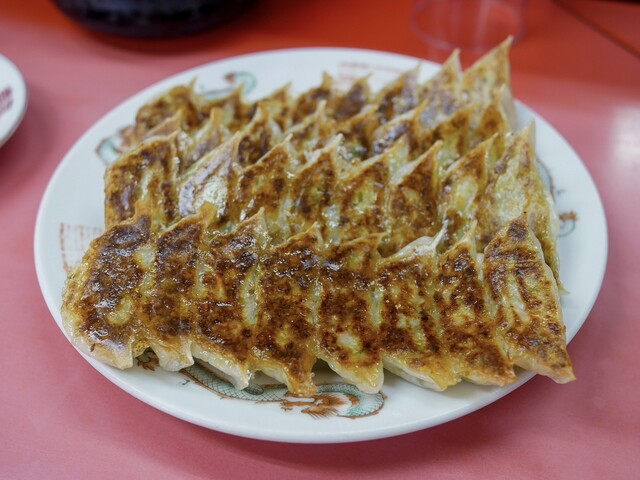
Approaching a suburban gyoza counter in Daito shifts the Osaka dining register. The central food districts sell speed, neon and grazing momentum; here the mood is narrower, local, and timing-dependent. Marusho Gyoza Ten Honten belongs to the Kansai specialist shops where the meal is inexpensive, but the decision to go is not casual. The draw is not ceremony, but the Japanese confidence of a single-format kitchen repeatedly recognized for doing one thing with discipline.
Osaka's dumpling culture gets more serious outside the obvious food districts
Osaka is often reduced to okonomiyaki, takoyaki and late-night counter eating, but its dumpling culture has its own hierarchy. At the casual end, gyoza is an add-on beside ramen or beer. At the specialist end, the dumpling becomes the whole argument: wrapper, filling, pan work, turnover, and the pace at which a small room feeds regulars without becoming spectacle. Marusho Gyoza Ten Honten belongs to that second group.
The evidence is concrete. It was selected for Tabelog 100 Dumplings in 2024, with earlier selections in 2021 and 2019. In Japan, that category recognition matters because gyoza is not a luxury genre where high spend automatically creates prestige. The competitive set is broad and practical, from railway-adjacent counters to family-run shops, and quality is marked by consistency rather than theatrical service.
That is why the price bracket matters. A dinner spend around JPY 1,000 to JPY 1,999 places this in a different decision category from Osaka’s expensive counter restaurants, including Yakitori Tokei, which sits in a far higher spend range. Closer comparisons are the city’s low-cost specialist rooms: Menya Jikon Daitou honten and Ikemen Tomikura in the same general budget band, or Udon Biyori at an even leaner spend. In that company, recognition must come from repetition, not polish.
For a wider Osaka map, this is the same city that moves from bakery culture at 52CHO-ME BAKERY to mass-appeal pork buns at 551 Horai (551蓬莱), then across to Italian rooms such as a canto (Italian) or pizza specialists like 99 Pizza Napoletana Gourmet. The point is range: Osaka rewards appetite-led wandering and narrow specialist planning. This gyoza counter sits firmly in the latter camp.
The booking pressure is part of the experience, not an afterthought
Japan’s small specialist restaurants often create a traveler’s paradox: the meal is financially accessible, while the logistics require attention. Marusho Gyoza Ten Honten is a strong example. Reservations are available, and the operating rhythm is built around same-day phone planning rather than long-horizon online booking. That favors diners already in Osaka, Japanese speakers, or travelers with hotel support. It also makes the restaurant less suited to a loose evening of spontaneous central-city movement.
This is not a criticism; it is a useful filter. Osaka has plenty of places where visitors can drift between snacks, department-store food halls and station-adjacent counters. A Daito gyoza plan asks for a different evening: choose the dumpling shop as the anchor, accept the narrower format, and let the rest of the night work around it. That is how many serious casual restaurants in Japan function. Their value is measured not by menu breadth or decor language, but by how clearly they reward diners who understand the room’s rules.
The room is listed with counter seating, which matters in this genre. Counter formats compress production and eating; they make pacing visible and remove the cushion of a large dining room. For gyoza, that is usually a strength. The category depends on timing more than narrative: batches, heat, and the choreography of a kitchen built for one repeatable act. No chef biography is needed. The format explains the promise.
Take-out is also part of the service model, a reminder that gyoza in Japan remains everyday food even when seriously recognized. That tension is central to the appeal. A shop can be award-listed and still operate closer to neighborhood hunger than destination dining theater. For EP Club readers, that makes it a useful counterweight to tasting-menu Osaka: lower spend, higher logistical friction, and a sharper sense of local dining behavior.
How to read the verdict on a low-cost specialist counter
The right expectation is narrowness. Do not approach the restaurant as a broad izakaya substitute or flexible group-dinner choice. Approach it as a focused dumpling stop with category credibility, compact format, and a planning pattern that rewards precision. In a city where casual dining can look effortless, this address reminds visitors how much structure sits behind seemingly simple food.
Its sibling comparison, Marusho Gyoza Ten Dai2 hanna ten, occupies a slightly higher listed spend band, reinforcing how the Marusho name operates inside a specialist lane rather than as a luxury signal. The Honten appeal lies in the original-shop gravity implied by the name and the repeat Tabelog Dumplings selections attached to it. Together, they give the restaurant a clear place in Osaka’s dumpling conversation without making it a formal occasion.
For readers building a broader itinerary, use it as a contrast point. Pair Osaka’s specialist food stops with broader city planning through Our full Osaka restaurants guide, then calibrate the rest of the trip with Our full Osaka hotels guide, Our full Osaka bars guide, Our full Osaka wineries guide, and Our full Osaka experiences guide. For a wider Japan and overseas food-reference frame, compare how focused concepts read across.cafe, -Grilled beef Sukiyaki- KAMAKURA TANUKIAN 鎌倉 たぬき庵 in Kamakura. 鮪と炭火焼き うお炭 秋葉原店 in Tokyo.know in Kumamoto, (Shoku) Vietnam in Kawasaki, [Curry Senmon Ten] Maruyama Kyoju. in Sapporo, [ki:] in Kyoto, Jōdo Saké Bar in Los Angeles, and Onigiri Time in Pasadena. The useful comparison is not cuisine-to-cuisine; it is how small formats create their own rules.
Cuisine Context
Comparable venues by price and recognition.
| Venue | Cuisine | Price | Notes |
|---|---|---|---|
| Marusho Gyoza Ten HontenThis venue — the venue you are viewing | Specialist gyoza & beer counter | $ | Not listed |
| Gyoza no Yuta | Japanese Gyoza Specialty Shop | $ | Neyagawa |
| Tonpito Torino Koryu Masu | Japanese Ramen | $ | Miyakojima |
| Chuka Soba Ibuki | Ramen & Tsukemen | $ | Kita |
| KALUTARA | Sri Lankan Curry House | $ | Nishi |
| Bumble Bee | Spice-forward Japanese curry house | $ | Nishi |
Recognition history
Dated appearances from independent guides and award organizations, with the underlying list record or original source where available.
Tabelog 100 #30 · No. 30
Tabelog · Tabelog 100 - Dumplings - 2024
Continue exploring
More in Osaka
Restaurants in Osaka
Browse all →


Bars in Osaka
Browse all →
Hotels in Osaka
Browse all →


Wineries in Osaka
Browse all →
At a Glance
- Lively
- Cozy
- Well Known
- Solo
- Casual Hangout
- After Work
- Late Night
- Group Dining
- Standalone
- Beer Program
Current opening hours
- Monday
- 4–11 PM
- Tuesday
- 4–11 PM
- Wednesday
- Closed
- Thursday
- 4–11 PM
- Friday
- 4–11 PM
- Saturday
- 4–11 PM
- Sunday
- 4–11 PM
Hours can change for holidays and private events. Last verified .