Markette

On 7th Avenue in Chelsea, Markette pairs European technique with Caribbean warmth across a menu built around salt cod fritters, braised oxtail with cheddar polenta, and a cocktail bar that runs well into the evening. Chef India Doris keeps the menu focused rather than sprawling, with each dish carrying a clear point of view. The room, mirrors, banquettes, recessed lighting, suits both a relaxed lunch and a more animated dinner.
Pearl is the En Primeur Club membership app — saves, bookings, and concierge access live there. Same editors, same standards.
- Address
- 326 7th Ave, New York, NY 10001
- Phone
- (212) 537-6577
- Website
- marketterestaurant.com
- Directions
- Get directions
 Saves & bookings on Pearl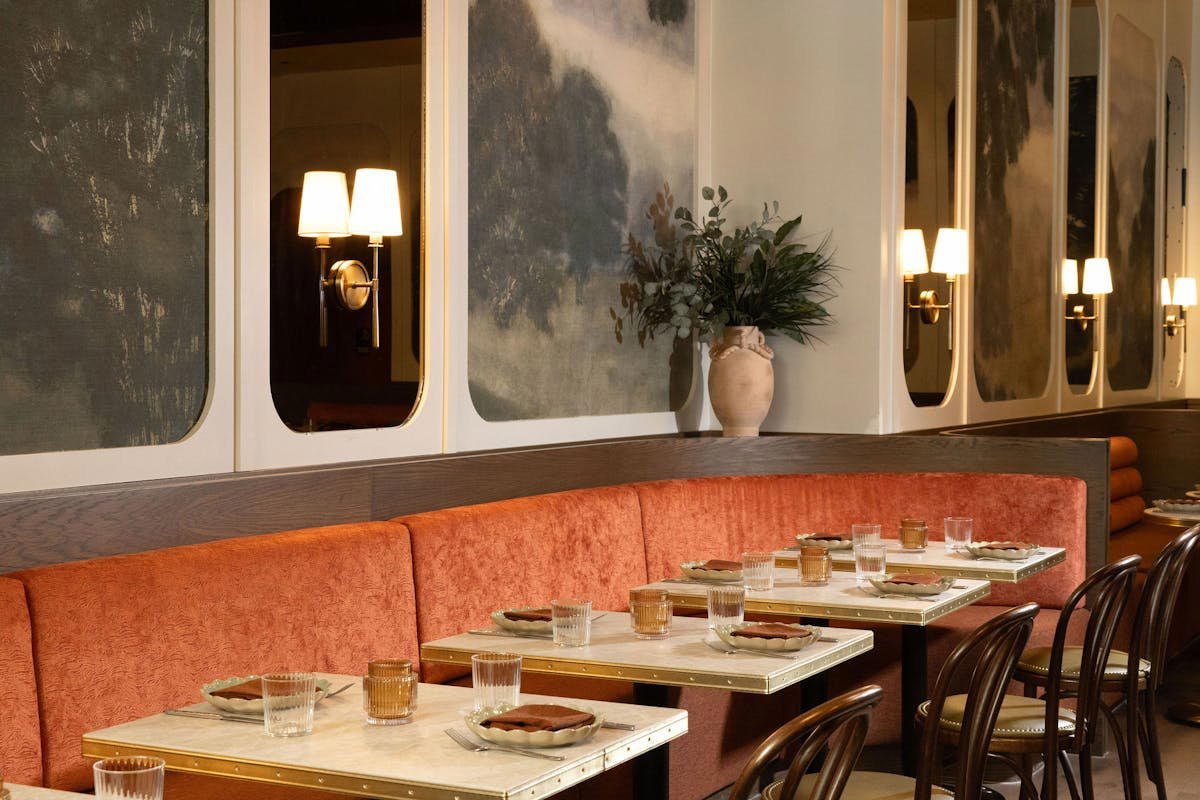
Chelsea's Evolving Dining Character and Where Markette Sits Within It
Chelsea has never been New York's most coherent dining neighbourhood. The gallery district drew crowds for decades without ever producing a reliable restaurant culture to match, leaving 7th Avenue as a corridor of workaday spots serving the neighbourhood's residential population rather than destination diners. That has been shifting. A younger wave of chef-driven rooms has appeared along the avenue and its cross streets, occupying the middle ground between the neighbourhood's casual staples and the four-dollar-sign formality you find further south at places like Eleven Madison Park or further midtown at Per Se. Markette is one of those rooms: a focused, independently run restaurant at 326 7th Avenue that positions itself through a tightly edited menu rather than through scale or prestige signalling.
The dining category Markette operates in, European-Caribbean crossover, small to mid-size room, credentialed kitchen without a celebrity name attached, has grown more competitive across New York in recent years. It sits in a different tier from the city's high-ceremony tasting menu circuit, which includes counters like Atomix or Masa, and closer to neighbourhood-anchored rooms that earn loyalty through consistency and personality rather than through omakase pricing.
The Room: Mirrors, Banquettes, and a Bar That Earns Its Square Footage
Walls of mirrors and modern lighting give the room a sense of spatial expansion without relying on raw square footage. The banquette arrangement signals deliberate design, this is not a room pieced together from a catalogue but one that understands how seating geometry shapes the mood of a dinner. The cocktail bar is framed in recessed lighting and operates as a destination within the destination, running through the evening independently of the dining programme. In New York's current bar culture, where technical ambition has largely replaced theatrical gimmickry, a well-executed in-house bar adds measurable value to a dinner booking rather than functioning as an afterthought. For the broader New York drinking scene, see our full New York City bars guide.
Lunch Versus Dinner: How the Two Services Read Differently
The lunch-versus-dinner divide at rooms like Markette rarely comes down to different menus. It comes down to pace, purpose, and what the room becomes when it fills up. At lunch, Chelsea's 7th Avenue draws a working neighbourhood crowd, residents, people passing between gallery visits, professionals from the surrounding blocks. The room's mirror-and-banquette configuration, which amplifies energy as occupancy rises, reads differently at noon than at nine in the evening. Daytime, it functions as a stylish but relaxed setting where the Caribbean-inflected dishes carry well without ceremony. The salt cod fritters, paired with a habanero aioli that is direct rather than decorative, land as a confident lunch dish, the kind of plate that communicates a kitchen's intentions without requiring the context of a longer meal around it.
Evening service shifts the equation. The cocktail bar asserts itself more as the room fills, the lighting earns its design budget, and dishes like the braised oxtail with cheddar polenta read as the centerpiece plates they were built to be. That oxtail preparation, which draws comparison to a British pub pie while outdoing it in ambition and execution, is the kind of dish that works well when there is time and appetite for it. The strawberry cheesecake served as a Swiss roll is an evening-appropriate finish: clever enough to reward attention, light enough not to labour the point.
For diners choosing between a lunch or dinner booking, the evening service offers the fuller version of what Markette is trying to do. Lunch is the more efficient, lower-ceremony entry point.
The Menu's Cultural Logic: Europe and the Caribbean as a Serious Combination
European-Caribbean combinations appear across New York's dining scene at different levels of execution, from tourist-facing fusion to genuinely personal cooking that treats both traditions as primary rather than decorative. Chef India Doris works in the latter register. The menu is trimmed deliberately, the number of dishes is modest, which is itself a curatorial position, and particularly successful preparations are the ones where the two culinary traditions are in direct conversation rather than merely coexisting on the same menu.
Salt cod is a ingredient shared across both European and Caribbean cooking, arriving in the Caribbean through the Atlantic trade network and becoming foundational to the region's kitchen. Serving it as fritters with habanero aioli is not a compromise between two traditions but a synthesis that is internally consistent. The braised oxtail with cheddar polenta maps similarly: oxtail cookery runs through British, Caribbean, and wider European traditions, and positioning it against a polenta base rather than a standard starch creates a productive tension between registers. These are dishes with a point of view, not a mood board.
That specificity of culinary argument is what separates this kind of cooking from the broader crossover category. For comparison points on how American restaurants at the high end handle multicultural culinary frameworks, Le Bernardin and Lazy Bear in San Francisco both illustrate how distinct culinary traditions can be woven into a coherent dining identity at different price points and ambitions. Emeril's in New Orleans offers another reference for American kitchens where European training meets regional and Caribbean-influenced tradition.
How Markette Fits New York's Mid-Tier Restaurant Scene
New York's restaurant market has long been discussed in terms of its extremes: the expense-account formality of rooms like The French Laundry or Alinea in Chicago at the national level, and the cheap-eats density that makes the city function day to day. The more contested and interesting ground is the middle: chef-driven rooms that price accessibly relative to the quality they produce, draw neighbourhood regulars alongside destination visitors, and sustain a cooking identity without the infrastructure of a group or a Michelin star anchoring them.
Markette occupies that middle ground in Chelsea. The room is styled well enough to sustain a celebratory dinner booking, accessible enough for a weekday lunch, and specific enough in its culinary identity to give repeat visitors a reason to return to particular dishes rather than simply to the room. For context on comparable approaches in other cities, Providence in Los Angeles and Single Thread Farm in Healdsburg both illustrate how a coherent culinary identity, maintained across service styles, builds a durable reputation in competitive markets.
For the broader New York restaurant scene, our full New York City restaurants guide covers the range from neighbourhood-anchored rooms to the tasting menu tier. The city's hotel context is covered in our New York City hotels guide, and wine programming across the city in our New York City wineries guide. For cultural programming around a visit, our New York City experiences guide maps the options. Internationally, 8 1/2 Otto e Mezzo Bombana in Hong Kong and Alain Ducasse Louis XV in Monte Carlo represent the further end of the fine-dining spectrum for readers calibrating where Markette sits on a global reference scale.
Planning a Visit
Address: 326 7th Avenue, New York, NY 10001, Chelsea. Dress: No formal code confirmed; the room's design register suggests smart casual is appropriate. Timing: Evening bookings will capture the full cocktail bar programme and the room at its most animated; lunch suits a lower-pace visit focused on the kitchen's daytime output.
At a Glance
Comparable venues nearby, for context on price, style, and recognition.
| Venue | Price | Notes |
|---|---|---|
| MarketteThis venue — the venue you are viewing | $$$ | Not listed |
| Lingo | $$$ | Greenpoint, Japanese-inspired New American |
| Peasant by Marc Forgione | $$$ | SoHo-Little Italy-Hudson Square, Rustic Italian Wood-Fired |
| Ribalta | $$$ | Greenwich Village, Authentic Neapolitan Pizza & Italian Cuisine |
| Roscioli NYC | $$$ | SoHo-Little Italy-Hudson Square, Classic Roman Italian |
| BSTRO 38 | $$$ | Midtown-Times Square, Global Fusion Bistro |
Recognition history
Dated appearances from independent guides and award organizations, with the underlying list record or original source where available.
Michelin Plate
Michelin
Continue exploring
More in New York City
Restaurants in New York City
Browse all →
Bars in New York City
Browse all →

Hotels in New York City
Browse all →





At a Glance
- Modern
- Cozy
- Trendy
- Elegant
- Date Night
- Casual Hangout
- Open Kitchen
- Craft Cocktails
Current opening hours
- Monday
- 5–11 PM
- Tuesday
- 5–11 PM
- Wednesday
- 5–11 PM
- Thursday
- 5–11 PM
- Friday
- 5–11 PM
- Saturday
- 5–11 PM
- Sunday
- Closed
Hours can change for holidays and private events. Last verified .
Walls of mirrors, modern lights, and cozy banquettes create a stylish, cozy atmosphere.