Margie's Candies
Our verdict
Margie's Candies has anchored Chicago's Bucktown neighborhood since 1921, serving ice cream sundaes and hand-dipped chocolates from a time-worn counter that predates most of the city's celebrated restaurant scene. The physical space, unchanged in its essentials for decades, draws a cross-generational crowd that returns less for novelty than for the particular reliability of a place that has never needed to reinvent itself.

Pearl is the En Primeur Club membership app — saves, bookings, and concierge access live there. Same editors, same standards.
- Address
- 1960 N Western Ave, Chicago, IL 60647
- Phone
- (773) 384-1035
- Hours
- Mon–Thu 10 AM–11 PMFri–Sun 10 AM–12 AM
- Website
- margiescandies.com
- Directions
- Get directions
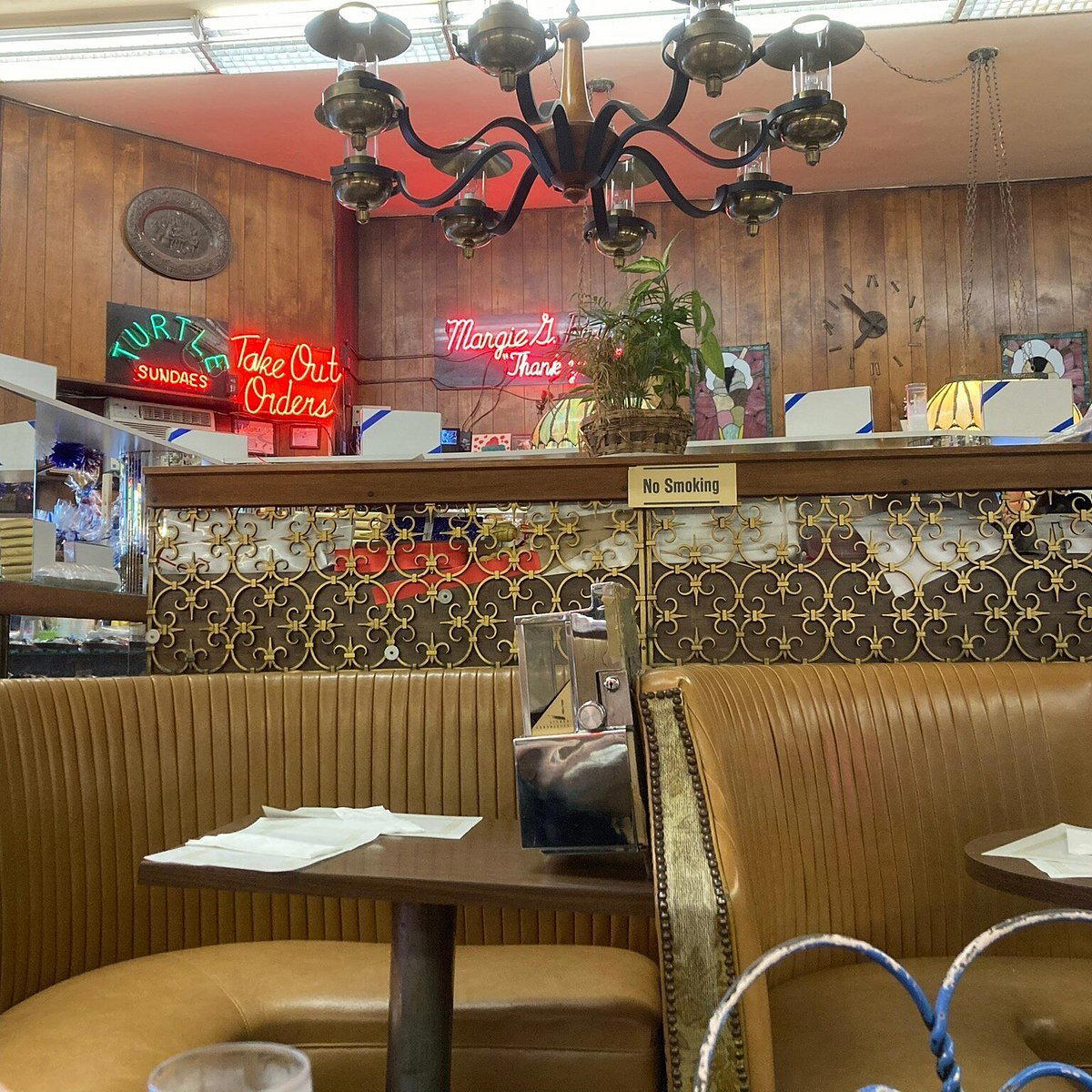
A Counter That Outlasted Trends
Chicago's dining culture has cycled through deep-dish temples, steakhouse dynasties, and a wave of tasting-menu destinations, from Alinea and Smyth to Oriole and Next Restaurant. Against that backdrop, Margie's Candies on North Western Avenue represents something rarer: a single-format operation that has remained commercially viable for over a century without pivoting, rebranding, or chasing the city's evolving food conversation. The storefront at 1960 N Western Ave in Bucktown has occupied the same address since 1921, and the interior communicates that continuity immediately. Worn booths, hand-lettered signage, and glass cases of chocolates signal a place where the product itself, not the presentation format, is the point.
Longevity of this kind is worth examining on its own terms. In a city where Kasama earns Michelin recognition for Filipino tasting menus and the progressive-American tier presses steadily upward in ambition and price, a cash-register-and-counter operation from the 1920s holding its neighborhood position for ten-plus decades implies something about the durability of formats that deliver a specific, uncomplicated pleasure at a repeatable standard. Margie's is not competing with those restaurants; it is operating in a different category entirely, one measured less by critical recognition than by generational loyalty.
What the Room Tells You
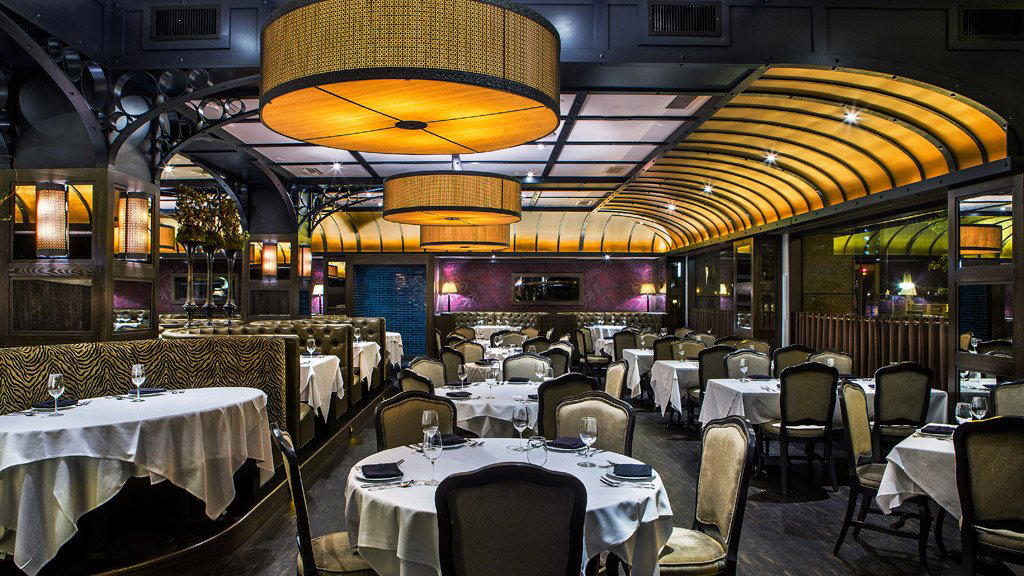
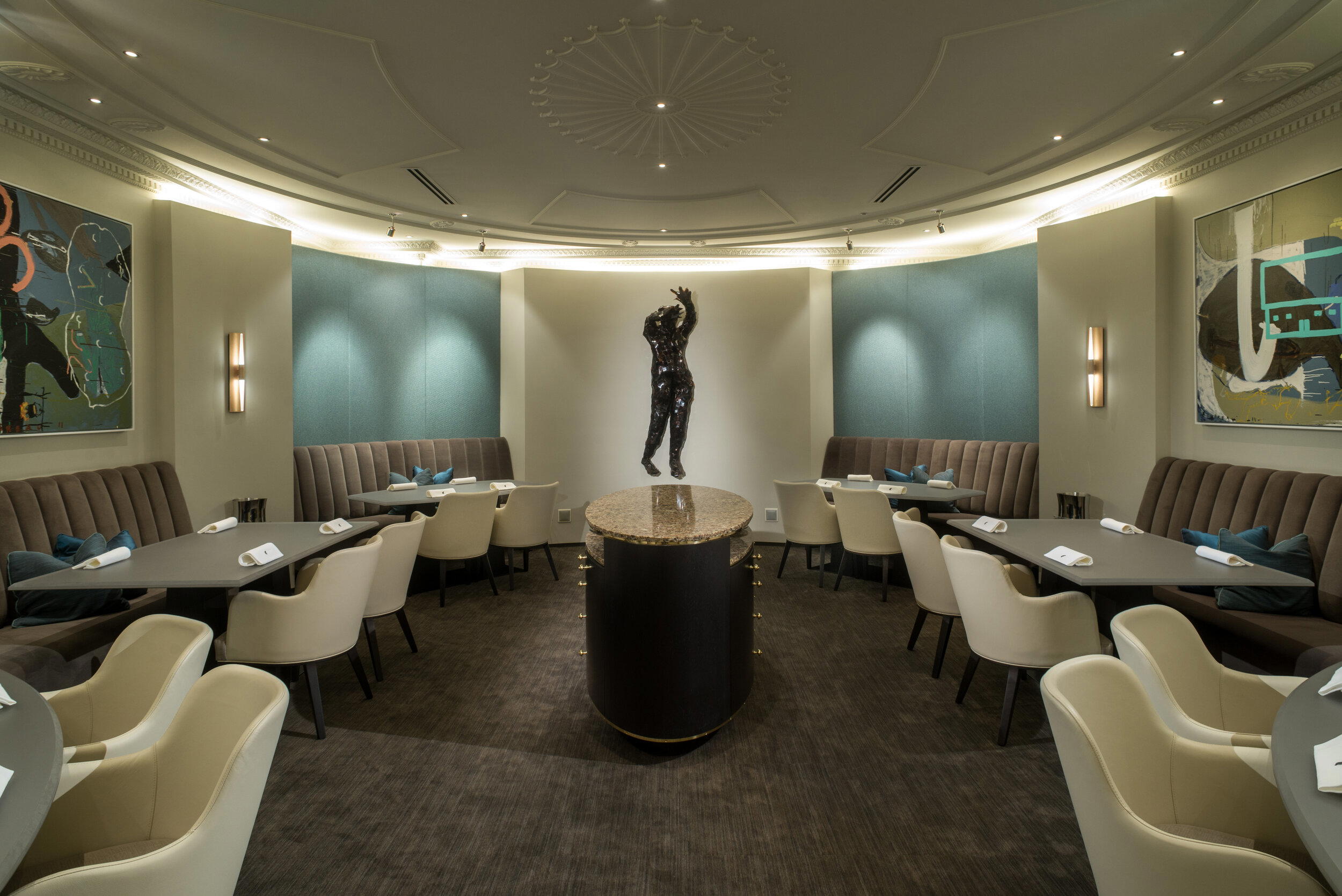
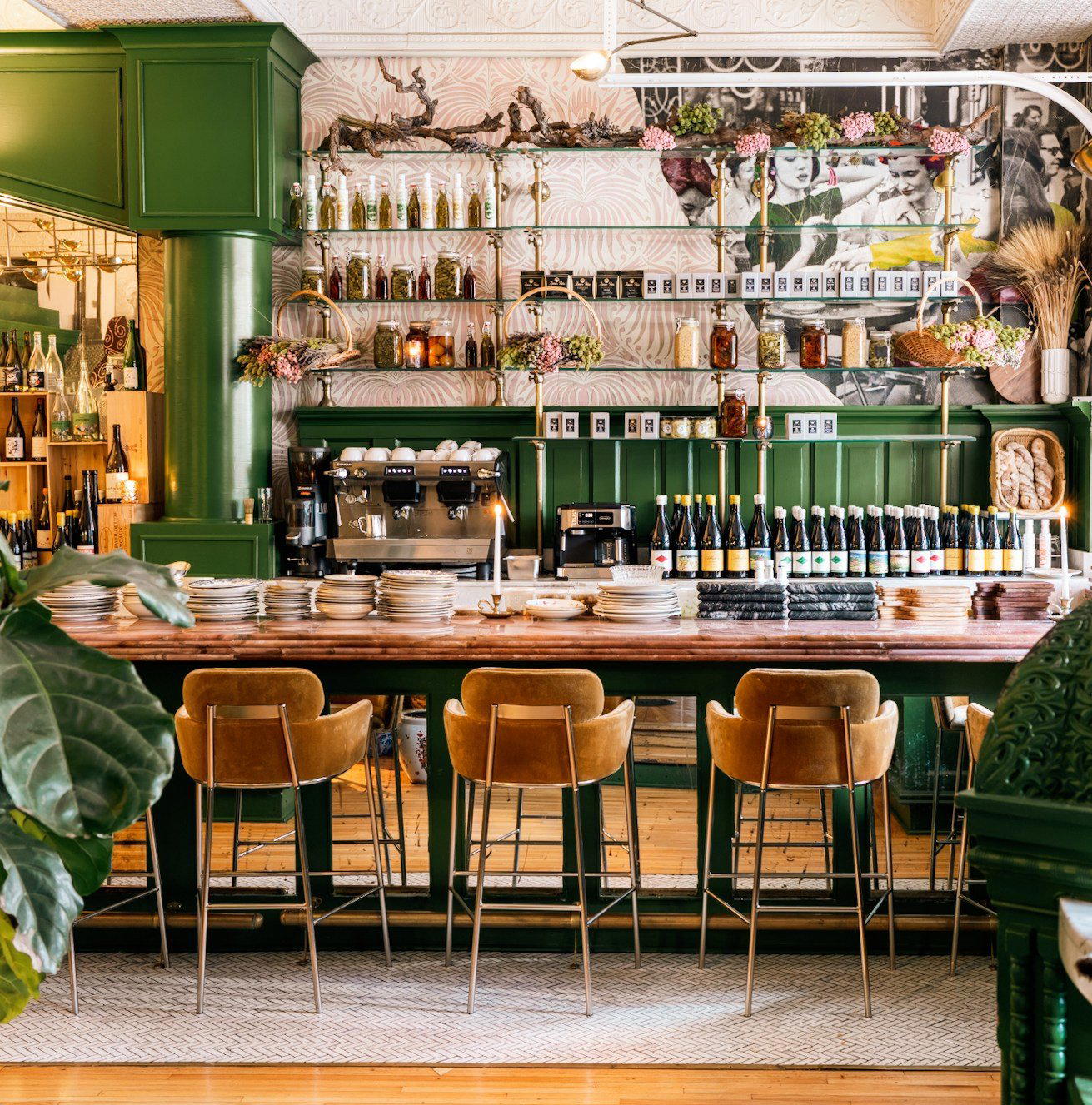
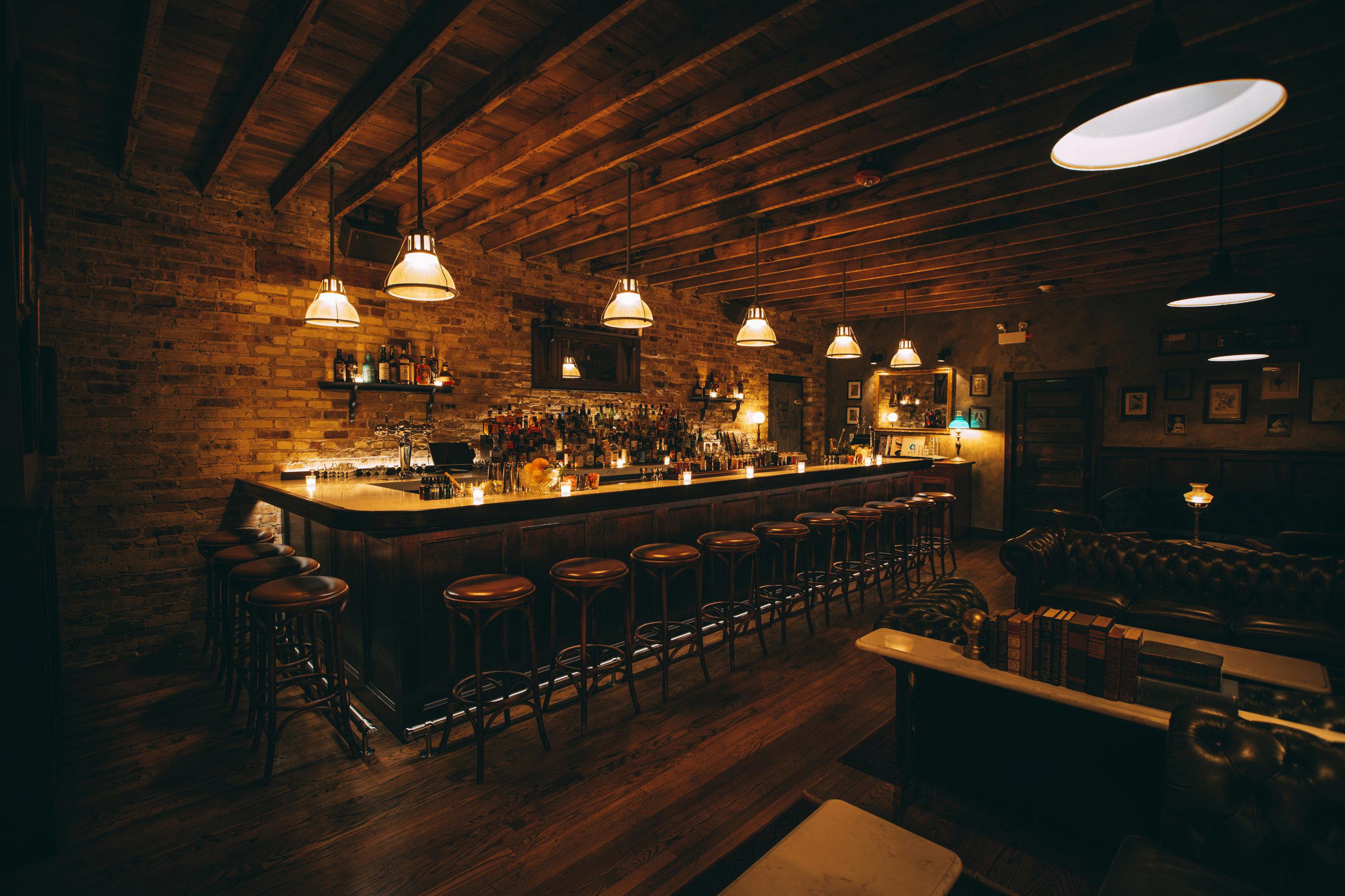
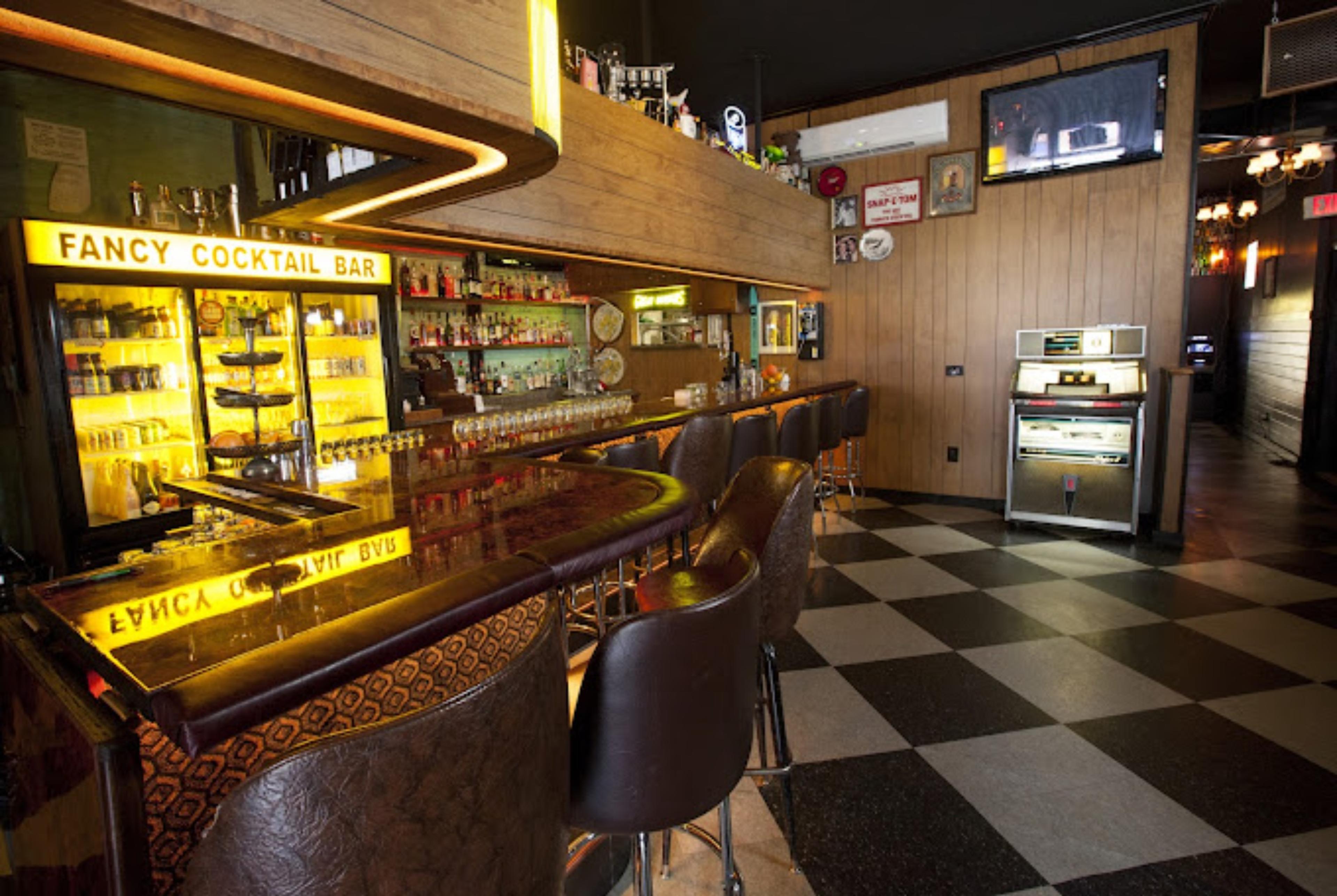
The atmospheric register at Margie's Candies is immediately legible. The space is small, deliberately unhurried, and arranged around a counter and booth layout that prioritizes the transaction, ice cream or chocolates delivered efficiently, over lingering dining-room theater. The glass candy cases that greet visitors at the entrance set the category before you sit down: this is a confectionery that also serves ice cream, not a dessert restaurant that happens to sell candy.
That distinction matters for calibrating expectations. The experience here sits closer in spirit to an old-school American soda fountain than to the dessert courses at Le Bernardin in New York City or the farm-to-table rigor of Blue Hill at Stone Barns in Tarrytown. The comparison is not a criticism; it is a genre clarification. Margie's functions as a neighborhood anchor in the tradition of American confectionery shops that once populated every major city and have since been largely displaced by chain formats. The ones that survive tend to do so because the community around them treats continued patronage as a form of civic maintenance.
The Service Dynamic
The editorial angle of team dynamics, the interplay between front-of-house, kitchen, and floor staff that defines the hospitality register of a room, takes on a compressed form at a counter-service operation like Margie's. There is no sommelier program, no expediting team, no elaborate division of labor between a tasting-menu kitchen and a dining room captain. What exists instead is a lean, direct service model where the person behind the counter is simultaneously order-taker, preparer, and server. In operations of this format, the consistency of the product depends heavily on institutional knowledge passed down through staff who have worked the same routines across years, sometimes decades.
This is actually the most durable form of team dynamic in American hospitality: not the choreographed precision of a tasting-menu room, but the practiced efficiency of a small crew that knows the operation well enough to run it without formal hierarchy. The equivalent logic plays out at celebrated counter-service institutions across the country, from old-line diners to the kind of regional ice cream shops that have resisted the pull of franchise expansion. Margie's fits that pattern, and its staying power in Bucktown, a neighborhood that has moved considerably upmarket since the 1990s, suggests the model continues to work.
Chicago Context: Where Margie's Sits in the Wider Picture
Bucktown and the surrounding Wicker Park corridor have absorbed significant restaurant investment over the past two decades. The neighborhood now carries a range of formats and price points that would have been unrecognizable to the original 1921 clientele. Against that backdrop, Margie's operates as a temporal fixed point, a marker of what the neighborhood looked like before the current wave of openings, and a reference against which newer arrivals are implicitly measured by longtime residents.
That position is not unique to Chicago. Similar dynamics play out around old-guard confectioneries in cities like New Orleans, San Francisco, and Los Angeles, where long-established sugar-and-dairy operations hold neighborhood identity roles that newer restaurants, however technically accomplished, cannot replicate simply by opening. The time required to accumulate that kind of local significance is not purchasable. For comparison, consider how Emeril's in New Orleans or Lazy Bear in San Francisco each carry their own form of civic restaurant identity, built over years of consistent operation. Margie's operates at a different price point and with a different menu format, but the principle of earned local permanence connects them.
Chicago's broader sweets and confectionery category is thin at the premium end. The city's critical attention concentrates on its tasting-menu tier, including destinations like Addison in San Diego, Providence in Los Angeles, and The French Laundry in Napa that serve as national benchmarks, alongside Chicago-specific institutions like Bacchanalia in Atlanta and Atomix in New York City that signal what serious investment in hospitality looks like. Margie's competes in none of those categories. It holds a position that those venues cannot occupy: the neighborhood institution that has been there longer than most of its current customers have been alive. For the full picture of where Chicago dining sits across formats and price tiers, see our full Chicago restaurants guide. Also worth noting in the global context of long-standing institutions: 8 1/2 Otto e Mezzo Bombana in Hong Kong and The Inn at Little Washington in Washington each demonstrate how institutional staying power translates across very different formats and geographies.
Know Before You Go
| Address | 1960 N Western Ave, Chicago, IL 60647 |
|---|---|
| Neighborhood | Bucktown |
| In operation since | 1921 |
| Format | Counter-service confectionery and ice cream |
| Booking | Walk-in only; no reservations |
| Phone | Not available in |
| Hours | Not available in; confirm before visiting |
| Price range | Not available in |
Frequently asked questions
Is Margie's Candies a good option for families with children?
The counter-and-booth format and ice cream-focused menu make Margie's straightforwardly appropriate for children. In Chicago's current dining scene, where many of the city's most-discussed restaurants operate tasting-menu formats at $$$$ price points, Margie's occupies an accessible, informal tier. It is a practical choice for families who want a classic American confectionery experience without the price or format constraints of a full-service restaurant visit.
How would you describe the atmosphere at Margie's Candies?
The room operates at a register that Chicago's current wave of critical-darling openings does not offer: worn, unhurried, and organized around the product rather than the experience of ordering it. There are no awards on the wall in the Michelin or James Beard sense; the trust signal here is the date on the door, over a century of continuous operation in the same Bucktown location. In a city that produces restaurants like Smyth and Oriole, Margie's occupies the opposite pole of the dining-out spectrum, without apology.
What do people tend to order at Margie's Candies?
Margie's built its reputation on ice cream sundaes and hand-dipped chocolates. The confectionery cases visible on entry signal that chocolate is as central to the operation as the ice cream program.
What is the ideal way to visit Margie's Candies?
Margie's operates as a walk-in counter-service venue; there is no reservation system. Given its long-standing neighborhood following in Bucktown and its status as one of Chicago's oldest operating confectioneries, expect the possibility of a short wait during peak afternoon and weekend hours. Arriving mid-week or during off-peak hours is the most reliable way to get counter service without a queue.
What is Margie's Candies renowned for in Chicago's food scene?
The operation's primary distinction is longevity and format continuity: over a century of ice cream and confectionery service from the same North Western Avenue address, in a city whose restaurant culture has otherwise transformed multiple times around it. That staying power, combined with a confectionery format that has largely disappeared from American urban neighborhoods, positions Margie's as a specific historical artifact of Chicago's food history rather than a participant in its current critical conversation.
How does a century-old confectionery survive in a neighborhood that has gentrified as significantly as Bucktown?
The short answer is that format durability and community identity function differently from restaurant economics. Margie's has operated at 1960 N Western Ave since 1921, predating Bucktown's transformation into a higher-income, design-conscious neighborhood by roughly seven decades. Establishments that survive that kind of demographic shift tend to do so because they become part of the neighborhood's self-narrative: a place locals point to as evidence of continuity. In Chicago, that dynamic is well-documented around a handful of legacy food operations that have held their positions through successive waves of neighborhood change.
Category Peers
Comparable venues nearby, for context on price, style, and recognition.
| Venue | Cuisine | Price | Notes |
|---|---|---|---|
| Margie's CandiesThis venue — the venue you are viewing | Classic American Ice Cream Parlor & Candy Shop | $10–20 | Not listed |
| Lucky's Sandwich Co. | Overstuffed Deli Sandwiches | Not listed | Lake View |
| Do-Rite Donuts & Coffee | Artisanal Donuts & Chicken Sandwiches | $1–10 | Streeterville |
| Parson's Chicken & Fish (Logan Square) | Fried Chicken & Fish | $20–30 | Logan Square |
| Chef Art Smith's Reunion | Southern Comfort Food | $30–50 | Streeterville |
| Wiener Circle | Chicago Char-Grilled Hot Dogs | $10–20 | Lincoln Park |
Details
- Classic
- Cozy
- Well Known
- Whimsical
- Family
- Casual Hangout
- Celebration
- Historic Building
- A La Carte
Current opening hours
- Monday
- 10 AM–11 PM
- Tuesday
- 10 AM–11 PM
- Wednesday
- 10 AM–11 PM
- Thursday
- 10 AM–11 PM
- Friday
- 10 AM–12 AM
- Saturday
- 10 AM–12 AM
- Sunday
- 10 AM–12 AM
Hours can change for holidays and private events. Last verified .
Nostalgic old-fashioned atmosphere evoking 1921 with aromas of rich chocolate and caramel, cozy seating, and a timeless candy shop vibe.