Our verdict
Mamacita Paris occupies a address at 14 Rue Rougemont in the 9th arrondissement, a neighbourhood where casual all-day dining and destination restaurants coexist a short walk from the Grands Boulevards. The venue sits within a Paris dining tier that rewards those who look beyond the established Michelin circuit for something less formal and more personal in its pacing.

Pearl is the En Primeur Club membership app, where members save venues, book tables and use the concierge.
The menu
What to order
- Tacos al Pastor
- Mango Guacamole
- Ceviche
- Quesadillas
The 9th Arrondissement and the Case for Eating Outside the Circuit
Paris dining in the 9th arrondissement operates on a different register from the grand addresses of the 8th or the Left Bank institutions that dominate international coverage. The area around Rue Rougemont, a short walk from the Grands Boulevards metro cluster, has quietly accumulated a density of neighbourhood restaurants that reward the kind of deliberate, unhurried meal that the city's dining culture has always prized more than its marketing admits. This is not the Paris of tasting menus measured in courses and ceremony, though that world is accessible nearby: Alléno Paris au Pavillon Ledoyen and Arpège represent the summit of that formal register, and Kei shows how contemporary technique can be absorbed into a French structural frame. Mamacita Paris operates in a different conversation entirely.
The address at 14 Rue Rougemont places it within walking distance of the covered passages of the 2nd arrondissement and the theatre district that surrounds the Opéra Comique. Historically, this corner of Paris supported a working-class and artisan dining culture before the neighbourhood shifted through successive waves of gentrification from the 1980s onward. The restaurants that have endured here tend to do so on the strength of a loyal local clientele rather than destination tourism alone, which shapes the pace and etiquette of the meal in ways that matter.
The Ritual of the Meal in a Paris Neighbourhood Setting
What distinguishes dining at this tier and in this arrondissement is the implicit contract between kitchen and table. In Paris's middle register, away from the choreographed service of places like Le Cinq at the Four Seasons George V or the classical severity of L'Ambroisie on the Place des Vosges, the meal is expected to take its own time. Courses arrive when they arrive. The table is yours for the evening. Switching between French and English mid-conversation with the server is standard practice in this part of the 9th, where international visitors have always mixed with the neighbourhood's long-standing population of media, publishing, and theatre workers.
The name Mamacita signals a Latin American or Mexican inflection, which places the venue in a Paris dining segment that has grown substantially over the past decade. Mexican food in Paris has moved from novelty to a small but coherent tier of its own, with addresses ranging from taco counters in the 11th to more considered sit-down formats that take the cuisine's regional complexity seriously. The question for any address in this category is where on that spectrum it sits: whether the kitchen is working from the logic of the cuisine or assembling familiar signifiers for an audience that mostly knows the genre through its most exported versions. That distinction determines the quality of the ritual on offer.
For context on what serious French regional cooking looks like at the destination end of the spectrum, the contrast is instructive: Flocons de Sel in Megève, Mirazur in Menton, and Troisgros in Ouches each anchor themselves in a specific regional logic that makes the meal inseparable from its geography. The most credible international addresses in Paris pursue a similar discipline. Mamacita's Rue Rougemont address suggests a casual format more aligned with the neighbourhood's evening rhythm than with that kind of destination intensity.
Placing Mamacita in the Broader Paris Dining Map
Paris has a long tradition of absorbing foreign cuisines and filtering them through local expectations about service pace, portion logic, and the role of wine at the table. Japanese cuisine produced some of the city's most interesting results in this process, as addresses like Kei demonstrate at the Michelin level. Latin American cuisines are at an earlier stage of that integration, with a handful of addresses beginning to establish the kind of credibility that comes from sustained quality and a clear point of view about what the cuisine actually is rather than what French diners expect it to be.
France's restaurant culture at the regional level offers a useful frame for thinking about this. Addresses like Auberge de l'Ill in Illhaeusern, Bras in Laguiole, and Paul Bocuse's Auberge du Pont de Collonges have built reputations over generations on the premise that cuisine is inseparable from place. The most interesting non-French kitchens in Paris are beginning to make a comparable argument: that the food they serve is rooted in a specific culinary logic, not assembled for local palatability. AM par Alexandre Mazzia in Marseille is a useful reference point for how a kitchen can assert a strong individual register while remaining legible to a broad audience.
Beyond France, the international comparison points matter too. Le Bernardin in New York and Atomix, also in New York, show how non-French cuisines and French-trained techniques can converge at a level that commands serious critical attention. Strasbourg's Au Crocodile, Assiette Champenoise in Reims, and Auberge du Vieux Puits in Fontjoncouse each demonstrate that France's most compelling dining experiences are distributed well beyond the capital. For the reader building a France itinerary, our full Paris restaurants guide maps the city's current tiers with greater granularity than any single address can provide.
Know Before You Go
Address: 14 Rue Rougemont, 75009 Paris, France
Arrondissement: 9th (Grands Boulevards / Opéra Comique area)
Nearest Metro: Grands Boulevards (lines 8 and 9) or Bonne Nouvelle (lines 8 and 9)
Price Range:
Booking: Contact method; walk-in availability likely varies by evening
Hours:; verify before visiting
Awards:
Practical note: The 9th arrondissement functions well as an evening dining base; the Rue Rougemont area is pedestrian-friendly and well-connected by metro
Frequently asked questions
Is Mamacita Paris good for families?
Rue Rougemont sits within a section of the 9th arrondissement that skews toward neighbourhood locals rather than tourist groups, which typically means a more relaxed dining pace. The 9th arrondissement broadly suits families looking for a low-pressure meal outside the heavily trafficked tourist corridors.
What is the atmosphere like at Mamacita Paris?
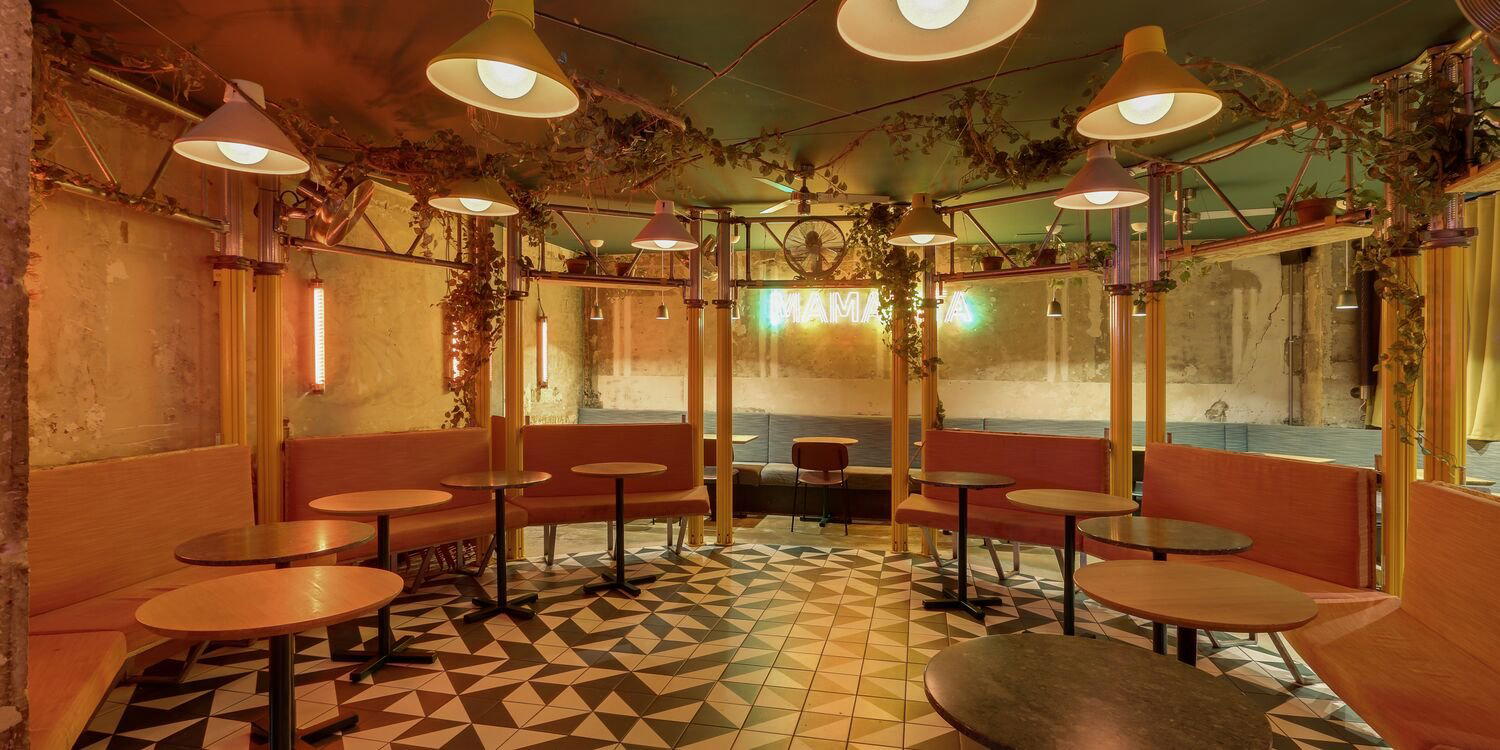
The Rue Rougemont address places Mamacita in a part of the 9th arrondissement closer to the working Grands Boulevards corridor than to the more polished streets around Pigalle or the Opéra. That positioning tends to produce a room that reads local and functional rather than sceney. Latin American restaurants in Paris at this neighbourhood tier typically carry an informal register, with energy coming from the kitchen concept rather than from designed spectacle.
Is Mamacita Paris part of the growing Latin American dining scene in Paris?
Paris has seen a steady expansion of Latin American restaurant addresses since the mid-2010s, moving from Tex-Mex approximations toward more regionally specific cooking from Mexico, Peru, and the Southern Cone. Mamacita Paris on Rue Rougemont in the 9th arrondissement sits within that broader shift, bringing a Latin kitchen concept to a neighbourhood that has absorbed diverse cuisines without the homogenising pressure of high tourist footfall.
What's the best thing to order at Mamacita Paris?
What the Latin American format in Paris generally delivers at neighbourhood level are shareable plates, grilled proteins, and cocktails rooted in agave or rum, though whether Mamacita follows that structure is unconfirmed. Arriving without a fixed agenda and asking the staff what is running that day is the standard approach at addresses like this.
Where do I go for Mamacita Paris?
Mamacita Paris is located at 14 Rue Rougemont, 75009 Paris, France, Paris.
What's the best way to book Mamacita Paris?
No phone number or booking platform is confirmed in available data for Mamacita Paris at 14 Rue Rougemont. For neighbourhood restaurants in the 9th arrondissement at this tier, walk-in dining during off-peak hours, lunch or early evening on weekdays, is often viable.
What makes Mamacita Paris worth seeking out?
Mamacita's position on Rue Rougemont puts it outside the arrondissement clusters that most Paris dining guides default to, which means the room tends to fill with people who chose it deliberately rather than by proximity to a landmark. Latin American cooking in Paris has moved well beyond novelty over the past decade, and addresses in less-trafficked neighbourhoods like this one often operate with more creative latitude than those managing high tourist turnover. The 9th arrondissement's local-first character gives the meal a different context than the same concept would carry in the Marais or Saint-Germain.
Booking and Cost Snapshot
Comparable venues nearby, for context on price, style, and recognition.
| Venue | Cuisine | Price | Notes |
|---|---|---|---|
| Mamacita ParisThis venue (the venue you are viewing) | Authentic Mexican Taqueria | $30–50 | Not listed |
| Anahuacalli | Authentic Mexican | $30–50 | Quartier Latin, Authentic Mexican |
| Coinstot Vino | Italian Bistro with Natural Wines | $20–30 | Passage des Panoramas, Italian Bistro with Natural Wines |
| Afendi | Authentic Lebanese | $20–30 | 10th Arr., Authentic Lebanese |
| Brasserie Barbès | Modern French Brasserie | $50–100 | Barbès, Modern French Brasserie |
| Senza Nome | Neapolitan Wood-Fired Pizza | $20–30 | Châtelet, Neapolitan Wood-Fired Pizza |