Malagón Mercado y Taperia

Awarded a Michelin star in 2025, Malagón Mercado y Taperia brings a Spanish mercado format to Charleston's lower peninsula, operating at a mid-range price point that makes it one of the more accessible starred restaurants in the American South. The Spring Street address places it within walking distance of the city's core dining corridor, and the tapas-and-market format offers a different structural logic than the tasting-menu rooms that dominate Charleston's fine-dining tier.
 Discover on Pearl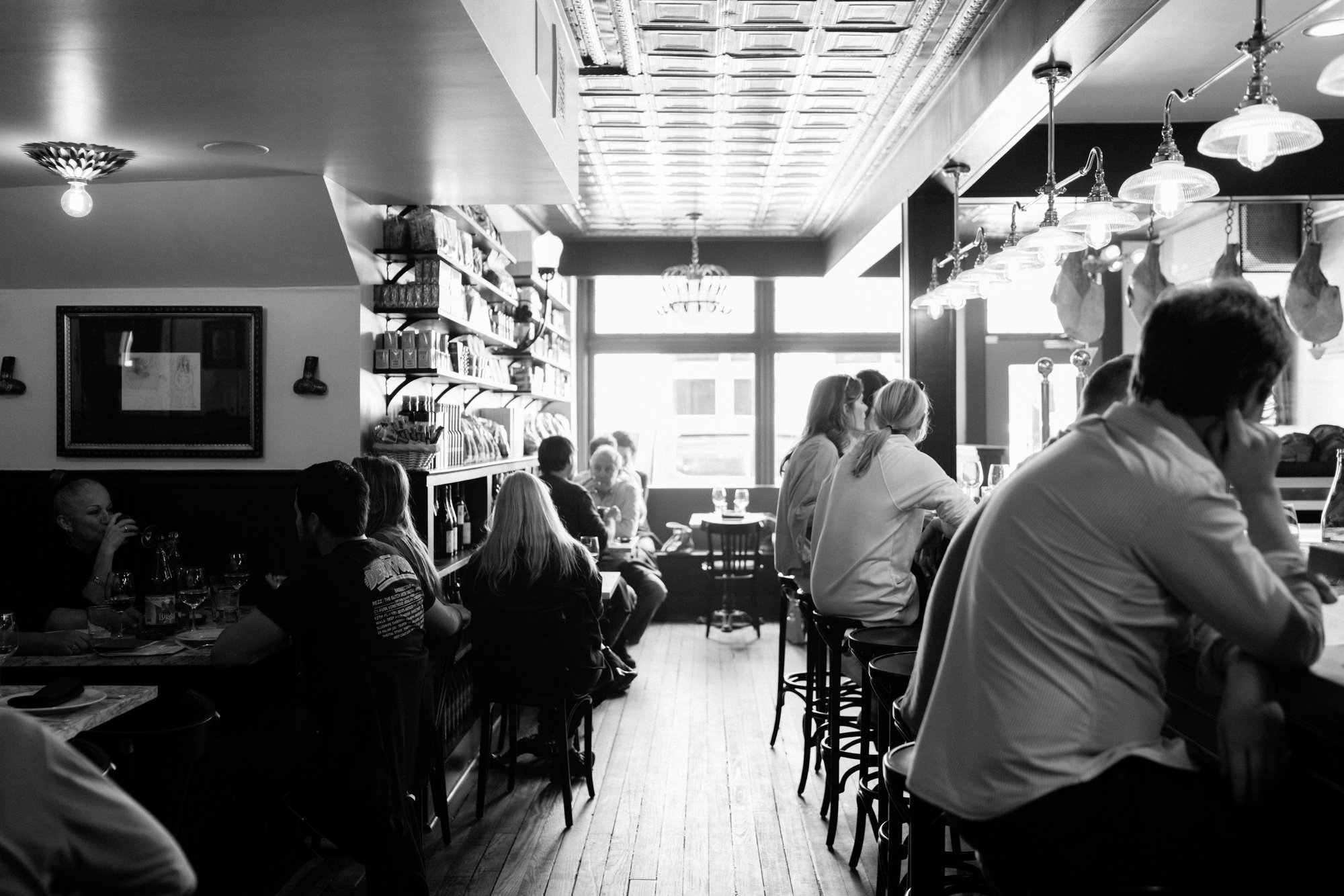
Spring Street, Spanish Discipline, and a Michelin Star That Reframes the Block
There is a particular kind of restaurant that arrives in a mid-sized American city and quietly rearranges what locals thought they understood about a cuisine. Spanish tapas culture, when rendered seriously, carries a specific physical grammar: the long zinc counter, the open kitchen punctuated by the hiss of a plancha, the shelves stocked with conservas and vermut bottles that signal a mercado sensibility rather than a conventional dining room. At 33 Spring St in Charleston, Malagón Mercado y Taperia works inside that grammar, and the 2025 Michelin star it received confirms that what's happening here has been noticed well beyond South Carolina.
The address sits on the lower peninsula, a stretch of Charleston that has accumulated serious dining credentials over the past decade without losing the residential texture that keeps it from feeling like a theme-park food district. Arriving on Spring Street, the building's scale reads closer to neighbourhood spot than destination restaurant, which is architecturally honest: the mercado-and-taperia format was never meant to announce itself with grand facades. Spanish mercado spaces, at their most functional, prioritise the relationship between counter, shelf, and standing diner over tablecloth ceremony.
The shortlist, unlocked.
Hard-to-book tables, cellar releases, and concierge-planned trips.
Get Exclusive Access →The Physical Container
The mercado designation matters here because it signals something structural, not decorative. In Spain, the mercado model collapses the distance between the place where food is sourced, prepared, and consumed. Shelves carry preserved goods alongside the service counter; the display of product is part of the proposition. This format functions differently from the white-tablecloth dining room or the tasting-menu counter, both of which place the kitchen behind a kind of curtain. A properly executed mercado keeps the kitchen and its raw materials in the same field of vision as the guest, which changes the tempo and sociality of a meal considerably.
Charleston has a strong tradition of making imported formats feel locally grounded. The city's best-known rooms, from the New American tables at Lowland to the focused American contemporary work at Vern's, have tended to wrap serious technique inside spaces that feel rooted in the Lowcountry's material culture. Whether Malagón achieves the same kind of rootedness with a Spanish template is a genuinely interesting question for the city's dining conversation. The Michelin committee, which began assessing Charleston in earnest only recently, appears to have concluded that it does.
What the Format Demands
Tapas at their disciplined end are a precision format. Each plate is small enough that temperature, seasoning, and timing carry more weight than they would in a multi-component plated course. The margin for error shrinks proportionally. The Spanish tapa canon, from croquetas to anchovy montaditos to patatas bravas, is familiar enough in the United States that diners arrive with implicit benchmarks, even if they've never eaten in San Sebastián or Barcelona. This is actually a harder position to occupy than something entirely novel: the kitchen has to satisfy both the initiated and the curious, and the gap between a credible version and a forgettable one is immediately legible.
The $$ pricing tier places Malagón in a bracket that is accessible relative to the Michelin-starred peer set nationally. For comparison, starred tasting-menu rooms in comparable American cities regularly operate at $150-$350 per person before wine; a tapas format at mid-range pricing represents a meaningfully different value proposition. This is not a trivial point. Starred restaurants at more accessible price points have a different role in their cities' dining ecosystems than the prestige-tier rooms that dominate Michelin conversation. Venues like Lazy Bear in San Francisco or Alinea in Chicago occupy the upper end of that spectrum; Le Bernardin in New York City and The French Laundry in Napa define its ceiling. Malagón's price point situates it as something the Charleston dining scene genuinely needed: serious European-format cooking that doesn't require clearing a special-occasion budget.
For a regional comparison, OvenBird in Birmingham offers another data point for how Spanish and Iberian formats are finding serious footing in the American South, operating at a comparable price tier with wood-fire as its central technique. The pattern suggests that Iberian cooking is establishing a real presence in the region, not as a transplant curiosity but as a format that the South's product-led cooking tradition can actually accommodate.
Charleston's Starred Tier in Context
Charleston entered the Michelin universe later than New York, Chicago, or San Francisco, but the city's dining culture had been producing technically serious work well before official recognition arrived. The restaurant community here has depth across formats: Rodney Scott's BBQ represents the kind of nationally recognised craft cooking that defined Charleston's reputation before fine dining dominated the conversation, while raw bar specialists like 167 Raw hold the line on ingredient-led simplicity. Bintü Atelier has added a serious African-influenced presence to a dining scene that once leaned heavily on Southern and New American registers.
Within this context, Malagón's star represents something specific: it expands Charleston's Michelin cohort into a format category, Spanish and mercado-format, that was previously unrepresented at that tier. At the national level, Spanish cuisine holds Michelin recognition in New York through a handful of high-end addresses, but the mercado-taperia hybrid is a less common vehicle for that recognition. For Charleston specifically, it signals that the city's food community is diversifying its technical vocabulary rather than simply adding more iterations of the same New American or Southern formats. The starred Korean-American omakase work at Atomix in New York City offers a parallel example of how a European-accredited format can be occupied by a non-European cuisine tradition to produce something that earns serious critical attention; Malagón's trajectory fits a similar logic of format discipline applied to a specific culinary tradition.
Planning a Visit
Malagón sits at 33 Spring St, walkable from the French Quarter and the upper King Street corridor. The $$ price bracket means a full evening of tapas and drinks for two should land comfortably below what a comparable starred tasting-menu room would charge for a single cover. Given the 2025 Michelin recognition, booking ahead is advisable; starred restaurants in cities with smaller dining scenes than New York or Chicago tend to see demand spike sharply after guide inclusion, particularly for weekend tables. Weeknight reservations in the earlier part of the evening are typically easier to secure. For context on how to build a broader Charleston itinerary around this visit, our full Charleston restaurants guide maps the city's full dining range, and our Charleston hotels guide covers accommodation across the peninsula and its surrounds. The Charleston bars guide, wineries guide, and experiences guide round out the picture for visitors spending more than a single night. For a cross-reference point on ambitious farm-driven dining in the region, Single Thread Farm in Healdsburg offers a useful contrast in how a different kind of restaurant uses a producer-led format to achieve comparable critical standing. And for those exploring the Southern Spanish-influenced dining trail further, Emeril's in New Orleans represents the longer arc of how European culinary tradition has shaped American Southern fine dining over the past three decades.
Frequently Asked Questions
- What dish is Malagón Mercado y Taperia famous for?
- Specific signature dishes are not confirmed in the current public record for Malagón, and the mercado-taperia format typically rotates plates seasonally rather than anchoring an identity to a single preparation. What the 2025 Michelin star does confirm is that the kitchen's output across the Spanish tapas format has reached a level of consistency and precision that the guide's inspectors found noteworthy. For a restaurant operating at a $$ price point within a tapas structure, that recognition points toward across-the-board execution rather than a single showpiece dish. Expect the kind of conservas, plancha work, and cured preparations that define serious Spanish counter cooking.
- Do I need a reservation for Malagón Mercado y Taperia?
- Following the 2025 Michelin star, the short answer is yes, particularly for weekends or prime evening slots. Michelin recognition in a city like Charleston, which has a smaller overall dining scene than a major metro, concentrates demand on a relatively small number of starred tables. The $$ price point makes Malagón accessible to a wider range of diners than a tasting-menu room, which increases reservation pressure further. Walk-ins at the counter may be possible on quieter weeknights, but the mercado format often includes bar or counter seating that operates on a first-come basis; checking directly with the venue on current policy before arriving without a booking is the practical approach.
Cuisine and Recognition
These are the closest comparables we have in our database for quick context.
| Venue | Cuisine | Awards | Notes |
|---|---|---|---|
| Malagón Mercado y Taperia | $$ · Spanish | Michelin 1 Star | This venue |
| Rodney Scott's BBQ | Barbecue | Barbecue | |
| 167 Raw | Oyster Bar | Oyster Bar | |
| Edmunds Oast | New American | New American | |
| FIG | New American | New American | |
| Husk | Southern | Southern |
Need a table?
Our members enjoy priority alerts and concierge-led booking support for the world's most difficult tables.
Get Exclusive AccessThe shortlist, unlocked.
Hard-to-book tables, cellar releases, and concierge-planned trips.
Get Exclusive Access →