Maki Hibachi
Our verdict
Maki Hibachi sits on Narcoossee Road in Orlando's Lake Nona corridor, placing it squarely in the orbit of a fast-growing residential and commercial district with an appetite for casual Japanese formats. The hibachi tradition it draws from is a well-established American dining genre, built around tableside theater and shared plates. For the Lake Nona crowd, it represents a neighborhood-level option in a part of the city still building out its dining infrastructure.

Pearl is the En Primeur Club membership app — saves, bookings, and concierge access live there. Same editors, same standards.
- Address
- 11954 Narcoossee Rd #1, Orlando, FL 32832
- Phone
- (407) 776-3799
- Hours
- Mon–Thu 11 AM–3 PM, 5–10 PMFri–Sat 11 AM–3 PM, 5–10:30 PMSun 11 AM–3 PM, 5–10 PM
- Website
- makihibachi.net
- Directions
- Get directions
- Booking
- Book on OpenTable
The Space Before the Flame
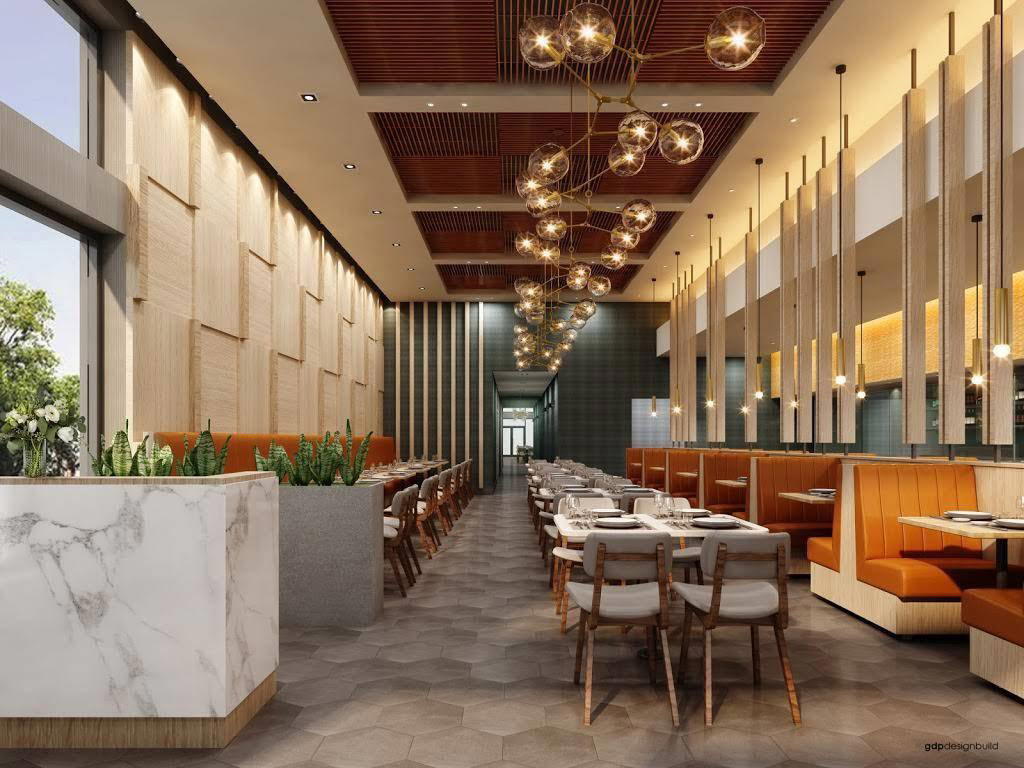
In American hibachi dining, the room does significant work before any food arrives. The format was designed for communal seating, for strangers sharing a teppanyaki surface, for the spatial logic of a performance kitchen placed at the center of a group. Maki Hibachi, located at 11954 Narcoossee Road in Orlando's Lake Nona district, operates within that tradition. The Narcoossee corridor has developed quickly over the past decade, drawing a mixed population of medical professionals, young families, and tech workers who pushed into southeast Orlando as the Lake Nona Medical City expanded. Restaurants in this zone serve a different function than those in downtown Orlando or the tourist corridors near International Drive: they are neighborhood anchors, not destination stops.
That positioning matters when thinking about how a hibachi format fits here. The teppanyaki grill table, with its communal bench seating arranged around a flat iron surface, was built for groups. It is a social architecture as much as a cooking method, encouraging shared ordering, cross-table conversation, and a pace of dining that stretches over multiple courses as the chef works through proteins and vegetables in sequence. Venues that do this format well use the room to its advantage: the layout places the grill at sightline center, and the open kitchen removes any mystery about preparation.
Hibachi in Orlando's Broader Japanese Dining Tier
Orlando's Japanese dining options have broadened considerably, though they remain concentrated in a few distinct tiers. At the higher end, venues like Kadence and Natsu operate as serious omakase and Japanese-inflected counters respectively, while Sorekara has established itself in the city's Japanese category at the leading price point. Hibachi, as a format, occupies a deliberately different register: it is a mid-tier, volume-capable, experience-forward category that does not compete with those counters. It competes instead with other casual group dining options, including steakhouse formats and pan-Asian restaurants that also serve families and workplace groups.
The Lake Nona location on Narcoossee Road places Maki Hibachi in a part of the city that has relatively fewer sit-down dining options than the busier corridors to the west and north. For a district that has added tens of thousands of residents since 2015, the local dining infrastructure is still catching up. A hibachi format is a logical fit in that environment: the communal table accommodates groups efficiently, the theatrical cooking element provides built-in entertainment, and the ticket average sits within a range accessible to the neighborhoods it serves.
The Format and What It Asks of a Room
Teppanyaki-style hibachi in the American tradition traces its mainstream expansion to the postwar popularization of Japanese steakhouse dining, a format that leaned heavily into the spectacle of open-flame cooking. The grill surface, the knives moving fast, the onion volcano that became a shorthand visual for the entire genre: all of it is about making the preparation visible and theatrical. The room architecture that supports this is fairly standardized across successful venues in the category. Large, shared teppanyaki tables seat between eight and twelve diners per surface. The chef position is fixed at one end or the center of the grill. Sight lines are calculated so the performance reads from every seat.
For a venue in the Lake Nona area, where foot traffic patterns differ from a downtown block, the room's ability to accommodate private events and large-group bookings becomes a practical consideration. Hibachi formats often draw birthday dinners, work celebrations, and family occasions because the shared table removes the social awkwardness of planning a group meal at a conventional restaurant. The room is the proposition as much as the food.
Orlando's higher-end dining options, from Capa to Camille, operate in a different structural register entirely, where intimate seating, precise service ratios, and composed plating define the experience. Nationally, venues like Le Bernardin, Alinea, and The French Laundry represent the end of the spectrum where the room itself is engineered for silence, focus, and a very specific kind of attention. The hibachi format makes the opposite bet: that noise, shared space, and visible fire are the experience, not distractions from it. Both are coherent positions. They serve different occasions.
What Lake Nona Needs From Its Dining Options
The southeast Orlando growth corridor has followed a pattern common to master-planned communities in Florida: retail and restaurant infrastructure arrives a step behind residential demand, leaving early residents underserved for several years before the commercial ecosystem catches up. As of the mid-2020s, Lake Nona still has fewer full-service dining options per capita than comparable Florida urban districts. That context shapes what a venue like Maki Hibachi provides: accessible group dining in a neighborhood where the alternative might be a 20-minute drive toward the Dr. Phillips or Sand Lake corridors.
Across the country, Japanese-American dining venues operating outside major urban centers have found that the hibachi format travels well to suburban and exurban markets precisely because it does not require the same concentration of culinary sophistication that sustains an omakase counter. Venues like Blue Hill at Stone Barns near New York or Single Thread Farm in Healdsburg operate in a niche that requires a very specific diner and a very specific occasion. Hibachi is democratic by design.
Planning a Visit
Maki Hibachi is located at 11954 Narcoossee Road, Suite 1, in Orlando, Florida 32832, within a retail strip development typical of the Lake Nona commercial corridor. For group bookings, contacting the venue directly in advance is advisable given the fixed-seating logic of teppanyaki tables: walk-in capacity for parties larger than four is generally constrained by how many grill tables are available on a given night. The Narcoossee Road location is accessible by car from most Lake Nona residential areas and from the broader southeast Orlando zone, though it sits outside typical tourist transit routes. For those exploring Orlando's wider dining range alongside a visit here, our full Orlando restaurants guide covers venues across categories and price tiers, including Providence-level reference points for those planning visits to comparable American cities.
Frequently asked questions
Where is Maki Hibachi in Orlando?
Maki Hibachi is located at 11954 Narcoossee Rd #1, Orlando, FL 32832, Orlando.
Is Maki Hibachi suitable for group dining and private events in the Lake Nona area?
The teppanyaki-hibachi format is structurally oriented around group seating, with communal tables built around a shared cooking surface — making it one of the more practical formats for group dinners in any market. Maki Hibachi at 11954 Narcoossee Road, Suite 1, sits in a part of Orlando that has relatively few dedicated group-dining venues given the area's residential growth. Whether private event arrangements are available would need to be confirmed directly with the venue.
What's the must-try dish at Maki Hibachi?
In the teppanyaki format Maki Hibachi follows, grilled proteins cooked tableside on a flat iron surface are the structural centerpiece of the meal. Checking directly with the restaurant will give you the current menu picture.
Should I book Maki Hibachi in advance?
Hibachi-format restaurants in growth corridors like Lake Nona tend to draw consistent demand from nearby residential communities, particularly on weekends. Maki Hibachi sits within a retail strip at 11954 Narcoossee Road, an area serving a rapidly expanding southeast Orlando population. Contacting the venue directly before visiting is the practical approach, especially for larger groups that require communal table coordination.
What is Maki Hibachi known for?
Maki Hibachi operates in the American teppanyaki-hibachi format, where cooking takes place on a flat iron griddle at or near the table in a communal seating arrangement. The venue is positioned on Narcoossee Road in Orlando's Lake Nona corridor, an area with limited Japanese dining options relative to its population density. That positioning makes it one of the more accessible hibachi options for southeast Orlando residents.
Is Maki Hibachi good for vegetarians?
The flat iron cooking surface used in hibachi-style preparation is often shared across proteins and vegetables, which is worth clarifying with staff if cross-contamination is a concern. Reaching out to the restaurant at 11954 Narcoossee Road before your visit is the most reliable way to confirm current options.
Is a meal at Maki Hibachi worth the investment?
Price range data for Maki Hibachi has not been publicly confirmed, so a direct cost-value comparison against other Orlando Japanese restaurants is not possible here. Within the hibachi format generally, the value proposition includes both the food and the tableside cooking experience, which drives the communal seating model. For southeast Orlando diners in the Lake Nona area, the Narcoossee Road location removes the need to travel to Orlando's more established Japanese dining zones.
Category Peers
Comparable venues nearby, for context on price, style, and recognition.
| Venue | Cuisine | Price | Notes |
|---|---|---|---|
| Maki HibachiThis venue — the venue you are viewing | Japanese Hibachi & Sushi | $20–30 | Not listed |
| Seito Sushi Baldwin Park | Modern Japanese Omakase & Sushi | Not listed | Baldwin Park |
| Hinabe | Modern Wagyu Hot Pot | $50–100 | Little Sand Lake |
| The Bistro & Bar | Urban International Gastropub | Not listed | Florida Center |
| Cantina Catrina Orlando | Traditional Mexican Scratch Kitchen | $20–30 | The Florida Mall area |
| Kobé Japanese Steakhouse - Lake Buena Vista | Japanese Teppanyaki Steakhouse | $30–50 | Crossroads |