
A five-storey building on Hold utca houses Budapest's most committed Moroccan kitchen. Chef Saad imports spices directly from Morocco, anchoring dishes like pastilla, zaalouk, and tajines in flavours that stretch well beyond the city's Central European default. At the €€ price tier, it occupies a distinct position in Budapest's dining scene: serious in intent, approachable in cost.
Pearl is the En Primeur Club membership app — saves, bookings, and concierge access live there. Same editors, same standards.
- Address
- Budapest, Hold u. 23, 1054 Hungary
- Phone
- +36 30 444 0585
- Website
- majorelle.hu
- Directions
- Get directions
 Saves & bookings on Pearl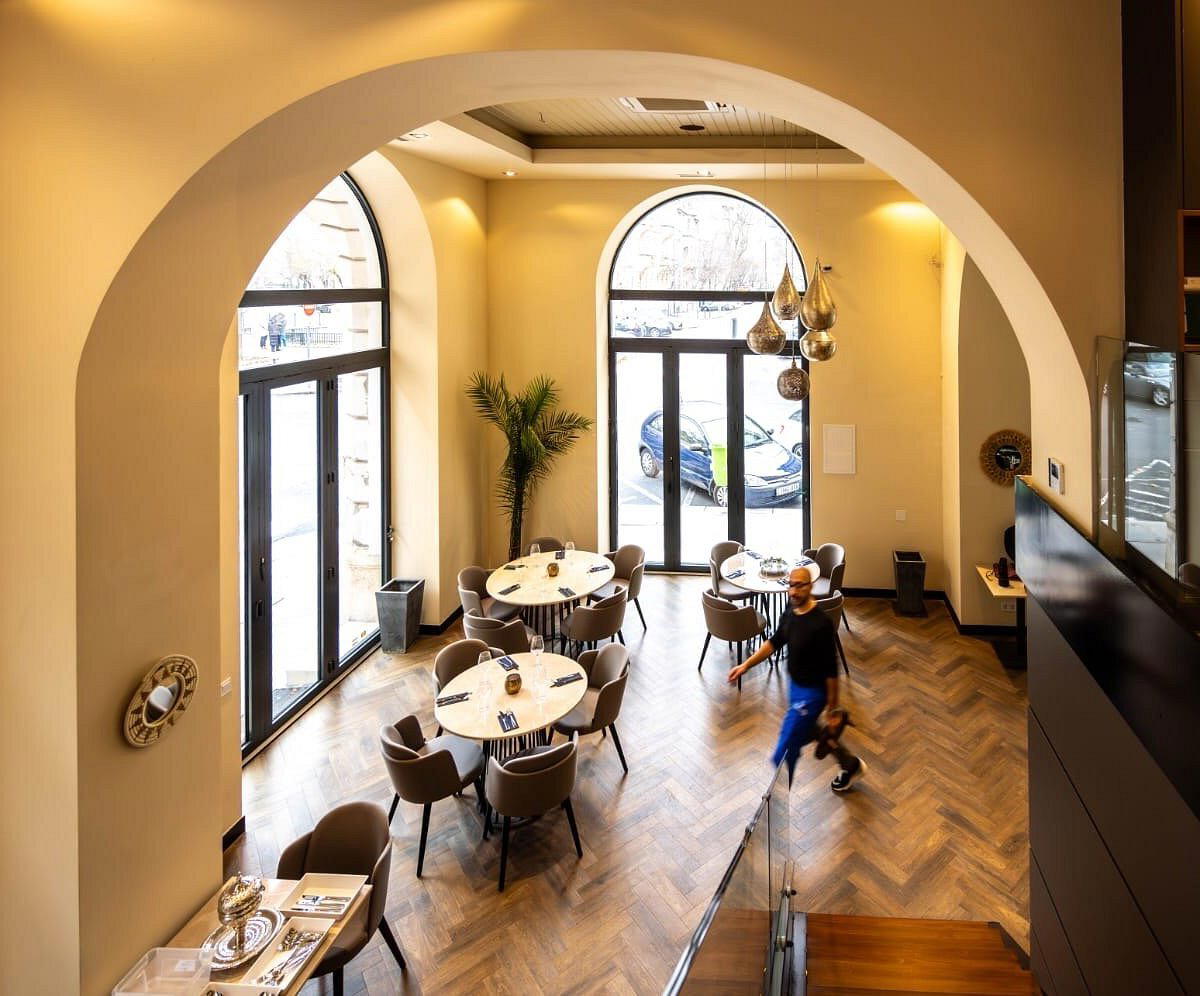
A North African Interior in a Central European Frame
Budapest's inner fifth district, Lipótváros, runs on grand 19th-century architecture and government-quarter formality. Hold utca cuts through that grid with a mix of market halls and neighbourhood restaurants, and it is here that Majorelle occupies a five-storey building with a balconied frontage that reads as conspicuously theatrical against the district's more restrained facades. Before you cross the threshold, the building announces a different set of references. The name itself is borrowed from the botanical garden in Marrakesh that French painter Jacques Majorelle created and Yves Saint Laurent later restored to international prominence. That reference point matters: it sets a visual and atmospheric ambition that the interior is designed to meet.
Budapest's restaurant scene in this price bracket tilts heavily toward Central European and Modern Hungarian formats. Places like Borkonyha Winekitchen and Babel represent the city's dominant contemporary register, and at the leading end, restaurants like Stand, Costes, and essência occupy the Michelin-starred tier. Majorelle operates in a different lane entirely: North African cooking at an accessible €€ price point, without a serious competitor in the city for that specific combination. That positioning is as much a structural fact about Budapest's dining geography as it is a statement about Majorelle itself.
The Architecture of the Experience
The building's five-storey height and balconied exterior give the space an unusual vertical presence for a restaurant in this part of the city. Moroccan-influenced design at its most considered uses geometric tilework, carved plasterwork, lantern lighting, and layered textiles to create rooms that feel dense with reference without tipping into pastiche. In a restaurant context, these spatial choices govern how a meal feels paced: low lighting encourages lingering, communal table formats push sharing, and a warm service register reinforces the domestic hospitality traditions that Moroccan cooking is grounded in. The physical container at Majorelle is doing real work alongside the kitchen.
That balance between architectural spectacle and functional dining space is something Budapest's higher-end rooms handle differently. The tasting-menu formats at restaurants like Stand or essência use minimal, controlled environments to focus attention on the plate. Majorelle's approach is the inverse: the room is expressive, the food is served to share, and the cumulative effect of multiple dishes arriving across a table is the point. For travellers moving through the city who have spent evenings in the quieter register of Modern Hungarian fine dining, Majorelle offers a deliberate shift in sensory and social format.
The Kitchen's Logic
Moroccan cooking has a supply-chain problem in most European cities. The spice combinations that define the cuisine, including ras el hanout, preserved lemon, harissa, and argan oil, deteriorate quickly and require sourcing from producers who understand the specific regional variations. Chef Saad addresses this directly by importing spices from Morocco rather than working through European intermediaries. This matters to the final plate: the layered sweet-savoury balance in dishes like pastilla, the herbaceous depth in zaalouk, and the slow-cooked complexity of tajines all depend on ingredient quality at the spice level, not just the protein or vegetable level.
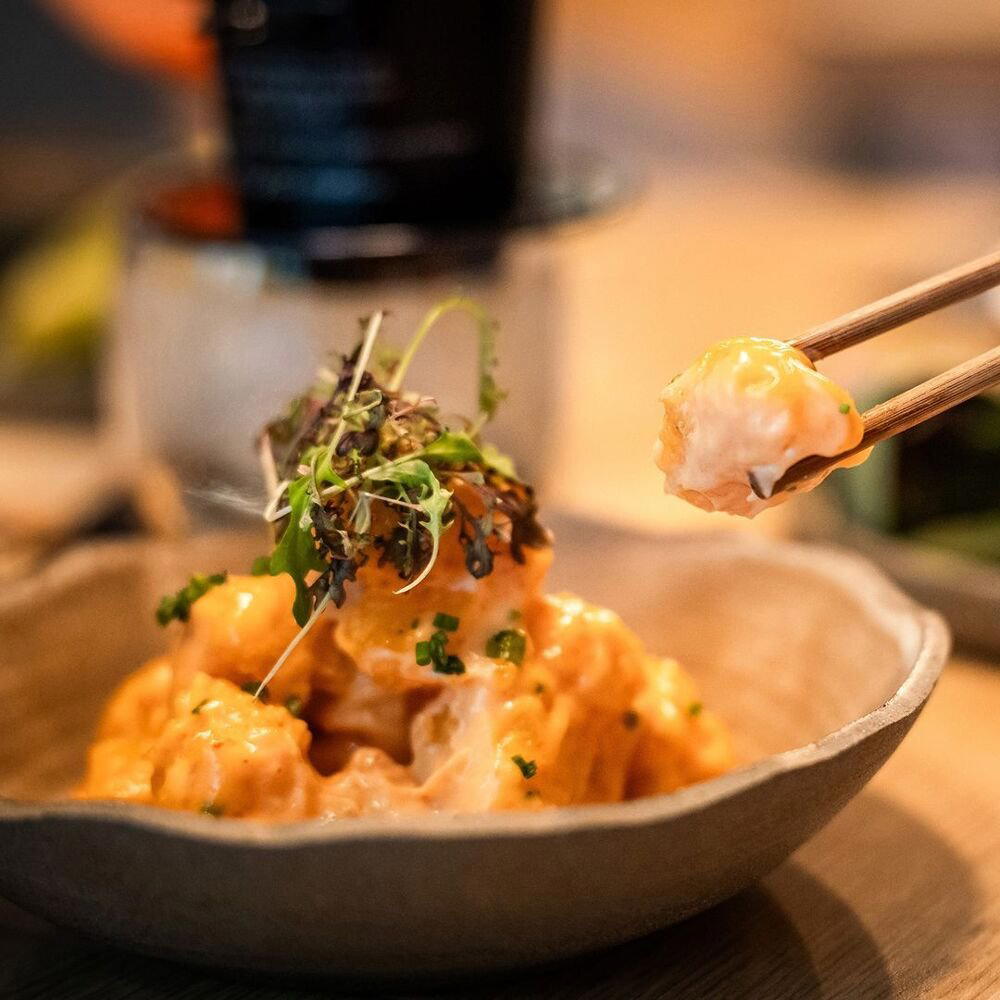
The menu covers the structural canon of Moroccan restaurant cooking. Pastilla, the Fassi pigeon or chicken pie encased in warqa pastry and dusted with cinnamon and powdered sugar, appears alongside briouats, the fried or baked triangular parcels that can carry minced meat, seafood, or cheese fillings. Zaalouk, a cooked aubergine and tomato salad seasoned with cumin and paprika, works as a dip and a side simultaneously. Tajines anchor the main course section, slow-cooked in the conical earthenware vessels that regulate steam to keep meat and vegetables tender over long cooking times. These are not simplified European adaptations; the format asks diners to order across multiple categories and share.
The jawhara, a crisp layered pastry filled with orange blossom cream, sits at the dessert end of that sharing dynamic with a caveat: it tests the communal spirit the rest of the meal has built. Fresh mint tea closes the meal in the Moroccan hospitality tradition, served by the team with a directness that matches the food's register. Mint tea in this context is not incidental; it is a structural part of the meal's pacing and closure, and the manner of its service signals how seriously the kitchen takes the full cultural frame rather than just the headline dishes.
Where Majorelle Sits in Budapest's Broader Scene
Budapest has developed a confident fine dining tier over the past decade, anchored by Michelin recognition and a generation of Hungarian chefs reinterpreting their own culinary traditions. That story is well-documented in restaurants across the city. What is less covered is the parallel development of ethnic and regional restaurants that serve Budapest's growing international visitor base and its own cosmopolitan resident population. Majorelle fits into that second current: a kitchen serious enough about its source material to import its primary flavour components, occupying a physical space designed to match the cultural ambition of the food.
For travellers building a Budapest itinerary that extends beyond the city, the wider Hungarian dining scene offers its own distinct rewards. Platán Gourmet in Tata, Pajta in Őriszentpéter, and 42 Restaurant in Esztergom each represent Hungarian fine dining in smaller city contexts. Further afield, 67 Sigma in Székesfehérvár, A Konyhám Stúdió 365 in Fonyód, and Alkimista Kulináris Műhely in Szeged extend the map across the country's regional dining scene. For a global comparative frame on technically disciplined kitchens, Le Bernardin in New York City and Atomix in New York City represent how entirely different culinary traditions achieve precision at the highest level.
Majorelle sits on Hold utca in the fifth district. Booking is advisable, particularly for evenings and weekends, given the building's evident draw and the restaurant's position as the only serious Moroccan kitchen in Budapest. The €€ pricing makes it accessible relative to the city's fine dining tier, and the sharing format means the table bill scales naturally with the size of the group and the appetite for multiple courses.
Cuisine Context
Comparable venues nearby, for context on price, style, and recognition.
| Venue | Cuisine | Price | Awards | Notes |
|---|---|---|---|---|
| MajorelleThis venue — the venue you are viewing | Authentic Moroccan | $$$$ | Michelin Plate | Not listed |
| MoszkvaTéЯ Bisztró | Authentic Russian Bistro | $$$ | Michelin Plate | Varhegy |
| Zincenco Kitchen | Modern Hungarian with International Influences | $$$$ | Michelin Plate | Terézváros |
| KOLLÁZS | Contemporary French Brasserie with Hungarian Specialties | $$$$ | Michelin Plate | Varhegy |
| Arany Kaviár | Fine Dining with French-Russian Influences and Caviar Focus | $$$$ | Michelin Plate | Varhegy |
| Búsuló Juhász | Hungarian Bourgeois Cuisine | $$$ | Not listed | Gellerthegy |
Recognition history
Dated appearances from independent guides and award organizations, with the underlying list record or original source where available.
Michelin Plate
Michelin
Continue exploring
More in Budapest
Restaurants in Budapest
Browse all →
Bars in Budapest
Browse all →
Hotels in Budapest
Browse all →
At a Glance
- Elegant
- Cozy
- Sophisticated
- Date Night
- Special Occasion
- Group Dining
- Open Kitchen
- Extensive Wine List
- Local Sourcing
- Sustainable Seafood
Current opening hours
- Monday
- Closed
- Tuesday
- 4–11 PM
- Wednesday
- 4–11 PM
- Thursday
- 4–11 PM
- Friday
- 4–11 PM
- Saturday
- 12–11 PM
- Sunday
- Closed
Hours can change for holidays and private events. Last verified .
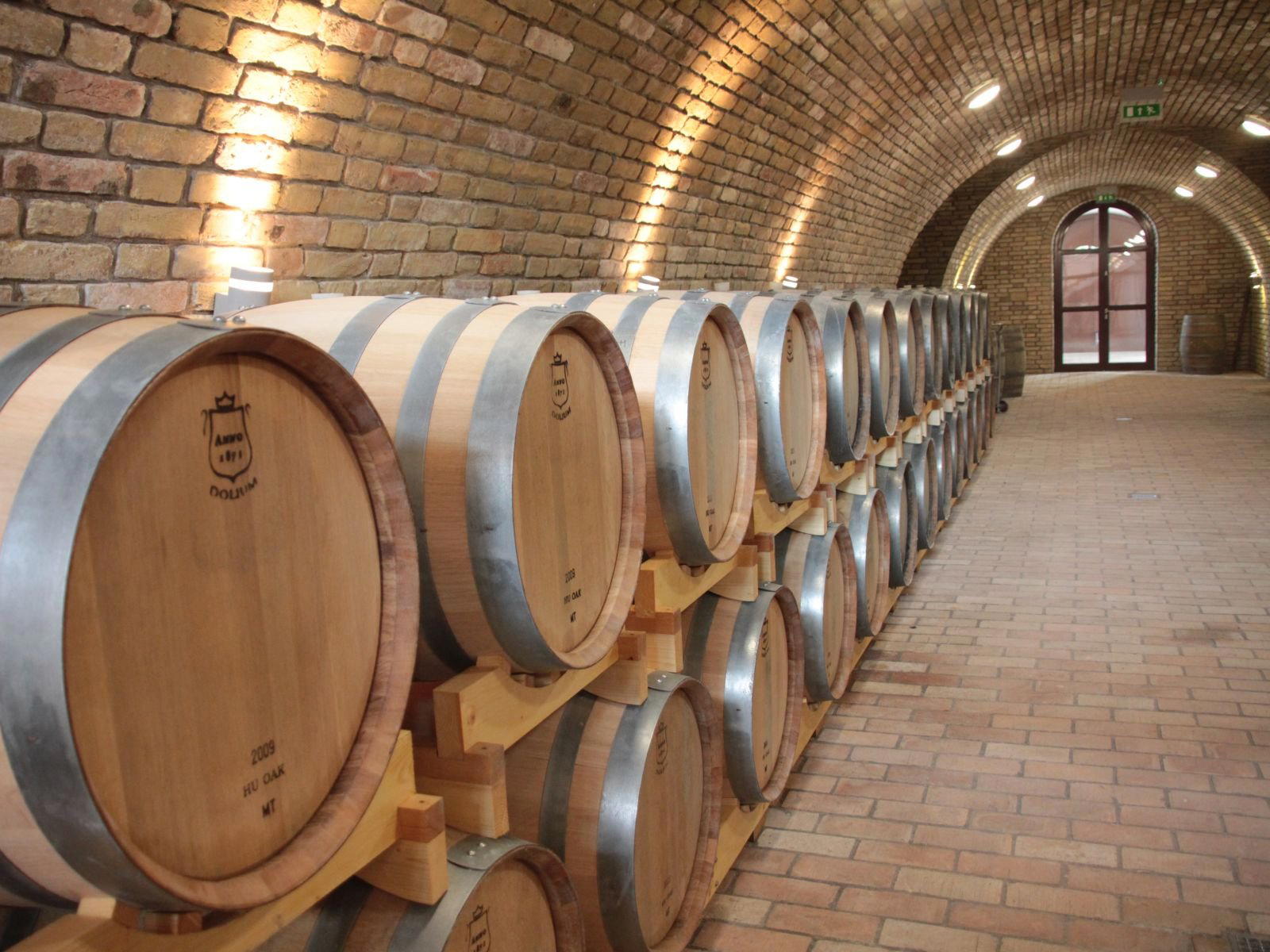
Warm, elegant atmosphere with stylish decor, Moroccan music, and cozy open space.