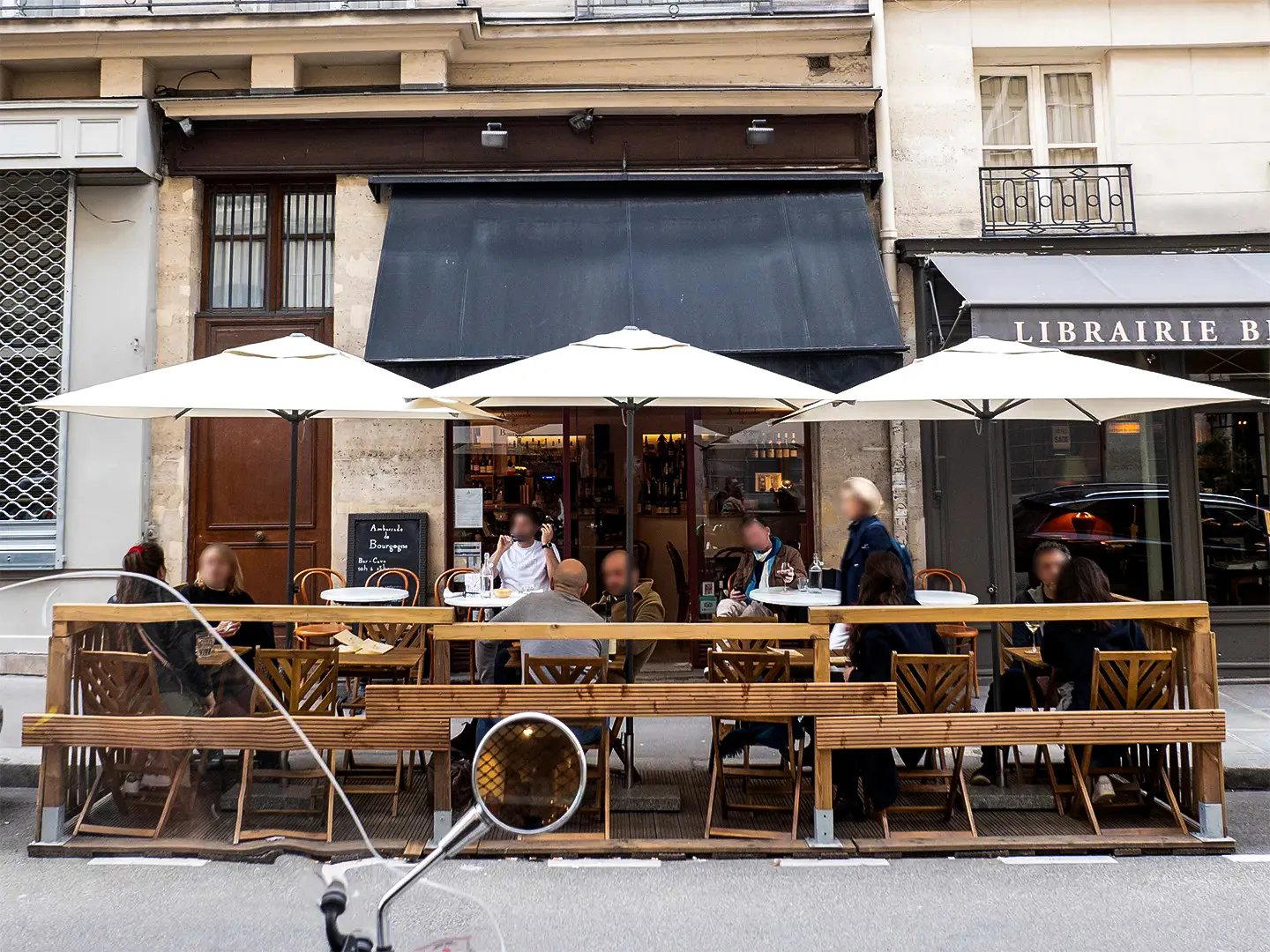
Maison Perchée serves French bistro cooking with Mediterranean touches at 58 Rue Mouffetard, with terrace seating and a street-scene view that suits a casual, conversational meal.
Pearl is the En Primeur Club membership app — saves, bookings, and concierge access live there. Same editors, same standards.
- Address
- 58 Rue Mouffetard, 75005 Paris, France
- Phone
- +33973880094
- Website
- m-perchee.fr
- Directions
- Get directions
 Saves & bookings on Pearl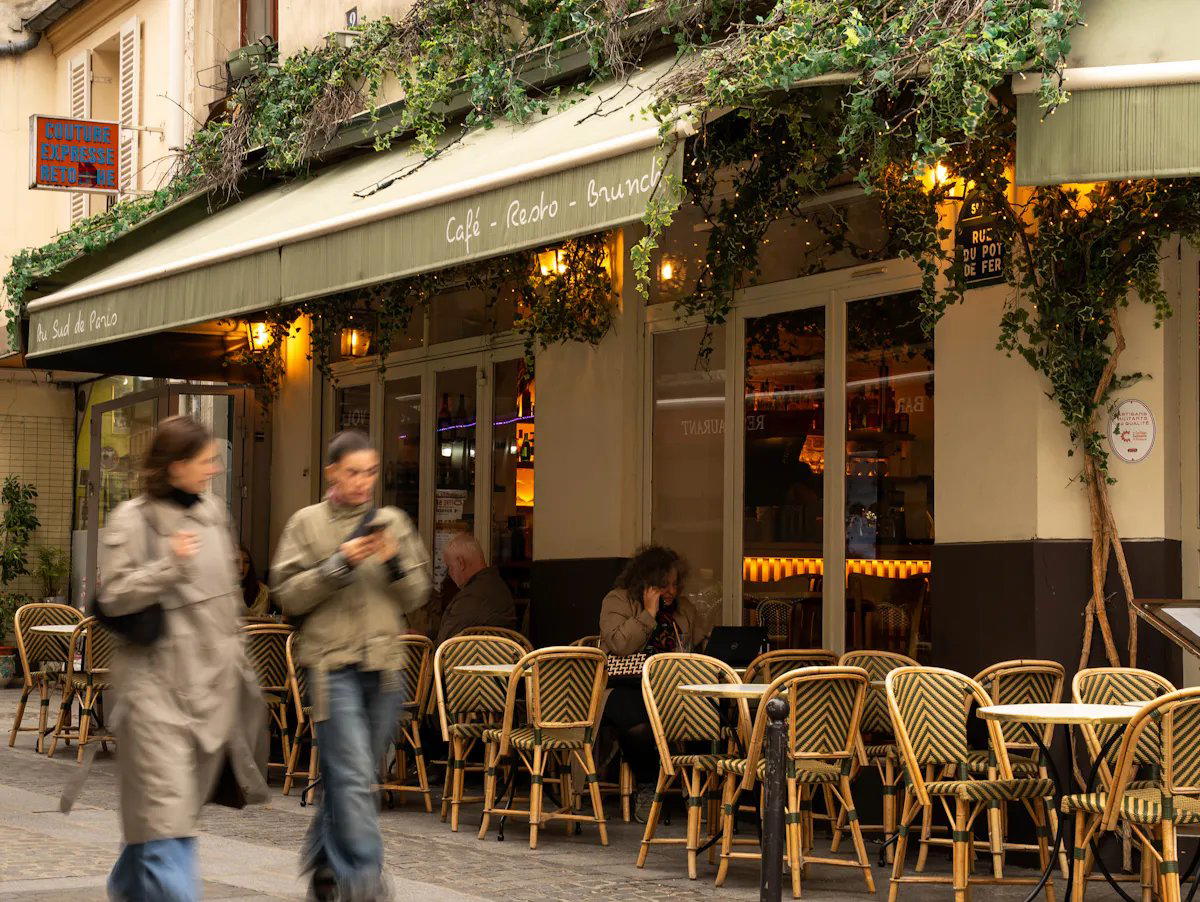
Rue Mouffetard and the Long Memory of the Left Bank
The Fifth Arrondissement has been feeding Parisians continuously since the medieval period, when Rue Mouffetard served as a Roman road out of Lutetia and later became the market street that provisioned the Sorbonne quarter. That continuity matters when reading any address on this stretch. Venues here inherit a context rather than invent one: the street's daily market, its steep cobbled pitch, and the particular mix of students, academics, and neighbourhood regulars who have defined its character for centuries. Maison Perchée, at number 58, sits inside that inheritance at an address where the cultural density of the surrounding streets does a great deal of the editorial work before a guest crosses the threshold.
The Mouffetard Market District as Culinary Reference Point
Understanding what Maison Perchée represents requires understanding what Rue Mouffetard is within the broader Paris dining hierarchy. The street and its immediate environs occupy a tier that is neither the grand-boulevard formality of the Eighth Arrondissement nor the self-consciously experimental territory of the Eleventh. Places like Le Cinq at the Four Seasons George V or Alléno Paris au Pavillon Ledoyen operate in a register defined by formal service architecture and tasting-menu ceremony. The Mouffetard quarter, by contrast, has always prioritised accessibility and daily rhythm over occasion dining. The market running along the lower street most mornings sets a standard for ingredient proximity that the better kitchens here take seriously. That proximity to produce, combined with a neighbourhood clientele that spans the economic range in ways that the Sixth or the Seventh do not, produces a particular kind of cooking culture: attentive but untheatrical, rooted in season and supply rather than concept.
Within the broader geography of French dining, this neighbourhood model has parallels at regional addresses that have built long reputations on similar principles of rootedness. Auberge de l'Ill in Illhaeusern and Bras in Laguiole both connect cooking to specific territory in ways that resist easy transplantation. The Mouffetard kitchen tradition works by similar logic, even if its territory is an urban arrondissement rather than a range of volcanic plateau or Alsatian riverbank.
What the Address Signals About the Experience
At 58 Rue Mouffetard, the physical location shapes expectations in concrete ways. The street's gradient, the proximity to Place de la Contrescarpe, and the density of the surrounding residential fabric all position this as neighbourhood dining rather than destination dining in the conventional sense. Paris's destination tier, occupied by addresses like L'Ambroisie on the Place des Vosges or Arpège on the Rue de Varenne, attracts guests who plan the visit months in advance and treat the meal as the primary reason for being in the city. The Mouffetard address inverts that logic: the neighbourhood draws you in, and the restaurant is the occasion within that pre-existing reason to be present.
That distinction carries practical consequences. Pacing, noise levels, proximity to neighbouring tables, and the degree to which service is structured around managing the guest experience versus simply feeding people well all shift when the surrounding street exerts this kind of pull. The French term for this quality is convivialité, and it is not a lesser category than formality; it is a different one, with its own rigour and its own ways of failing.
Paris in the Wider French Dining Conversation
Any serious engagement with Paris dining requires some acknowledgment that the capital's best-regarded addresses now compete in a national and international conversation that has shifted considerably in the past two decades. Mirazur in Menton, Flocons de Sel in Megève, and Troisgros in Ouches draw international guests to addresses outside Paris that would have been considered peripheral a generation ago. Within Paris, the three-star tier has expanded to include approaches as varied as Kei's Franco-Japanese synthesis and the sustained technical ambition of Assiette Champenoise in Reims from the capital. Meanwhile, historic provincial anchors like Paul Bocuse's Auberge du Pont de Collonges and Au Crocodile in Strasbourg remind visitors that French fine dining was never exclusively a Parisian project. Addresses like Auberge du Vieux Puits in Fontjoncouse and AM par Alexandre Mazzia in Marseille represent a southern axis of ambition that increasingly draws the same international attention as the capital. That dispersal of seriousness across the country sets the context for what neighbourhood dining in Paris does and does not need to do. A Mouffetard address is not competing with Ledoyen; it is serving a different purpose in the ecosystem, and doing it well is its own credential.
For visitors building a broader itinerary around French cuisine, our full Paris restaurants guide maps the city's dining tiers with neighbourhood-level specificity. For those extending to international reference points, Le Bernardin in New York and Atomix in New York City offer comparison points for how French technique travels and transforms in other contexts.
Know Before You Go
- Address: 58 Rue Mouffetard, 75005 Paris, France
- Arrondissement: 5th (Latin Quarter / Mouffetard)
- Getting There: Nearest metro stops are Place Monge (Line 7) and Censier-Daubenton (Line 7); Rue Mouffetard is a short walk from both
- Market Context: The lower section of Rue Mouffetard operates as a food market on most mornings; visiting before or after a meal adds useful neighbourhood context
- Booking: Contact details not confirmed at time of publication; verify current booking method directly before visit
- Price Range: Not confirmed at time of publication
- Hours: Not confirmed at time of publication; verify before visiting
Continue exploring
More in Paris
Restaurants in Paris
Browse all →
Bars in Paris
Browse all →
Hotels in Paris
Browse all →




At a Glance
- Cozy
- Intimate
- Brunch
- Family
- Casual Hangout
- Terrace
- Local Sourcing
- Street Scene
Current opening hours
- Monday
- 10:30 AM–12 AM
- Tuesday
- 10:30 AM–12 AM
- Wednesday
- 10:30 AM–12 AM
- Thursday
- 10:30 AM–12 AM
- Friday
- 10:30 AM–12 AM
- Saturday
- 9 AM–12 AM
- Sunday
- 10 AM–10:30 PM
Hours can change for holidays and private events. Last verified .
Warm, familial atmosphere with a cozy, homey feel from wooden beams and curated furniture, enhanced by sunny terrace seating.