
Tabelog 100 #32
Our verdict
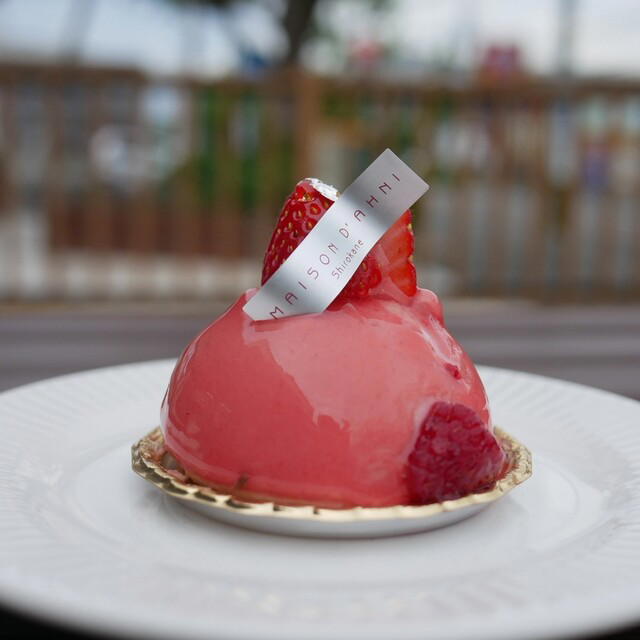
MAISON D'AHNI is a Shirokane-Takanawa sweets counter in Tokyo, listed in Tabelog 100 Sweets Tokyo in 2019, 2020, 2022, and 2023. Its appeal sits in the city’s serious pâtisserie culture: cake and bread treated as a daily ritual rather than a formal restaurant occasion, with a compact format that suits a neighbourhood stop as much as a planned detour.

Pearl is the En Primeur Club membership app, where members save venues, book tables and use the concierge.
The menu
What to order
- Gâteau Basque
- Macaron Basque
- Seasonal fresh pastries
Tokyo has a particular quiet in its sweets culture: polished storefronts, carefully ordered counters, and pastry treated not as a coffee accessory but as its own discipline. Here, MAISON D'AHNI fits a Tokyo tradition of compact rooms, takeout counters, and visual order. Its design story is not spectacle, but scale, restraint, and the way a small pastry shop can make cake and bread feel calibrated rather than casual.
Tokyo’s sweets scene rewards precision, from department-store pâtisserie cases to independent shops. Serious addresses do not need tasting-menu choreography to signal intent. Recognition through Tabelog Hyakumeiten in 2023 places MAISON D'AHNI in a competitive field where consistency matters as much as novelty. A Tabelog score of 3.78 adds another signal: this is not a tourist-facing dessert stop built on novelty alone, but a shop that has held local attention in a crowded category.
A small-room sweets culture shaped by display, takeaway, and neighbourhood rhythm
Tokyo pâtisserie often works through compression. The room is part retail theatre, neighbourhood utility, and index of craft. Cases, shelves, packaging, and queue flow communicate before a customer tastes anything. That structure matters because sweets in Tokyo serve several purposes at once: a personal afternoon purchase, a family dessert, an office gift, or something for a home visit. The shop must carry daily-use ease and presentation discipline.
That makes the Tokyo setting meaningful. The shop’s pastry culture reads as local and repeatable, supported by everyday visits as much as occasion spending. MAISON D'AHNI fits through a cake-and-bread format, not a dessert-course restaurant. In Tokyo, that distinction matters: a sweets specialist can be judged by counter clarity and takeaway reliability, not by linen, wine pairings, or chef narration.
The category also explains the price tier. In a city where high-end dining can pull sweets into luxury tasting menus, the independent cake-and-bread shop remains a democratic luxury: small-format, craft-led, and accessible enough for repeat purchase. GAZTA can sit nearby as an comparisons point, but the broader truth is more useful than a one-to-one match: serious dessert does not always require long seating or a restaurant bill. By contrast, conversations around Imafuku, Wagyu Yakiniku KIM, AlCeppo, and TARANTELLA da luigi belong to meal-led planning rather than pastry shopping. The comparison separates a sweets stop from dining out. Tokyo treats both seriously, but with different expectations.
The design argument is restraint, not spectacle
Design-led food spaces in Tokyo often split into two camps: some build an image that dominates the food; others use the room to reduce friction and sharpen the purchase. Stronger pastry shops tend to do the latter. Counter height, product visibility, packaging logic, and customer movement are the real architecture. A small sweets shop succeeds when the room tells customers how to choose, wait, and leave with fragile goods intact.
MAISON D'AHNI is listed for cake and bread, a pairing that gives the room dual purpose. Cake asks for visual focus and careful handling. Bread pulls the shop toward morning and daily rhythm. Together, they keep the experience from becoming too precious. That duality is a recurring strength in Tokyo sweets culture: craft absorbed into a city where convenience, gifting, and seasonal appetite shape the format. The Tabelog Hyakumeiten 2023 selection suggests credibility in that system, rather than a claim built only on self-presentation.
The accessible price band also matters in a city where premium food writing can over-focus on counter seats and adult-only seriousness. Sweets shops serve a broader social role: commuters, hosts, solo customers, and anyone seeking precision without a full restaurant exchange. That makes the physical container more important. A room that can handle takeaway and careful selection has to be tightly edited.
For travellers, this is not a substitute for Tokyo’s restaurant culture but a different lens on the city’s standards. A visitor who only chases formal reservations misses how much of Tokyo’s food intelligence sits in narrow everyday formats. Use Our full Tokyo restaurants guide for the wider dining map, then place sweets shops like this alongside more meal-driven options across the city. The contrast is the lesson: Tokyo’s range is not only in cuisine, but in formats.
How to read it within a Tokyo itinerary
The strongest use of a Tokyo sweets stop is as a calibrated pause, not the centrepiece of a day. Pair it with a city walk, hotel change, or slower morning. The value is seeing how a serious local cake-and-bread shop behaves outside a full restaurant context. Tokyo rewards that pacing, turning a small purchase into a study of local taste.
Travellers building a broader itinerary should think in categories. Restaurants give the city’s long-form arguments; bars show its technical drinking culture; hotels reveal how access shapes a trip; experiences add context beyond eating. For adjacent planning, use broader Tokyo guides and compare MAISON D'AHNI with other dining in Tokyo generically rather than treating it as the same kind of stop as a seated meal. Even beyond the city, small-format food culture has its own grammar, but here the point is local: a compact shop can communicate standards as clearly as a more elaborate dining room.
The editorial read is clear: MAISON D'AHNI is worth understanding as part of Tokyo’s polished everyday sweets culture, not as a restaurant performing luxury. Its credibility comes from Tabelog Hyakumeiten recognition in 2023, a defined cake-and-bread identity, and a room built around the small decisions that make pastry shopping in Tokyo feel exacting.
Budget and Context
Comparable venues at the same tier.
| Venue | Cuisine | Price | Awards | Notes |
|---|---|---|---|---|
| MAISON D'AHNIThis venue (the venue you are viewing) | Basque-style French patisserie | $10–20 | Tabelog 100 #32 | Not listed |
| Au Bon Vieux Temps Oyamadai ten | Traditional French Patisserie & Salon | $20–30 | Tabelog 100 #83 | Setagaya, Traditional French Patisserie & Salon |
| Cafe 1894 | Western Bistro Cafe | $20–30 | Tabelog 100 #16 | Chiyoda, Western Bistro Cafe |
| LE CAFE de Joel Robuchon Nihonbashi takashimaya ten | Not listed | $20–30 | Tabelog 100 #10 | Chūō, French café and patisserie by Joël Robuchon |
| ASTERISQUE | Modern French patisserie | $10–20 | Relais Desserts Member Boutique · Tabelog 100 #7 | Shibuya, Modern French patisserie |
| Avranches Guesnay | Modern French Patisserie | $10–20 | Tabelog 100 #51 | Bunkyō, Modern French Patisserie |
Recognition history
Dated appearances from independent guides and award organizations, with the underlying list record or original source where available.
Tabelog 100 #32 · No. 32
Tabelog · Tabelog 100 - Sweets - TOKYO - 2023
Continue exploring
More in Tokyo
Restaurants in Tokyo
All restaurants in Tokyo →


Bars in Tokyo
All bars in Tokyo →



Details
- Cozy
- Quiet
- Classic
- Solo
- Casual Hangout
- After Work
- Family
- Standalone
- Design Destination
- Local Sourcing
- A La Carte
- Counter Dining
- Coffee
- Tea
Current opening hours
- Monday
- 9 AM–7 PM
- Tuesday
- Closed
- Wednesday
- 9 AM–7 PM
- Thursday
- 9 AM–7 PM
- Friday
- 9 AM–7 PM
- Saturday
- 9 AM–7 PM
- Sunday
- 9 AM–7 PM
Hours can change for holidays and private events. Hours as of .
Small, relaxed cake shop with just a few seats, a calm neighborhood feel, and a classic patisserie counter showcasing colorful French-style pastries and baked Basque specialties.