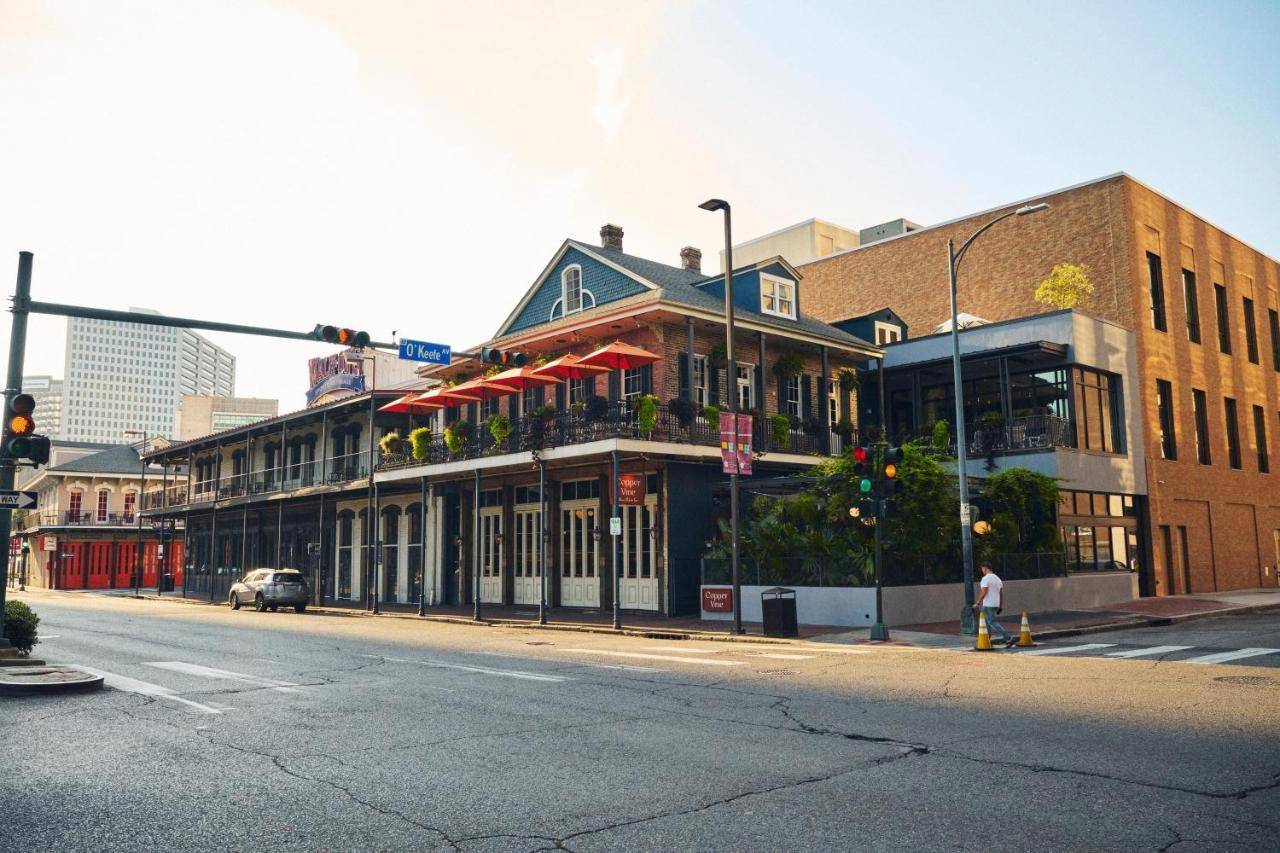
Mahony's Po-boys

Diners, Drive-Ins and Dives Featured Restaurant
Our verdict
On Magazine Street in the Garden District, Mahony's Po-boys operates in the tradition of the working New Orleans lunch counter, where the po-boy is treated as a serious local form, not a tourist concession. The address puts it squarely in a neighborhood corridor where residents eat, not one built around visitor traffic. For anyone tracing how the city's sandwich culture holds its ground alongside fine-dining expansion, this is a practical and instructive stop.

Pearl is the En Primeur Club membership app, where members save venues, book tables and use the concierge.

The menu
What to order
- Peacemaker
- Fried Shrimp Po-boy
- Fried Oyster Po-boy
- Roast Beef Po-boy
Magazine Street and the Po-Boy as a Local Institution
Magazine Street runs for miles through some of New Orleans' most lived-in residential corridors, and the stretch around 3454 has long attracted the kind of independent food operation that serves the neighborhood rather than the tourist circuit. In a city where the conversation about dining increasingly centers on tasting menus and Michelin recognition, venues like Saint-Germain and Re Santi e Leoni represent the city's upward push in contemporary dining, the po-boy counter occupies a completely separate tier. It is not competing with those rooms. It is answering a different question about what New Orleans cooking actually is at its foundation.
The po-boy is not a casual footnote to Louisiana food culture. It is a document of the city's working-class culinary history, developed in the early twentieth century and refined over decades by shops that treated the French bread loaf, the fry technique, and the ratio of filling to crust as matters requiring consistent attention. Mahony's sits inside that tradition at an address that reinforces the point: this is a neighborhood lunch destination, and the crowd reflects it.
What the Po-Boy Format Demands
Across New Orleans, the quality gap between po-boy counters is not subtle. The bread is the primary variable, the city's French loaves have a specific crust-to-crumb ratio that differs from anything produced outside Louisiana, and a shop that sources well has an immediate structural advantage. The filling execution follows: fried oysters, shrimp, roast beef debris, and catfish are the canonical options, and the margin between a well-executed version and a mediocre one is immediately legible to anyone who has eaten their way through the genre.
Mahony's on Magazine draws steady local traffic, which in New Orleans is the most reliable signal available. The city's residents have strong, specific opinions about their sandwich shops, and they route accordingly. A counter that holds a regular neighborhood following over years has passed a test that no press release can replicate.
Placing Mahony's in the New Orleans Dining Structure
New Orleans dining in 2024 covers a wider range than it did a decade ago. The fine-dining tier has grown in ambition and price, with rooms like Bayona anchoring the New American tradition and Emeril's representing the Cajun-inflected formal end of the market. The casual end, meanwhile, has not surrendered its identity. The city still runs on neighborhood counters, second-line groceries, and lunch spots that have no interest in attracting the tasting-menu crowd.
Mahony's is firmly in that second category. It does not function as an entry point to fine dining, the way that a bistro in a larger metropolitan market might. It functions as a destination in its own right for a specific product that the upper dining tiers do not offer and would not attempt. This is the structure of New Orleans food culture: the categories coexist rather than forming a hierarchy where one aspires to become the other.
For visitors calibrating their time across the city's dining options, the distinction matters. A meal at Zasu and a po-boy at Mahony's are not interchangeable choices at different price points, they are answering different questions about the city's food. Anyone building a serious itinerary through New Orleans should treat both as required reading. Our full New Orleans restaurants guide maps the range more completely.
Planning Your Visit: The Booking Experience
The logistics here are meaningfully different from the reservation-driven rooms that dominate most premium travel planning. Venues like Le Bernardin in New York City, Lazy Bear in San Francisco, or The French Laundry in Napa require weeks or months of advance planning, dedicated booking windows, and sometimes credit card holds. Mahony's operates on a completely different model: the walk-in counter, which is the correct format for a po-boy shop and the one that the neighborhood expects.
This matters for how you plan the day. Magazine Street rewards a slow morning or early afternoon, the neighborhood moves at a pace that suits a walk rather than a scheduled itinerary. The shop is at 3454 Magazine St in the Garden District corridor, accessible by the Magazine Street bus line or a short cab or rideshare from the French Quarter. Parking on Magazine is available but can require patience during peak hours, particularly on weekends when the street draws a mix of locals and visitors.
Timing within the day is the main variable to manage. Po-boy counters in New Orleans run at lunch and often into the early evening, but the freshest bread and the highest-volume fry output typically land in the midday window. Arriving between 11:30 and 1:00 puts you in the rhythm of the working lunch crowd, which is the correct way to experience this format. The room will be busier, but the product will be at its most consistent.
For those building a broader trip around American regional dining at the serious end, places like Smyth in Chicago, Single Thread Farm in Healdsburg, Providence in Los Angeles, Blue Hill at Stone Barns in Tarrytown, Addison in San Diego, The Inn at Little Washington, Frasca Food and Wine in Boulder, Atomix in New York City, or Atelier Moessmer Norbert Niederkofler in Brunico, Mahony's represents the other end of a useful spectrum. Understanding what a city's street-level food culture does well is as instructive as understanding what its formal rooms achieve.
Frequently asked questions
Is Mahony's Po-boys better for a quiet night or a lively one?
Mahony's sits on Magazine Street, one of New Orleans' primary Uptown corridors, which sets the baseline energy as neighborhood rather than destination-bar loud. The counter format keeps the pace moving rather than lingering, so visitors looking for a relaxed meal over a drawn-out evening will find the rhythm here suits a casual, unhurried stop rather than a high-volume night out.
How do I find Mahony's Po-boys?
Mahony's Po-boys is located at 3454 Magazine St, New Orleans, LA 70115, New Orleans.
How does Mahony's Po-boys fit into the broader New Orleans po-boy tradition?
The po-boy is one of New Orleans' most documented civic foods, with a format defined by the local French loaf, which has a crust and interior texture distinct from any bread produced outside the city's microclimate. Mahony's operates at 3454 Magazine Street, placing it within the Uptown residential corridor where neighborhood sandwich counters are measured by locals against a long and specific regional standard rather than against the city's fine-dining rooms.
What do people recommend at Mahony's Po-boys?
The po-boy is the format here, and in New Orleans that means bread quality is the first measure of any order. Mahony's location on Magazine Street places it within the Uptown corridor where regular locals hold sandwich counters to a specific standard for the French loaf's crust and crumb. Specific menu items are best confirmed on-site, as the selection can shift by season and supply.
Do they take walk-ins at Mahony's Po-boys?
Mahony's operates as a counter-service venue on Magazine Street, which places it firmly outside the reservation-driven tier of New Orleans dining. Walk-in is the standard approach here, consistent with the po-boy format across the city, though peak lunch hours on a busy stretch of Magazine Street can mean a short wait.
What do critics highlight about Mahony's Po-boys?
Mahony's presence on Magazine Street at 3454 is noted within the context of Uptown New Orleans as a neighborhood anchor for the po-boy format rather than a headline fine-dining room. The critical conversation around po-boy counters in New Orleans consistently returns to bread sourcing and filling execution as the primary differentiators, which frames how informed visitors approach any counter in the city.
Can Mahony's Po-boys adjust for dietary needs?
The po-boy format is built around French bread and protein-led fillings, which places structural limits on certain dietary adaptations.
Comparable Spots
| Venue | Cuisine | Price | Awards | Notes |
|---|---|---|---|---|
| Mahony's Po-boysThis venue (the venue you are viewing) | New Orleans Po-boys | $20–30 | Diners, Drive-Ins and Dives Featured Restaurant | Not listed |
| Emeril’s | Modern Creole-Cajun Fine Dining | $150–200 | 2 Michelin Stars · World's 50 Best #20 | Cajun |
| Re Santi e Leoni | Modern Italian Fine Dining | $100–150 | 1 Michelin Star | Contemporary |
| Bayona | Modern Creole Fine Dining | $100–150 | World's 50 Best #45 · James Beard Award Best Chefs | New American |
| Pêche Seafood Grill | Modern Seafood Grill | $50–100 | Michelin Plate · James Beard Award Semi Finalist | American Regional - Cajun Seafood |
| Commander’s Palace | Modern Creole | $50–100 | La Liste Top Restaurants · Star Wine List | Creole |
Recognition history
Dated appearances from independent guides and award organizations, with the underlying list record or original source where available.
Diners, Drive-Ins and Dives Featured Restaurant
Diners, Drive-Ins and Dives · 2026 Diners, Drive-Ins and Dives Featured Restaurants