Mother's Restaurant
Our verdict
At 401 Poydras Street, Mother's has been absorbing the foot traffic of downtown New Orleans for generations, operating as a reference point for the city's po'boy and debris sandwich tradition. It sits in a different register from the white-tablecloth Creole houses uptown, serving a style of cooking that measures itself against history rather than Michelin criteria. For visitors mapping the full range of New Orleans food culture, it fills a gap that no tasting menu can.

Pearl is the En Primeur Club membership app, where members save venues, book tables and use the concierge.

The menu
What to order
- Ferdi Special
- Roast beef debris po'boy
- World's best baked ham
- Jambalaya
- Red beans and rice
- Bread pudding
Where Downtown New Orleans Eats Without Ceremony
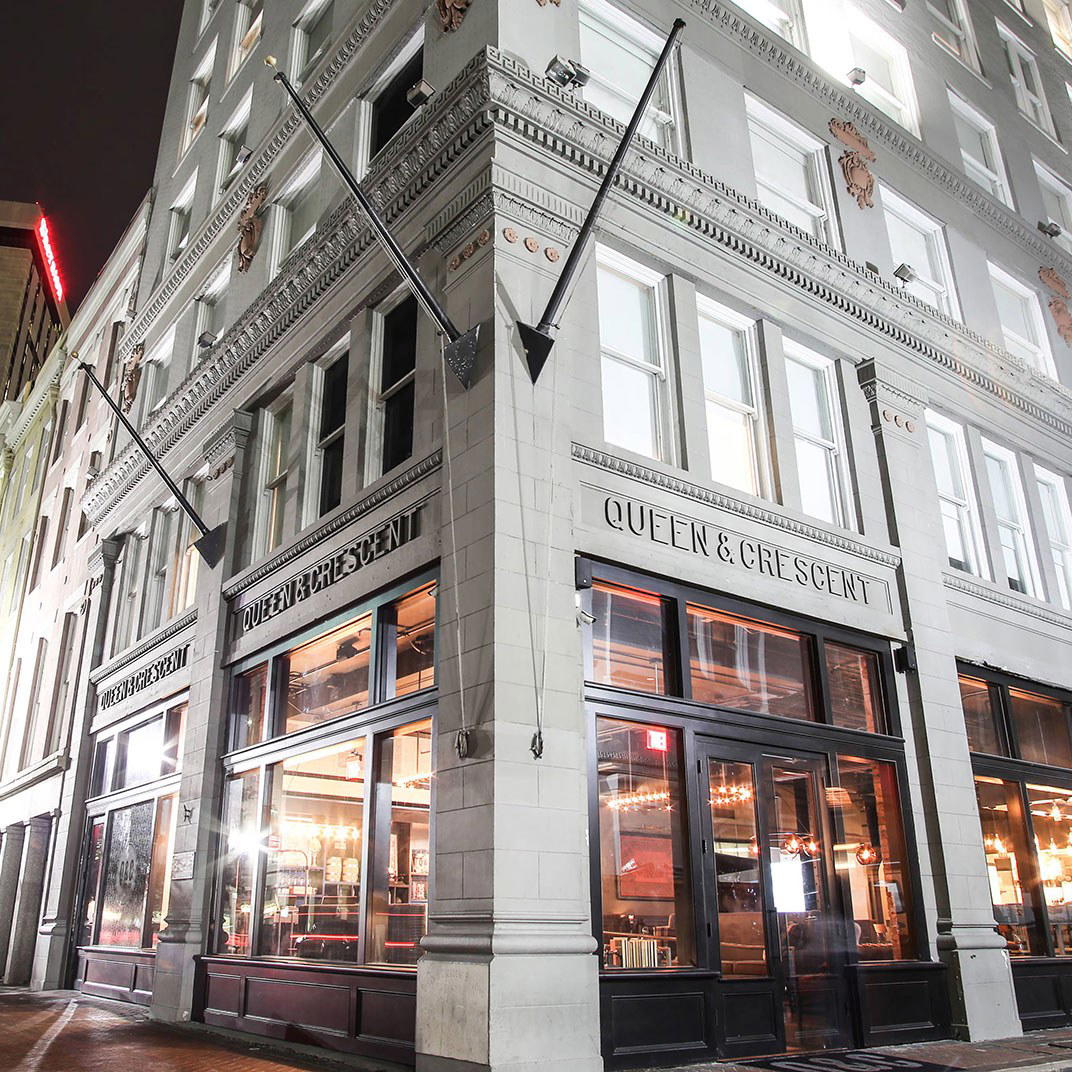
The corner of Poydras and Magazine has a particular quality in the morning: the city has not yet decided what kind of day it wants to have, and the line forming outside Mother's Restaurant is one of the few fixed points on the block. The building does not announce itself with design. There is no composed lighting scheme, no host stand with a reservation system. What there is, reliably, is a queue that tells you something useful about how New Orleans has always sorted its food culture: not by price tier or formal credential, but by how long people are willing to wait.
That dynamic, the willing queue as quality signal, separates a particular tier of New Orleans institution from both the tourist traps and the haute Creole houses. Commander's Palace holds the Garden District's formal Creole tradition. Emeril's anchored the chef-driven Cajun revival of the 1990s in the Warehouse District. Mother's operates in a different register entirely: the register of the working lunch counter that has outlasted its contemporaries by refusing to be anything other than what it is.
The Po'Boy Tradition and Where Mother's Sits Within It
New Orleans po'boy culture is a serious subject, contested by neighborhood loyalists who treat it with the same argumentative energy that Roman food writers bring to carbonara. The debris po'boy, a Mother's signature built from the roast beef scraps and drippings that collect beneath the carving station, sits at the center of that conversation as a documented example of what the city's vernacular sandwich tradition looks like when pushed to its logical conclusion: nothing wasted, everything flavorful, the byproduct becoming the point.
This approach to zero-waste cooking long predates its current fashionability in tasting-menu formats at places like Blue Hill at Stone Barns or Single Thread Farm in Healdsburg. At Mother's, it has always been practical rather than philosophical: the debris is what you get when roast beef is carved all day for a high-volume counter, and using it is common sense dressed as tradition.
That counter-style service model shapes everything about the dining experience. You move through a line, you make choices at the case, and you carry your tray. The format strips out the intermediary steps that define the team dynamic at New Orleans' higher-end rooms, where the interplay between front-of-house and kitchen is part of the theater. Here, the collaboration happens between the carver, the bread person, and the cashier, a compressed and efficient version of the same coordination that, in more formal settings, Frasca Food and Wine in Boulder or Atomix in New York City would orchestrate across multiple courses.
Context in the New Orleans Dining Spread
New Orleans restaurant culture has always had a wide span. At one end sit the grande dame institutions, Commander's Palace and Antoine's, where service ritual and culinary history carry equal weight. At the other end, the city runs on a density of po'boy shops, daiquiri stands, and lunch counters that rarely attract out-of-town editorial attention but that locals treat as infrastructure. Mother's occupies an interesting position in that spread: old enough and well-known enough to attract visitors, but operating with the format and pricing logic of the counter-service tier rather than the destination-dining tier.
That positioning becomes useful when you are constructing a visit that covers the full range. Saint-Germain covers the contemporary end at price points that reflect its tasting-menu ambitions. Bayona holds the New American middle ground in the French Quarter. Zasu and Re Santi e Leoni represent newer arrivals in the contemporary tier. Mother's represents the part of the city's food identity that none of those places touch: the mid-century lunch counter that runs on volume, institutional knowledge, and a menu that has not needed significant revision in decades.
For the reader building a multi-day itinerary, this matters. The temptation in New Orleans is to book upward, toward the tasting menus and the Michelin-adjacent rooms. The city's counter-service tradition, of which Mother's is a well-documented anchor, pushes back on that instinct. Some of what makes New Orleans legible as a food city exists entirely outside the fine-dining sequence that defines coverage at places like Le Bernardin, The French Laundry, or Providence in Los Angeles.
Planning a Visit: What to Know
Mother's is located at 401 Poydras Street, a short walk from the Central Business District hotels and within reasonable distance of the Warehouse District and lower French Quarter. The counter-service format means no reservation is required and no dress code applies, but the lines during peak hours, particularly weekend mornings and the lunch rush on weekdays, can extend outside. Arriving early, before 10am for breakfast or before 11:30am for lunch, reduces wait time considerably. The format is also unambiguous about pace: this is not a two-hour-lunch kind of room. You order, you eat, you leave, and the whole exchange is efficient in a way that high-end tasting rooms at Lazy Bear in San Francisco or Smyth in Chicago are deliberately not.
For context on how Mother's fits within the broader New Orleans restaurant picture, our full New Orleans restaurants guide maps the city's dining across price tiers, neighborhoods, and culinary traditions.
Frequently asked questions
Where do I go for Mother's Restaurant?
Mother's Restaurant is located at 401 Poydras St, New Orleans, LA 70130, New Orleans.
How does Mother's Restaurant fit into New Orleans' broader po'boy scene, and how does it compare to other city institutions?
New Orleans has a contested po'boy geography, with neighborhood loyalists debating Parkway Bakery, Domilise's, and Mahony's alongside Mother's, each representing a different part of the city and a different set of allegiances. Mother's holds particular relevance for visitors staying in the Central Business District, given its location at 401 Poydras Street, within walking distance of the major downtown hotels. Its longevity in a city that takes food heritage seriously functions as its primary credential.
What's the best thing to order at Mother's Restaurant?
Mother's is known in New Orleans po'boy circles primarily for its debris po'boy, the roast beef trimmings and drippings that accumulate at the bottom of the pan. That dish alone accounts for much of the reputation the Poydras Street address has built over decades. Ham and biscuits at breakfast hold a similar standing among regulars who arrive early.
Is Mother's Restaurant reservation-only?
Mother's operates as a counter-service, walk-in format, the kind of place where the line forms on the sidewalk along Poydras Street rather than on a reservations platform. No booking is required or typically available. Arriving off-peak, particularly mid-morning or mid-afternoon, shortens the wait considerably.
What makes Mother's Restaurant worth seeking out?
Mother's sits at an address, 401 Poydras Street, that has become a reference point in New Orleans po'boy culture, which is itself a fiercely argued subject among locals. The restaurant represents one end of the city's dining spectrum: no tablecloths, no tasting menus, no ceremony. In a city where food identity is taken seriously, that consistency carries its own authority.
Can Mother's Restaurant accommodate dietary restrictions?
Mother's menu is built around pork-forward Louisiana cooking, debris, ham, and similar preparations are central to what the kitchen does. Diners with pork or gluten restrictions will find the options limited by the nature of the menu rather than by any gap in hospitality. Contacting the restaurant directly before visiting is advisable for specific dietary needs.
Should I splurge on Mother's Restaurant?
Splurge is the wrong frame here. Mother's operates as an affordable, counter-service institution on Poydras Street, positioned at the opposite end of the New Orleans dining spectrum from Commander's Palace or Antoine's. A full meal runs well within reach of any travel budget, which is part of why the line includes downtown office workers alongside out-of-town visitors.
Fast Comparison
Comparable venues nearby, for context on price, style, and recognition.
| Venue | Cuisine | Price | Notes |
|---|---|---|---|
| Mother's RestaurantThis venue (the venue you are viewing) | Classic New Orleans Po'boys & Cajun | $20–30 | Not listed |
| Brown Butter Depot | Southern Comfort American | Not listed | Old Gretna |
| The Original Fiorellas' Cafe | Classic New Orleans Fried Chicken & Italian | $10–20 | Seabrook |
| Lost Coyote | Modern American with New Orleans influences | Not listed | Esplanade Ridge |
| Evangeline | Authentic Cajun & Creole | $30–50 | French Quarter |
| NOCHI | New Orleans-Inspired Student-Led Dining | Not listed | Arts District |