Michelin Plate · Star Wine List · Canada's 100 Best Restaurants #94
Our verdict
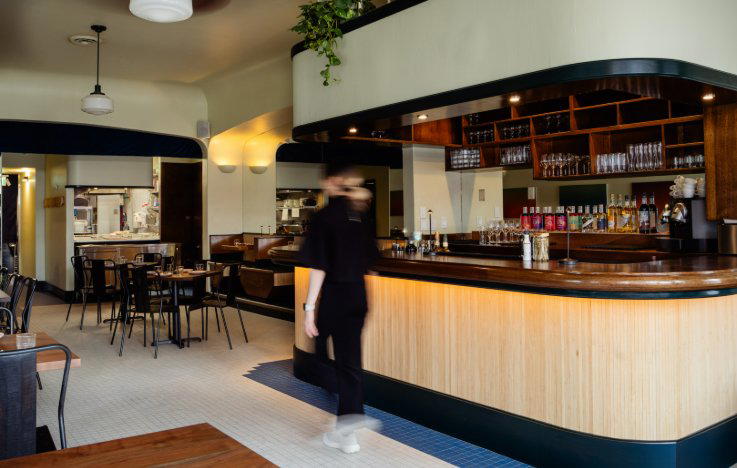
On Kitsilano's W 4th Avenue, Maenam has been reframing what Thai cuisine looks like in a Canadian context since 2009. Chef Angus An's progressive approach draws on time spent at London's Michelin-starred Nahm and extensive travel through Thailand, producing food that is intensely flavoured and grounded in local ingredients. A consistent Michelin Plate holder and Opinionated About Dining fixture, it occupies a different tier from the neighbourhood's quieter bistros.

Pearl is the En Primeur Club membership app, where members save venues, book tables and use the concierge.
The menu
What to order
- Whole Crab
- Pad Thai
- 3 Flavour BC Lingcod
- Massaman Lamb Shank Curry
Kitsilano's Longest-Running Argument Against Cautious Thai Food
Walk west along W 4th Avenue in Kitsilano on any given weekday evening and the street reads like a catalogue of Vancouver's mid-price dining ambitions: wine-led bistros, Japanese counters, neighbourhood Italian. Maenam, at number 1938, sits within that pattern but operates against it. Where much of the block leans toward restraint and subtlety, the kitchen here commits to intensity. That commitment, sustained since the restaurant opened in 2009, has made it one of the more durably relevant addresses in a city where restaurants cycle quickly through critical attention.
Kitsilano itself matters to understanding what Maenam is. The neighbourhood draws a dense mix of local professionals and food-literate regulars who eat out frequently and expect something more considered than standard takeaway Thai. That audience gave Maenam room, from its opening year, to serve food that assumed knowledge rather than catered to fear. It is not a restaurant that softens heat for the room; the spice levels are genuine, and the wine program has been built accordingly, with enough aromatic and off-dry options to work alongside dishes that would overwhelm a conventional list.
A Specific Training Arc, and Why It Matters Here
Vancouver's Thai restaurant scene, like most North American cities', spent decades sorting itself into two broad camps: budget neighbourhood spots and fusion-leaning mid-market rooms. The gap between those two categories was, for a long time, where ambitious Thai cooking in Canada was missing. When Maenam opened, it landed in that gap with a kitchen pedigree that was harder to dismiss than most. Chef Angus An had worked at Nahm in London, the first Thai restaurant to receive a Michelin star, and had travelled extensively in Thailand before returning to Vancouver. Those credentials do not appear here as biography for its own sake; they explain why the flavour profiles at Maenam read differently from what most diners in this city had encountered before 2009. The sourcing is local, but the technique and seasoning logic are drawn from a serious engagement with Thai culinary tradition rather than a North American approximation of it.
Across Canada, the restaurants earning sustained critical attention in 2024 and 2025 include places like Alo in Toronto, Tanière³ in Québec City, and Jérôme Ferrer - Europea in Montreal, all of which operate at higher price points and with tasting-menu formats. Maenam, at the $$$ tier, is doing something structurally different: it has held its position in the Opinionated About Dining North America rankings for three consecutive years (ranked 83rd in 2023, 146th in 2024, and 147th in 2025) while remaining accessible to the Kitsilano regular rather than positioning itself as a special-occasion destination. That consistency at a mid-range price point is harder to maintain than it appears.
The Menu Format and What to Order
The kitchen runs both à la carte and a family-style chef's menu. The à la carte list covers the range of Maenam's output and works for groups that want to build their own path through the meal. The family-style chef's menu is, by most accounts, the more coherent way to eat here. It allows the kitchen to set the pacing and the sequence, and it tends to communicate the flavour logic of the food more clearly than individual dishes ordered in isolation. For a first visit, committing to the chef's menu is the sharper choice.
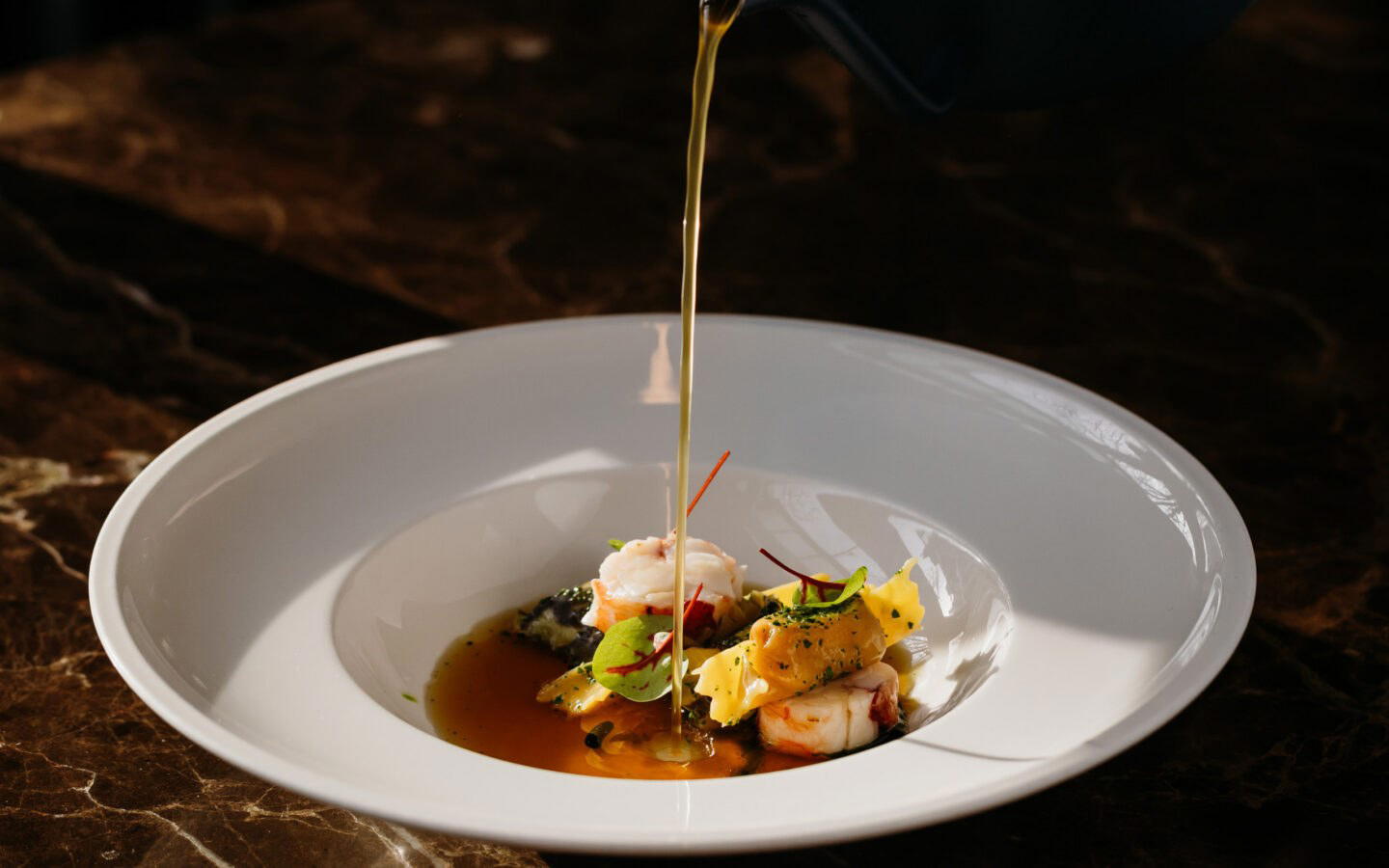
Dishes are intensely flavoured in the sense that matters: complexity is the goal, not volume for its own sake. The integration of local British Columbia ingredients into Thai frameworks is the kitchen's central editorial decision, and it works because the approach is disciplined rather than decorative. This is not fusion in the loose sense of the word; it is Thai cooking that uses what grows nearby without losing the internal logic of its source tradition.
Where Maenam Sits in Vancouver's Broader Scene
Vancouver's restaurant scene at the $$$$ tier has become increasingly dense with technically ambitious rooms. Kissa Tanto holds a Michelin star and works a Japanese-Italian fusion framework; Masayoshi operates at the precision end of Japanese omakase; AnnaLena and Barbara represent contemporary fine dining with strong local sourcing credentials. iDen & QuanJuDe Beijing Duck House anchors a different end of the Chinese dining spectrum at the same price tier. Maenam operates below that bracket in price but not necessarily in critical standing. The Michelin Plate designation, held in both 2024 and 2025, signals that the guide's inspectors consider it a kitchen worth eating at, even if it sits outside the starred tier.
That position is worth examining. A Michelin Plate means the food is good; it does not mean the restaurant has been passed over for a star. It means the inspectors found something worth flagging without finding the totality of the experience, service consistency, or format to have crossed the threshold for a full star recommendation. For diners, it functions as a reliable quality signal rather than a ceiling on ambition. Maenam has been at this level for at least two consecutive inspection cycles, which suggests a kitchen running with discipline rather than coasting.
For a wider picture of where Maenam sits relative to the city's full dining range, the EP Club Vancouver restaurants guide covers the full spread of the scene. Those planning a longer stay will also find the Vancouver hotels guide, Vancouver bars guide, Vancouver wineries guide, and Vancouver experiences guide useful for building out a fuller itinerary.
For those travelling between Canadian cities and wanting context on the country's broader dining range, comparisons with Narval in Rimouski, The Pine in Creemore, and Restaurant Pearl Morissette in Lincoln offer a sense of how seriously regional Canadian kitchens are now operating outside the major cities. Internationally, those who follow the progression from technically trained chefs working non-European culinary frameworks might also draw a line between what Maenam does in Vancouver and what Atomix does with Korean cuisine in New York, or what Le Bernardin represents as a sustained standard of French seafood cooking in the same city.
Planning a Visit
Maenam is located at 1938 W 4th Avenue in Kitsilano, a ten-minute drive from downtown Vancouver or reachable by bus along the 4th Avenue corridor. The restaurant serves lunch Wednesday through Saturday from noon to 2 pm, and dinner Sunday through Tuesday from 5 to 10 pm, with lunch and dinner service running Wednesday through Saturday. Monday and Sunday evenings follow the 5 to 10 pm dinner-only window. Booking ahead is advisable, particularly for dinner on weekends, given the neighbourhood's dining density and the restaurant's sustained recognition across multiple ranking cycles.
Frequently asked questions
What style of cooking does Maenam do?
Has Maenam won any awards?
Maenam has received recognition including: Maenam is a chef’s restaurant. Chef and owner Angus An’s deft hand blends local ingredients seamlessly into his progressive Thai cuisine, which can be reassuringly spicy, and so the wine program leans...; Opinionated About Dining Casual in ….
What's the signature dish at Maenam?
Maenam does not publish a fixed signature dish, the menu shifts with seasonal Canadian ingredients, which is central to Angus An's approach. What holds constant is the kitchen's commitment to intensity: dishes are built for flavour depth, drawing on An's training at London's Nahm and his extensive time in Thailand. Across multiple Opinionated About Dining rankings (including #83 in North America in 2023) and consecutive Michelin Plate recognitions, the family-style chef's menu is the format that earns the most consistent praise.
What price level is Maenam?
Pricing at Maenam is listed as $$$.
What days is Maenam closed?
Hours at Maenam: Hours: Monday 5–10 pm Tuesday 5–10 pm Wednesday 12–2 pm, 5–10 pm Thursday 12–2 pm, 5–10 pm Friday 12–2 pm, 5–10 pm Saturday 12–2 pm, 5–10 pm Sunday 5–10 pm.
Where do I go for Maenam?
Maenam is located at 1938 W 4th Ave, Vancouver, BC V6J 1M5, Canada, Vancouver.
Which chef is Maenam associated with?
The chef associated with Maenam is Angus An.
Cuisine Lens
A quick peer list to put this venue’s basics in context.
| Venue | Cuisine | Price | Awards | Notes |
|---|---|---|---|---|
| MaenamThis venue (the venue you are viewing) | Modern Thai | $50–100 | Michelin Plate · Star Wine List | Not listed |
| AnnaLena | Modern Canadian Tasting Menu | $100–150 | 1 Michelin Star · World's 50 Best #35 | Contemporary |
| iDen & QuanJuDe Beijing Duck House | Beijing Roast Duck Fine Dining | $100–150 | 1 Michelin Star | Chinese |
| Kissa Tanto | Japanese-Italian Fusion | $100–150 | 1 Michelin Star · La Liste Top Restaurants | Fusion |
| Masayoshi | Modern Japanese Omakase | $200–300 | 1 Michelin Star | Japanese |
| Published on Main | Contemporary Canadian | $150–200 | 1 Michelin Star · World's 50 Best #17 | Contemporary |
Recognition history
Dated appearances from independent guides and award organizations, with the underlying list record or original source where available.
Michelin Plate
Michelin
Star Wine List
Star Wine List
Opinionated About Dining Casual in North America Recommended
Opinionated About Dining
Canada's 100 Best Restaurants #94
Canada's 100 Best
Full recognition history (8 entries)
Opinionated About Dining Casual in North America Ranked #147
Opinionated About Dining
Michelin Plate
Michelin
Opinionated About Dining Casual in North America Ranked #146
Opinionated About Dining
Opinionated About Dining Gourmet Casual Dining in North America Ranked #83
Opinionated About Dining