Lor 29 Geylang sits inside Singapore's most storied late-night eating corridor, where decades of unfiltered hawker and zichar culture have made Geylang a reference point for the city's working food traditions. The address draws locals who know the neighbourhood's reputation for honest, high-volume cooking served without ceremony. For visitors willing to move past the tourist belt, it represents a different register of Singapore dining entirely.
Pearl is the En Primeur Club membership app — saves, bookings, and concierge access live there. Same editors, same standards.
- Address
- Singapore
- Directions
- Get directions
 Saves & bookings on Pearl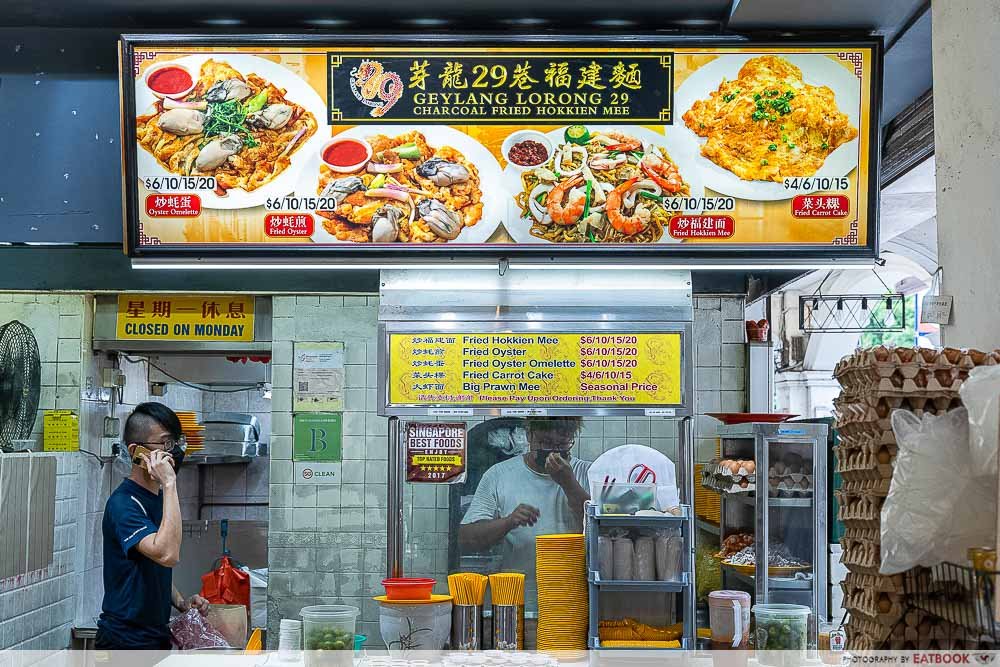
Geylang After Dark: Singapore's Most Instructive Dining Corridor
Approach Geylang on any evening from around 9pm and the temperature of the neighbourhood changes noticeably. The lorongs, the numbered side streets branching off Geylang Road, fill with the kind of foot traffic that tells you this is not a curated dining district. It is something older and more functional: a corridor where Singapore's appetite for late-night eating has been operating on its own terms for well over half a century. Lor 29 sits within this grid, in a stretch where the cooking tends to be direct, the hours generous, and the clientele largely local.
For a city whose fine-dining scene now includes addresses like Odette and Zén, and where European Contemporary tasting menus at the $$$ to $$$$ tier have earned sustained international attention, Geylang represents the other pole of Singapore's food culture, the pole that preceded Michelin inspectors, reservation systems, and any notion of a dress code. Understanding both is, the only way to read Singapore's dining character with any accuracy.
What the Lorong System Tells You About Singapore's Food Geography
Geylang's lorong numbering is one of Singapore's more legible pieces of urban food geography. Odd-numbered lorongs historically concentrated eating activity; even-numbered ones carried different functions. The result is that specific addresses within Geylang carry neighbourhood-level reputations that residents track with the same precision that food-aware visitors in other cities apply to named chef restaurants. Lor 29, in this context, is not simply a street, it is a location whose culinary associations have accumulated over decades of use.
This kind of place-based reputation operates differently from the credential systems that govern Singapore's more formal restaurants. Where Les Amis or Jaan by Kirk Westaway build authority through starred recognition and chef lineage, the eating houses and zichar stalls of Geylang build theirs through repetition, the same regulars returning across years, the same dishes ordered without consulting a menu. It is a form of culinary trust that predates and runs parallel to every formal evaluation system the city has adopted.
The broader Singapore hawker tradition that Geylang exemplifies was inscribed on UNESCO's Representative List of Intangible Cultural Heritage in 2020, a designation that formalised what locals had long understood: that the city's street-level cooking culture carries genuine historical weight, not merely nostalgic value. Geylang is one of the few districts where that culture remains largely unmodernised and uncommercialised.
The Zichar Tradition and What It Demands of the Kitchen
Much of Geylang's late-night reputation rests on zichar, the Cantonese-derived style of wok cooking that produces dishes like cereal prawns, salted egg yolk crab, and claypot tofu in rapid, high-heat succession. Zichar is a social format as much as a cooking style: dishes arrive at the table in no particular order, portions are sized for sharing, and the pace of a meal is determined by hunger rather than a composed progression. It is the structural opposite of the tasting-menu format practised at addresses like Meta or Béni in Orchard.
The wok hei, the breath of the wok, that slightly charred, high-temperature flavour quality, that defines good zichar cooking is a technical skill as demanding in its own register as the sauce work at any European kitchen. It requires sustained high heat, fast timing, and an understanding of how proteins and aromatics behave at extreme temperatures. Geylang's better zichar kitchens are serious operations, even when the tables are plastic and the lighting is fluorescent.
Singapore's hawker and zichar traditions have also influenced the broader regional food culture that now extends across the island. Comparisons to Asian Twist by 365 Food in Queenstown or the simpler hawker formats at addresses like KTMW chicken rice tea-cafe in Bedok illustrate how this tradition distributes across Singapore's different residential and commercial zones, each with its own local character, Geylang's being among the more concentrated and least filtered.
Durian, Frog Porridge, and the Seasonal Logic of Geylang
Geylang is also one of Singapore's primary durian corridors. During peak durian season, broadly June through August, when Musang King and D24 varieties arrive from Malaysian plantations, the lorongs acquire a distinct additional character, with vendors setting up street-side stalls and the air carrying the variety's polarising scent for blocks in either direction. This is not a tourist concession; it is how the neighbourhood has functioned seasonally for decades.
Frog porridge is another Geylang speciality that has no obvious equivalent elsewhere in Singapore's dining ecosystem. The dish, frog legs prepared in ginger and spring onion, served alongside or cooked into rice congee, appears at specific Geylang addresses that have been operating the format long enough to develop genuine technique. It sits in a different culinary register from the more photogenic dishes that circulate in food media, which is partly why it remains concentrated in this neighbourhood rather than migrating to food courts or casual dining chains.
Reading Geylang Against Singapore's Wider Restaurant Scene
Singapore's dining scene in 2024 spans a price and format range that few cities of comparable size can match. At the leading end, European Contemporary restaurants operate multi-course menus with wine pairings that price against international peers. The gap between that tier and Geylang's late-night eating houses is not a deficiency in either direction, it reflects a city that has managed to preserve genuinely different registers of food culture within the same urban boundaries.
For visitors whose Singapore itinerary skews toward the formal end, Geylang functions as necessary counterweight. The same food intelligence that leads someone to Cicheti in Rochor for Italian-influenced small plates, or to Etna Restaurant in Outram for a different kind of neighbourhood eating, should lead them to Geylang for what the city's working food culture actually looks like when it is not dressed for outside attention.
Planning Your Visit to Geylang
Price and Recognition
Comparable venues nearby, for context on price, style, and recognition.
| Venue | Cuisine | Price | Awards | Notes |
|---|---|---|---|---|
| Lor 29 GeylangThis venue — the venue you are viewing | ALJUNIED, Singaporean Fried Hokkien Mee | $ | Not listed | Not listed |
| Soon Wah Fishball Kway Teow Mee | Newton Circus, Teochew Fishball Noodles | $ | Not listed | Not listed |
| 545 Whampoa Prawn Noodle | Not listed | $ | Not listed | BALESTIER, Traditional Singapore Prawn Noodles |
| Tim Ho Wan 添好運 | KALLANG BAHRU, Hong Kong-style Dim Sum | $$ | Not listed | Not listed |
| Hock Lye Noodles House & Fishii Tales | Not listed | $ | Michelin Plate | GHIM MOH, Singaporean Prawn Noodles & Fishball Noodles |
| Beach Road Scissor-Cut Curry Rice | Not listed | $ | Not listed | Jalan Besar, Hainanese Scissor-Cut Curry Rice |
Continue exploring
More in Singapore
Restaurants in Singapore
Browse all →
Bars in Singapore
Browse all →
At a Glance
- Lively
- Casual Hangout
- Group Dining
- Open Kitchen
Casual hawker stall in a coffeeshop with lively atmosphere during peak hours and long queues.