Beach Road Scissor-Cut Curry Rice serves Hainanese scissor-cut curry rice at 229/231 Jalan Besar (At Kitchener Road), with pork chop and chicken chop versions for lunch, dinner, or late night.
Pearl is the En Primeur Club membership app — saves, bookings, and concierge access live there. Same editors, same standards.
- Address
- 229/231 Jalan Besar (At Kitchener Road), 208905
- Directions
- Get directions
 Saves & bookings on Pearl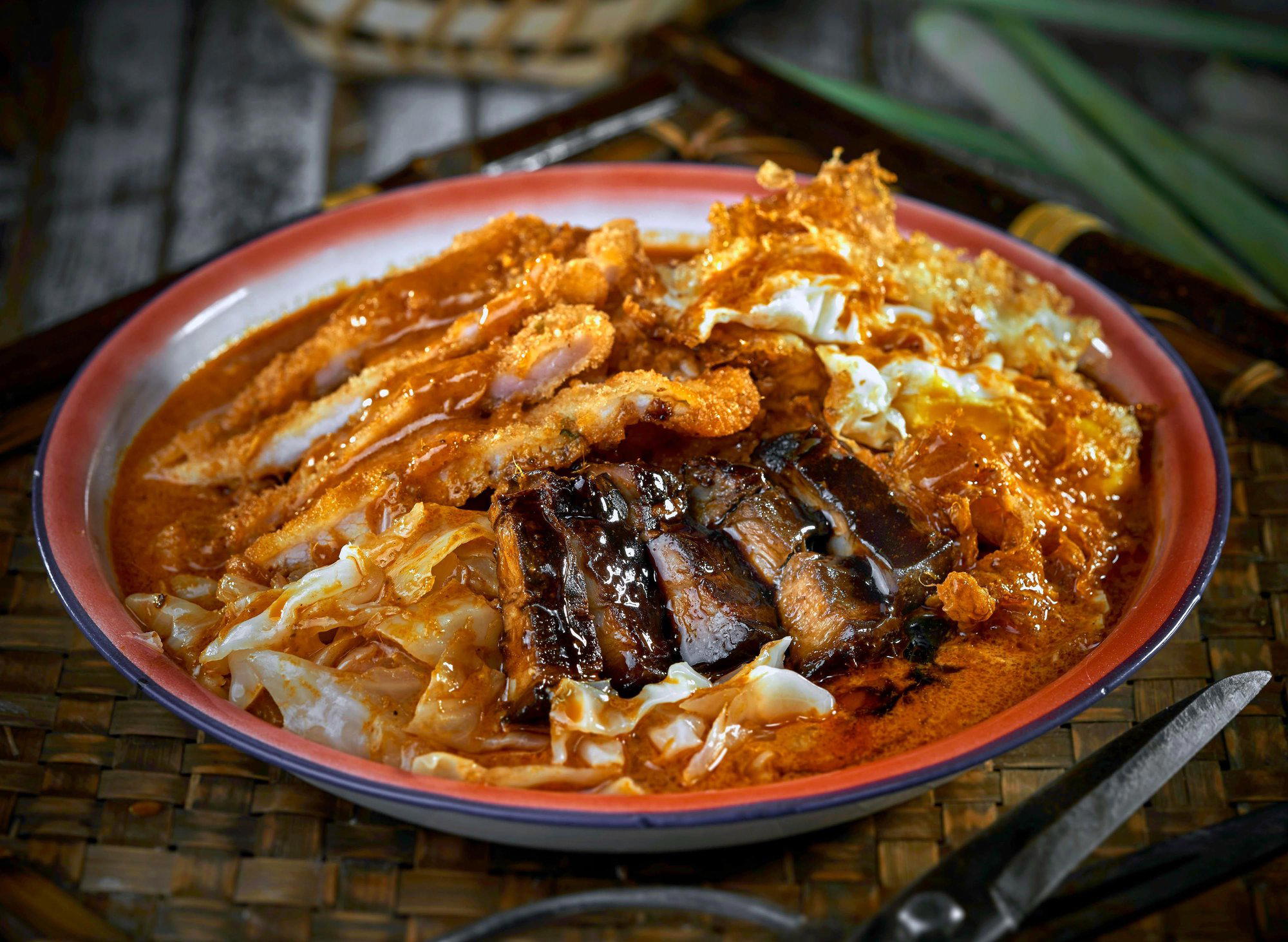
Jalan Besar's Hawker Standard-Bearer
Beach Road Scissor-Cut Curry Rice is a Singapore restaurant serving Hainanese Scissor-Cut Curry Rice at 229/231 Jalan Besar (At Kitchener Road), 208905. Stalls that have served a single dish for decades accumulate a kind of institutional authority that no amount of fine-dining ambition can replicate. The Jalan Besar corridor, running through a neighbourhood of pre-war shophouses, wet markets, and coffee shops that predate most of Singapore's modern planning, houses several of these fixtures. Beach Road Scissor-Cut Curry Rice at the Kitchener Road corner is among the more discussed: a double-unit stall occupying 229 and 231 Jalan Besar, where queues form before the shutters are fully up and the rhythm of service is set not by reservation software but by the pace of the scissors.
Scissor-cut curry rice is a format, not just a dish. The technique involves chopping assembled plates with kitchen scissors rather than plating components separately, allowing braising sauces, curry gravy, and pork fat to intermingle across the cut surfaces. It is a distinctly Singaporean-Hokkien tradition, and this stall is one of a small number still maintaining it in anything approaching its original street-food register. The format places it in a different competitive conversation from the Michelin-starred tasting menus at Odette or Les Amis, but it belongs in any serious account of what Singapore eats.
The Mechanics of Service
At a hawker stall operating at volume, the team dynamic takes a form quite different from the choreographed floor coordination at Zén or the brigade discipline of Jaan by Kirk Westaway. Here, the team dynamic is entirely visible from the queue. Multiple hands work simultaneously: one managing the braised meats, one ladling gravy, one operating the scissors. The efficiency is the craft. Each component, whether braised pork belly, stewed egg, cabbage in curry sauce, or deep-fried pork chop, is prepared by someone who knows their station and does not deviate from it. That division of labour, maintained across years of daily service, is what produces the consistency that keeps the queue there.
In Singapore's hawker ecosystem, this kind of operational discipline is not incidental. It is the mechanism by which stalls transmit recipes across generations without written documentation. The knowledge lives in the hands, in the ratio of curry powder to coconut milk that a particular family has been using for decades, in the temperature at which the pork belly is considered ready. Visitors who have experienced the more theatrical team dynamics at places like Meta will find something instructive in the contrast.
What Gets Ordered and Why
Scissor-cut curry rice is assembled to order from a selection of cooked components displayed behind glass or on heated trays. The canonical combination involves steamed rice, braised pork belly, a ladle of blended curry and braising sauce, and at least one additional component from whatever is available that day. The scissors do their work across the whole plate, and the result is a dish that reads as unified rather than composed. The braising liquid and curry migrate through the rice; nothing stays separate for long.
The pork chop, battered and fried, is among the more requested components at this particular stall, as is the braised egg, which absorbs the soy-dark braising liquid over hours rather than minutes. Vegetable components, typically cabbage cooked down in curry sauce, provide textural contrast. Because the format is assembly-driven rather than cooked-to-order, the practical rhythm is fast: plates move quickly, and the stall handles significant volume during peak hours without the wait becoming prohibitive.
For context on Singapore's broader hawker geography, the city's dining spread runs from hawker centres through to Michelin-recognised kitchens. Elsewhere in the Jalan Besar area, Fu He Delights in Rochor represents another dimension of the neighbourhood's food identity, while 大巴窑93茶粿 in Kallang shows the diversity of Singaporean-Chinese hawker formats available within short distance.
Neighbourhood Context
Jalan Besar sits between Little India and the Bugis-Rochor corridor, a location that shaped its food culture over decades. The area's immigrant history, predominantly Hokkien and Teochew Chinese communities in the early twentieth century, produced the braised-meat and curry-rice traditions that this stall represents. Surrounding streets include coffee shops, independent bakers, and a wet market that continues to function as a working neighbourhood market rather than a tourist attraction. The shophouse architecture along the road is largely intact, giving the area a material continuity that many of Singapore's more developed precincts have lost.
For those building a day around the neighbourhood, the surrounding streets reward unhurried movement: there is no single-purpose food court structure here, just a cluster of independent operators who have been trading in the same blocks for a long time.
Singapore's hawker landscape extends well beyond this corridor. Those curious about the city's Chinese restaurant register can look at Imperial Treasure Fine Chinese Cuisine in the Downtown Core for a formal-dining comparison, while KTMW chicken rice tea-cafe in Bedok and Asian Twist by 365 Food in Queenstown illustrate how specialised hawker formats distribute across the island's residential precincts. The city's fine-dining end runs through places like Béni in Orchard and Etna Restaurant in Outram, a reminder that Singapore's food culture operates simultaneously at several registers without any one of them cancelling out the others.
Planning Your Visit
The stall operates from street-level premises at the Kitchener Road end of Jalan Besar, at addresses 229 and 231. Arriving before or after the main lunch peak, which runs roughly from noon through early afternoon on weekdays, gives slightly better queue conditions, though the stall's reputation means some wait is typical. Dress code is casual. Payment is typically by cash.
Price and Positioning
Comparable venues nearby, for context on price, style, and recognition.
| Venue | Cuisine | Price | Awards | Notes |
|---|---|---|---|---|
| Beach Road Scissor-Cut Curry RiceThis venue — the venue you are viewing | Not listed | $ | Not listed | Not listed |
| Kampong Chicken Eating House | Not listed | $ | Not listed | TIONG BAHRU, Traditional Hainanese Kampong Chicken Rice |
| Zhen Zhen Porridge 中国街真真粥品 | Chinatown, Cantonese Porridge | $ | Not listed | Not listed |
| Kim Heng (HK) Roasted Delights | Serangoon, Hong Kong Roasted Meats | $ | Not listed | Not listed |
| Kim Heng Roasted Meat | Serangoon, Hong Kong Roasted Meats | $$ | Not listed | Not listed |
| People's Park Hainanese Chicken Rice | PEARL'S HILL, Hainanese Chicken Rice | $ | Michelin Plate | Not listed |
Continue exploring
More in Singapore
Restaurants in Singapore
Browse all →
Bars in Singapore
Browse all →
At a Glance
- Casual
- Casual Hangout
- Late Night