Loop
Loop occupies a quietly residential stretch of Francis Road in Leyton, E10, sitting at a distance from central London's fine-dining circuit that has become part of its appeal. The venue operates within a neighbourhood restaurant tradition that prizes locality and editorial independence over institutional recognition. Visitors arrive for cooking that reflects the cultural character of East London rather than a stage-managed West End experience.
Pearl is the En Primeur Club membership app — saves, bookings, and concierge access live there. Same editors, same standards.
- Address
- 216b Francis Rd, London E10 6PR, United Kingdom
- Website
- loop-dining.co.uk
- Directions
- Get directions
 Saves & bookings on Pearl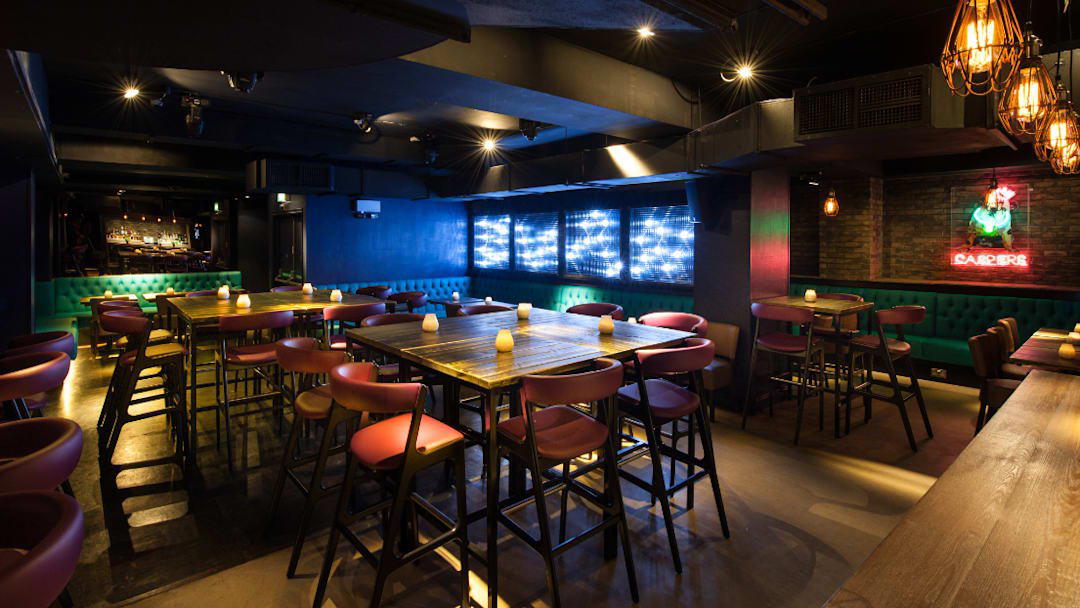
Francis Road and the East London Restaurant Shift
Loop is an independent restaurant in Leyton, London, serving American Bar cooking at a casual price point. The venues that anchor that conversation, from CORE by Clare Smyth and Restaurant Gordon Ramsay to The Ledbury and Sketch, The Lecture Room and Library, operate under a broadly shared set of assumptions about what a destination restaurant looks like: formal room, extensive wine list, prix-fixe architecture, and a postcode that signals intent before a guest even sits down.
That model has been quietly challenged by a different kind of London venue, one that opens in a residential street, draws a neighbourhood crowd first and a destination crowd second, and treats the surrounding community as a defining condition rather than an inconvenience. Francis Road in Leyton is precisely that kind of address. The E10 stretch, anchored by a concentration of independent cafes and small operators, has built a local reputation that travels further than its postcode suggests. Loop sits within that context, on a road where the dining logic runs closer to a cultivated local favourite than to a formal destination.
The Cultural Weight of East London's Eating Scene
The restaurants that have shaped East London's reputation over the past fifteen years share a recognisable set of conditions. They tend to arrive in areas where rents permit experimentation, where the clientele is mixed enough to resist a single demographic capture, and where the relationship between kitchen and neighbourhood feels genuinely reciprocal. Hackney, Dalston, Bethnal Green, and Clapton each went through versions of this cycle, and the pattern is now visible in Leyton and Walthamstow. Our full London restaurants guide tracks how that east-to-northeast axis continues to generate the city's most interesting independent openings.
What distinguishes East London's better neighbourhood restaurants from comparable venues in, say, Edinburgh's Stockbridge or Manchester's Ancoats is the density of cultural reference they draw on. London's east carries a particularly layered food memory, shaped by successive waves of migration and the culinary traditions they deposited: Bangladeshi, Somali, Turkish, Vietnamese, West African, and more recently a generation of operators who have grown up eating across all of those traditions and are cooking in ways that reflect that synthesis. Particularly interesting neighbourhood venues in E10 and the postcodes around it sit inside that tension rather than resolving it tidily.
For comparison, the formal destination model plays out differently. Dinner by Heston Blumenthal in Knightsbridge, or the country house tier represented by Waterside Inn in Bray, Le Manoir aux Quat'Saisons in Oxford, and L'Enclume in Cartmel, operate on premises of codified luxury and controlled context. Loop's address puts it in a separate conversation entirely, one where the neighbourhood is the context and the cooking is judged against daily life rather than against a tasting menu orthodoxy.
What Loop Represents in the Francis Road Setting
216b Francis Road is a specific kind of London address: residential, low-rise, with the character of a street that evolved its retail and hospitality offer organically rather than through development pressure. The concentration of independent operators on Francis Road has attracted attention from food writers and neighbourhood enthusiasts in roughly equal measure, which places it in a peer group with other London roads, Exmouth Market, Lordship Lane, Columbia Road, that built reputations through density of independent quality rather than a single flagship anchor.
Within that setting, Loop occupies the kind of position that neighbourhood restaurants have always aspired to: known well enough to travel to, embedded deeply enough to retain a local core. That dual identity is harder to sustain than it appears. Venues that attract too much destination traffic often lose the regulars who gave them their character; venues that stay purely local rarely develop the editorial profile that sustains them through difficult trading periods. The balance Francis Road supports is, by London standards, relatively unusual.
The broader regional context is useful here. Across the UK's serious independent restaurant circuit, from Moor Hall in Aughton and Gidleigh Park in Chagford to Midsummer House in Cambridge and Opheem in Birmingham, particularly durable venues tend to carry a clearly legible sense of place. Loop's east London address and the community around Francis Road provide exactly that kind of grounding. Internationally, the neighbourhood-restaurant model has produced particularly awarded venues in their respective cities, with Atomix in New York City demonstrating how a non-central address combined with a specific cultural point of view can build global recognition over time.
Placing Loop in the Wider Conversation
The UK's independent restaurant circuit includes venues at multiple scales and price points. At the formal end, Restaurant Andrew Fairlie in Auchterarder, Hand and Flowers in Marlow, and hide and fox in Saltwood each occupy a position defined by awards recognition and a clear fine-dining proposition. Le Bernardin in New York City represents the global tier of that model. Loop operates at a different register, where the measure of success is not institutional recognition but the quality of relationship between a kitchen and its immediate community.
That is not a lesser ambition. Some of London's most consistently interesting eating over the past decade has come from venues that prioritised neighbourhood coherence over destination credentials. The Francis Road address signals a deliberate choice about which conversation Loop is joining.
Loop is located at 216b Francis Road, London E10 6PR, on a pedestrian-friendly residential street in Leyton that is most conveniently reached via Leyton Underground station on the Central line, approximately a ten-minute walk. Francis Road's independent character means the area rewards arriving early enough to explore the street before or after eating. As a neighbourhood-scale venue on a street with a strong independent identity, Loop fits most naturally into a visit structured around the local area rather than a central London dining itinerary.
Standing Among Peers
Comparable venues nearby, for context on price, style, and recognition.
| Venue | Cuisine | Price | Notes |
|---|---|---|---|
| LoopThis venue — the venue you are viewing | American Bar | $$ | Not listed |
| Black Bear Burger | Modern American Burgers | $$ | Clerkenwell |
| Little Pitt | American BBQ | $$ | Soho |
| Chick 'n' Sours | Asian-Inspired Fried Chicken | $$ | St Giles |
| Heard | Modern Smash Burgers | $$ | Borough |
| Gourmet Burger Club - Covent Garden | Premium Gourmet Burgers | $$ | Covent Garden |
Continue exploring
More in London
Restaurants in London
Browse all →
Bars in London
Browse all →
Hotels in London
Browse all →



At a Glance
- Lively
- Energetic
- Casual Hangout
- After Work
- Open Kitchen
Current opening hours
- Monday
- Closed
- Tuesday
- Closed
- Wednesday
- Closed
- Thursday
- 6:30–10:30 PM
- Friday
- 6:30–10:30 PM
- Saturday
- 6:30–10:30 PM
- Sunday
- Closed
Hours can change for holidays and private events. Last verified .
Dynamic and party-like atmosphere ideal for relaxing by day or evening socializing.