Little Beast Restaurant
Our verdict
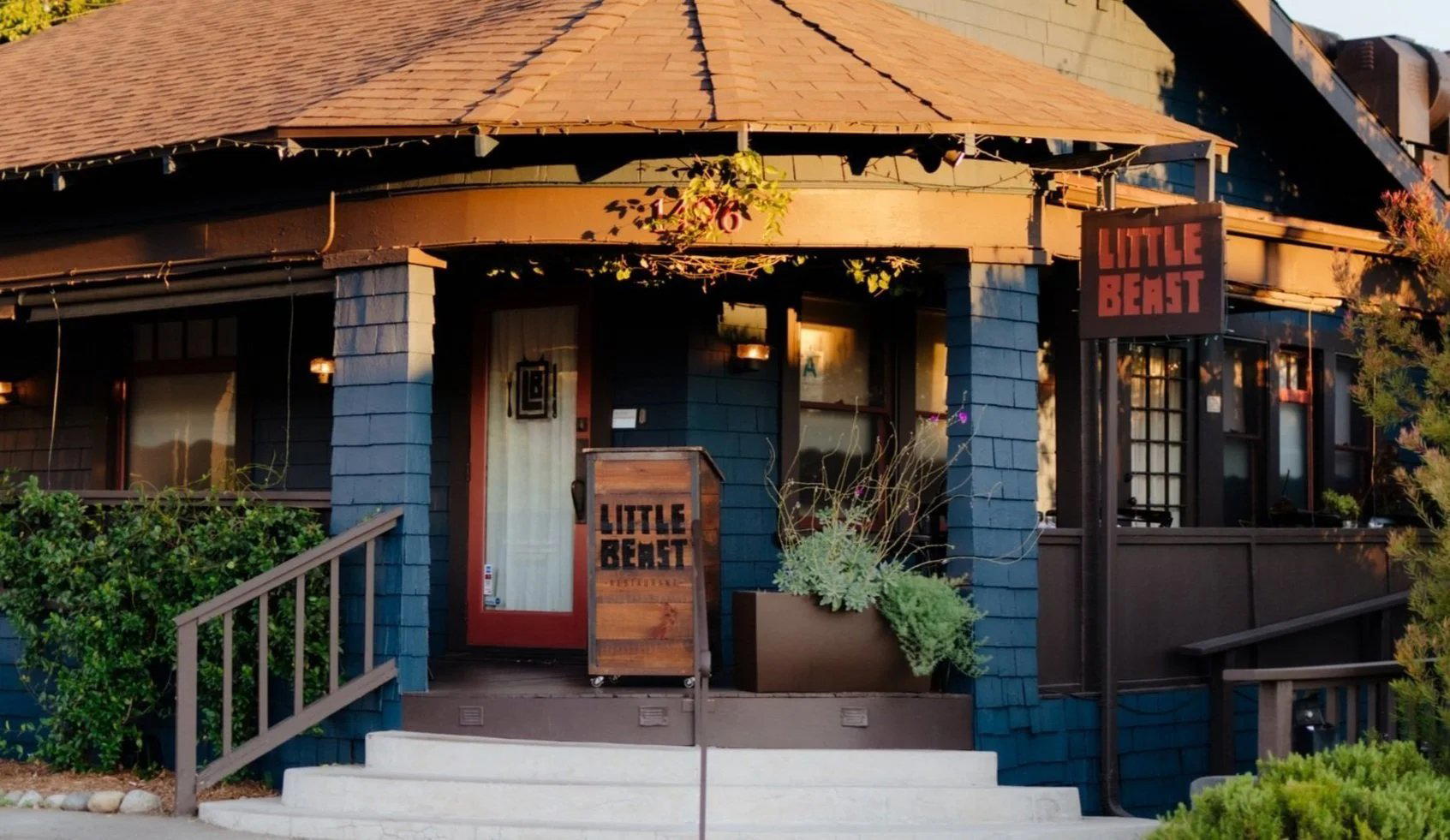
Little Beast Restaurant occupies a corner of Eagle Rock's Colorado Boulevard where the neighborhood's independent dining character is most concentrated. The kitchen works at the intersection of California's agricultural breadth and broadly trained technique, placing it in a different conversation from the tasting-menu tier that dominates Los Angeles fine dining coverage. For readers mapping the city's mid-register but serious restaurant scene, it belongs on the list.

Pearl is the En Primeur Club membership app — saves, bookings, and concierge access live there. Same editors, same standards.
- Address
- 1496 Colorado Blvd, Los Angeles, CA 90041
- Phone
- (323) 341-5899
- Hours
- Mon 5–9 PMTue ClosedWed–Thu 5–9 PMFri–Sat 5–10 PMSun 5–9 PM
- Website
- littlebeastrestaurant.com
- Directions
- Get directions
- Booking
- Book on Resy
The menu
What to order
- Salmon Belly Mousse
- Brussels Sprouts
- Butternut Squash Soup
- Little Beast Burger
- Belgian Chocolate Pudding
- Linguine Alla Nerano
- Chicken Fried Lamb Chops
Eagle Rock's Dining Identity, and Where Little Beast Fits
Eagle Rock sits northeast of downtown Los Angeles in a corridor that has developed a genuine independent dining culture, distinct from the Michelin-chased density of West Hollywood or the omakase concentration of Little Tokyo. Colorado Boulevard, the neighborhood's commercial spine, runs through blocks where the restaurants are owner-operated, the price points are deliberate rather than discount, and the kitchens tend to reflect specific culinary commitments rather than trend aggregation. Little Beast Restaurant, at 1496 Colorado Blvd, is part of that fabric.
Los Angeles dining in this register — serious but not ceremonial, ingredient-led but not austere — has grown into a recognizable category. It sits between the $$$$ tasting-menu tier occupied by venues like Kato, Hayato, and Somni on one end, and the casual neighborhood standbys on the other. It is the tier that most reflects how Angelenos actually eat when they are being thoughtful but not performative about it.
Local Ingredients, Global Technique: The California Conversation
The editorial angle that most accurately frames Little Beast is one that applies broadly to a generation of California kitchens: the application of technique absorbed from classical or international training to ingredients that are specifically and often exclusively local. This is not a new idea in California dining, The French Laundry in Napa has built its reputation on exactly that synthesis at the luxury tier, and Single Thread Farm in Healdsburg extends it into the Japanese kaiseki register. What changes at the neighborhood level is the absence of ceremony. The technique is present in the execution, not announced in the format.
Southern California gives kitchens working in this mode unusual material to work with. The growing seasons are long, the produce suppliers concentrated in places like the Santa Monica and Hollywood Farmers Markets, and the proximity to both Mexican culinary tradition and Pacific Rim ingredients creates a sourcing palette that is genuinely broader than most American cities can access. A kitchen on Colorado Boulevard in Eagle Rock draws from the same regional supply chain that feeds the city's most decorated restaurants, and that parity of ingredient access is part of what makes the mid-tier in Los Angeles more interesting than in many comparable cities.
For context on how this same local-ingredient, trained-technique framework plays out at different price points and formality levels nationally, it is worth looking at Blue Hill at Stone Barns in Tarrytown, Smyth in Chicago, or Lazy Bear in San Francisco, each of which anchors a similar philosophy at a higher formality level. The neighborhood restaurant version of that commitment is harder to sustain commercially, which is part of why venues that do it well develop loyal regulars quickly.
The Eagle Rock Atmosphere
Eagle Rock's dining rooms tend to be smaller and less designed than their counterparts in Silver Lake or Los Feliz, which creates an atmosphere that is more functional and less self-conscious. Colorado Boulevard storefronts are generally modest in footprint, and restaurants that occupy them tend to develop character through operation rather than interior investment. The result is spaces that feel inhabited rather than staged, a distinction that matters to a certain kind of diner and that separates neighborhood restaurants from destination ones.
The proximity to Occidental College and the broader northeast Los Angeles residential population means the dining room demographic skews toward regulars who live within driving distance rather than visitors making a special trip. That local-anchor dynamic shapes service expectations and pace in ways that are generally positive: the kitchen does not need to manage a first-timer's unfamiliarity with the menu at every table, and the room tends to run at a pace set by the kitchen rather than by reservation pressure.
How Little Beast Fits the Los Angeles Fine-Dining Map
Los Angeles has developed one of the more stratified restaurant systems in the United States. At the leading, venues like Providence, which holds two Michelin stars for its contemporary seafood, and Osteria Mozza, which anchored Los Angeles Italian dining for well over a decade, define the upper tier of the non-omakase category. The omakase tier has its own hierarchy, with venues like Sushi Kaneyoshi and Hayato operating at the $$$$ level.
Little Beast occupies a different position: a neighborhood restaurant with enough culinary seriousness to interest readers who track the city's dining scene, but without the booking difficulty or price ceiling that defines the tasting-menu tier. For visitors to Los Angeles who want to eat well in the northeast corridor without routing through the Westside, it is a relevant data point. For a fuller map of where it sits relative to the city's broader options, our full Los Angeles restaurants guide provides the comparative context.
Readers who track the farm-to-table commitment at venues like Addison in San Diego or the ingredient-driven precision of Frasca Food and Wine in Boulder will recognize the broader American regional dining movement that Little Beast participates in, even if at a different scale and formality. The same local-product ethos surfaces in very different forms at places like Emeril's in New Orleans and, at the highest technical register internationally, at Atelier Moessmer Norbert Niederkofler in Brunico, where the regional-ingredient constraint is near-absolute. The California version is looser in its rules but no less specific in its sourcing orientation.
For readers comparing Los Angeles specifically to other American dining cities, Le Bernardin in New York City, The Inn at Little Washington, and Atomix in New York City represent the upper end of their respective city hierarchies, and the distance between those venues and a neighborhood restaurant like Little Beast is precisely what makes the mid-tier category worth tracking. The tasting-menu tier gets most of the critical coverage; the restaurants that sustain serious cooking at accessible price points in residential neighborhoods are harder to document but arguably more representative of a city's dining culture.
Know Before You Go
Address: 1496 Colorado Blvd, Los Angeles, CA 90041
Neighborhood: Eagle Rock, Northeast Los Angeles
Getting There: Eagle Rock is accessible by car from the 134 and 2 freeways; street parking on Colorado Blvd and side streets. Metro Gold Line (now A Line) Filmore Station is within walking distance.
Booking:
Hours:
Price:
Frequently asked questions
Is Little Beast Restaurant a family-friendly restaurant?
Eagle Rock's dining rooms generally run smaller and less formal than those in Silver Lake or Los Feliz, which tends to create a relaxed environment suited to a range of ages. Little Beast at 1496 Colorado Blvd sits within a neighbourhood that prizes independent, community-rooted hospitality over high-concept formality. For specific seating arrangements or menu options for younger guests, contacting the restaurant directly before visiting is advisable.
How would you describe the vibe at Little Beast Restaurant?
Eagle Rock restaurants on Colorado Blvd tend to feel lived-in rather than designed, and Little Beast fits that pattern: neighbourhood-driven, without the self-conscious cool of trendier Los Angeles corridors further west. The dining culture in this part of Northeast LA rewards regulars and rewards curiosity over spectacle. It reads more like a confident local institution than a destination engineered for social media.
Is Little Beast Restaurant worth visiting if you're coming from outside Eagle Rock or Northeast Los Angeles?
Little Beast occupies a position on Los Angeles's dining map that sits outside the Michelin-tracked corridors of West Hollywood or downtown, which is precisely what makes it a considered choice rather than a default one. Eagle Rock has developed a genuine independent dining identity distinct from more heavily publicised Los Angeles neighbourhoods, and 1496 Colorado Blvd is one of the addresses that anchors that reputation. Visitors willing to cross the 110 or the 5 will find a California kitchen operating within a local food culture that larger-venue Los Angeles dining rarely replicates.
What dish is Little Beast Restaurant famous for?
The broader kitchen approach in Eagle Rock's independent scene applies California technique to locally sourced ingredients, which typically means a menu that shifts with availability rather than anchoring to a single fixed calling card. Checking the restaurant's current menu directly will give the most accurate picture of what is on offer.
What's Little Beast Restaurant's location?
Little Beast Restaurant is located at 1496 Colorado Blvd, Los Angeles, CA 90041, Los Angeles.
Cuisine and Awards Snapshot
| Venue | Cuisine | Price | Awards | Notes |
|---|---|---|---|---|
| Little Beast RestaurantThis venue — the venue you are viewing | Progressive American Comfort Cuisine | $50–100 | Not listed | Not listed |
| Kato | Modern Taiwanese Fine Dining | $300–500 | 2 Michelin Stars · World's 50 Best #49 | New Taiwanese, Asian |
| Hayato | Traditional Japanese Kaiseki | $300–500 | 2 Michelin Stars · La Liste Top Restaurants | Japanese |
| Vespertine | Avant-Garde Tasting Menu | $200–300 | 2 Michelin Stars · La Liste Top Restaurants | Progressive, Contemporary |
| Holbox | Modern Mexican Seafood | $30–50 | 1 Michelin Star · World's 50 Best #26 | Mexican Seafood, Mexican |
| Sushi Kaneyoshi | Edomae Omakase | $300–500 | 1 Michelin Star · LA Times 101 Best Restaurants #24 | Sushi, Japanese |
Continue exploring
More in Los Angeles
Restaurants in Los Angeles
Browse all →
Bars in Los Angeles
Browse all →

Hotels in Los Angeles
Browse all →
Wineries in Los Angeles
Browse all →
Details
- Romantic
- Cozy
- Intimate
- Elegant
- Date Night
- Casual Hangout
- Group Dining
- Special Occasion
- Live Music
- Private Dining
- Historic Building
- Standalone
- Craft Cocktails
- Beer Program
- Farm To Table
- Local Sourcing
- Sustainable
- Small Plates
- A La Carte
- Prix Fixe
- Craft Cocktails
- Wine
- Beer
- Vegetarian Friendly
- Allergy Accommodating
Current opening hours
- Monday
- 5–9 PM
- Tuesday
- Closed
- Wednesday
- 5–9 PM
- Thursday
- 5–9 PM
- Friday
- 5–10 PM
- Saturday
- 5–10 PM
- Sunday
- 5–9 PM
Hours can change for holidays and private events. Last verified .
Warm and inviting with the charm of a historic craftsman home; quiet yet sophisticated atmosphere that encourages lingering and conversation.