Limoncello Belltown
Limoncello Belltown occupies a stretch of 1st Avenue where Seattle's dining scene runs thickest, bringing Italian-leaning cooking into a neighbourhood that has consistently rewarded restaurants willing to commit to a clear identity. The address places it among Belltown's established dining corridor, where local produce traditions and imported techniques have long found common ground.
Pearl is the En Primeur Club membership app — saves, bookings, and concierge access live there. Same editors, same standards.
- Address
- 2326 1st Ave, Seattle, WA 98121
- Phone
- +12064920522
- Website
- limoncellobelltown.com
- Directions
- Get directions
 Saves & bookings on Pearl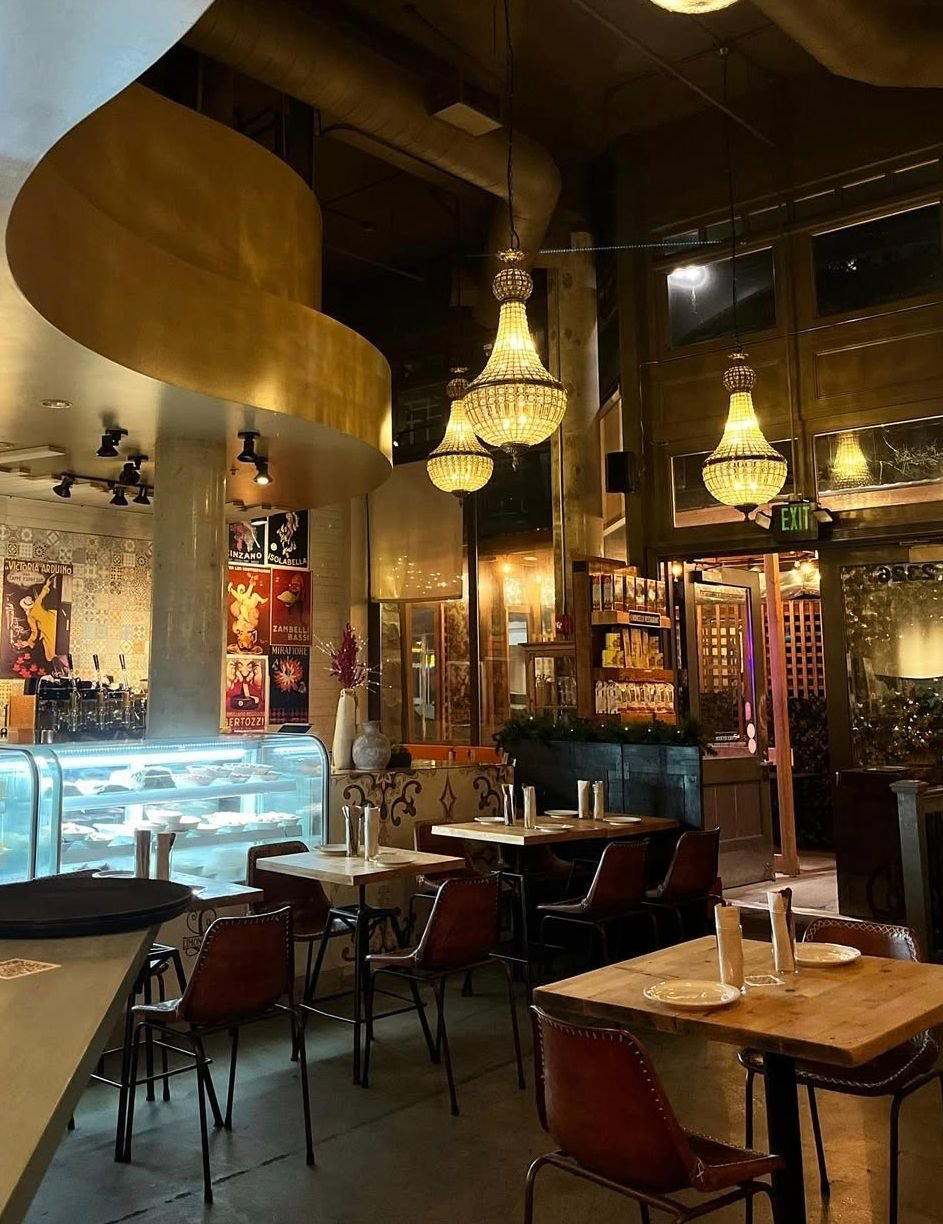
First Avenue at the Edge of Belltown
The 2300 block of 1st Avenue sits at the point where Belltown transitions from late-night energy to something more considered. The buildings here are lower than the blocks immediately south, and the pace on the pavement reflects it. Restaurants on this stretch have historically attracted a mix of neighbourhood regulars and visitors moving between Pike Place Market and the waterfront, a foot-traffic pattern that rewards places with a legible identity and consistent execution. Limoncello Belltown occupies this address and draws from that dual audience.
Belltown's dining character has shifted over the past decade. What was once a corridor defined by volume-driven concepts has gradually given way to more focused operations, many of them drawing on Pacific Northwest sourcing while applying technique borrowed from European or Asian traditions. That convergence, local ingredient base meeting imported method, is now less a novelty than a baseline expectation for serious restaurants in the neighbourhood. For Italian-adjacent kitchens in particular, the overlap between Mediterranean technique and Northwest produce is well established: Dungeness crab in place of Adriatic seafood, Cascade foothills mushrooms substituted for Umbrian varieties, Washington stone fruit doing the work that Amalfi citrus would handle further south.
Italian Framework, Northwest Materials
The name Limoncello gestures toward southern Italy, specifically the Campanian and Amalfitano tradition of bright, citrus-forward cooking. That register, high-acid, herb-driven, lighter on fat than northern Italian conventions, maps reasonably well onto Pacific Northwest produce, where growing seasons produce fruit and vegetables with pronounced acidity and clean flavour. The combination is not forced: Washington's apple orchards and berry farms, the Skagit Valley's vegetable output, and the seafood arriving through Seattle's wholesale market all carry flavour profiles that work within an Italian framework without requiring translation.
This approach has broader precedent across American fine dining. Restaurants like Single Thread Farm in Healdsburg and Blue Hill at Stone Barns in Tarrytown have demonstrated that one durable version of this model is not cuisine tourism but genuine integration, where the sourcing logic and the technique logic reinforce each other rather than simply coexisting. Seattle's Italian kitchens that have lasted have generally understood this. The ones that treated Northwest ingredients as a marketing layer rather than a structural commitment have tended to fade.
Compared to Seattle's reference points in adjacent categories, Limoncello Belltown positions itself differently from the New American precision of Canlis or the cross-cultural intensity of Joule. Those restaurants operate at a higher register of formal ambition. The Italian trattoria model, even when updated with contemporary sourcing, tends to sit in a more convivial register, where the dining experience is built around shared plates, moderate pacing, and a wine list that functions as a companion to food rather than a statement in its own right.
The Seasonal Argument for Belltown Italian
The strongest case for Italian cooking in the Pacific Northwest is made in late summer and early autumn. From August through October, the convergence of Washington tomatoes, stone fruit at peak ripeness, wild mushroom season beginning in the Cascades and Olympics, and the overlap of Dungeness crab transitioning into its prime northern season creates a sourcing window that genuinely rewards a kitchen working in a Mediterranean idiom. Dishes that would feel generic in February become specific in September, because the ingredients are carrying flavour that technique only needs to frame, not manufacture.
That seasonal specificity is what separates the Italian restaurants with staying power in cities like Seattle from the ones operating on imported pantry items and year-round menus that could exist anywhere. The commitment to cooking inside the season rather than around it is visible in wine choices as well: Italian regional bottles, particularly from the south and the islands, have acidity structures that align with peak-season Northwest produce in ways that heavier, international-varietal wines often do not.
Belltown in Context
For visitors planning a Seattle dining itinerary, 1st Avenue in Belltown functions as one of the city's highest-density restaurant corridors. The proximity to Pike Place Market means that kitchen supply chains here are shorter than in many American cities of comparable size; the market's wholesale floor, accessible to restaurant buyers in the early morning hours, remains a genuine differentiator for Seattle kitchens that use it actively. That logistical advantage is not automatically exploited, but for a restaurant whose name and concept signal an interest in produce quality, the proximity is a structural asset.
Other addresses in the city's dining fabric worth considering alongside Limoncello Belltown include 1415 1st Ave, also on the same arterial, and further afield 1744 NW Market St in Ballard and 2963 4th Ave S in SoDo, both of which reflect the city's pattern of serious cooking appearing well outside its central tourist corridors.
For reference against what Italian-adjacent technique achieves at its American apex, Le Bernardin in New York City and Alinea in Chicago represent the formal extreme of imported European technique applied to American ingredients. At the other end of the formality scale, Lazy Bear in San Francisco and Emeril's in New Orleans show how regional American ingredient logic can drive a menu that still reads as technique-forward. The restaurant operates somewhere in the middle of that range, with the Mediterranean name and citrus-bright register anchoring its identity without demanding the formality that higher-tier tasting menus require. Further comparison points, including Providence in Los Angeles, Addison in San Diego, Atomix in New York City, The French Laundry in Napa, The Inn at Little Washington, and 8 1/2 Otto e Mezzo Bombana in Hong Kong, illustrate how Italian and European technique travels across dining cultures when anchored by a clear sourcing argument.
Planning a Visit
The restaurant is located at 2326 1st Ave, Seattle, WA 98121, in Belltown's central restaurant corridor. The address is walkable from Pike Place Market in under ten minutes and accessible from the waterfront via 1st Avenue directly.
Peers Worth Knowing
Comparable venues nearby, for context on price, style, and recognition.
| Venue | Cuisine | Price | Notes |
|---|---|---|---|
| Limoncello BelltownThis venue — the venue you are viewing | Italian Pasta & Pizza | $$ | Not listed |
| Pasta Casalinga | Handmade Italian Pasta with Northwest Flavors | $$ | Pike Place Market |
| Primo Pizza Parlor | Gourmet Pizza and Italian | $$ | First Hill |
| Johnny Mo's Pizzeria | New York & Chicago Style Pizza | $$ | Portage Bay |
| Italio Pizza & Pasta | Authentic Italian Pizza & Pasta | $$ | Greenwood |
| Tavolàta | Italian Pasta with Pacific Northwest Twist | $$ | Belltown |
Continue exploring
More in Seattle
Restaurants in Seattle
Browse all →
Bars in Seattle
Browse all →
Hotels in Seattle
Browse all →

At a Glance
- Cozy
- Classic
- Intimate
- Casual Hangout
- After Work
- Group Dining
- Terrace
- Craft Cocktails
- Beer Program
- Local Sourcing
Current opening hours
- Monday
- 4–9 PM
- Tuesday
- 4–9 PM
- Wednesday
- 4–9 PM
- Thursday
- 4–9 PM
- Friday
- 4–10 PM
- Saturday
- 4–10 PM
- Sunday
- 4–9 PM
Hours can change for holidays and private events. Last verified .
Cozy and inviting with friendly, attentive staff and a charming neighborhood atmosphere.