


Michelin Plate · Star Wine List · Tabelog 100 #69
Our verdict
Among Osaka's French restaurants, Les Souvenirs occupies a mid-tier price point while operating with the material discipline of a much more expensive address. Housed on the fifth floor in Sonezakishinchi, the kitchen layers kombu dashi and soy sauce through classical French structure, using exclusively Japan-grown seasonal produce and commissioning its crockery and cutlery from independent artisans. A Michelin Plate in both 2024 and 2025, and Star Wine List's number-one ranked restaurant in Japan for 2025.

Pearl is the En Primeur Club membership app, where members save venues, book tables and use the concierge.
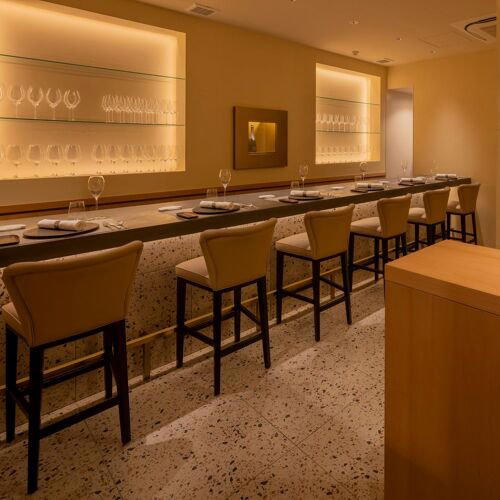
A Fifth-Floor Room Where French Cooking Meets Japanese Restraint
Sonezakishinchi sits just north of Osaka's Umeda interchange, a district built around late-night hospitality where the ratio of bars and small restaurants to residents runs heavily in favour of the former. Among the vertical stacks of izakayas, whisky bars, and counter restaurants that fill buildings like the Daisansha Suzuki Building on 1 Chome-2-10, a fifth-floor address rarely signals serious cooking. Les Souvenirs, which translates from the French as 'memories', revises that expectation. The room occupies a position the restaurant name gestures toward: somewhere you return to, not because the occasion demands it, but because the conversation around the table felt worth repeating.
Where Les Souvenirs Sits in Osaka's French Dining Field
Osaka's French restaurant field is broad and stratified. At the leading, addresses like La Cime and Différence price at ¥¥¥¥ and operate with multi-star ambition. La Bécasse and LE PONT DE CIEL anchor the French-classical tradition in different registers. Then there is the tier below, marked ¥¥¥, where the question is always what gets compressed to keep prices accessible. At Les Souvenirs, the answer appears to be: nothing that the diner directly experiences. The sourcing stays Japanese and seasonal, the tableware is commissioned from artisans rather than sourced from catalogue suppliers, and the wine program earned the number-one ranking from Star Wine List in Japan for 2025. That last credential is significant context for the price point. Star Wine List's White Star designation and its national ranking are granted on the basis of list depth, curation, and value, not ambience or prestige. Being ranked first in Japan at a ¥¥¥ price band suggests the wine program punches well above what the cover price implies.
The Michelin Plate recognitions in both 2024 and 2025 locate Les Souvenirs in a specific tier of the guide's assessment. A Plate signals food worth a detour in Michelin's language, without the star designations that cluster around the ¥¥¥¥ addresses above it. Within the ¥¥¥ French category in Osaka, that two-year consistency matters: it indicates a kitchen holding a standard, not chasing a moment. For comparison, nent operates in adjacent territory, and the broader Osaka picture is available in our full Osaka restaurants guide.
The Value Proposition: What the Price Band Actually Delivers
The editorial case for Les Souvenirs rests on a direct comparison: what does ¥¥¥ typically deliver in Osaka, and what does this kitchen deliver at that price? Across Japan's French cooking scene, the integration of Japanese ingredients into classical French structure is common enough to be a genre rather than a novelty. What separates the more deliberate versions of this approach is precision in where the Japanese elements enter and in what proportion. At Les Souvenirs, the recorded approach places kombu dashi and soy sauce as accent flavours within French construction, rather than as the dominant register. This is a technically demanding position: both ingredients carry assertive umami loads that can overpower delicate French saucing if used without restraint. The fact that the kitchen has maintained Michelin recognition across two years suggests the balance is being struck.
Commissioned tableware is a different kind of value signal. Custom crockery and cutlery from independent artisans represent a material cost and a logistical relationship that most mid-tier restaurants absorb by sourcing from standard distributors. That choice shapes what arrives in front of the diner: objects with considered weight, surface, and proportion rather than interchangeable restaurant-supply pieces. It is the kind of decision that reads as detail rather than headline, but it accumulates. For reference points beyond Osaka, the Franco-Japanese integration approach appears in different forms at Sézanne in Tokyo and at European French addresses like Hotel de Ville Crissier in Crissier, though both operate at considerably higher price bands and in different culinary registers.
Producer Relationships and Seasonal Sourcing
Japan-grown, in-season ingredients as a non-negotiable sourcing constraint shapes a kitchen's calendar in ways that menus sourced from international distributors do not. When a chef limits the supply base to domestic producers and insists on knowing the people behind the produce, the menu necessarily shifts with Japan's agricultural seasons rather than with what is globally available on a given week. In practical terms, this means the menu at Les Souvenirs in autumn will be structurally different from the menu in spring, not just in garnish or accent, but in the central proteins and vegetables around which the French structure is built.
This model requires sustained producer relationships, which are a kind of overhead that does not appear on a cover price but does appear in the consistency of what reaches the table. The commitment also functions as a trust signal: a kitchen that publicly emphasises knowing its producers is staking a reputational claim on supply-chain transparency that is easier to maintain than to fabricate over multiple Michelin assessment cycles.
For readers interested in how other Japanese cities handle the tension between French technique and local sourcing, Harutaka in Tokyo, Gion Sasaki in Kyoto, and akordu in Nara each occupy adjacent territory with distinct approaches. Further afield, Goh in Fukuoka and 1000 in Yokohama and 6 in Okinawa show how regional identity inflects similar structural commitments across Japan.
Planning Your Visit
Les Souvenirs is on the fifth floor of the Daisansha Suzuki Building, 1 Chome-2-10 Sonezakishinchi, Kita Ward, Osaka. Price range: ¥¥¥, which places it below the top tier of Osaka French dining but at a level where the wine program and commissioned tableware indicate spending well above the floor of this band. Awards: Michelin Plate 2024 and 2025; Star Wine List White Star; Star Wine List number-one ranked restaurant in Japan (2025). Reservations: Booking details are not publicly listed; contacting the venue directly or using a concierge service is advisable given the small Sonezakishinchi address format. Getting there: Kita Ward is served by multiple metro lines converging at Umeda and Higashi-Umeda stations, both within walking distance of Sonezakishinchi. For accommodation context, see our full Osaka hotels guide. For drinking before or after, our full Osaka bars guide covers the neighbourhood in detail. Additional Osaka planning resources include our full Osaka wineries guide and our full Osaka experiences guide.
What Regulars Order at Les Souvenirs
What the awards data and sourcing approach indicate is that the kitchen's most consistent territory sits where French technique and Japanese seasonal produce intersect: dishes built on a classical French architecture with kombu dashi and soy providing depth in the sauce layer rather than defining the flavour profile outright. Given the seasonal sourcing constraint, regulars are likely to track what is changing course by course as the agricultural year progresses, rather than returning for a fixed dish. The chef's documented emphasis on producer relationships suggests that the most articulate part of any given menu will be whatever ingredient is at its seasonal peak in that week's Japanese harvest, framed through classical French construction rather than imported wholesale into a fusion register.
A short peer table to compare basics side-by-side.
| Venue | Cuisine | Price | Awards | Notes |
|---|---|---|---|---|
| LES SOUVENIRSThis venue (the venue you are viewing) | French-Japanese Fusion Fine Dining | $150–200 | Michelin Plate · Star Wine List | Not listed |
| HAJIME | Avant-Garde Japanese Fine Dining | $300–500 | 3 Michelin Stars · World's 50 Best #83 | French, Innovative |
| La Cime | Modern French with Japanese Ingredients | $150–200 | 2 Michelin Stars · World's 50 Best #13 | French |
| Kashiwaya Osaka Senriyama | Seasonal Kaiseki Omakase | $200–300 | 3 Michelin Stars · La Liste Top Restaurants | Japanese |
| Taian | Traditional Japanese Kaiseki Omakase | $150–200 | 3 Michelin Stars · La Liste Top Restaurants | Kaiseki, Japanese |
| Fujiya 1935 | Modern Japanese with European influences | $100–150 | 2 Michelin Stars · La Liste Top Restaurants | Innovative |
Recognition history
Dated appearances from independent guides and award organizations, with the underlying list record or original source where available.
Michelin Plate
Michelin
Star Wine List
Star Wine List
Tabelog 100 #69 · No. 69
Tabelog · Tabelog 100 - French - WEST - 2025
Full recognition history (6 entries)
Michelin Plate
Michelin
Star Wine List
Star Wine List
Michelin Plate
Michelin
Continue exploring
More in Osaka
Restaurants in Osaka
All restaurants in Osaka →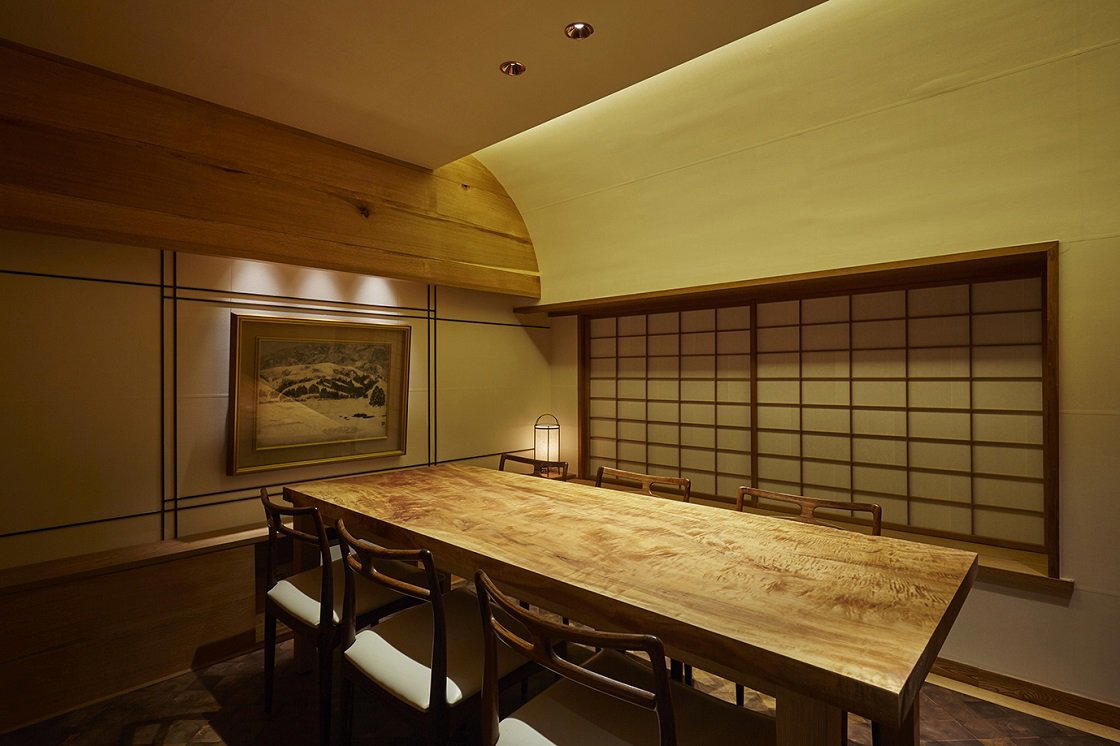
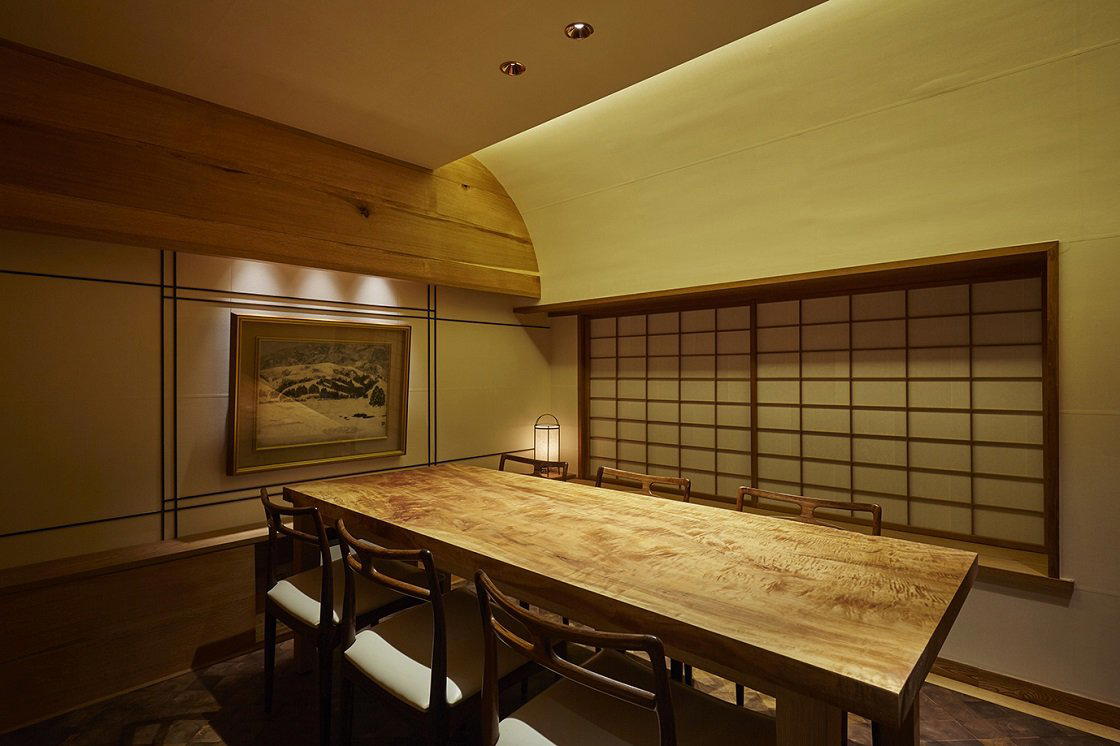



Bars in Osaka
All bars in Osaka →
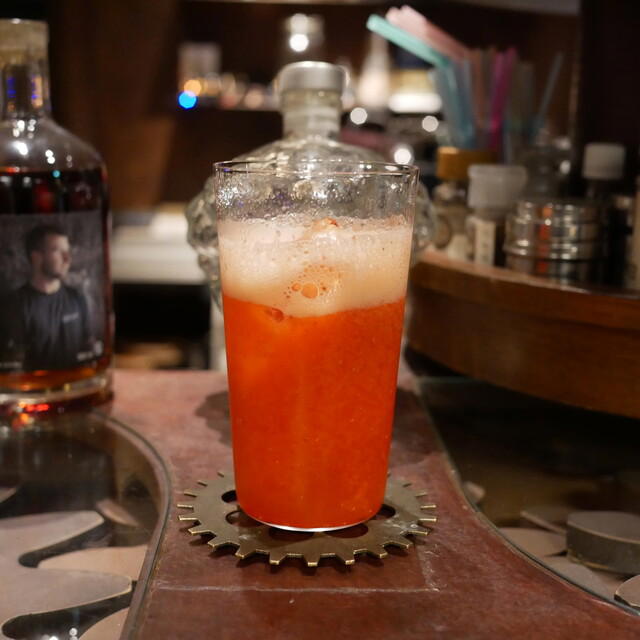


Hotels in Osaka
All hotels in Osaka →


Wineries in Osaka
Browse all →
LES SOUVENIRS
The wine
- Wine program
- Deep wine list
- Extensive wine list
- Sake program
Details
- Elegant
- Cozy
- Intimate
- Sophisticated
- Relaxed
- Date Night
- Special Occasion
- Business Dinner
- Extensive Wine List
- Sake Program
- Local Sourcing
- Wine
- Cocktails
- Allergy Accommodating
Current opening hours
- Monday
- 6–10:30 PM
- Tuesday
- 12–3 PM, 6–10:30 PM
- Wednesday
- 12–3 PM, 6–10:30 PM
- Thursday
- 12–3 PM, 6–10:30 PM
- Friday
- 12–3 PM, 6–10:30 PM
- Saturday
- 12–3 PM, 6–10:30 PM
- Sunday
- Closed
Hours can change for holidays and private events. Hours as of .
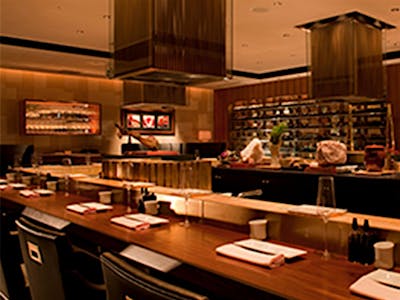
Elegant and relaxing with cozy interior, stylish space, and warm welcoming atmosphere.