Set within the Passage des Panoramas, one of Paris's oldest covered arcades, Les Saveurs de l'Orient occupies a space where 19th-century ironwork and glass meet the cooking traditions of the Arab world. Compared to the grand-palace French dining rooms that define much of the city's special-occasion circuit, it offers a different register: intimate, atmospheric, and rooted in cuisines that Paris's restaurant scene has historically under-represented at the table-service level.
Pearl is the En Primeur Club membership app — saves, bookings, and concierge access live there. Same editors, same standards.
- Address
- 43 Pass. des Panoramas, 75002 Paris, France
- Phone
- +33144825661
- Directions
- Get directions
 Saves & bookings on Pearl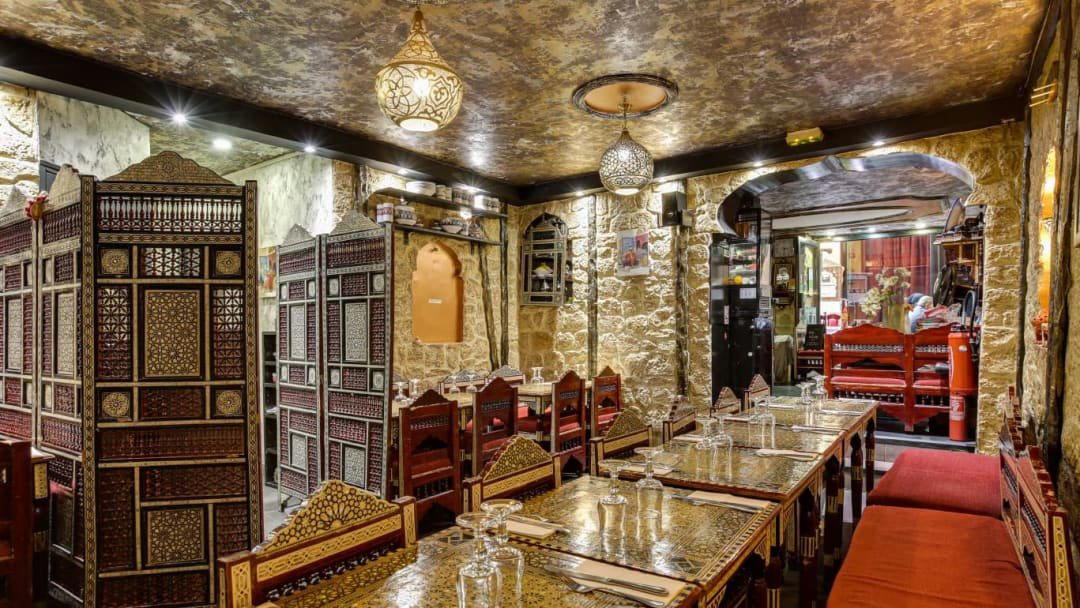
An Arcade That Sets a Different Tone
Les Saveurs de l'Orient is a Lebanese & Moroccan restaurant at 43 Pass. The Passage des Panoramas, opened in 1800 and among the first of Paris's covered shopping galleries, does something that most Parisian dining streets cannot: it filters out the city. Step inside from the Boulevard Montmartre and the ambient noise of the 2nd arrondissement drops away, replaced by the particular hush of a glass-and-iron corridor that has been drawing Parisians off the main road for more than two centuries. Restaurants here do not compete with terrace culture or the theatre of a grand boulevard. They exist in a self-contained world, which makes the arcade an unusual but effective setting for occasion dining, the kind of meal where the surroundings are expected to hold their own weight before a dish arrives.
Les Saveurs de l'Orient operates within that context. The address at 43 Passage des Panoramas places it inside a retail and dining strip that has seen considerable repositioning over the past decade, with stamp dealers and printers giving way to a mix of restaurants and speciality shops. The passage itself carries a heritage classification, meaning the ironwork, glass ceiling, and tiled floors are protected. For a dining room oriented toward the cooking traditions of the Arab world and wider Middle East, this setting creates an immediate tension, between the French bones of the building and the flavours inside, that works in its favour.
Where This Fits in Paris's Special-Occasion Circuit
Paris's celebration-meal infrastructure is dominated by French-coded institutions. Alléno Paris au Pavillon Ledoyen on the Champs-Élysées, Arpège on the Left Bank, L'Ambroisie on the Place des Vosges, Le Cinq at the Four Seasons George V, the blueprint for these rooms involves either grand palace formality or the structured tasting-menu format that now defines much of Kei and its contemporaries. That infrastructure is deep and well-funded, and it leaves less room for cuisines that don't map neatly onto the Michelin vocabulary.
Restaurants working in North African, Levantine, or wider Oriental culinary traditions occupy a different place in Paris, numerous at the neighbourhood level, rarely positioned as destination dining for milestone meals. The Passage des Panoramas address provides the occasion-meal signalling (historic setting, a sense of event, a departure from the everyday) without the price architecture of the palace-hotel rooms. For a dinner that needs to feel considered without demanding the full ceremonial weight of a multi-course tasting menu, that positioning has real practical logic.
Across France, the conversation about what counts as occasion dining has been shifting. Flocons de Sel in Megève, Mirazur in Menton, and Troisgros all operate within a specific French institutional framework. So do long-established houses like Auberge de l'Ill, Bras, Paul Bocuse, AM par Alexandre Mazzia, Assiette Champenoise, Au Crocodile, and Auberge du Vieux Puits. The dominance of that tradition is part of what makes an alternative, cuisine-led occasion dining format in central Paris worth paying attention to, it answers a need the main circuit does not.
The Cuisine in Context
Oriental cuisines, a broad category that in Parisian restaurant usage tends to encompass North African, Levantine, Egyptian, and sometimes further-reaching Middle Eastern traditions, are among the more complex and historically layered in the world. Spice literacy alone spans centuries of trade-route knowledge: the careful calibration of cumin, coriander, saffron, and preserved citrus in a Moroccan tagine; the distinct herb-and-pomegranate logic of Levantine mezze; the slow-cooked lamb preparations that travel from Marrakech to Cairo in recognisably related but regionally specific forms. This is not simple cooking. It requires sourcing precision and technique depth that, when applied seriously, produces meals that hold the table through multiple courses as effectively as any European tradition.
The occasion-dining case for this type of cuisine in Paris rests partly on that complexity and partly on the social logic of shared plates. Many Oriental meal formats are structurally generous: dishes arrive in sequence or together, portions invite sharing, and the meal tends to extend naturally rather than clicking through predetermined courses. For a celebration dinner, a birthday, an anniversary, a gathering where the conversation should be as important as the food, that format often works better than a rigid tasting menu where the kitchen controls the timing absolutely.
The Passage as Setting
There are covered passages in Paris. The Passage des Panoramas is the oldest still in operation, and its condition, worn in places, carefully maintained in others, animated by a mix of working shops and restaurants, makes it feel inhabited rather than preserved. That distinction matters for dinner. A dining room that sits inside a living building, used daily by locals for purposes beyond restaurant attendance, carries a different atmosphere from a room that exists purely to receive diners. The approach through the arcade, past the stamp dealers and brasserie fronts, functions as a kind of transition: you arrive at the table already separated from the street, already in a different register.
For milestone meals, setting does a significant portion of the emotional work. The Passage des Panoramas has been doing that work for two centuries, not as a stage set, but as an actual place with accumulated history. Restaurants in the arcade inherit that quality without having to manufacture it.
Know Before You Go
Address: 43 Passage des Panoramas, 75002 Paris, France
Arrondissement: 2nd (Grands Boulevards)
Nearest Metro: Grands Boulevards (lines 8 and 9) or Bonne Nouvelle (lines 8 and 9)
Price range: About $30 per person
Booking: Reservations are recommended
Hours: Mon to Thu, 12 to 3 PM and 6:30 to 11 PM; Fri, 12 to 3 PM and 6:30 PM to 12 AM; Sat, 12 PM to 12 AM; Sun, 12 to 10:30 PM
Occasion suitability: Historic arcade setting makes this appropriate for celebratory dinners, anniversaries, and small group gatherings seeking a distinctive address outside the palace-hotel circuit
A Minimal comparable set
Comparable venues nearby, for context on price, style, and recognition.
| Venue | Cuisine | Price | Notes |
|---|---|---|---|
| Les Saveurs de l'OrientThis venue — the venue you are viewing | Not listed | $$ | Not listed |
| Mabrouk | Not listed | $$ | 3rd arrondissement, Tunisian-Jewish Mediterranean |
| L'Étoile Longchamp | Not listed | $$ | 16th Arr. - Passy, Authentic Moroccan |
| La Pause Libanaise | Madeleine, Authentic Lebanese | $$ | Not listed |
| L’As du Fallafel | Le Marais, Authentic Israeli Falafel | $$ | Not listed |
| Saïdoune | Batignolles-Monceau, Authentic Lebanese | $$$ | Not listed |
Continue exploring
More in Paris
Restaurants in Paris
Browse all →
Bars in Paris
Browse all →
Hotels in Paris
Browse all →
Wineries in Paris
Browse all →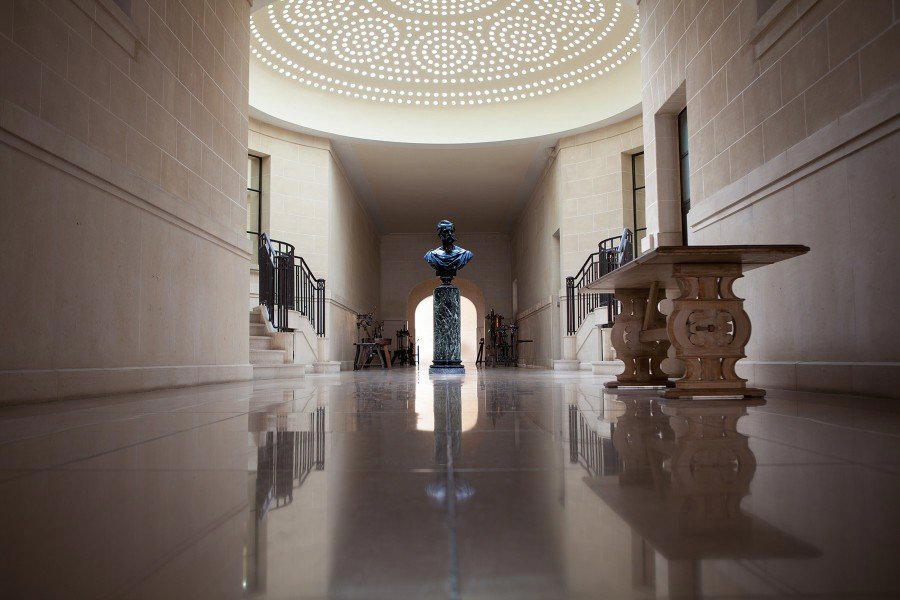
At a Glance
- Cozy
- Classic
- Rustic
- Casual Hangout
- Group Dining
- Family
- Date Night
- Standalone
- Historic Building
Current opening hours
- Monday
- 12–3 PM, 6:30–11 PM
- Tuesday
- 12–3 PM, 6:30–11 PM
- Wednesday
- 12–3 PM, 6:30–11 PM
- Thursday
- 12–3 PM, 6:30–11 PM
- Friday
- 12–3 PM, 6:30 PM–12 AM
- Saturday
- 12 PM–12 AM
- Sunday
- 12–10:30 PM
Hours can change for holidays and private events. Last verified .
Enchanting aromas of oriental spices create a warm, welcoming atmosphere with traditional décor reflecting the restaurant's authentic Middle Eastern heritage.