L'Entredgeu at 83 Rue Laugier sits in the 17th arrondissement's quieter residential stretch, where the bistro tradition still means sourced ingredients cooked without theatrical distraction. The format is direct French: a short, market-driven menu and a room that earns its repeat custom through consistency rather than spectacle. For those who find the Right Bank's grander addresses overwrought, this is a useful counterpoint.
Pearl is the En Primeur Club membership app — saves, bookings, and concierge access live there. Same editors, same standards.
- Address
- 83 Rue Laugier, 75017 Paris, France
- Phone
- +33140549724
- Website
- lentredgeu.fr
- Directions
- Get directions
 Saves & bookings on Pearl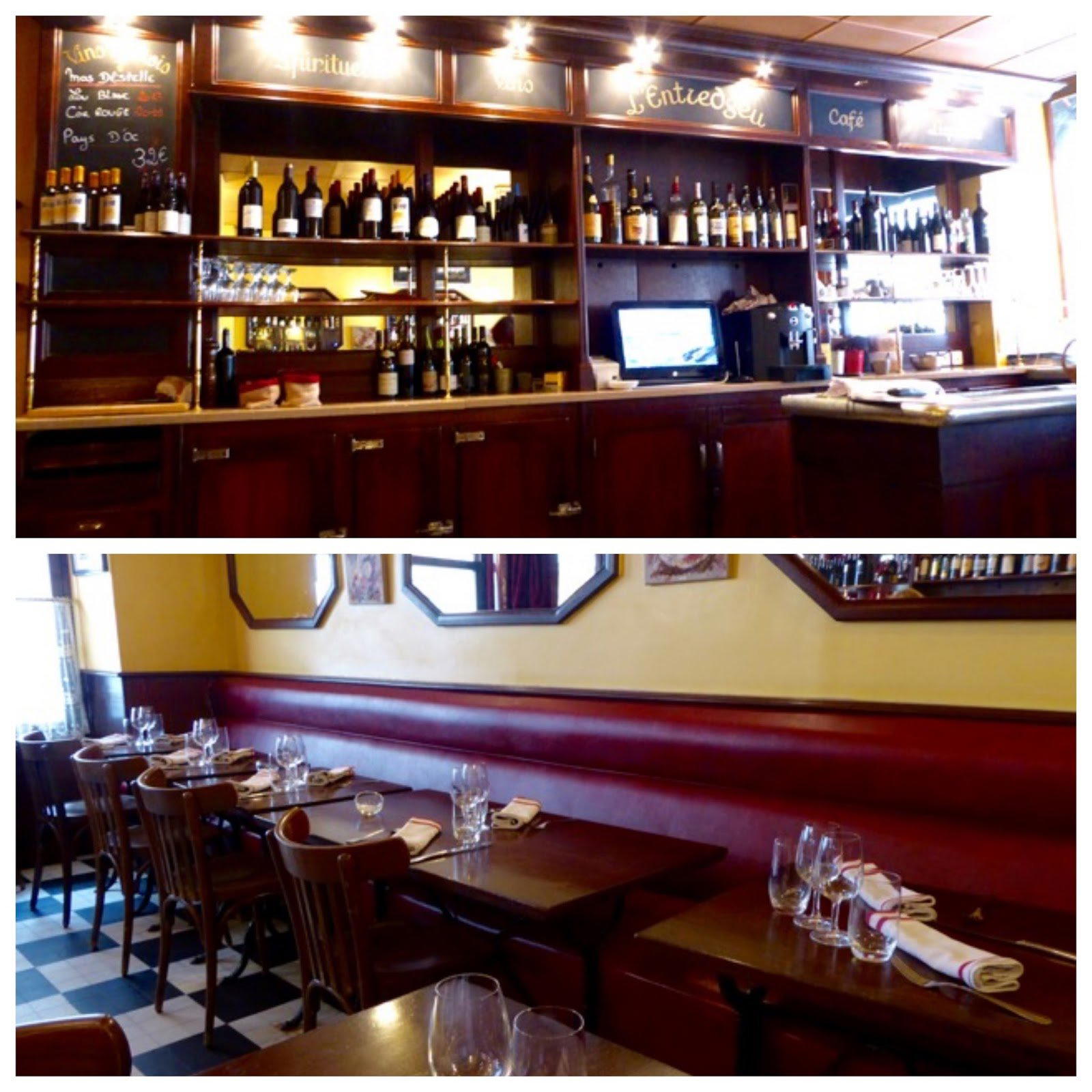
The 17th and the Bistro That Doesn't Announce Itself
Paris's 17th arrondissement occupies an unusual position in the city's dining hierarchy. Its northern reaches around Rue Laugier sit far from the tourist circuits of the Marais or the grand brasserie theater of the Grands Boulevards, and that distance tends to attract a specific kind of restaurant: the kind that depends on a neighbourhood rather than a reputation. L'Entredgeu is a Traditional French Bistro in Paris's 17th arrondissement at 83 Rue Laugier, with a smart-casual dress code and reservations recommended. It operates inside that logic. The room is modest by the standards of a city where dining rooms are frequently designed to signal something about the chef's ambitions. The chairs don't shift position when you sit down. The noise level settles somewhere between convivial and loud. There is nothing in the approach of the building that prepares you for a monument, which is, in the context of Paris's bistro tradition, precisely the point.
The 17th has never carried the dining prestige of the 8th, where addresses like Alléno Paris au Pavillon Ledoyen or Le Cinq at the Four Seasons George V perform a different kind of French restaurant, formal, technically ambitious, priced against international luxury demand. The bistro tradition that survives in the 17th operates at a different register, one where the sourcing of ingredients and the relationship between kitchen and supplier matter more than the architecture of the tasting menu.
Where the Food Comes From and Why That Matters Here
The dominant editorial story about French restaurant food over the past two decades has been about ingredient sourcing: the push away from industrialised supply chains toward smaller producers, regional specificity, and seasonal discipline. That shift happened first at the leading end, restaurants like Arpège, which built an entire identity around its kitchen garden, or provincial addresses like Bras in Laguiole, where the surrounding Aubrac plateau defines the menu, and then filtered into the bistro tier with varying degrees of conviction.
What separates the bistros that use sourcing as a genuine operating principle from those that deploy it as marketing language is legibility on the plate. At the sourcing-led end of the bistro spectrum, the menu is short because the kitchen is working with what arrived that morning rather than a static laminated card that runs year-round. The geography of French ingredient culture is dense enough to sustain this approach: Brittany's shellfish, the Loire's river fish, the southwest's duck and foie gras, the Alps' charcuterie traditions documented by places like Flocons de Sel in Megève. A Parisian bistro with real sourcing discipline draws from this network rather than from a cash-and-carry supplier.
L'Entredgeu sits in this sourcing-led tier of the Paris bistro market. The menu reads as market-driven and regionally inflected, southwest France in particular appears as a reference point, which connects the kitchen to a tradition of rich, product-forward cooking that prioritises the quality of the raw material over the complexity of its treatment. This is not the approach of Kei, where French technique meets Japanese precision, or L'Ambroisie, where classical French cooking is maintained at a standard that commands four-figure bills. It is a different set of values, and a different price conversation entirely.
How This Fits the Broader French Bistro Canon
The French bistro has been declared dead and then resurrected so many times that the category has become something of a critical obsession. The Neo-Bistro wave of the 2010s, driven by chefs who had trained in three-star kitchens and then opened low-overhead rooms in the 11th and 10th arrondissements, shifted the benchmark for what a simple French restaurant could achieve technically. That movement produced some of Paris's most discussed addresses and also inspired a generation of bistros in smaller French cities, many of which are now holding their own at serious levels: AM par Alexandre Mazzia in Marseille and Assiette Champenoise in Reims represent regional French cooking operating at a level that makes Parisian claims to dominance feel increasingly provisional.
In this context, the 17th arrondissement bistro that holds its neighbourhood clientele across years is making a quiet but coherent argument: that consistency and sourcing integrity matter as much as innovation cycles. The comparison is not to Paul Bocuse's Auberge du Pont de Collonges or Auberge de l'Ill in Illhaeusern, which operate as historical monuments to a different era of French cooking. It is a more modest claim, but not a trivial one.
For visitors more familiar with ambitious tasting menu formats, the kind of structural ambition found at Mirazur in Menton or the long-standing technical rigour at Troisgros in Ouches, an evening at a neighbourhood bistro like L'Entredgeu reads as a deliberate change of pace. The format is not a lesser version of the tasting menu experience; it is a different category of eating, one that rewards a different kind of attention.
Placing L'Entredgeu in the Paris Dining Map
Paris's dining scene has always been stratified by arrondissement in ways that reflect broader patterns about who eats where and why. The 17th is not where international visitors typically direct their first evening, which means the restaurants that survive in its residential streets are sustained by repeat local custom rather than tourist rotation. That is an editorial data point in itself: a Paris bistro in the 17th that maintains a reputation across years is almost by definition doing something right at the level of consistency and value, since it cannot depend on the one-time visitor for its revenue.
For a fuller picture of how the restaurant sits within Paris's wider dining options, the city’s dining map spans addresses across price tiers and neighbourhoods, including the grander formats at Le Bernardin in New York for transatlantic comparison and the technique-driven precision of Atomix as a reference point for how other cities are approaching the high-end format. Closer to home, the Alsatian tradition documented at Au Crocodile in Strasbourg and the southern French depth at Auberge du Vieux Puits in Fontjoncouse represent the broader French regional context that informs what a sourcing-led Paris bistro is drawing from.
Where It Fits
Comparable venues nearby, for context on price, style, and recognition.
| Venue | Cuisine | Price | Notes |
|---|---|---|---|
| L'EntredgeuThis venue — the venue you are viewing | Traditional French Bistro | $$ | Not listed |
| François Félix | Classic French Bistro | $$ | 8th arrondissement (Faubourg Saint-Honoré) |
| Le Cellier | Modern French Bistro with Breton Influences | $$ | 9e arrondissement |
| Le Petit Saint-Benoit | Classic French Bistro | $$ | 6th Arrondissement (Saint-Germain-des-Prés) |
| Café Charlot | French Brasserie & Cafe | $$ | Le Marais |
| Chez Mademoiselle | Traditional French Bistro | $$ | Saint-Gervais |
Continue exploring
More in Paris
Restaurants in Paris
Browse all →
Bars in Paris
Browse all →
Hotels in Paris
Browse all →
Wineries in Paris
Browse all →
At a Glance
- Cozy
- Classic
- Intimate
- Date Night
- Business Dinner
- Casual Hangout
- Standalone
- Extensive Wine List