Lehrhaus

Esquire Best New Restaurants #28
Our verdict
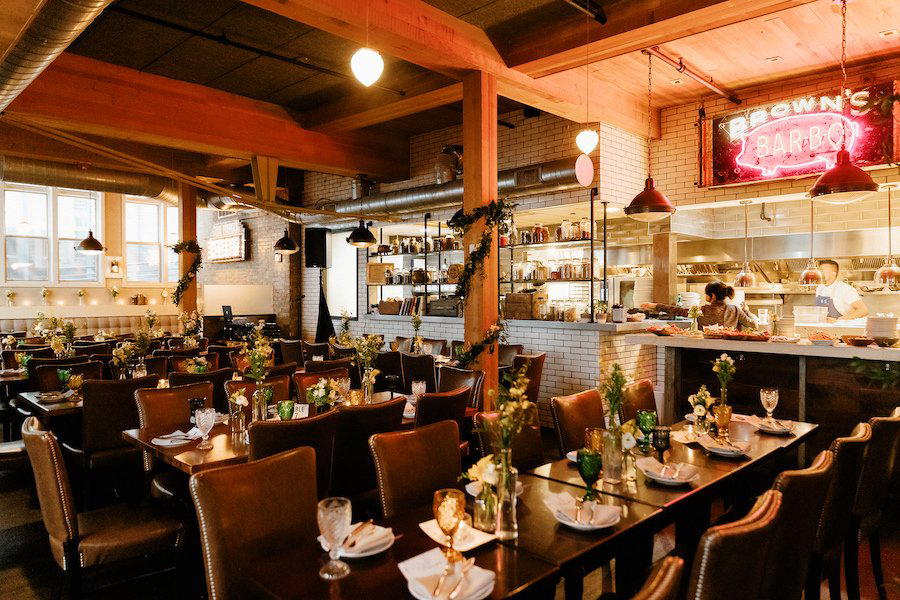
Lehrhaus brings a rigorous, ingredient-forward approach to Jewish cooking in Somerville's Washington Street corridor, earning an Esquire Best New Restaurants ranking in 2023. The kitchen draws on a tradition that runs deeper than deli nostalgia, using sourcing decisions to anchor dishes in both place and cultural memory.

Pearl is the En Primeur Club membership app, where members save venues, book tables and use the concierge.
The menu
What to order
- Beet pastrami Reuben
- Fish and chips
- Mac and cheese kugel
Washington Street, Somerville: Where Jewish Cooking Gets Serious Again
There is a particular quality to the blocks along Washington Street in Somerville, just across the line from Cambridge, that rewards the restaurants willing to do something specific. The neighbourhood does not carry the tourist gravity of the South End or the financial pressure of Back Bay, which means the kitchens that land here tend to arrive with a point of view rather than a strategy. Lehrhaus, at 425 Washington Street, fits that pattern. The address sits within a stretch of Somerville that has become increasingly serious about food without performing seriousness, and the restaurant's presence in that corridor feels earned rather than placed.
Jewish cooking in the American restaurant context has long been filtered through one of two lenses: the deli as cultural monument, or the modernist reinterpretation that strips the tradition down to technique. Lehrhaus operates in neither register. The kitchen treats Jewish culinary tradition as a living thing, one with geography, diaspora, and seasonal logic built in, rather than a fixed archive to either preserve or disrupt. That framing matters because it changes what ingredient sourcing means in this context. The food here is not simply farm-to-table with Ashkenazi or Sephardic references attached. The sourcing decisions are part of how the kitchen argues for a cuisine that has always moved with the communities that carried it.
The Sourcing Argument Embedded in the Menu
Jewish food traditions span Ashkenazi Eastern Europe, Sephardic Iberia and the Levant, Mizrahi North Africa and the Middle East, and dozens of regional variations that accumulated across centuries of movement. Each of those traditions developed its own logic for what to preserve, ferment, brine, or slow-cook, shaped by what was locally available and what religious law governed. A kitchen that takes that seriously has to make sourcing choices that reflect those logics rather than simply using high-quality local ingredients as a backdrop for dishes that could appear anywhere.
Sourcing at this level is increasingly rare in American Jewish restaurants, which have tended either to anchor in nostalgia or to detach from tradition entirely in the name of innovation. The middle path, using procurement decisions to reinforce culinary argument, is the harder one. It is also the one that tends to produce food with a longer shelf life in the critical conversation, which is partly why Esquire placed Lehrhaus at number 28 on its Leading New Restaurants list in 2023. That kind of recognition does not arrive for restaurants playing it safe with their sourcing or their context.
For comparison, consider how ingredient sourcing functions at restaurants where the cuisine carries similar weight of cultural identity. At Atomix in New York City, sourcing decisions are inseparable from the argument about contemporary Korean cooking's legitimacy in the fine dining tier. At Single Thread Farm in Healdsburg, the farming operation underpins the entire editorial stance of the kitchen. Lehrhaus does not operate at either of those price points or formats, but the underlying logic is recognizable: sourcing is not a marketing layer, it is a structural element of what the food means.
A 4.7 and What It Tells You About the Room
It reflects sustained performance across a broad cross-section of diners, including first-timers who showed up without institutional context. For a restaurant working with a cuisine tradition that requires some literacy to fully read, that score suggests the kitchen is communicating across different levels of engagement. You do not need to arrive knowing the difference between a schmaltz-roasted preparation and a preserved-lemon Maghrebi influence to have a good dinner. But if you do, the layers are there.
That accessibility without condescension is genuinely difficult to achieve, and it is one reason Lehrhaus occupies a specific position in the Boston dining conversation that other restaurants in the city do not. 311 Omakase and Asta both demand a certain kind of prior knowledge from the diner. Bar Mezzana and Bar Volpe work within Italian traditions that American diners largely come pre-loaded to appreciate. Abe & Louie's operates in the steakhouse format, where the category does the orienting. Lehrhaus is doing something structurally different: building fluency in the diner rather than assuming it.
Where Lehrhaus Fits in the National Moment
The past decade has seen Jewish cooking re-enter the critical conversation at a level it had not occupied since the mid-twentieth century deli era, and the restaurants driving that re-entry have been concentrated in New York, Los Angeles, and a handful of other major markets. Boston had not produced a serious entrant in that conversation until recently, which makes the Esquire recognition more pointed than a single-year snapshot. The restaurant is not just good for Boston. It is positioned within a national shift in how American Jewish cooking is being received, resourced, and argued about in print.
That shift connects to a broader pattern across the American dining tier, where cuisine traditions long treated as peripheral to the fine dining conversation, including Korean (see Atomix), contemporary American with deep local sourcing commitments (see Lazy Bear in San Francisco), and hyper-regional French (see Le Bernardin in New York City), are now treated as the point rather than the exception. Lehrhaus entered that current at the right moment and with enough specificity to hold a position in it.
Planning Your Visit
Lehrhaus is located at 425 Washington Street in Somerville, Massachusetts, accessible from central Boston via the MBTA. Given the Esquire recognition and the 4.7 rating volume, booking ahead is advisable, particularly for weekend evenings. The restaurant's presence in Somerville rather than Boston proper means parking is somewhat more manageable than in the core neighbourhoods, though public transit remains the cleaner option for most visitors. For a fuller picture of what Boston and its surrounding areas have to offer across categories, see our full Boston restaurants guide, our full Boston hotels guide, our full Boston bars guide, our full Boston wineries guide, and our full Boston experiences guide.
Frequently asked questions
What awards or recognition does Lehrhaus have?
Lehrhaus has received recognition including: Esquire Best New Restaurants #28 (2023).
Where exactly is Lehrhaus?
Lehrhaus is located at 425 Washington St, Somerville, MA 02143, Boston.
What's the signature dish at Lehrhaus?
Lehrhaus does not publish a fixed signature dish, and the menu draws across Ashkenazi, Sephardic, and Mizrahi traditions rather than anchoring to a single preparation. Esquire named it one of the best new restaurants in the United States in 2023, which points to the kitchen's range rather than a single showpiece. Your best read on what's leading the menu on a given week is checking their current offerings directly before visiting 425 Washington Street.
What cuisine category does Lehrhaus fall under?
Do they take walk-ins at Lehrhaus?
Lehrhaus earned Esquire Best New Restaurants recognition in 2023, and that kind of national profile tends to compress walk-in availability considerably, particularly on weekends. Booking in advance is the safer approach. For current reservation policy, check the venue's official channels at 425 Washington Street, Somerville, or check their booking platform for available slots.
Comparable Venues
Comparable venues nearby, for context on price, style, and recognition.
| Venue | Cuisine | Price | Awards | Notes |
|---|---|---|---|---|
| LehrhausThis venue (the venue you are viewing) | Modern Jewish Diaspora Kosher | $50–100 | Esquire Best New Restaurants #28 | Not listed |
| Artisan Bistro | Contemporary American Bistro | $50–100 | Not listed | Downtown Crossing |
| Lucca | Northern Italian Tuscan | $50–100 | Wine Spectator Best of Award of Excellence | North End |
| Fin Point | New England Oyster Bar & Grille | $50–100 | Not listed | Financial District |
| Battery Wharf Grille | Modern New England Seafood | $50–100 | Not listed | North End |
| Temazcal Tequila Cantina | Upscale Mexican Fine Dining | Not listed | Not listed | South Boston Waterfront |
Recognition history
Dated appearances from independent guides and award organizations, with the underlying list record or original source where available.
Esquire Best New Restaurants #28
Esquire